

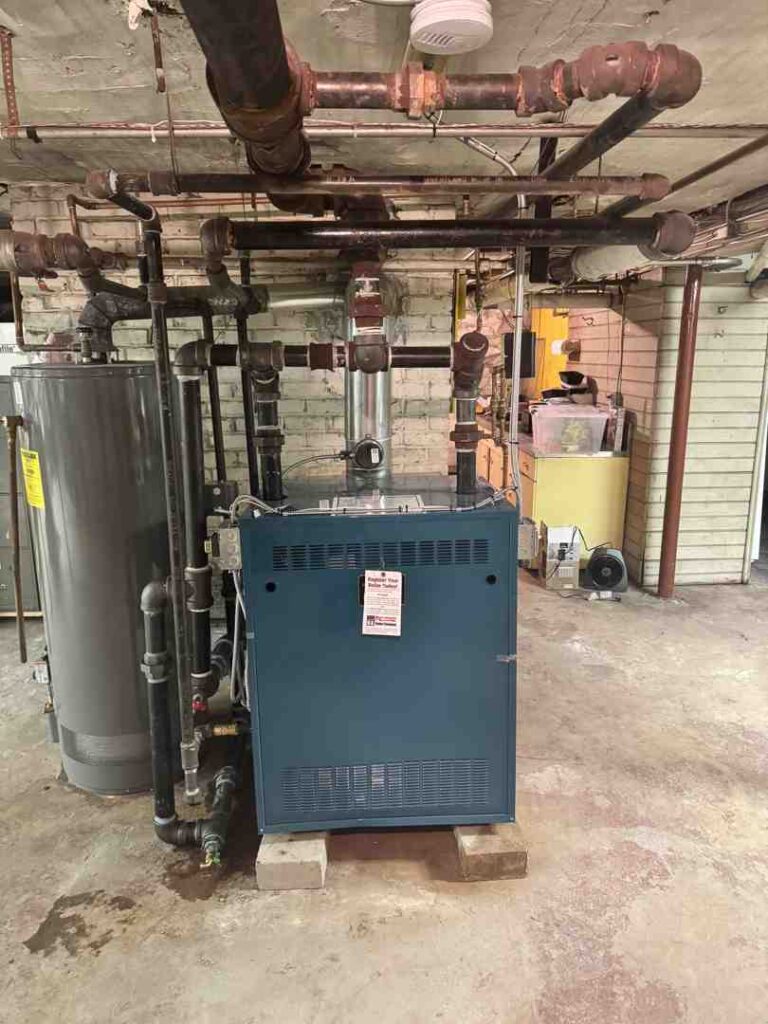
Why It’s Critical to Detect a Water Leak Under Your Floor Early
The ability to detect water leak under floor surfaces before visible damage appears can save you thousands of dollars — and protect your family’s health.
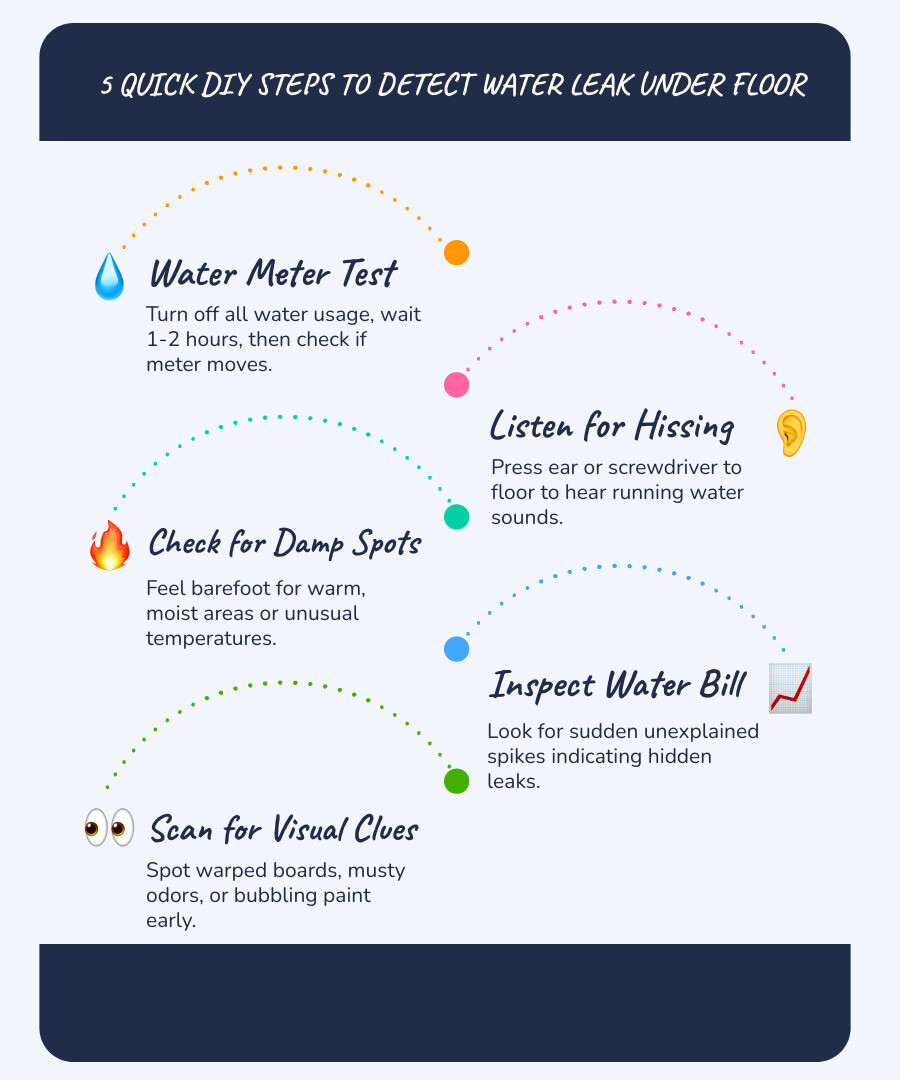
Here are the fastest ways to check for a water leak under your floor:
- Water meter test – Turn off all water in your home, wait 1-2 hours, and check if the meter has moved
- Listen carefully – Put your ear (or a screwdriver handle) to the floor and listen for hissing or running water
- Feel for warm or damp spots – Walk barefoot across your floor and note any unusual temperature changes
- Check your water bill – A sudden, unexplained spike is one of the earliest warning signs
- Look for visual clues – Warped floorboards, damp carpet, bubbling paint, or musty smells
- Use a moisture meter – Press it against flooring to measure moisture levels without lifting anything
- Call a professional – For confirmed or suspected slab leaks, acoustic detection and thermal imaging find the exact spot
Most leaks start small and silent. By the time you see a puddle or warped floor, the leak may have been running for weeks or months.
And the damage compounds fast. According to the U.S. EPA, household leaks can waste nearly 10,000 gallons of water per year — much of it hidden beneath your feet. Worse, mold can begin growing in as little as 24 to 48 hours after water exposure in a dark, damp subfloor environment.
For Massachusetts homeowners especially, where harsh winters and older housing stock create extra stress on pipes and foundations, catching a leak early isn’t just smart — it’s essential.
This guide walks you through 15 practical methods to find a water leak under your floor, from simple DIY checks you can do right now to the professional tools that pinpoint leaks within inches — without tearing up your whole floor.
Key terms for detect water leak under floor:
How to Detect Water Leak Under Floor Using DIY and Professional Methods
When you suspect a “phantom” leak, the goal is to confirm its existence without turning your living room into an archaeological dig site. We use a combination of common-sense DIY checks and high-tech professional diagnostics to narrow down the location.
The Water Meter Test: Your First Line of Defense
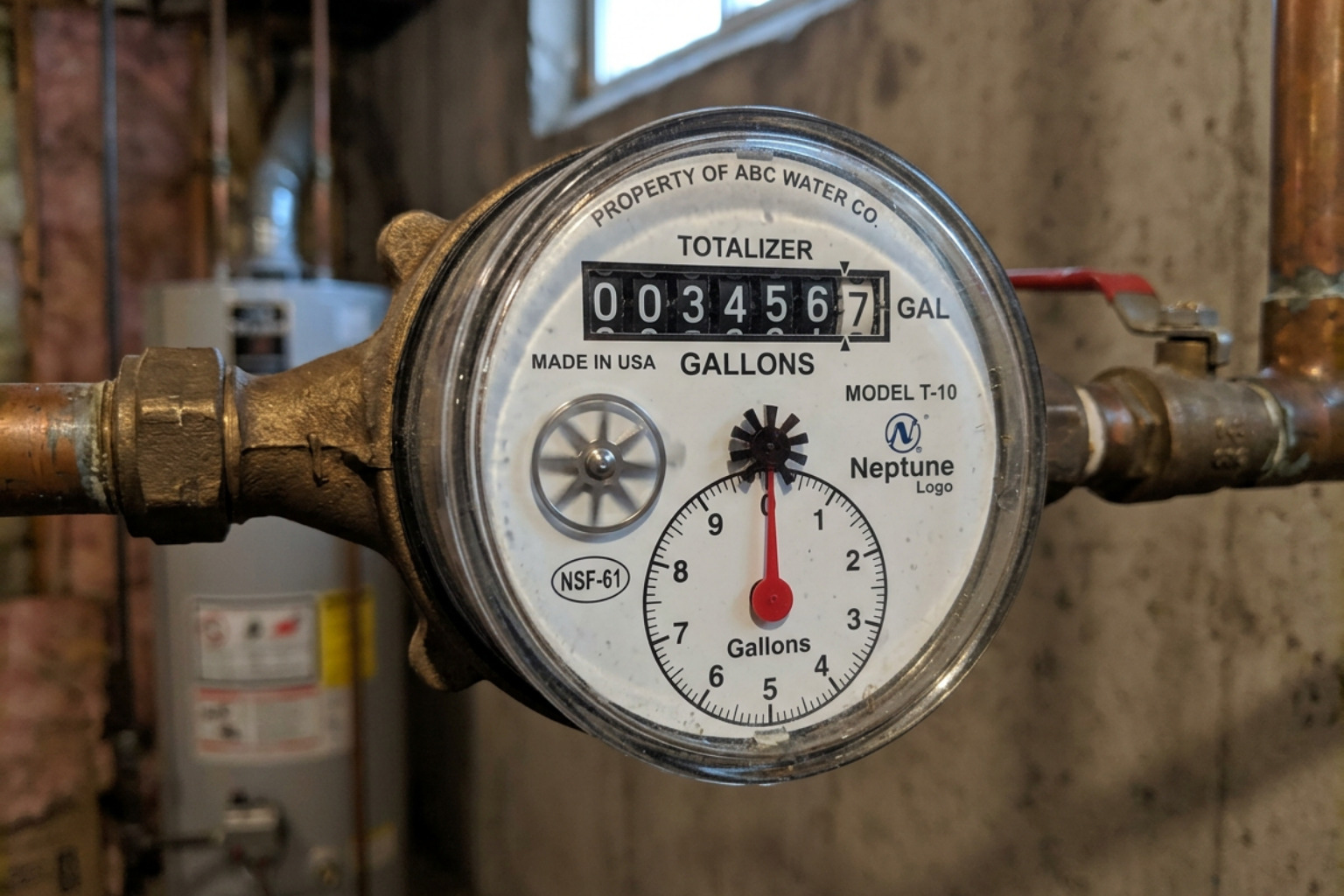
The most reliable way to confirm you have a leak somewhere in your system is the water meter test. First, ensure all faucets, showerheads, dishwashers, and washing machines are off. Locate your water meter (usually in the basement or a dedicated closet in Massachusetts homes). Note the reading and look for a small “leak indicator” triangle or star. If that dial is spinning while everything is off, you have a leak. To be certain, leave the water off for two hours and check the main digits again. Any movement confirms a leak is present.
Professional Precision: Tracer Gas and Acoustic Listening
If the meter confirms a leak but you can’t see it, we level up the technology. Tracer gas leak testing is a brilliant, non-invasive method. We drain the water from your pipes and inject a safe, inert mixture of hydrogen and nitrogen. Because these gas molecules are tiny, they escape through the leak and rise through the floorboards or concrete. We then use a handheld “sniffer” to pick up the gas trail, pinpointing the leak’s location within inches.
Acoustic listening is another pro favorite. Using high-sensitivity microphones or “ground microphones,” we can hear the distinct hissing or splashing sounds of water escaping a pressurized pipe under your floor. We even use acoustic correlators, which place sensors at two different points on a pipe and calculate the exact distance to the leak based on how long the sound takes to travel to each sensor.
DIY “Low-Tech” Hacks
Before calling in the heavy gear, try these clever tricks:
- The Screwdriver Stethoscope: If you have a suspected area, place the metal tip of a long screwdriver against the floor (or a nearby pipe) and press your ear against the handle. It acts as a rudimentary amplifier for vibrations.
- The Foil Test: If you see a damp spot on a concrete floor but aren’t sure if it’s a pipe leak or just humidity, tape a square of aluminum foil to the floor and seal the edges. After 24 hours, check it. If the underside of the foil is wet, water is seeping up from the floor. If the top is wet, it’s just condensation from the room.
- Dye Testing: If you suspect a drain leak, add heavy food coloring to your toilet tank or sink. If that color shows up in the “puddle” forming under your floorboards, you’ve found your source.
| Method | Best For | DIY or Pro? | Accuracy |
|---|---|---|---|
| Water Meter Test | Confirming a leak exists | DIY | High (Binary) |
| Thermal Imaging | Hot water line leaks | Pro | High |
| Moisture Meter | Surface dampness levels | DIY/Pro | Medium |
| Tracer Gas | Tiny pinhole leaks | Pro | Extremely High |
| Visual Signs | Catching early warnings | DIY | Low |
If you’re feeling overwhelmed, you can Solve Your Plumbing Issues in Massachusetts with This Guide which provides a broader look at home maintenance.
Recognizing Early Signs to Detect Water Leak Under Floor
Early detection is the difference between a quick pipe patch and a full-scale foundation repair. Keep your senses sharp for these “red flags.”
1. Unexplained Bill Spikes If your water usage hasn’t changed but your bill looks like you’re filling a backyard pool every week, it’s time to investigate. In Massachusetts, seasonal changes can mask leaks, but a consistent upward trend is a major warning.
2. Musty Odors and Mold Water trapped under flooring creates a perfect, dark breeding ground for fungi. If a room smells like a damp basement even after cleaning, moisture is likely trapped in the subfloor. According to U.S. EPA mold guidelines, you must dry these areas within 24–48 hours to prevent health risks.
3. Warped Wood and Damp Carpets Hardwood floors will “cup” or “crown” when exposed to moisture from below. For carpeted areas, look for darker patches or a “spongy” feel when you walk. If a section of the floor feels soft or gives way slightly, the subfloor may be rotting.
4. Foundation and Wall Cracks A “slab leak” (a leak under your concrete foundation) can actually cause the ground to shift. This movement puts stress on your home’s skeleton, leading to cracks in the drywall or even exterior foundation cracks.
5. Hot Spots and Hissing If you walk across your kitchen tile and suddenly feel a warm patch under your feet, you likely have a hot water line leak. This is common in slab foundations where copper pipes are buried. Similarly, if the house is dead quiet and you hear a faint hissing or the sound of a toilet “running” when it isn’t, there’s water moving somewhere it shouldn’t.
Using Advanced Technology to Detect Water Leak Under Floor
When the leak is buried under several inches of concrete or multiple layers of flooring, we bring out the “big guns.”
Infrared Thermography (Thermal Imaging) This is one of the most effective non-invasive tools. A thermal camera detects temperature variations on the surface of your floor. A leaking hot water pipe will show up as a bright “heat plume” on the screen, while a cold water leak might show up as a dark, cool patch. This allows us to “see” through the floor without removing a single tile.
Ground Penetrating Radar (GPR) In complex cases, Ground penetrating radar can be used. GPR sends radio waves into the concrete and measures the reflections to create a map of what’s underneath. It can identify voids created by escaping water or the exact location of buried pipes.
Borescope Cameras If we have a small access point (like a crawl space or a removed baseboard), we can thread a tiny fiber-optic camera under the floor. These cameras provide high-resolution video of the subfloor area, allowing us to see puddles or corroded pipe joints directly.
Pressure Testing By isolating sections of your plumbing and applying a pressure gauge, we can see if a specific line is losing pressure. This helps us determine if the leak is on the main supply line, a specific bathroom branch, or the heating system.
Understanding the Causes of Slab Leaks
Why do pipes fail under a floor? It’s usually a combination of chemistry and physics.
- Electrolysis and Corrosion: This is common with copper pipes. When different minerals in the soil or water react with the metal, it can cause “pitting” or pinhole leaks. Older Massachusetts homes with original galvanized steel pipes are especially prone to internal rusting.
- Soil pH and Clay Expansion: Parts of Massachusetts have soil with high clay content. When it rains, the clay expands; when it dries, it shrinks. This constant “heaving” can actually snap or rub against buried pipes until they fail.
- High Water Pressure: If your home’s PSI (pounds per square inch) is consistently above 80, it puts immense stress on pipe joints and valves. We recommend keeping it between 40 and 60 PSI.
- Thermal Expansion: Hot water pipes expand and contract as water flows and stops. If the pipe was installed too tightly against concrete or a wooden joist, this constant movement can lead to “abrasion” leaks.
- Poor Installation: Sometimes, pipes are simply laid poorly, without proper protection from the abrasive concrete slab, leading to premature failure.
Understanding these risks is Why Regular Plumbing Maintenance is a Must in Massachusetts. Catching high pressure or early corrosion can prevent a total floor failure later.
Taking Action: Repair Options and Prevention
Once we detect water leak under floor, the next step is choosing the right “surgery.” Gone are the days when we always had to jackhammer up your entire living room.
Modern Repair Options
- Pipe Rerouting: This is often the preferred choice for older homes. Instead of breaking the concrete to fix one spot, we abandon the leaking line entirely and run a new PEX (flexible plastic) line through your walls or attic. This is cleaner and prevents future leaks in that same inaccessible area.
- Epoxy Coating (In-Place Repair): For some leaks, we can “line” the inside of the existing pipe with an epoxy resin. This creates a new pipe inside the old one, sealing all leaks without any digging.
- Direct Access Repair: If the leak is in a convenient spot and the pipe is otherwise healthy, we may perform a “spot repair” by removing a small section of the floor, fixing the pipe, and patching it back up.
Comparing Repair Costs and Insurance Coverage
Homeowners often worry about the financial hit. According to Angi’s 2025 data, professional leak detection typically averages around $280. However, the full repair—including the plumbing fix and floor restoration—can range from a few hundred to several thousand dollars, with a national average of about $2,280.
Will Insurance Cover It? This is a nuanced question. Most Water damage insurance coverage policies cover “sudden and accidental” water damage. For example, if a pipe bursts and floods your floor, the cost to tear out the floor and dry the area is usually covered. However, many policies exclude “gradual damage” or “seepage” that has been happening for weeks due to poor maintenance.
Pro Tip: Always document everything. Take photos of the wet spots, the meter readings, and the plumber’s findings. This documentation is vital for a successful insurance claim.
Long-Term Prevention Strategies
The best way to deal with a leak under your floor is to never have one in the first place.
- Smart Leak Detectors: Devices like the Moen Flo or Phyn monitor your home’s water pressure and flow 24/7. If they detect a tiny drip or a major burst, they can automatically shut off your main water valve and send an alert to your phone.
- Pressure Regulators: If your home has high water pressure, installing a regulator can instantly double the lifespan of your pipes.
- Water Softeners: In areas of Massachusetts with “hard” water (high mineral content), a softener prevents the scale buildup that leads to internal pipe corrosion.
- Annual Inspections: Having a pro check your Kitchen & Bathroom Plumbing Services once a year can catch a “sweating” pipe before it becomes a subfloor lake.
When to Call the Pros
While we love a good DIY spirit, some things require a licensed expert. If you’ve done the water meter test and confirmed a leak, or if you see cracks forming in your foundation, it’s time to call in the cavalry.
At Accurate Baker Elman, we’ve spent over 30 years helping neighbors in Franklin, Medway, Norfolk, and across Massachusetts navigate these tricky hidden hazards. Whether you need high-tech acoustic detection or a complete pipe reroute, we provide honest, expert solutions to keep your home dry and your foundation solid.
Don’t let a hidden leak undermine your home’s value. If you suspect trouble under your tiles, reach out to our Plumbing team today for a professional inspection. We’re available 24/7 for emergencies, ensuring that a small drip doesn’t turn into a major disaster.
Summary of Prevention Tips:
- Check your water meter monthly.
- Keep an eye on your water bill for sudden changes.
- Install a pressure regulator if your PSI is over 80.
- Consider a greener plumbing system to improve efficiency and reduce stress on pipes.
By staying proactive and using these 15 clever detection methods, you can protect your home from the silent threat of under-floor water damage. The sooner you find it, the easier (and cheaper) it is to fix!