Are Tankless Water Heaters Worth It? Here’s the Short Answer
Are tankless water heaters worth it for most homeowners? The honest answer: it depends — but for the right household, they’re a genuinely smart upgrade.
Here’s a quick summary before we dive deeper:
| Factor | Tankless | Traditional Tank |
|---|---|---|
| Energy savings | 8%–34% more efficient | Less efficient (standby heat loss) |
| Lifespan | 20+ years | 10–15 years |
| Hot water supply | Unlimited, on demand | Limited to tank capacity |
| Upfront cost | Higher | Lower |
| Space required | Very compact (wall-mounted) | Large floor footprint |
| Best for | Smaller households, long-term owners, limited space | Tight budgets, high simultaneous demand, older homes |
The core idea behind tankless water heaters is simple. Instead of keeping 40–80 gallons of water hot around the clock, a tankless unit heats water only when you turn on the tap — using a heat exchanger powered by gas or electricity. No stored water means no standby energy loss.
That efficiency gain is real. The U.S. Department of Energy estimates tankless units can be 24%–34% more energy efficient for homes using 41 gallons of hot water per day or less. For higher-use households, savings are smaller but still meaningful.
But efficiency isn’t the whole story. Upfront costs are higher, installation can be complex (especially in older Massachusetts homes), and the payback period can stretch over many years. For some households, a traditional tank is still the smarter call.
The sections below break down exactly when tankless makes sense — and when it doesn’t.
Are tankless water heaters worth it terminology:
Are Tankless Water Heaters Worth It? A Cost-Benefit Analysis
When we talk to homeowners in Franklin or Medfield, the conversation usually starts with the monthly utility bill. We all want to save money, and the “standby heat loss” of a traditional tank is essentially like leaving your car idling in the driveway all night just in case you need to go to the grocery store at 3:00 AM. It’s a waste of energy.
Traditional tanks work by constantly reheating the water inside the reservoir to maintain a set temperature. Even if you are away at work or sleeping, that burner or heating element is kicking on to fight the heat escaping through the tank walls. Tankless models eliminate this entirely. By heating water instantaneously as it flows through a heat exchanger, you only pay for the hot water you actually use.

According to Scientific research on tankless efficiency, the savings can be substantial. For a home that uses about 41 gallons of hot water daily, you’re looking at up to 34% better efficiency. Even in larger households using closer to 86 gallons a day, you can still see an 8% to 14% improvement.
However, we have to talk about the “upfront cost” elephant in the room. A tankless unit is a sophisticated piece of technology. It contains flow sensors, modulating gas valves (in gas models), and high-output heat exchangers. Because of this, the initial investment is higher than a standard tank. Furthermore, the installation isn’t always a “plug-and-play” situation. If you are switching from a tank to a tankless system, we often need to modify gas lines, upgrade electrical circuits, or install new venting through the side of your house.
So, are tankless water heaters worth it from a purely financial standpoint? If you plan on moving in two years, probably not. But if this is your “forever home” in Norfolk or Wrentham, the lower operating costs combined with a significantly longer lifespan start to make the math look very attractive. On average, gas-fired tankless models can save homeowners about $108 annually, while electric versions save roughly $44 per year. Over two decades, those savings add up.
Understanding the Lifespan and Maintenance: Are Tankless Water Heaters Worth It Long-Term?
One of the biggest advantages of going tankless is the sheer longevity of the equipment. A standard water heater is like a ticking time bomb; eventually, the tank will corrode and leak, usually around the 10-to-15-year mark. When that happens, the whole unit is junk.
In contrast, most tankless water heaters have a life expectancy of more than 20 years. Because they don’t store water, they aren’t subject to the same constant corrosive pressure as a tank. Many of the internal components are also replaceable. If a sensor or a heating element fails in year 15, we can often swap that part out rather than replacing the entire system. This makes them a much more sustainable choice for the environment and your wallet.
However, that 20-year lifespan comes with a “maintenance” asterisk. Because these units heat water so quickly, mineral deposits (scale) can build up inside the heat exchanger, especially in areas with hard water. If you live in a part of Massachusetts where the water is particularly mineral-heavy, this scale can act like insulation, forcing the unit to work harder and eventually causing it to overheat or fail.
To keep things running smoothly, we recommend an annual descaling service. This involves flushing the unit with a food-grade vinegar solution to dissolve those mineral deposits. It’s a straightforward process, but it’s vital. You can learn more about how we handle this in our tankless water heater services guide. Think of it like an oil change for your car—do it regularly, and the machine will take care of you for decades.
Flow Rates and Household Size: Are Tankless Water Heaters Worth It for Large Families?
This is where the “endless hot water” myth meets reality. Yes, a tankless heater will provide hot water forever if you are the only one using it. You can take a three-hour shower (though your skin might not appreciate it), and the water will stay at 120 degrees.
The challenge arises when multiple people want hot water at the same time. Tankless units are rated by their “flow rate,” measured in gallons per minute (GPM). Most residential units provide between 2 and 5 GPM. To put that in perspective:
- A standard showerhead uses about 2.0 to 2.5 GPM.
- A kitchen faucet uses about 1.5 to 2.0 GPM.
- A dishwasher or washing machine uses about 1.5 to 2.5 GPM.
If you have a large family in Holliston or Hopkinton and you try to run two showers, the dishwasher, and the laundry all at once, you might exceed the unit’s capacity. When that happens, the water temperature might drop, or the flow will become a trickle. This is what industry pros call the “cold water sandwich” or “flow limit.”
Consumer Reports performance comparison notes that while these units are excellent for consistency, sizing is everything. For larger households, we often recommend installing a higher-capacity gas unit or even two units in parallel. Another option is a “point-of-use” unit specifically for a remote bathroom or a high-demand appliance like a washing machine.
Another factor specifically for us here in Massachusetts is the “groundwater temperature.” In the middle of a Belmont or Watertown winter, the water coming into your home from the street is freezing. A tankless unit has to work much harder to raise that water from 40 degrees to 120 degrees than it does in the summer. When the incoming water is colder, the maximum flow rate of the unit decreases. We always factor in these “peak demand” scenarios when helping you choose a model.
Gas vs. Electric Models: Choosing the Right Infrastructure
Deciding between a gas or electric tankless model isn’t just about fuel preference; it’s about what your home can actually support.
Gas Tankless Heaters: These are generally the heavy hitters. They typically have higher flow rates and are better suited for whole-home use in cold climates like ours. However, they require specific venting (often Category III stainless steel or special PVC for condensing models) to handle the hot exhaust gases. They also need a larger gas line. Most traditional tanks use a 1/2-inch gas line, but a high-output tankless unit often requires a 3/4-inch or even a 1-inch line to get enough fuel to flash-heat that water.
Electric Tankless Heaters: These are often cheaper to buy and easier to vent (since they don’t produce exhaust). They are great for small apartments or as “boosters” for a specific sink. The downside? They pull a massive amount of electricity. Installing a whole-home electric tankless unit in an older home in Foxboro or Bellingham often requires an upgrade to your electrical panel—sometimes needing 120 to 200 amps of dedicated service just for the heater.
We’ve covered the technical nuances of this choice in our tankless vs traditional debate article, but the takeaway is this: gas is usually the winner for Massachusetts families, while electric works best for smaller, targeted applications.
Making the Switch: Is a Tankless System Right for Your Massachusetts Home?
Massachusetts is famous for its beautiful, historic homes. From the Victorians in Newton to the colonials in Walpole, our local architecture has character—but it also has tiny, cramped basements and utility closets. This is where tankless systems truly shine.
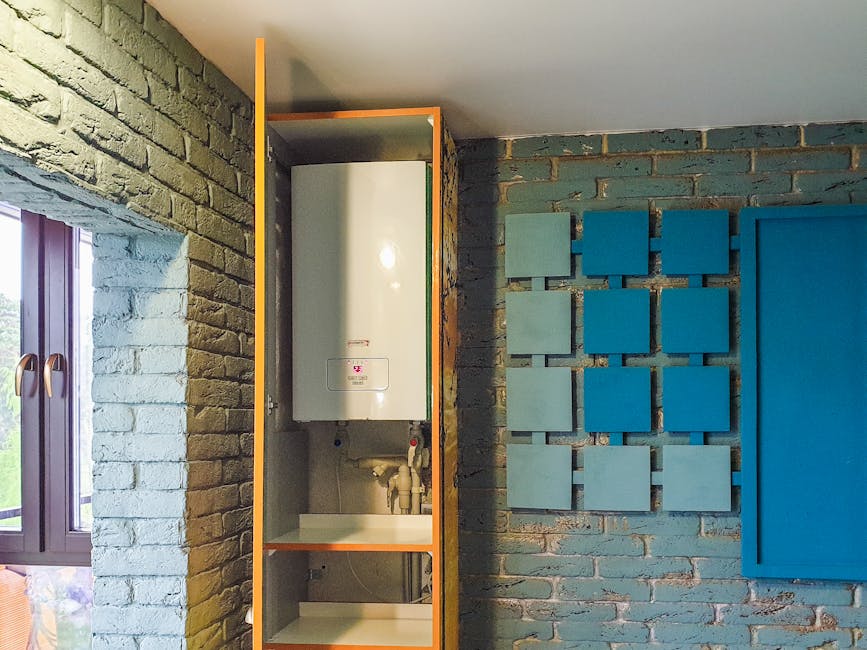
A traditional 50-gallon water heater is a giant metal cylinder that takes up about 10 to 15 square feet of floor space. A tankless unit is roughly the size of a carry-on suitcase and mounts directly to the wall. For homeowners in places like Charlestown or Brighton, where every square inch of basement storage matters, freeing up that floor space is a game-changer.
However, retrofitting an older home requires expertise. You can’t just hang a tankless unit on the wall and hope for the best. You have to consider the “retrofit challenges.” For example, if your home has an old chimney that was used for venting your previous water heater, we might need to seal that off and create a new vent path through the rim joist of your house.
Our team at Accurate Baker Elman has spent over 30 years navigating these exact scenarios. We know how to handle the plumbing and HVAC requirements of a water heater installation services in MA project while respecting the integrity of your home. Whether you are in Quincy or Wayland, we ensure that the transition to tankless is seamless and code-compliant.
Key Considerations Before You Buy
Before you pull the trigger on a new system, there are a few “homework” items to check off. Are tankless water heaters worth it for you? Ask yourself these questions:
- What is my peak hot water demand? Do you typically run the shower and the laundry at the same time? Count up the fixtures you use simultaneously to determine the GPM you need.
- What is the “temperature rise” required? In Massachusetts, we assume a winter groundwater temperature of around 40°F. If you want 120°F water, your unit needs to be capable of an 80-degree “rise” at your required flow rate.
- Are there rebates available? This is a big one! Because tankless units are so efficient, they often qualify for Energy Star rebates or local utility incentives. In some cases, you can even claim federal tax credits of up to $2,000 for high-efficiency upgrades. These incentives can significantly lower the effective cost of the unit.
- How is my water quality? If you have hard water, you should consider installing a water softener alongside your tankless heater to protect your investment.
When you work with trusted plumbing services in MA, we handle the “sizing” math for you. We look at your household habits and your home’s infrastructure to recommend a unit that won’t leave you shivering in a lukewarm shower on a Tuesday morning.
The Verdict: When to Invest in Tankless Technology
So, let’s get down to the final verdict. Are tankless water heaters worth it?
They are worth it if:
- You plan to stay in your home for at least 10–15 years.
- You have a small household or can afford a properly sized high-output unit.
- You are tired of running out of hot water during back-to-back showers.
- You want to reclaim floor space in your basement or utility room.
- You are environmentally conscious and want to reduce your carbon footprint.
You might want to stick with a tank if:
- You are on a very tight budget and need an emergency replacement today.
- You have a massive household with five people showering at 7:00 AM.
- You plan to sell your home in the next year or two.
- Your home’s electrical or gas infrastructure would require prohibitively expensive upgrades.
At Accurate Baker Elman, we pride ourselves on being honest with our neighbors in Franklin, Needham, and throughout the region. We aren’t here to sell you the most expensive gadget on the market; we’re here to find the solution that fits your life. With over 30 years of experience and our status as a Mitsubishi Electric Elite Diamond Contractor, we bring a level of technical expertise that ensures your home comfort is in good hands.
If you’re ready to stop paying to heat water you aren’t using, or if you’re just tired of that old tank taking up half your laundry room, we can help. You can find more info about tankless water heater services on our website or give us a call to discuss your specific needs.
Whether it’s a cold winter night in Lexington or a humid summer afternoon in Easton, you deserve a hot water system that is as reliable as it is efficient. Tankless technology has come a long way, and for many Massachusetts families, it truly is the smartest way to heat your home’s water for the next 20 years.