
Why Hot Water Unit Replacement Matters for Massachusetts Homeowners
Hot water unit replacement becomes necessary when your water heater reaches the end of its 8-12 year lifespan, starts leaking, or fails to provide consistent hot water. Whether you’re facing an emergency or planning proactively, understanding the replacement process helps you make informed decisions, avoid costly mistakes, and maximize long-term savings through energy-efficient upgrades.
Quick Answer: When to Replace Your Water Heater
- Age: Your unit is 10+ years old
- Leaks: Visible water pooling around the base
- Performance: Inconsistent hot water or rusty discoloration
- Noise: Rumbling or banging sounds indicating sediment buildup
- Cost: Rising energy bills from decreased efficiency
Often overlooked in a basement or utility closet, a failing water heater has an immediate impact. Suddenly your morning shower runs cold, your dishwasher struggles, and you’re facing the stress of an emergency replacement with limited time to research options.
Proactive replacement is always better than emergency replacement. When you plan ahead, you can compare models, secure rebates and tax credits, choose the most efficient system for your needs, and schedule installation at your convenience. Emergency replacements often mean settling for whatever’s in stock and paying premium rates for urgent service.
Massachusetts homeowners face unique considerations, from harsh winters that strain water heaters to state building codes that require proper permitting and professional installation. This guide walks you through the entire replacement process—from recognizing warning signs to selecting the right unit, understanding costs, and ensuring safe, code-compliant installation.
Is It Time for a Replacement? Key Signs Your Water Heater is Failing
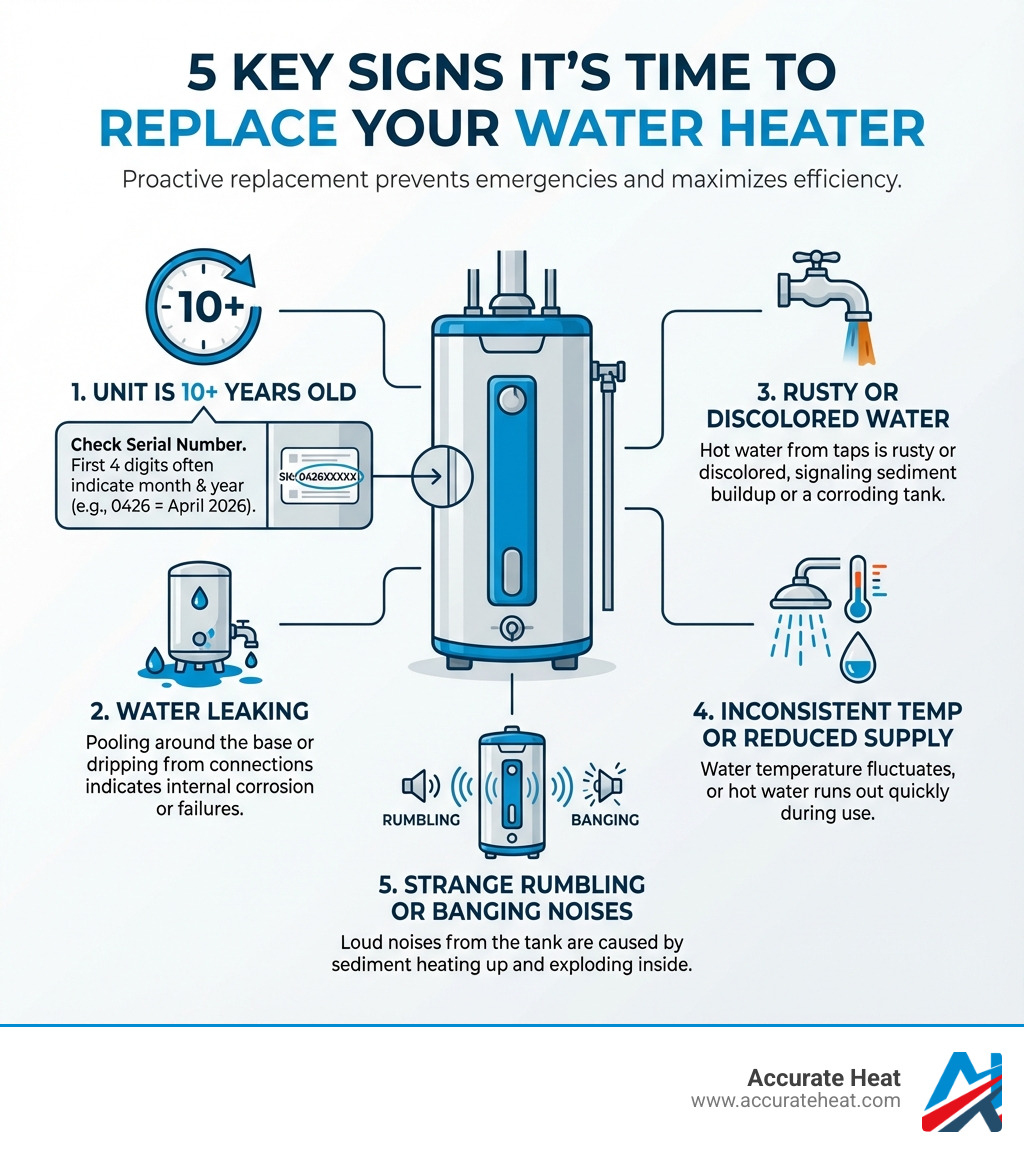
A cold shower on a chilly Massachusetts morning is a rude awakening. Your water heater works hard, but it has a lifespan of 8 to 12 years. Ignoring the warning signs of failure can lead to a messy and costly emergency. If your unit is approaching or has surpassed this age, it’s time to start planning for a hot water unit replacement.
Beyond age, there are several common red flags that signal your water heater is struggling or nearing its end. These include:
- Inconsistent Hot Water: Are your showers getting shorter and colder? Does the hot water run out faster than it used to? This could indicate a failing heating element or significant sediment buildup reducing the tank’s effective capacity.
- Strange Noises: Hearing rumbling, banging, or popping sounds from your tank? That’s often the sound of sediment buildup at the bottom of the tank. As water heats, it jostles these mineral deposits, making noise and reducing efficiency. Over time, this can damage the tank.
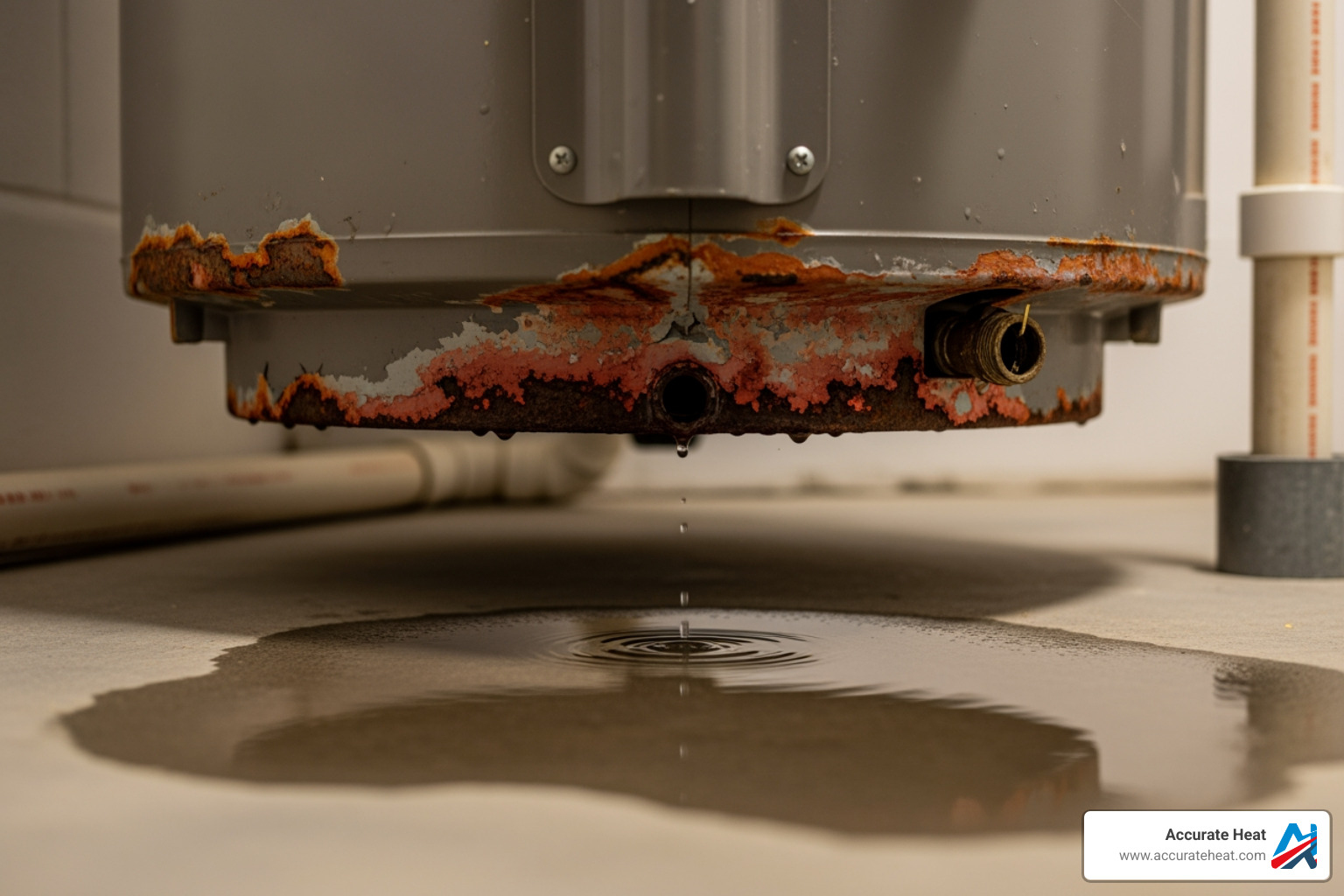
- Leaks and Moisture: A small puddle around the base of your water heater is rarely good news. Visible water leaking from joints, seals, or especially the tank itself, is a critical sign. A slow drip, often accompanied by rusty water, usually means the steel tank has corroded through—and that’s an irreparable problem.
- Rusty Water: If you turn on your hot water tap and see rusty or discolored water, it could mean your water heater’s internal tank is corroding. While sometimes it’s just rusty pipes, if it’s only happening with hot water, the water heater is the likely culprit.
- Visible Corrosion: Beyond rust in your water, inspect the outside of the tank and connections for any signs of corrosion. This can weaken the tank and lead to leaks.
When you spot these signs, it’s time to act. Proactive replacement allows you to choose the best new unit, schedule installation at your convenience, and avoid the stress of a sudden failure. Regular plumbing maintenance, as discussed in our guide Why Regular Plumbing Maintenance is a Must in Massachusetts, can help you catch these issues early.
Determining Your Water Heater’s Age
Knowing your water heater’s age is the first step in proactive planning. Most units have an average lifespan of 8 to 12 years. If yours is already 10 years old, it’s a good idea to start budgeting and researching for a hot water unit replacement.
To find your water heater’s age, we typically look at the serial number. Manufacturers encode the date of manufacture within this number, though the format varies by brand. You can usually find the serial number on a sticker or metal plate on the side of the tank.
- Serial Number Location: Usually near the top or side of the tank.
- Manufacturer Codes: The first few digits or letters often indicate the year and sometimes the month. For example, “0810” might mean October 2008, or “F08” could mean June (F being the 6th letter) 2008.
- Online Lookup Tools: Many manufacturers, like A. O. Smith, Bradford White, and Rheem, offer online tools or dating charts on their websites where you can input your serial number to find the exact manufacturing date. Resources like the International Association of Certified Home Inspectors (InterNACHI) also provide general guides.
Once you know the age, you can decide whether to plan a proactive hot water unit replacement or wait for an emergency. We always recommend the proactive approach to save you stress, time, and money in the long run.
Common Red Flags and Performance Issues
Beyond age, specific performance issues can be clear indicators that your water heater is waving a white flag:
- Reduced Hot Water Supply: If your hot showers are suddenly shorter, it’s a sign of declining efficiency, possibly due to sediment buildup or failing heating elements.
- Fluctuating Temperatures: Inconsistent temperatures can be a sign of a faulty thermostat or heating element.
- Sediment Buildup: As mentioned, rumbling noises are often caused by sediment, which reduces efficiency and can wear out the tank.
- Anode Rod Failure: The anode rod is your water heater’s unsung hero, sacrificing itself to attract corrosive elements in the water, protecting the tank. If it fails or is depleted, the tank itself becomes vulnerable to rust and corrosion, eventually leading to leaks.
- Increased Energy Consumption: Have your utility bills mysteriously risen without a change in usage? An inefficient water heater could be the culprit. As components age and sediment builds up, your unit has to work harder and longer to heat water, using more energy and costing you more money.
Choosing Your New Water Heater: Types, Fuels, and Sizing
Deciding on a new water heater isn’t just about picking the first one you see. It’s an opportunity to upgrade your home’s efficiency, save on long-term costs, and ensure your family has a reliable supply of hot water for years to come. When considering hot water unit replacement, we focus on energy efficiency, your household’s specific needs, and the potential for long-term savings. For a comprehensive overview, you might find a Water Heater Buying Guide helpful.
Choosing the Right Type for Your Hot Water Unit Replacement
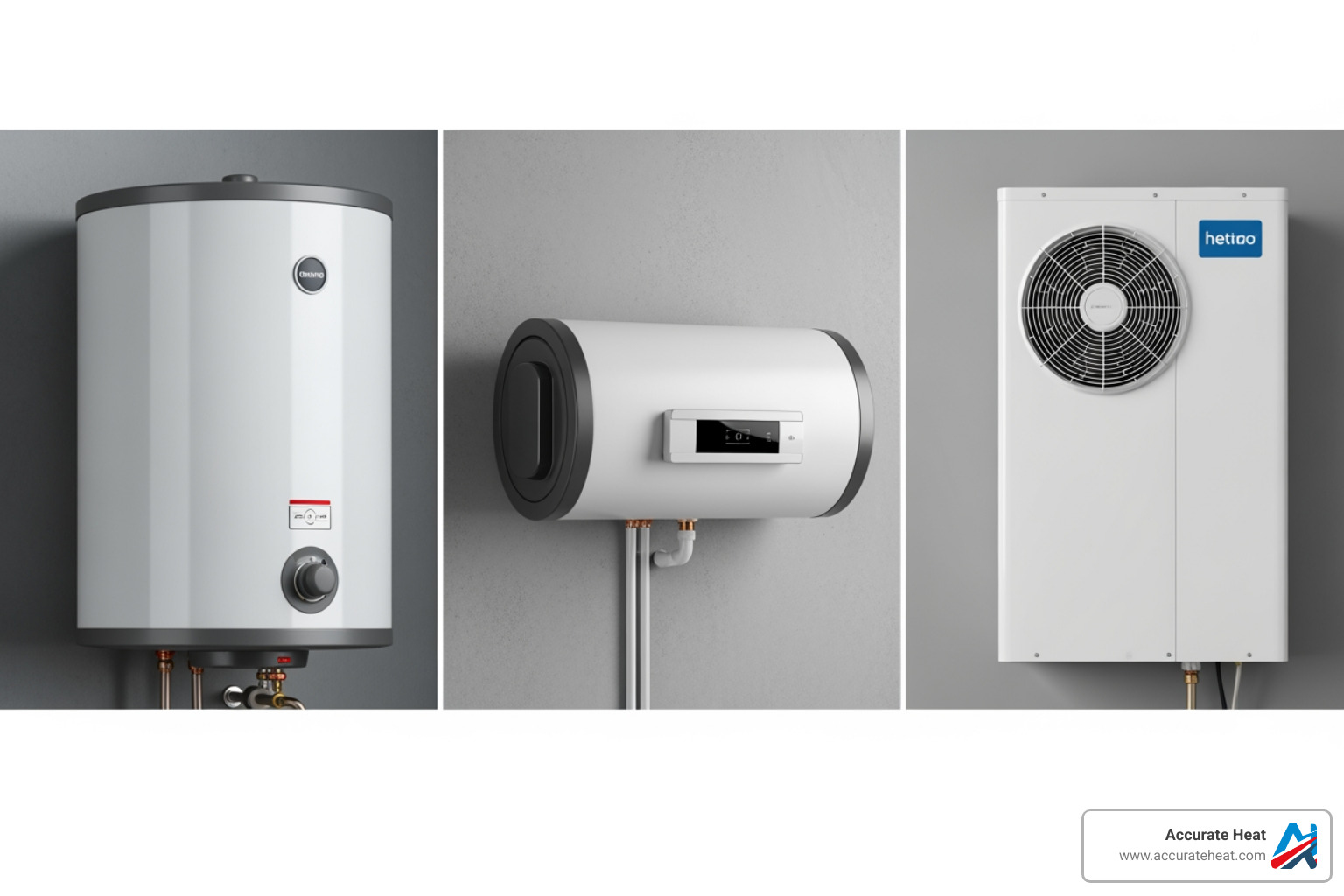
The world of water heaters has evolved! There are several types, each with its own benefits and considerations. Let’s break down the most common options for your hot water unit replacement:
- Conventional Storage Tank Water Heaters: These are the most common type, storing and heating a set amount of water in an insulated tank. They are generally less expensive upfront but continuously use energy to keep the water hot, even when not in use. They come in various capacities, typically from 40 to 80 gallons, suitable for different household sizes. An 80-gallon tank, for instance, provides double the hot water ready compared to a 40-gallon option, making it ideal for medium to large families. Upgrading to a more efficient conventional model can still reduce energy bills by about 7%.
- On-Demand (Tankless) Water Heaters: These innovative units heat water only when you need it, providing a continuous supply. They save space, eliminate the risk of tank leaks (because there’s no tank!), and can save up to 30% on energy costs by not heating water constantly. While the upfront cost is higher, their longer lifespan (with proper maintenance) and energy savings can make them a wise long-term investment. For more detailed information, check out our Tankless Water Heater Services.
- Heat Pump (Hybrid) Water Heaters: These are the energy-saving superstars! Also known as hybrid water heaters, they combine a traditional tank with a heat pump unit, usually on top. They pull heat from the surrounding air to warm the water, making them incredibly efficient. Heat pump models are ‘conservatively’ at least twice as efficient as traditional electric water heaters, with the most efficient ones using less than a quarter of the energy of an electric resistance water heater. An ENERGY STAR certified heat pump water heater can save a household of four over $330 per year on electric bills compared to a standard electric unit, and more than $3,530 over its lifetime. They can help save up to 60% on energy costs. Their upfront cost is higher ($2,500-$5,000 installed, according to Home Depot estimates), but federal tax credits and rebates often offset this.
- Solar Water Heaters: These systems use solar panels to collect sunlight and heat water, offering exceptional energy efficiency and significant long-term savings, especially in sunnier climates. While Massachusetts isn’t the desert, solar options can still be effective, often used as a pre-heater for a conventional system.
Here’s a quick comparison:
| Feature | Conventional Tank Water Heater | Tankless Water Heater | Heat Pump (Hybrid) Water Heater |
|---|---|---|---|
| Upfront Cost | Lower | Higher | Higher |
| Lifespan | 8-12 years | 15-20+ years | 10-15 years |
| Energy Savings | ~7% (with upgrade) | Up to 30% | Up to 60-70% |
| Space Needs | Large footprint | Compact, wall-mounted | Large footprint (taller) |
| Hot Water | Limited by tank size | Continuous, on-demand | Limited by tank size |
Sizing Your Unit Correctly
Choosing the right size for your new water heater is crucial for both comfort and efficiency. An undersized unit means cold showers, while an oversized one wastes energy. We consider a few key metrics:
- First-Hour Rating (FHR) for Storage Tanks: This is the number of gallons of hot water a storage tank water heater can deliver in an hour, starting with a full tank of hot water. You’ll find this rating on the unit’s EnergyGuide label. To determine the right FHR, we’ll assess your household’s peak hour demand – the maximum amount of hot water you typically use during a single hour (e.g., multiple showers, dishwasher, laundry all at once). For example, a family of four might use over 100 gallons of hot water daily.
- Gallons Per Minute (GPM) for Tankless Units: For tankless water heaters, we focus on the GPM rating, which indicates how much hot water the unit can deliver continuously. We calculate this by adding up the flow rates of all hot water fixtures you might use simultaneously. For instance, a shower might use 2.5 GPM, and a faucet 0.75 GPM. If you often run both at the same time, you’d need a unit that can handle at least 3.25 GPM.
- Household Size and Habits: Naturally, a single person has different needs than a family of five. We’ll consider the number of people, how many bathrooms you have, and your daily hot water habits (e.g., frequency of laundry, use of large tubs).
- Low-Flow Fixtures: If you have low-flow showerheads and faucets, your hot water demand might be lower, allowing for a smaller or more efficient unit.
A properly sized water heater will meet your household’s hot water needs while operating more efficiently. We can help you use tools and calculations, like those outlined by the Department of Energy on Sizing a New Water Heater, to get it just right.
Understanding Fuel Sources
The fuel type your water heater uses significantly impacts its operating costs, efficiency, and even installation requirements. In Massachusetts, the most common fuel types we encounter for hot water unit replacement are:
- Natural Gas: Widely available in many parts of Massachusetts, natural gas water heaters typically heat water faster than electric models. They are often a cost-effective choice where gas lines are already present.
- Propane: For homes without access to natural gas lines, propane is a common alternative. It functions similarly to natural gas in terms of heating speed but requires a storage tank on your property.
- Electric: Electric water heaters are widely available and often have lower upfront costs. However, electricity can be more expensive than natural gas or propane, leading to higher operating costs. This is where high-efficiency electric options like heat pump water heaters shine, as they can drastically reduce electricity consumption.
- Solar: While less common as a primary sole heat source in Massachusetts, solar water heaters can significantly supplement your hot water needs, especially during sunnier months, reducing reliance on conventional fuels.
- Geothermal: Though less common for dedicated water heating, homes with geothermal heat pump systems can often integrate water heating, leveraging the earth’s stable temperatures for highly efficient operation.
When considering a different fuel type during your hot water unit replacement, be aware of potential conversion costs. This might include running new gas lines, adding a dedicated electrical breaker, or installing new venting. Sometimes, even if local natural gas costs are lower, an electric heat pump water heater might offer lower overall energy costs due to its superior efficiency. We can help you compare fuel costs and efficiency for your specific situation. You can find more comprehensive details on different fuel types from the Department of Energy.
The Hot Water Unit Replacement Process: Installation and Safety
A hot water unit replacement isn’t just about swapping out an old appliance for a new one. It involves intricate plumbing, potentially gas lines or high-voltage electrical work, and adherence to local Massachusetts building codes. While some homeowners might be tempted by a DIY approach, we strongly recommend professional installation to ensure safety, efficiency, and compliance.
Why professional installation? Improper installation of gas water heaters can lead to dangerous gas leaks, carbon monoxide exposure, or even explosions. Electrical water heaters pose risks of electrical shock or fire if wiring isn’t handled correctly. Poorly installed pressure relief valves or venting systems can result in excessive pressure buildup, potentially causing the tank to rupture. And of course, plumbing connections must be sealed correctly to prevent leaks that could lead to water damage or mold growth. For reliable service, you can always count on our Trusted Plumbing Services in MA.
Installation Requirements: Tank vs. Tankless
The installation process for a hot water unit replacement varies significantly depending on the type of unit you choose:
- Conventional Storage Tank Water Heaters: These are generally the most straightforward to replace, especially if you’re swapping a similar model. However, newer, more efficient tanks may be slightly wider or taller due to increased insulation, so space considerations are still important. They require proper venting for gas models and appropriate electrical connections for electric ones.
- Tankless Water Heaters: Because they heat water on demand at high rates, tankless units often require larger gas lines or dedicated high-amperage electrical circuits. Venting requirements can also be more stringent, sometimes requiring specialized direct-venting systems. While they save space with no tank, the supporting infrastructure can be more complex and costly to install if not already present.
- Heat Pump Water Heaters: These units are typically taller than conventional tanks and require more surrounding air space (often 700-1000 cubic feet) to operate efficiently, as they extract heat from the air. They also produce condensate (water) as a byproduct of their operation, necessitating a condensate drain or pump. Electrical requirements are usually 240V.
In all cases, ensuring adequate space, proper venting, and correct utility connections are paramount for safe and efficient operation.
Safety, Permits, and Massachusetts Building Codes
Safety is our top priority during any hot water unit replacement. Here are critical considerations:
- Temperature & Pressure (T&P) Relief Valve: This is a non-negotiable safety device that prevents the tank from exploding if pressure or temperature gets too high. It must be properly installed with a discharge pipe directed to a safe location, free of obstructions.
- Thermal Expansion Tanks: Many Massachusetts municipalities require a thermal expansion tank, especially in closed-loop plumbing systems. This tank absorbs excess water pressure created as water heats up, protecting your water heater and plumbing system from damage.
- Proper Ventilation and Carbon Monoxide Risks: For gas and propane water heaters, proper ventilation is crucial to safely expel combustion byproducts, including dangerous carbon monoxide (CO). We always check for backdrafting to ensure fumes are venting correctly. Carbon monoxide detectors are a must in any home with combustion appliances.
- Electrical Safety: Electric water heaters require dedicated circuits with appropriate amperage. Incorrect wiring can lead to electrical fires or shocks.
- Local Permits and Building Codes: In Massachusetts, almost all hot water unit replacement projects require a permit from your local building department. This ensures that the installation meets the state’s plumbing and electrical codes, which are designed for your safety and the long-term integrity of your home. We handle all necessary permits and ensure our work is up to code. Our comprehensive plumbing services in MA always adhere to these crucial regulations.
Budgeting for Your Hot Water Unit Replacement: Costs & Savings
The cost of a hot water unit replacement involves more than just the price tag of the new unit. It’s an investment in your home’s comfort, efficiency, and safety. While there are upfront costs, we often find that the long-term energy savings and environmental benefits make upgrading to an efficient model a smart financial decision.
Upfront Costs vs. Long-Term Value
When budgeting for a hot water unit replacement, consider these components:
- Unit Price:
- Conventional Tank: Typically the least expensive, ranging from $150 to $400 for the unit itself.
- Tankless: Higher upfront cost, often $1,000 to $3,000 for the unit.
- Heat Pump (Hybrid): The most expensive upfront, with units costing $1,449 to $1,950, and total installed costs estimated between $2,500 and $5,000.
- Installation Labor Costs: This can vary significantly based on the complexity of the job. A straightforward swap of a conventional tank might cost $200 to $450 in labor. However, converting from a tank to a tankless or heat pump unit, or changing fuel types, will involve additional labor for gas line upgrades, electrical circuit installation, new venting, or condensate drains. Plumber hourly rates typically range from $45 to $65.
- Additional Materials/Permits: We also factor in the cost of necessary piping, fittings, safety devices (like thermal expansion tanks), and the required local permits.
- Warranty Considerations: Newer, high-efficiency units often come with longer warranties, protecting your investment for more years.
While the upfront cost of an energy-efficient unit might seem higher, we encourage you to look at the long-term value. The savings on your utility bills, combined with potential rebates and tax credits, often lead to a quicker payback period and significant savings over the unit’s lifespan.
Open uping Savings with Energy-Efficient Models
This is where the real magic happens! Upgrading to an energy-efficient water heater, especially an ENERGY STAR certified model, can dramatically reduce your household’s energy consumption and utility bills.
- Heat Pump Water Heater Savings: An ENERGY STAR certified electric heat pump water heater (HPWH) is a game-changer. It uses new technology and can save a household of four more than $330 per year on its electric bills compared to a standard electric water heater. Over its lifetime, those savings can exceed $3,530! These models use about 70 percent less energy than a standard electric water heater.
- Tankless Energy Reduction: Switching to a tankless unit can save up to 30% on energy costs because it only heats water when needed.
- Hybrid Water Heaters: These can help save up to 60% on energy costs.
- Conventional Upgrades: Even upgrading to a newer, more efficient conventional water heater can reduce your energy bills by about 7%.
Rebates and Incentives: The good news for Massachusetts homeowners is that there are often financial incentives available for choosing energy-efficient models:
- Federal Tax Credits: Thanks to the 2022 Inflation Reduction Act, eligible heat pump water heaters can qualify for a federal tax credit of 30 percent of the project’s costs, up to $2,000. This credit is available through December 31, 2032.
- Local and Utility Rebates: We always recommend checking with local Massachusetts utilities (like Mass Save programs) for available rebates. These programs often provide incentives for installing ENERGY STAR certified water heaters, further reducing your upfront costs.
Beyond your wallet, choosing a more energy-efficient water heater has significant environmental benefits. If all residential electric water heaters less than 55 gallons sold in the United States were ENERGY STAR certified HPWHs, the energy cost savings would grow to almost $12 billion each year, and 140 billion pounds of annual greenhouse gas emissions would be prevented. That’s equivalent to taking over 13 million vehicles off the road! It’s a great way to contribute to Tips for a Greener Plumbing System.
Frequently Asked Questions about Water Heater Replacement
How often should I replace my water heater?
Most conventional tank water heaters have a lifespan of 8 to 12 years. If your unit is over 10 years old and showing signs of failure, it’s wise to plan for a replacement to avoid an emergency.
Can I install a new water heater myself?
While it’s possible for those with advanced plumbing and electrical skills, professional installation is highly recommended. Improper installation can lead to dangerous gas leaks, water damage, or void the manufacturer’s warranty.
Are energy-efficient water heaters worth the extra cost?
Yes. Models like heat pump water heaters can save a household of four over $330 annually on electricity bills. Combined with federal tax credits and local rebates, the higher upfront cost is often recovered quickly through significant long-term energy savings.
Your Partner for a Seamless Water Heater Replacement
Navigating hot water unit replacement can feel overwhelming, but it doesn’t have to be. From recognizing the subtle signs of a failing unit to choosing the perfect energy-efficient model and ensuring a safe, code-compliant installation, we’re here to make the process as smooth and stress-free as possible.
Proactive replacement saves you from the headache of emergency repairs and allows you to carefully select a unit that aligns with your household’s needs and budget. Choosing the right unit means enjoying consistent hot water, lower utility bills, and the peace of mind that comes with a reliable system.
For expert guidance and reliable hot water unit replacement in Franklin and across Massachusetts, trust the experienced team at Accurate Heat. With over 30 years of experience, we offer transparent advice, professional installation, and 24/7 emergency service to ensure your home comfort.
Ready to upgrade your hot water experience? Schedule Your Water Heater Installation in MA with us today!