What Does Ducted Heating and Cooling Installation Actually Cost?
Ducted heating and cooling installation cost is one of the biggest questions homeowners face when upgrading their home comfort system — and the answer depends on more factors than most people expect.
Here’s a quick snapshot of typical total costs:
| Scenario | Estimated Cost Range |
|---|---|
| Replacing units only (existing ductwork) | $5,000 – $11,000 |
| Replacing units + ductwork | $7,000 – $16,000 |
| Full install in new home | $7,000 – $16,000 |
| Full install with new ductwork (heat pump) | $9,000 – $20,000 |
| Premium system with zoning and upgrades | $20,000 – $25,000+ |
Costs vary based on home size, system type, ductwork condition, and local labor rates.
For Massachusetts homeowners, these numbers can run slightly higher than national averages — local labor markets, permit requirements, and the demands of cold New England winters all play a role.
The good news? Understanding what drives the price puts you in control. Whether you’re replacing an aging furnace, adding central cooling for the first time, or upgrading to a high-efficiency heat pump, knowing the cost breakdown helps you ask better questions, spot fair quotes, and avoid surprises.
This guide walks you through every piece of the puzzle — from equipment and labor to ductwork, permits, and rebates.
Breaking Down the Ducted Heating and Cooling Installation Cost
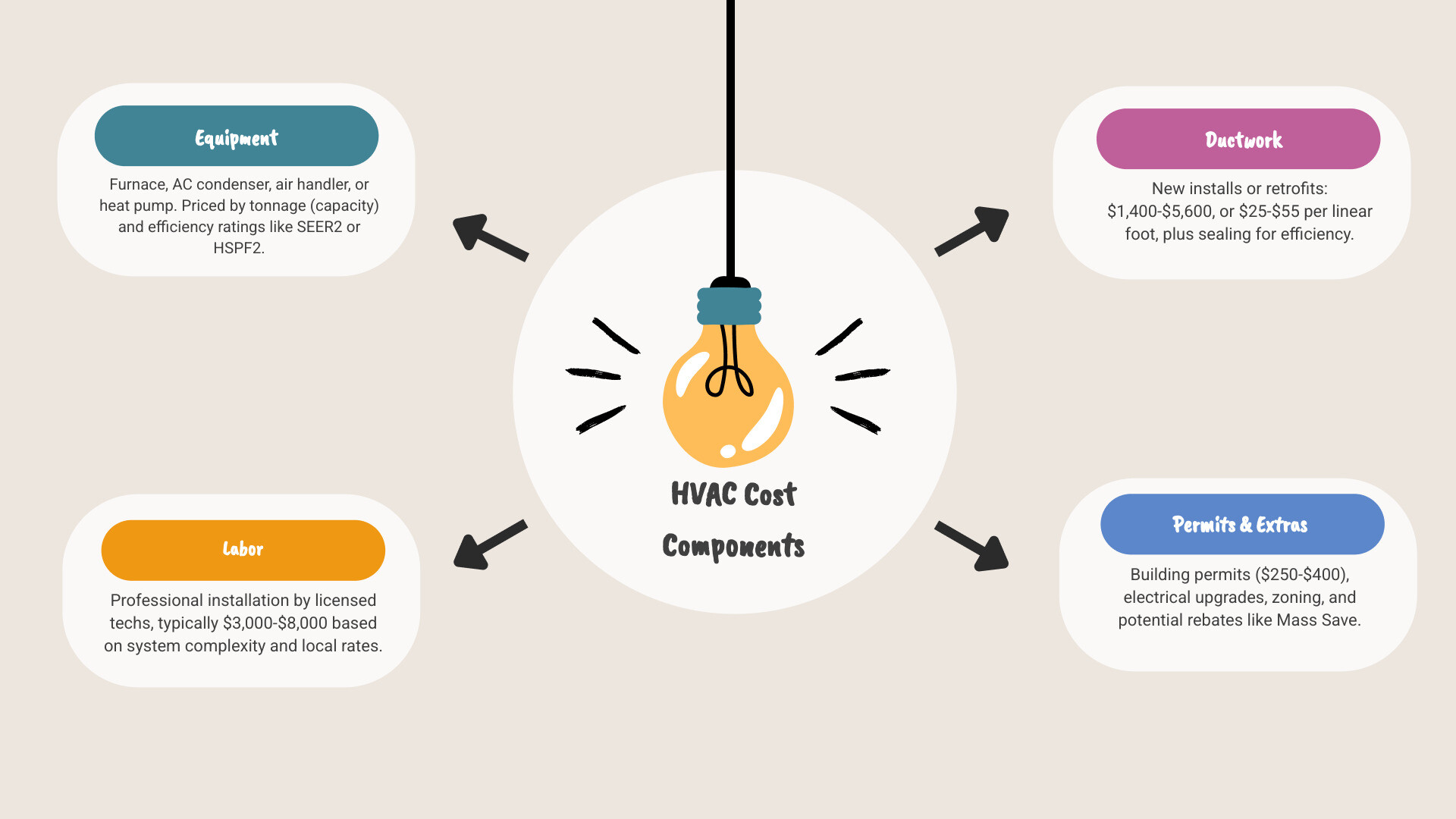
When we talk about the ducted heating and cooling installation cost, we aren’t just talking about the shiny metal box that sits in your basement or on your lawn. A complete HVAC project is a complex puzzle made up of several expensive pieces. At Accurate Baker Elman, we believe in total transparency, so let’s look at what actually goes into that final number on your estimate.
First, there is the equipment itself. This includes the furnace, air handler, condenser, or heat pump. These units are priced based on their capacity (measured in tons) and their efficiency ratings. A high-efficiency unit will have a higher sticker price than a standard model, but it will save you significantly on monthly utility bills.
Labor is the next major component. In Massachusetts, we have some of the most skilled tradespeople in the country, but that expertise comes with a higher hourly rate compared to other regions. A standard installation can take anywhere from 8 to 40 labor hours depending on the complexity. If we are just swapping out an old unit for a new one, it might take a day. If we are running new ducts through an 18th-century home in Medway or Norfolk, it’s a much longer project.

Don’t forget the “hidden” costs like permits and inspections. In towns like Franklin and Bellingham, local building codes require specific permits to ensure the electrical and mechanical work is safe. These fees are usually a percentage of the total project cost or a flat fee per thousand dollars spent. Finally, there are the accessories: smart thermostats, air purifiers, and humidifiers, which add to the total comfort and the total cost.
Average Ducted Heating and Cooling Installation Cost by System Type
The type of “engine” you choose for your home comfort system is the biggest variable in your budget.
- Central Air Conditioning: If you already have a furnace and ductwork, adding central AC is often the most straightforward path. The cost depends heavily on the SEER2 (Seasonal Energy Efficiency Ratio) rating you choose.
- Gas Furnaces: These remain a staple in Massachusetts. Modern units are incredibly efficient, often reaching 96% to 98% AFUE (Annual Fuel Utilization Efficiency). This means almost every dollar you spend on gas is turned directly into heat for your home.
- Air-Source Heat Pumps: These are becoming the gold standard for home comfort. They provide both heating and cooling by moving heat rather than creating it. While the upfront investment is higher, the efficiency is unmatched. You can learn more about how these systems work on our heat pumps page.
- Hybrid Systems: Also known as “dual-fuel,” these systems pair an electric heat pump with a gas furnace backup. This is a popular choice in our climate because the heat pump handles the moderate days, and the gas furnace kicks in during those sub-zero nights in Hopkinton or Holliston.
For those interested in the science behind these systems, research on heat pump efficiency shows that modern cold-climate models can maintain their capacity even when temperatures drop significantly, making them a viable primary heat source for Massachusetts.
How Ductwork Impacts Your Total Investment
Ductwork is the “respiratory system” of your home. If the ducts are undersized, leaky, or poorly designed, even the most expensive HVAC unit won’t keep you comfortable.
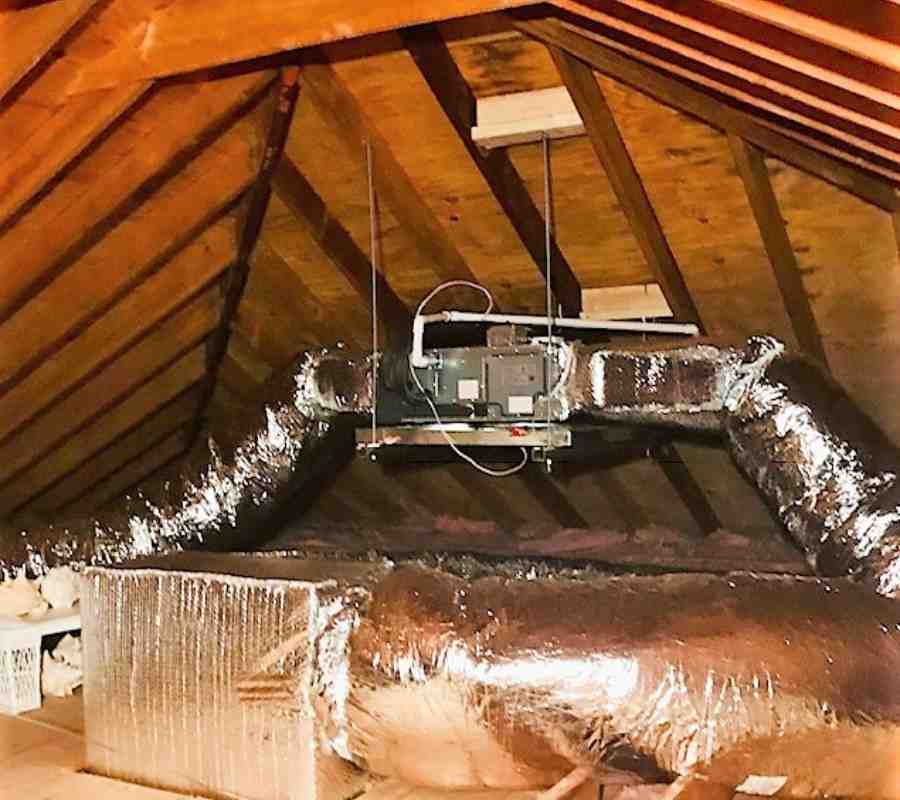
If you are lucky enough to have existing ductwork that is in good shape, your ducted heating and cooling installation cost will be significantly lower. However, if we are retrofitting a home that previously used boilers or baseboard heat, we have to factor in the cost of design and installation. This involves cutting through walls, floors, and ceilings to place the registers and returns.
Ductwork is often priced by the linear foot or by the “ton” of HVAC capacity. For a typical 3-ton system, the ductwork alone can represent a significant portion of the budget. We also emphasize duct sealing. Leaky ducts can waste up to 30% of your energy. By sealing them with mastic or specialized tape, we ensure the air you pay to heat or cool actually reaches your bedroom. For a full list of how we handle these complex air delivery systems, check out our HVAC services.
Regional Factors and Massachusetts Permit Requirements
Living in Massachusetts means dealing with specific regional factors that influence pricing. Our local labor market is competitive, and our building codes are among the strictest in the nation. This is for your safety, but it does mean that professional installation in towns like Foxboro or Walpole requires meticulous attention to detail and proper permitting.
One of the biggest advantages for our customers is the availability of Mass Save® rebates. These incentives can drastically reduce the net cost of high-efficiency systems, particularly heat pumps. We help our clients navigate these programs to ensure they get every dollar they are entitled to.
Furthermore, we must adhere to Energy Star efficiency standards, which dictate the minimum efficiency for new installs. If you’re planning a new furnace, you can see more details on the process at our furnace installation page.
Maximizing Value and Efficiency in Your HVAC Project
We often tell our neighbors in Needham and Newton that the cheapest quote is rarely the best value. A low-ball estimate often means the contractor is skipping critical steps like a Manual J Load Calculation. This is a mathematical process we use to determine exactly how much heating and cooling your specific home needs based on its insulation, window types, and square footage. An oversized system will “short cycle,” turning on and off too frequently, which wears out the parts and leaves your home humid.
Factors Influencing Ducted Heating and Cooling Installation Cost
Several variables can swing your estimate by thousands of dollars:
- System Tonnage: A 5-ton system for a large home in Wellesley will naturally cost more than a 2-ton system for a cozy cottage in Millis.
- Home Layout: Multi-story homes or homes with difficult-to-access crawl spaces and attics require more labor and specialized equipment.
- Electrical Panel Upgrades: Modern heat pumps and high-powered AC units may require more “juice” than your old electrical panel can provide. If you need a panel upgrade to 200 amps, that is an additional cost to factor in.
- SEER2 and HSPF2 Ratings: These are the efficiency scores for cooling and heating. The higher the number, the more the unit costs upfront, but the lower your monthly bills will be. We often find that a SEER2 of 16 to 18 provides the best “sweet spot” for Massachusetts homeowners. You can find more about these options on our AC installation services page.
When to Choose Ducted Over Ductless Systems
While we are a Mitsubishi Electric Elite Diamond Contractor and love ductless systems, they aren’t always the right fit for every home.
Ducted systems are often the superior choice if you already have the infrastructure in place. They offer whole-home air filtration and humidification that is easier to manage from a single point. Many homeowners also prefer the aesthetic of nearly invisible floor or ceiling registers compared to wall-mounted “heads” used in ductless setups.
However, if you have a home with no basement or attic access, or if you are adding a single sunroom, ductless might be the way to go. You can compare the two by visiting our ductless mini-split systems page.
Conclusion: Getting an Accurate Quote for Your Home
At Accurate Baker Elman, we’ve spent over 30 years helping our neighbors in Franklin, MA, and the surrounding towns stay comfortable. We know that a new HVAC system is a major investment, and we don’t take that lightly. Our licensed technicians provide honest, upfront pricing and 24/7 emergency service because we live in these communities too.
Whether you are in Canton, Easton, or Wayland, the best way to determine your specific ducted heating and cooling installation cost is to have an expert walk through your home. We look at your insulation, your existing ducts, and your electrical capacity to build a quote that is accurate—not just an estimate.
Ready to roll? Explore our heating installation services to see how we can help.