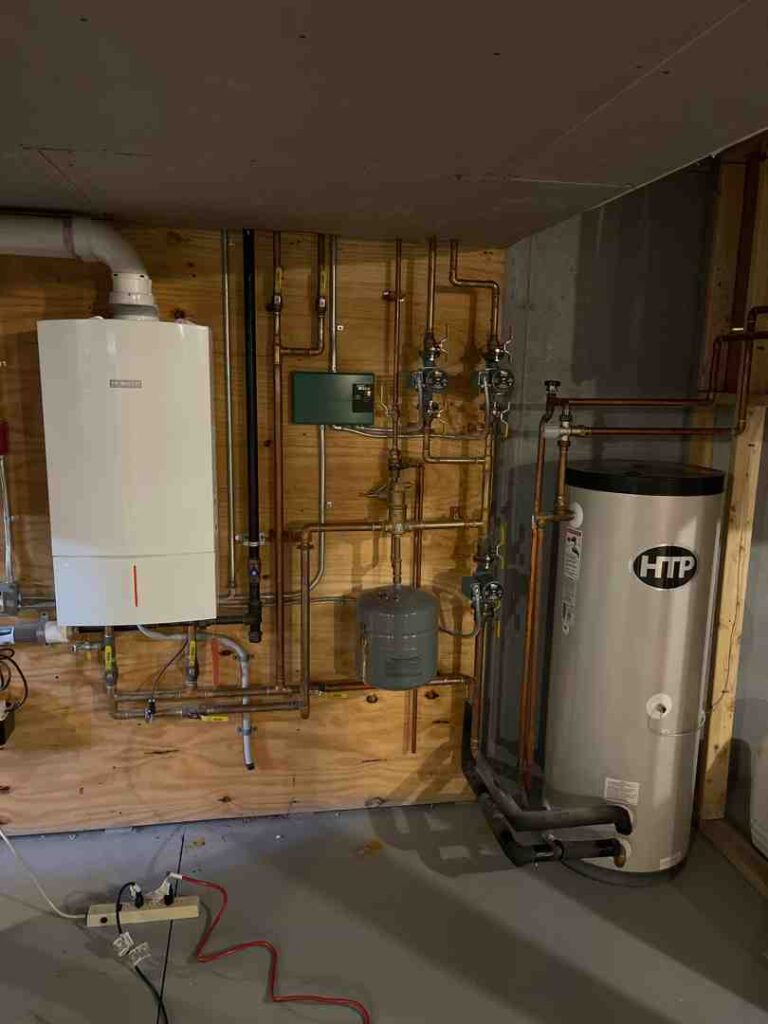
Understanding Continuous Hot Water Systems and Their Installation Investment
The continuous hot water system installation cost typically ranges from $2,500 to $5,500 for most Massachusetts homes, depending on the unit type, size, and installation complexity. Here’s what you can expect:
Quick Cost Breakdown:
- Unit Price: $800 – $2,500 (varies by brand, size, and efficiency)
- Professional Installation: $1,500 – $3,000 (labor and materials)
- Gas Models: Higher upfront cost but more efficient for larger households
- Electric Models: Lower initial cost, easier installation
- Basic Replacement: Around $1,000 (existing tankless unit, same location)
- New Installation or Upgrade: $2,000+ (switching from traditional tank)
If you’ve ever run out of hot water mid-shower or finded a leaking water heater tank flooding your basement, you’ve probably wondered about alternatives. That’s where continuous flow hot water systems come in.
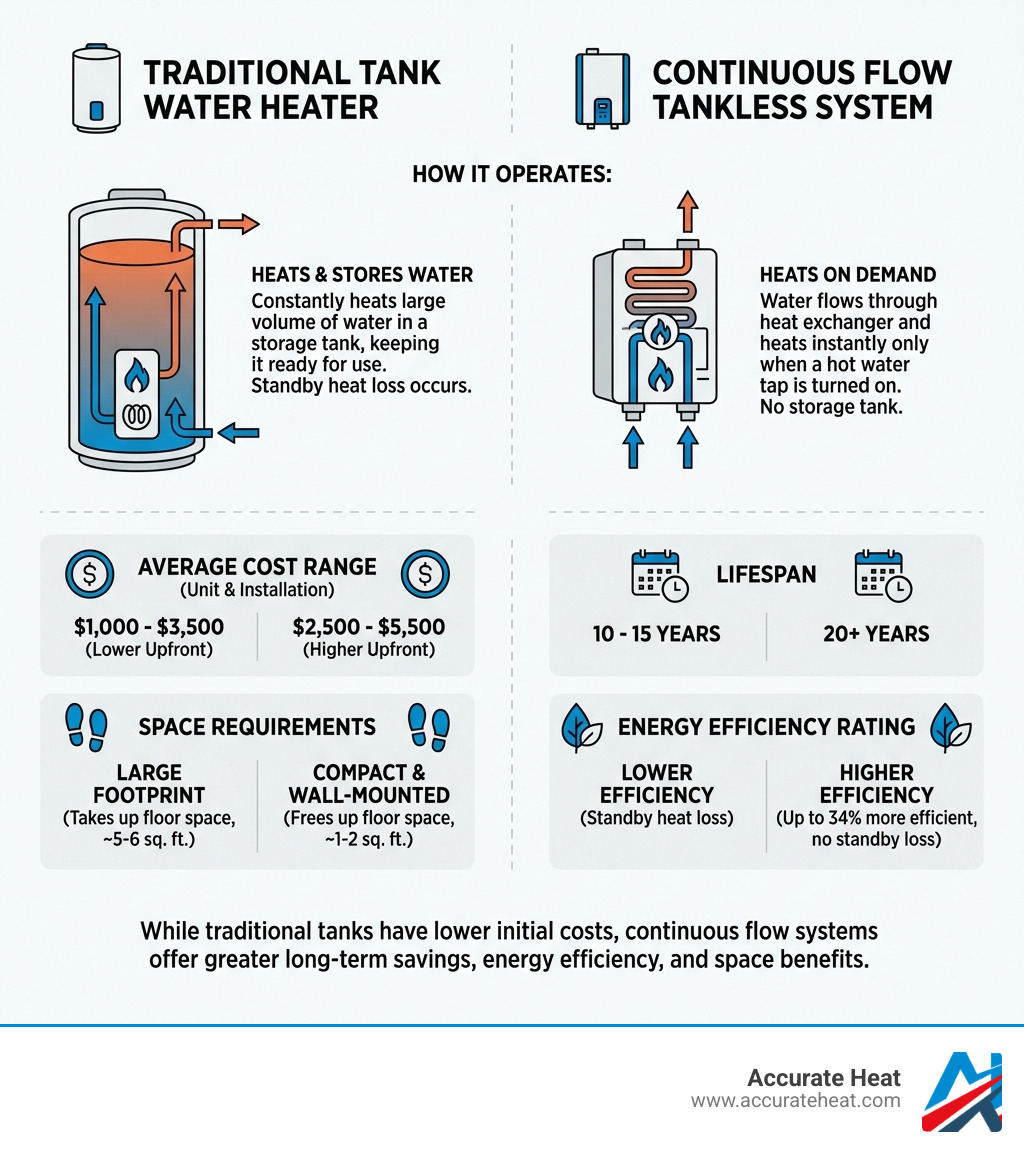
Also called tankless or on-demand water heaters, these systems heat water only when you need it. Cold water flows through a heat exchanger, gets heated instantly, and delivers hot water directly to your tap. No storage tank. No waiting. No running out.
The benefits are compelling: up to 34% more energy-efficient than traditional tanks, a lifespan of 20+ years (compared to 10-15 years for tanks), and they free up valuable space in your home. But the higher upfront cost often gives homeowners pause.
Understanding what drives these installation costs helps you budget wisely and choose the right system for your Massachusetts home—especially important during our harsh winters when reliable hot water isn’t just a convenience, it’s a necessity.
Understanding the Average Continuous Hot Water System Installation Cost
When we talk about the continuous hot water system installation cost, we’re looking at more than just the price tag of the unit itself. It’s a comprehensive investment that includes the equipment, labor, and any necessary modifications to your home’s existing plumbing or electrical systems.
Breaking Down the Continuous Hot Water System Installation Cost
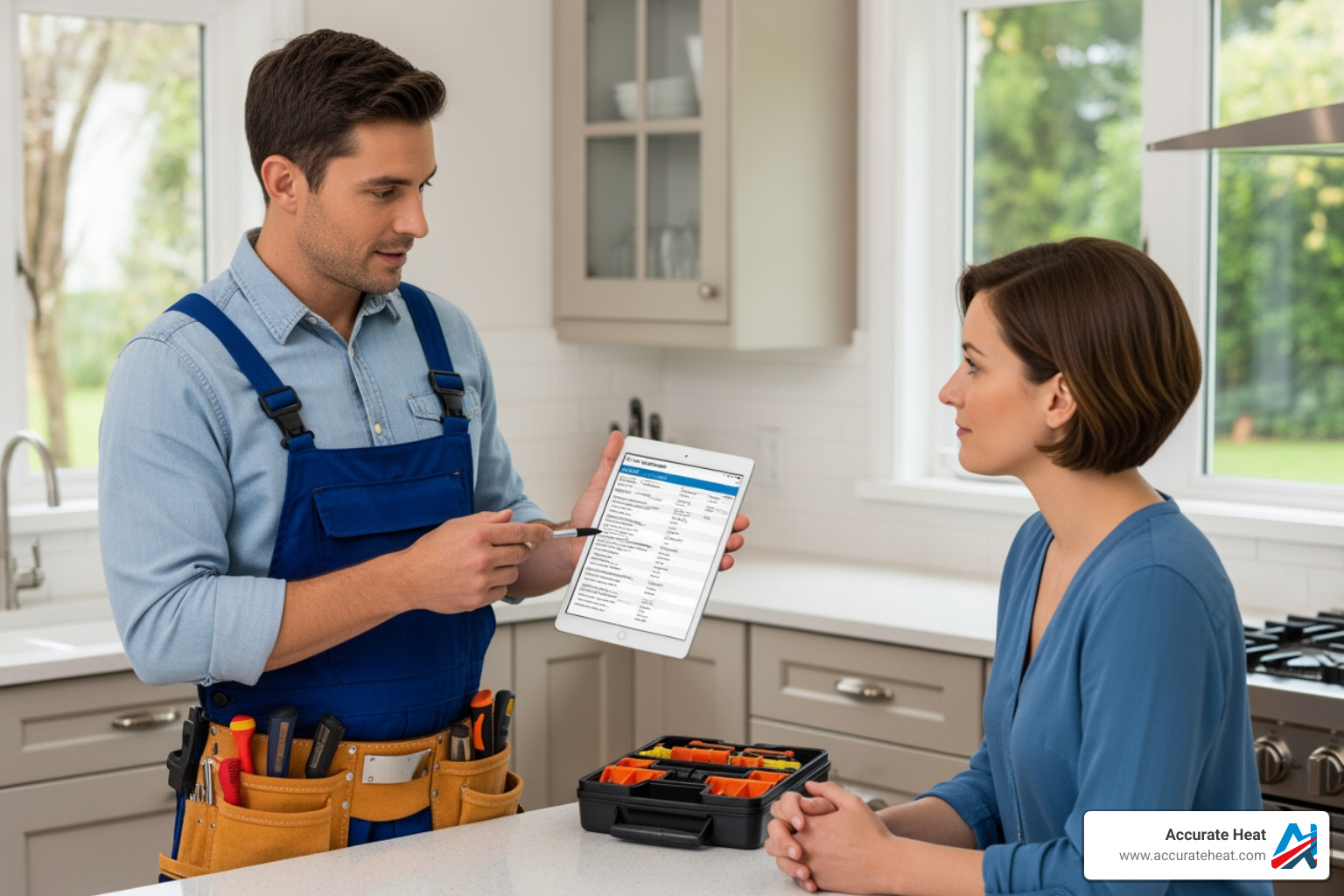
Let’s unpack the typical expenses involved in bringing endless hot water to your Franklin, MA home. The instant water heater unit price itself usually falls between $800 and $2,500. This range depends heavily on the brand, its size, and how energy-efficient it is.
However, the unit is only one piece of the puzzle. Professional installation by a licensed contractor typically adds another $1,500 to $3,000 to the total. This covers the labor, materials, and expertise required to ensure your system is installed safely and correctly.
So, when you combine these elements, the total average continuous hot water system installation cost in our Massachusetts service areas can range from $2,500 to $5,500. For basic projects, like replacing an existing tankless unit in the exact same spot, we might see costs closer to the lower end, around $1,000. But if you’re upgrading from a traditional tank system or installing a tankless unit in a bare space, expect the labor hours and associated costs to rise, potentially exceeding $2,000 just for installation.
High-end projects, especially those requiring significant gas line modifications or electrical panel upgrades, can easily push the total cost upward of $5,000. For more insights into how we handle various plumbing needs, check out our More info about our plumbing services.
Cost Comparison: Gas vs. Electric Tankless Models
The choice between a gas-powered or electric-powered continuous flow system is a significant factor in your overall continuous hot water system installation cost.
Gas-powered models, while often more efficient for larger households and offering robust hot water delivery, tend to have a higher upfront cost. Their installation can be more complex, often requiring proper venting for exhaust gases and potentially gas line upgrades to handle the higher BTU loads. These gas line modifications alone could add $350 to $750 to the cost, and venting installation might be an additional $300 to $800.
Electric tankless water heaters, on the other hand, are generally less expensive upfront and often easier to install. However, they demand significant electrical capacity. If your home’s electrical panel isn’t up to the task, you might need an upgrade, which can cost anywhere from $1,000 to $3,000. Electric units typically need two to four 240V breakers, so it’s a crucial consideration.
When it comes to long-term running costs, gas hot water systems are often more economical to operate than electric systems, given the typical price differences between natural gas and electricity in Massachusetts. However, electric models often boast a higher Energy Factor (EF) rating (around 98%) because they don’t lose heat through exhaust, making them highly efficient at the point of use.
Here’s a quick comparison to help visualize the differences:
| Feature | Gas Tankless Units | Electric Tankless Units |
|---|---|---|
| Upfront Cost | Higher (unit + complex installation) | Lower (unit + simpler installation) |
| Installation Complexity | Requires venting, possible gas line upgrades | Requires significant electrical capacity, possible panel upgrades |
| Average Running Cost | Generally more cost-effective | Higher due to electricity prices |
| Energy Efficiency (EF) | Typically 90%+ (can be condensing for higher EF) | Often 98% (no heat loss through exhaust) |
| Ideal For | Larger homes, multiple simultaneous uses | Smaller homes, single-point-of-use applications |
Key Factors That Influence Your Installation Price Tag
Beyond the basic unit and labor, several specific elements can significantly impact your final continuous hot water system installation cost. Understanding these will help us provide the most accurate estimate for your home.

Unit Size and Flow Rate (GPM)
One of the most critical factors is the size of the tankless unit, measured by its flow rate in Gallons Per Minute (GPM). This dictates how much hot water the system can deliver at once. Sizing your system correctly is crucial for ensuring you never run out of hot water, even when multiple fixtures are in use.
For example, a small 3-4 GPM unit might be sufficient for a single bathroom or a small apartment in Franklin. These typically cost between $800 and $1,500 for the unit itself. However, for a busy family home in Medway or Walpole, where you might have multiple showers, a dishwasher, and a washing machine running simultaneously, a larger 8-10 GPM unit would be necessary. These higher-GPM models generally range from $1,500 to $2,500 for the unit alone. If your household frequently runs multiple high-demand fixtures, you’ll definitely need a model with 7+ GPM capacity, which will inevitably be on the higher end of the cost spectrum.
To ensure your home is as efficient as possible, especially with your new hot water system, consider exploring our Tips for a Greener Plumbing System.
Installation Complexity and Retrofitting
The complexity of the installation is often the biggest variable in the total continuous hot water system installation cost. If we’re upgrading your home from a traditional tank system to a continuous flow unit, there are usually additional costs involved. This isn’t just a simple swap!
- Plumbing Modifications: The new unit might not fit perfectly into the old tank’s footprint. We might need to extend plumbing lines or even relocate the unit entirely, which can add $500 to $1,500 to the total cost.
- Venting Requirements: For gas tankless models, proper venting is non-negotiable. These systems require sealed wall venting to safely expel exhaust gases. If your home doesn’t have suitable venting, or if it needs to be upgraded, this can add an additional $300 to $800.
- Condensate Drains: If you opt for a highly efficient condensing tankless unit (which we’ll discuss next), it reuses heat from the exhaust but also produces condensation. This means we’ll need to install a drain line for the condensate, adding another layer of complexity and cost.
- Water Softener Installation: In areas with hard water, we often recommend installing a water softener to protect your continuous flow system from scale buildup. This helps extend the unit’s lifespan and maintain efficiency, but it is an additional upfront cost.
These modifications ensure your system operates safely and efficiently, providing reliable hot water for years to come.
Energy Efficiency and Government Rebates
Energy efficiency is a hallmark of continuous flow hot water systems, and it can also play a role in both upfront costs and long-term savings.
- Energy Factor (EF) Rating: This rating indicates a water heater’s energy efficiency. Continuous flow systems often boast EF ratings of 90% or higher, meaning they convert 90% or more of the fuel they consume into usable hot water. Electric tankless models, which don’t lose heat through exhaust, can achieve even higher EF ratings, sometimes around 98%.
- Condensing vs. Non-Condensing Units: Condensing tankless units are the most energy-efficient because they capture and reuse heat from the exhaust gases to preheat incoming water. While they have a higher upfront cost and require a condensate drain, their improved efficiency can lead to greater long-term energy savings.
- Rebates and Incentives: To encourage homeowners to adopt energy-efficient technologies, government agencies and local utilities often provide incentives. For instance, ENERGY STAR-certified tankless water heaters may qualify for federal tax credits. While specific state and local rebates vary, we always recommend checking for programs like Mass Save® or other utility incentives in Massachusetts that could help offset your initial continuous hot water system installation cost. We can also discuss various Financing options that might be available to make your upgrade more accessible.
Continuous Flow vs. Traditional Tanks: A Cost & Efficiency Showdown
The decision to install a continuous flow hot water system often comes down to a careful weighing of upfront investment against long-term benefits. Let’s compare these modern marvels to their traditional tank-based counterparts.
Upfront Cost vs. Long-Term Savings
It’s no secret that the continuous hot water system installation cost is typically higher than that of a traditional tank water heater. While a standard tank water heater might cost $600 to $1,100 to install, a tankless system’s installation typically ranges from $2,500 to $5,500 in our Massachusetts service areas.
However, this higher initial investment is often recouped through significant long-term savings. Traditional tank heaters continuously heat and reheat water, even when you’re not using it, leading to “standby heat loss.” Continuous flow systems eliminate this inefficiency by heating water only on demand. This can translate to substantial energy bill reductions—tankless systems are up to 34% more energy-efficient for homes that use less than 41 gallons of hot water daily, and can save potentially hundreds of dollars each year by conserving 27% to 50% more energy overall.
While the exact payback period varies based on your household’s hot water usage and local energy costs, the long-term savings often make tankless systems a better investment. For a deeper dive into this debate, check out The Great Water Heater Debate: Why Tankless Might (or Might Not) Be Your Best Bet.
Lifespan and Maintenance
Another compelling argument for continuous flow systems is their impressive longevity. A traditional tank water heater typically lasts 10-15 years, often needing replacement sooner if maintenance is neglected. Continuous flow water heaters, with proper maintenance, can last more than 20 years. That’s potentially double the lifespan! You can learn more about this impressive durability here: Tankless models can last more than 20 years.
While traditional tank heaters require professional maintenance every six months to a year, tankless units are generally less “intense” to maintain. However, regular professional maintenance is still crucial to ensure optimal performance, efficiency, and to uphold your manufacturer’s warranty. This typically involves flushing the system to prevent mineral buildup, especially important in Massachusetts homes. Neglecting maintenance can shorten the lifespan of any water heater, so we always emphasize the importance of regular check-ups. For more on this, read our guide on Why Regular Plumbing Maintenance is a Must in Massachusetts.
DIY vs. Professional Installation: A Cost and Safety Analysis
When considering the continuous hot water system installation cost, some homeowners might be tempted to save money by attempting a DIY installation. While we understand the desire to cut costs, for a complex appliance like a tankless water heater, this is a decision that comes with significant risks.
The Risks of DIY Installation
Installing a tankless water heater is not like hanging a picture frame. It involves intricate connections to your home’s gas lines (if it’s a gas model) or high-voltage electricity (for electric models), as well as significant plumbing work. Here’s why DIY is rarely a good idea:
- Safety Hazards: Incorrectly handling gas lines can lead to leaks and explosions, while improper electrical wiring can cause fires or electrocution. These are serious life-threatening risks.
- Building Code Violations: In Massachusetts, water heater installations require permits and must comply with strict local building codes. A DIY job is highly likely to violate these codes, leading to fines, rework, and potential issues with insurance claims down the line.
- Voiding Manufacturer Warranty: Most tankless water heater manufacturers require professional installation by a licensed technician for the warranty to remain valid. A DIY installation could leave you without coverage if something goes wrong.
- Potential for Improper Performance: Incorrect sizing, venting, or plumbing can lead to inefficient operation, inconsistent hot water, or even damage to the unit itself. You might end up with cold showers and a system that fails prematurely, costing you more in the long run.
The Value of Professional Installation
Hiring a professional for your continuous hot water system installation might seem like a higher upfront cost, but it’s an investment in safety, efficiency, and peace of mind.
- Licensed and Insured Plumbers: Our team at Accurate Heat consists of licensed and insured plumbers who have the expertise and training to handle the complexities of tankless water heater installation. We ensure your system is installed correctly and safely, protecting your home and family.
- Guaranteed Compliance: We are intimately familiar with all Massachusetts building codes and regulations. Our professional installation guarantees that your new system will meet all legal requirements, pass inspections, and comply with safety standards.
- Optimal Performance and Efficiency: A professionally installed tankless unit is correctly sized for your home’s needs, properly vented, and efficiently connected to your plumbing and power. This ensures it operates at its peak performance and delivers the energy savings you expect.
- Peace of Mind: Knowing that your continuous flow system has been installed by experts means you won’t have to worry about leaks, gas hazards, electrical issues, or voided warranties. We stand by our work, providing reliable hot water for your Massachusetts home.
For all your water heating needs, including expert installations, trust our team. Explore our Water Heater Installation Services in MA.
Frequently Asked Questions about Continuous Hot Water Systems
We often hear similar questions from homeowners in Franklin, Medfield, and throughout our Massachusetts service areas when they’re considering a continuous flow hot water system. Let’s address some of the most common ones.
How much can I really save with a tankless water heater?
The savings potential of a tankless water heater is one of its biggest draws. By heating water only when it’s needed, these systems eliminate standby heat loss—the energy wasted by traditional tanks constantly reheating stored water. This can lead to significant reductions in your energy bills.
For homes that use less than 41 gallons of hot water daily, tankless systems can be up to 34% more energy-efficient than conventional tank water heaters. Overall, many homeowners see a 20-34% reduction in their water heating energy consumption, with some reports indicating energy conservation of 27-50% compared to typical tank heaters. The actual savings will depend on your household’s hot water usage habits, the cost of energy in your area, and the efficiency of your old system. Smart usage habits, like being mindful of hot water consumption, can further maximize these savings, potentially allowing the unit to pay for itself in just a few years.
How do I choose the right size tankless water heater for my home?
Choosing the right size tankless water heater is crucial for ensuring you have enough hot water without overspending. We size these units based on their flow rate (GPM) and the required temperature rise.
Here’s what we consider:
- Simultaneous Fixture Use: How many hot water fixtures (showers, faucets, dishwasher, washing machine) might be running at the same time? Each fixture has a typical GPM demand. For instance, a shower might use 2.5 GPM, while a dishwasher uses 1.5 GPM. We calculate your peak demand to ensure the unit can handle it. If your household frequently uses multiple high-demand fixtures simultaneously, you’ll need a model with a higher GPM (typically 7+ GPM).
- Groundwater Temperature: The temperature of the incoming cold water (groundwater temperature) varies significantly throughout the year in Massachusetts. In winter, colder incoming water means the tankless unit has to work harder to achieve your desired hot water temperature, which affects its effective GPM output.
- Temperature Rise Calculation: We calculate the “temperature rise” needed (your desired hot water temperature minus the incoming groundwater temperature). A larger temperature rise requirement means the unit will deliver a lower GPM.
This is where professional sizing advice from our Accurate Heat experts comes in handy. We’ll assess your family’s specific needs, daily hot water usage patterns, and local climate conditions to recommend the perfect unit for your home in Bellingham, Newton, or any of our other service areas.
Is a tankless water heater worth the higher upfront cost?
For many growing families and homeowners focused on long-term value, a tankless water heater is absolutely worth the higher upfront continuous hot water system installation cost.
Consider these benefits:
- Long-Term Value: With a lifespan of 20+ years, a tankless unit can outlast two traditional tank heaters. This means fewer replacements and associated costs over time.
- Energy Savings: The elimination of standby heat loss and improved energy efficiency translates directly into lower monthly utility bills, putting money back in your pocket year after year.
- Endless Hot Water: Imagine never running out of hot water, even during peak demand. This convenience is a game-changer for larger families or homes with multiple bathrooms.
- Increased Home Value: An energy-efficient, modern appliance like a tankless water heater can be an attractive feature for potential buyers, potentially increasing your home’s resale value.
- Space Savings: Tankless units are compact and wall-mounted, freeing up valuable floor space that a bulky traditional tank would occupy.
While the initial investment is higher, the combination of energy savings, extended lifespan, and unparalleled convenience makes continuous flow systems a smart and sustainable choice for many Massachusetts homeowners. To learn more about how tankless systems stack up against traditional ones, check out our Tankless vs. Traditional Water Heaters.
Get an Accurate Estimate for Your Home
Choosing the right hot water system is a significant decision for your home’s comfort and your budget. While the initial continuous hot water system installation cost may seem substantial, the long-term benefits of energy efficiency, endless hot water, and extended lifespan often make it a wise investment.
At Accurate Heat, we believe in budgeting for quality. Our over 30 years of experience serving Franklin and the surrounding Massachusetts communities means we understand the unique needs and challenges of local homes. As a Mitsubishi Electric Elite Diamond Contractor, we’re committed to providing expert, honest, and timely solutions. We’ll help you steer the options, from unit size and energy source to potential upgrades, ensuring you get a system perfectly custom to your household’s demands.
Don’t let guesswork dictate your home comfort. For a precise and reliable quote custom to your Massachusetts home, explore our professional Tankless Water Heater Services today. Let us help you enjoy the luxury of endless hot water, efficiently and reliably, for years to come.