
Why Indoor Air Quality Matters for Your Health and Home
Cleaning air in home environments is one of the most effective ways to protect your family’s health. According to the EPA, indoor air can be four to five times more polluted than outdoor air, and most of us spend the majority of our time indoors. In Massachusetts, where our homes are often tightly sealed against the winter cold and summer heat, this issue is even more pronounced. When we seal our homes to save on energy costs, we inadvertently trap pollutants inside, leading to a buildup of dust, allergens, and chemical vapors.
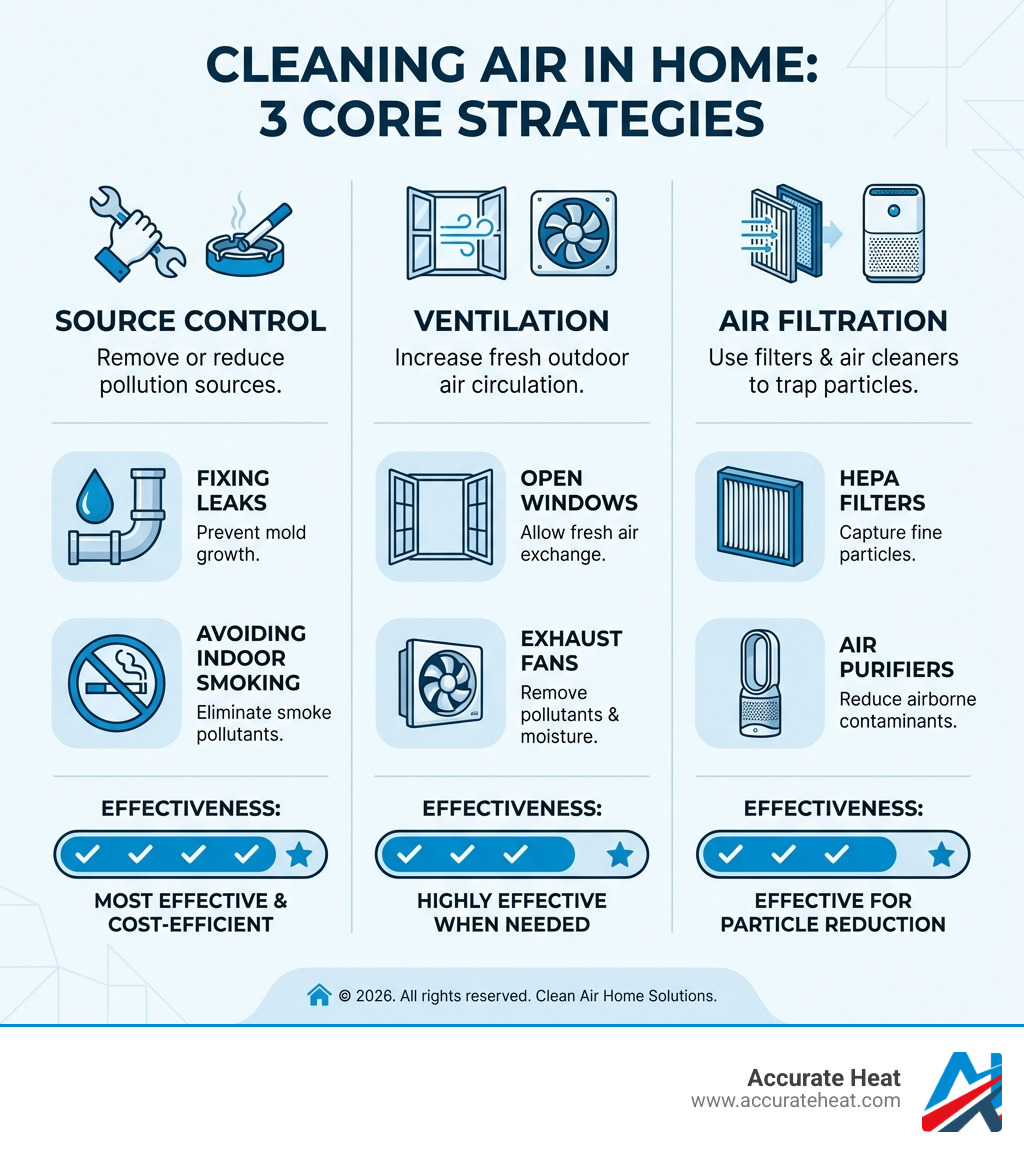
Quick Answer: The 3 Core Strategies for Cleaning Air in Home
- Source Control – Remove or reduce pollution sources (most effective and cost-efficient)
- Ventilation – Increase fresh outdoor air circulation through windows, doors, and exhaust fans
- Air Filtration – Use HEPA filters and air cleaners to trap airborne particles
Poor indoor air quality doesn’t just cause discomfort. It can trigger immediate symptoms like headaches, throat irritation, and coughing. Over time, exposure to indoor pollutants can worsen asthma, increase respiratory illness risk, and even contribute to serious conditions like lung cancer from radon exposure. For many residents in Franklin and Norfolk, MA, the combination of older home construction and modern airtight renovations creates a unique challenge for maintaining fresh air.
The good news? You don’t need expensive equipment to start improving your air quality today. Most improvements come from simple changes: controlling moisture to prevent mold, ventilating properly during cooking, choosing safer cleaning products, and maintaining your HVAC system. By understanding the science of air movement and filtration, you can transform your living space into a sanctuary of health.
This guide walks you through the proven strategies Massachusetts homeowners use to breathe cleaner air, from identifying hidden pollutants in your home to knowing when professional testing makes sense.
Glossary for cleaning air in home:
Identifying Common Sources of Indoor Air Pollution
Before we can effectively clean the air in our homes, we first need to understand what’s polluting it. Indoor air pollution isn’t always visible, but its sources are often common household items and activities. Some common indoor air pollutants include:
Radon
This invisible, odorless, and tasteless radioactive gas is naturally occurring from the breakdown of uranium in soil and rock. Radon can seep into our homes through cracks in foundations, walls, and floors. It is a serious concern for homeowners, as it’s the leading cause of lung cancer among nonsmokers, and the second leading cause overall. Given its prevalence, especially in areas like Massachusetts, understanding and mitigating radon is crucial for our family’s health. Many homes in Medway and Medfield have geological profiles that make radon testing a necessity. We’ll discuss how to test for it later, but for now, radon is a silent threat we must address. You can learn more about this critical issue on our page, Its Time to Put Radon on Your Radar.
Secondhand and Thirdhand Smoke
While many of us avoid smoking indoors, the impact of tobacco smoke can linger. Secondhand smoke refers to exhaled cigarette smoke, and anyone exposed to it, even briefly, may have a higher risk of developing health concerns, including certain types of cancer. But the danger doesn’t stop there. Thirdhand smoke, which is found on surfaces like clothes, furniture, and even walls that absorb it, also poses a health risk. This residue can off-gas into the air over time, creating a persistent source of pollution that is difficult to remove with standard cleaning. The best way to keep second- and thirdhand smoke out of our living spaces is to avoid smoking indoors entirely. Minimizing the habit altogether can also help, as thirdhand smoke on our clothes may still affect our living space and air quality.
Volatile Organic Compounds (VOCs)
VOCs are gases emitted from certain solids or liquids and can significantly impact indoor air quality. These compounds are found in a surprising number of everyday products and materials in our homes, including paints, varnishes, cleaning supplies, air fresheners, pesticides, building materials, and even furnishings. When you smell that “new car” or “new carpet” scent, you are often smelling VOCs. Exposure to VOCs can cause immediate symptoms like eye, nose, and throat irritation, headaches, and nausea. Long-term exposure can lead to more severe health issues, including damage to the liver, kidneys, and central nervous system. Choosing low-VOC or no-VOC products is a key part of cleaning air in home environments.
Formaldehyde
A particularly common type of VOC, formaldehyde is often found in glues used in composite wood products, such as plywood and particleboard, and many types of furniture. It can seep into the indoor air, and too much exposure can cause respiratory issues, including bronchitis. When we’re considering new furniture or renovations in towns like Wrentham or Bellingham, opting for solid wood or used items can help reduce the amount of formaldehyde released into our homes. Proper ventilation is key to mitigating its effects, especially in the first few months after purchasing new items.
Other Indoor Pollutants
Our homes can harbor a variety of other pollutants that compromise our indoor air quality. These include:
- Combustion Pollutants: Such as carbon monoxide and nitrogen dioxide from unvented or poorly maintained fuel-burning appliances (stoves, fireplaces, space heaters). Carbon monoxide is especially dangerous because it’s undetectable without a specialized alarm.
- Allergens: Dust mites, pet dander, pollen, and mold spores are common allergens that can trigger asthma and allergy symptoms. In Massachusetts, seasonal pollen can easily find its way indoors, making filtration essential.
- Mold: Resulting from moisture problems, mold releases spores that can cause respiratory issues, allergic reactions, and other health problems. We’ll dig deeper into mold prevention shortly.
- Pesticides: Chemicals used to control pests can linger in the air and on surfaces, posing health risks to children and pets who spend time on the floor.
- Asbestos: Found in older building materials common in Millis and Holliston, asbestos fibers can become airborne when disturbed and cause serious lung diseases.
Understanding these common sources is the first step in our mission to improve the Indoor Air Quality in our Massachusetts homes.
The Most Effective Strategies for Cleaning Air in Home Environments
Improving the air in our homes requires a multi-pronged approach. The most effective strategies focus on tackling the problem at its root, ensuring fresh air circulation, and filtering out lingering particles. These three pillars, source control, ventilation, and air filtration, work synergistically to create a healthier living environment. Our 5 Easy Tips for Better Indoor Air Quality in MA Homes offer a great starting point for homeowners in Hopkinton and Foxboro.
Source control is widely considered the most effective strategy. By removing the source of pollution, such as fixing a damp basement to prevent mold or choosing non-toxic cleaning supplies, you reduce the overall pollutant load so your home needs less “catch up” ventilation or filtration. However, since some pollutants are unavoidable (outdoor pollen, dust tracked in from shoes, and off-gassing from common materials), ventilation and filtration act as necessary backups.
Here’s a comparison of these core strategies:
| Strategy | Description | Effectiveness | Primary Benefit |
|---|---|---|---|
| Source Control | Eliminating individual sources of pollution or reducing their emissions. | Highest | Prevents pollution from entering the air. |
| Ventilation | Increasing the amount of outdoor air coming indoors to dilute pollutants. | High | Removes stale air and balances humidity. |
| Air Filtration | Using air cleaners and HVAC filters to remove particles from the air. | Moderate to High | Captures allergens, dust, and microscopic particles. |
By combining these methods, you create a comprehensive defense against indoor air pollution. For example, while source control keeps out the big threats, a high-quality HVAC filter captures the daily dust and dander that naturally accumulate in any active household.
Practical Source Control Steps (What to do first)
If you’re prioritizing cleaning air in home spaces on a budget, start here. These actions reduce pollutants before they become airborne or before they spread throughout the house.
- Stop pollutants at the door: Use entry mats, remove shoes, and vacuum high-traffic areas regularly. This simple habit can significantly cut down on tracked-in pollen, road dust, and other fine particles.
- Use exhaust at the source: Run a vented range hood during cooking and a bathroom fan during and after showers. Cooking fumes and moisture are major contributors to indoor particles and odor.
- Choose safer products: Select low-VOC paints, sealants, and cleaning products when possible. When you do need stronger products, ventilate the area until odors are gone.
- Maintain combustion appliances: Have fuel-burning equipment inspected and serviced as recommended. Proper venting and safe operation protect against combustion byproducts like carbon monoxide.
- Control pet and fabric dust: Wash pet bedding, vacuum upholstered furniture, and clean filters in vacuums or robot vacuums per the manufacturer’s guidance.
Even small changes can make a noticeable difference, especially in tighter Massachusetts homes where air does not naturally exchange as often in winter.
Why HVAC maintenance matters for cleaner indoor air
Your HVAC system can either help or hurt your indoor air quality depending on how well it is maintained. When filters are clogged or ductwork has leaks, the system may circulate dust more easily and run longer than necessary.
A few homeowner-friendly checks that support cleaner air:
- Replace filters on schedule: Many homes do well with filter changes every 1 to 3 months, but pets, renovations, allergies, or heavy system run-time may require more frequent replacement.
- Keep returns and supply vents clear: Blocked returns reduce airflow and can lower filtration performance.
- Address comfort problems early: Rooms that are consistently stuffy or dusty may indicate airflow imbalances, filter fit issues, or other system concerns.
For homeowners in Franklin and Norfolk County, seasonal tune-ups are also a convenient time to talk with a technician about filter options (such as higher-efficiency pleated filters) and practical ways to improve ventilation without sacrificing comfort.
Putting it together: A simple plan you can follow
If you want a straightforward approach to cleaning air in home environments, try this sequence:
- This week: Identify obvious sources (smoke, strong chemicals, moisture, visible mold) and fix what you can.
- This month: Improve ventilation habits in kitchens and bathrooms, and confirm your exhaust fans actually vent outdoors.
- This season: Upgrade filtration to a well-fitted, appropriately rated HVAC filter and keep up with replacement intervals.
Used together, these steps help reduce airborne particles, odors, and moisture-related issues while supporting more consistent comfort throughout the home.