
Why Your Basement’s Air Quality is a Health Priority
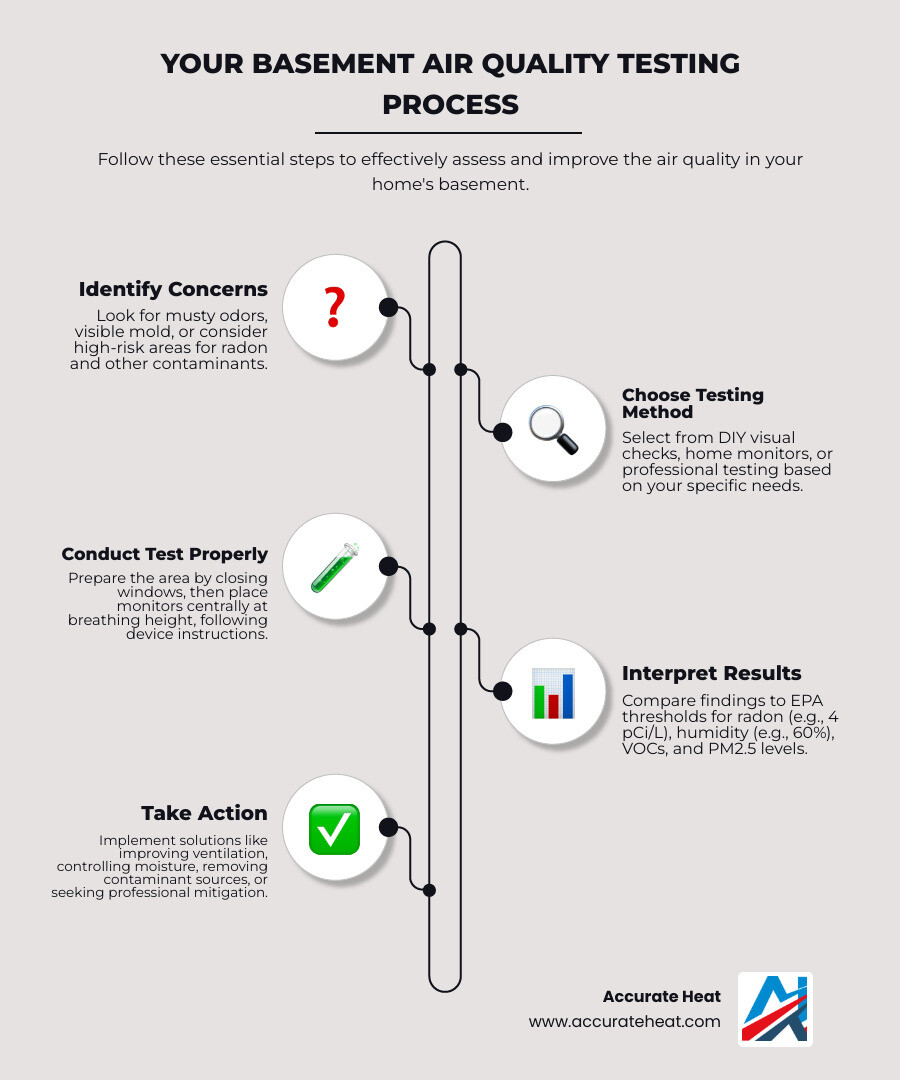
A basement air quality test helps you identify hidden contaminants that can harm your family’s health. Here’s what you need to know:
Quick Answer: Testing Your Basement Air Quality
- What to test for: Mold, radon, carbon monoxide, VOCs, humidity, and particulate matter
- Testing options: DIY visual inspections and monitors, electronic air quality devices, or professional testing services
- When to test: If you notice musty odors, visible moisture, increased allergies, or before finishing a basement
- Action levels: Radon above 4 pCi/L requires mitigation; humidity over 60% promotes mold; VOCs above safe thresholds need source removal
In many Massachusetts homes, the basement is the room with the worst air quality. And here’s the problem: basement air doesn’t stay in the basement. It rises through your home, carrying moisture, mold spores, radon gas, and other contaminants that can damage your health.
According to the EPA, indoor air can be four to five times more polluted than outdoor air. Basements make this worse because they’re surrounded by concrete, built underground with limited ventilation, and prone to moisture problems. Poor basement air quality can lead to respiratory issues, allergies, and more severe health conditions.
The good news? Testing your basement’s air is straightforward. You can start with simple visual checks and humidity meters, use electronic monitors for real-time data, or bring in professionals for comprehensive analysis. The key is knowing what to look for and when to take action.
This guide walks you through everything you need to assess your basement’s air quality, interpret the results, and take effective steps to breathe easier.
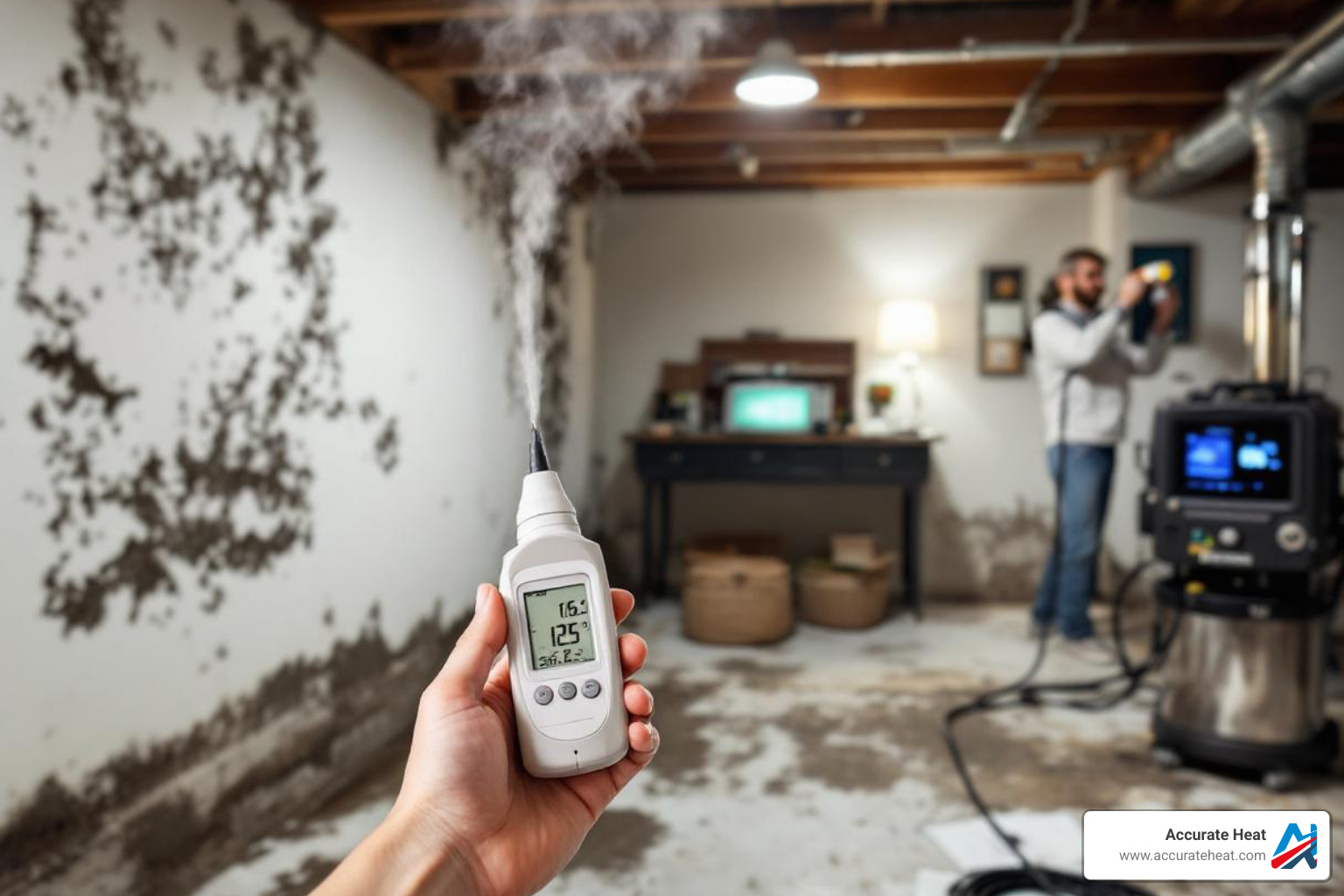
Basements are unique environments where stagnant air and moisture can lead to a buildup of harmful contaminants. Understanding these common issues is the first step toward a healthier home.
The Role of Humidity and Mold
One of the most common air quality issues found in basements across Massachusetts is directly linked to moisture. Basements are inherently prone to dampness because they are built underground and often lack the natural ventilation of upper floors. This dampness creates a perfect breeding ground for mold and mildew. As the blog post “Getting to the bottom of basement issues” points out, moisture control is the primary method to prevent mold growth in basements.
Sources of moisture can be varied:
- High humidity: Warm, moist air condensing on cooler basement surfaces.
- Leaks: Foundation cracks, leaky pipes, or poorly sealed windows can allow water to seep in.
- Condensation: Occurs when warm, humid air comes into contact with cool surfaces like concrete walls or pipes.
Mold is a common issue in basements due to moisture, and can release spores that affect indoor air quality. When mold and mildew grow, they release spores and mycotoxins into the air, which can cause musty odors and trigger a range of health effects, including respiratory issues, allergies, and asthma. The World Health Organization (WHO) has associated building dampness and mold with a 30 to 50 percent increase in respiratory and asthma-related health outcomes. This is why controlling humidity and addressing moisture sources immediately is crucial for a healthy basement environment.
Invisible Dangers: Radon and Other Harmful Gases
Beyond mold, basements can harbor invisible, odorless threats that pose significant health risks.
Radon gas is a naturally occurring radioactive gas that comes from the breakdown of uranium in soil and rock. It can seep into homes through cracks in foundations, floor drains, and other openings. Radon is the leading environmental cause of any cancer according to the U.S. Centers for Disease Control and Prevention, and is responsible for some 21,000 lung cancer deaths annually in the U.S. per the Environmental Protection Agency. It’s the second-leading cause of lung cancer overall and the leading cause among non-smokers. Since radon is odorless, colorless, and tasteless, a specific basement air quality test is the only way to detect its presence. For more detailed information on its health risks, consult the EPA’s resource on the Health risk of radon. We strongly recommend testing your home for radon, especially if you spend significant time in the basement.
Carbon Monoxide (CO) is another odorless, flammable, and poisonous gas. It can leak from various places in your home, including fuel-burning appliances like furnaces, water heaters, and even vehicles in an attached garage. An unmaintained furnace, especially one with a dirty filter, can prevent proper working and allow a potentially dangerous source of CO to go unmonitored. The CDC recommends having your heating systems and gas appliances serviced annually.
Volatile Organic Compounds (VOCs) are chemical gases emitted from certain solids or liquids. They are often found in indoor air and can be measured by air quality testers, relevant for basement environments. Sources include paints, adhesives, new flooring, furniture off-gassing, cleaning supplies, and building materials. Formaldehyde is a common indoor air pollutant that can be detected by air quality monitors, and may be present in basements, especially in newly finished spaces or from composite wood products. Exposure to certain VOCs can cause headaches, nausea, kidney and liver damage, and potentially cancer. As our partners at DrycreteWP note, VOCs can significantly impact basement air quality for Massachusetts homeowners.
Airborne Particles and Allergens
Poor ventilation in basements can lead to a buildup of various airborne particles and allergens. These can come from both indoor and outdoor sources.
Particulate Matter (PM) refers to tiny solid or liquid particles suspended in the air. PM2.5 (particles 2.5 microns or smaller) and PM10 (particles around 10 microns) can originate from sources like dust, pollen, pet dander, pest droppings, and even outdoor sources like wildfire smoke or vehicle exhaust that infiltrates the basement. When breathed in, PM2.5 can travel deep into the lungs and even enter the bloodstream, contributing to heart disease, asthma, low birth weight, and other health problems.
The impact of air pollution on health can be significant, affecting everything from mental health and childhood development to heart disease. Basements, with their often limited airflow, can trap these particles, making them a significant concern for indoor air quality. That’s why understanding and addressing these issues is paramount for the health and well-being of our Massachusetts clients.
Choosing the Right Basement Air Quality Test
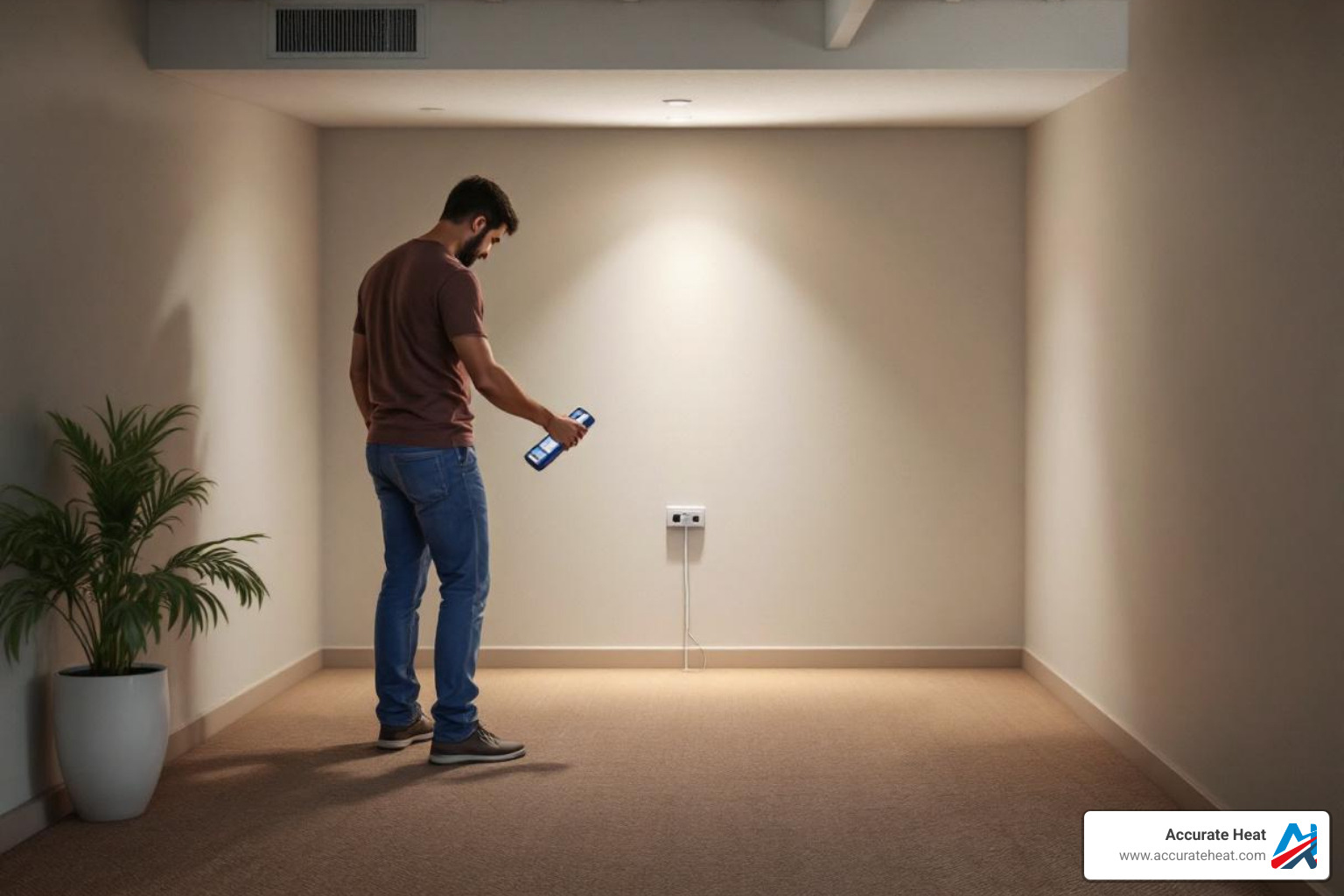
With various ways to assess air quality, it’s important to select an approach that targets your specific concerns. Options range from simple visual checks and monitoring devices to professional assessments.
DIY Assessment Methods
For initial checks or ongoing monitoring, several do-it-yourself (DIY) methods can provide valuable insights into your basement’s air quality.
- Visual inspection for mold and moisture: Regularly look for signs of water damage, warped walls, water droplets on surfaces, or visible mold growth. Any musty odors are also a strong indicator of moisture or mold issues. These are often the first clues that something is amiss.
- Using humidity meters: Simple hygrometers can measure relative humidity. We aim for humidity levels between 30-50% in our homes. If your basement consistently reads above 60%, it creates an environment conducive to mold growth.
- Monitoring for condensation: Observe windows, pipes, and cold surfaces for condensation, which signals excessive humidity.
- Simple air quality monitors for general indicators: Many affordable devices are available that can detect basic pollutants like CO2, TVOC, and PM2.5. DIY mold test kits are available for home use, allowing for testing of surfaces, HVAC systems, and indoor air quality in areas like basements. These kits can be a good starting point to identify if a potential problem exists, although they may not provide the detailed analysis of professional tests.
Electronic Air Quality Monitors
Moving beyond basic DIY kits, electronic air quality monitors offer more sophisticated and continuous data. These devices can provide real-time readings for a variety of pollutants, making them excellent tools for long-term monitoring and understanding fluctuations in your basement’s air.
Air quality monitors can detect various pollutants including CO2, TVOC, PM2.5, PM1.0, and PM10, which can be present in basement air. Many models also monitor temperature and humidity. Some advanced monitors even integrate with smart home systems, allowing you to track air quality trends over time and receive alerts on your phone. This continuous feedback can help us identify specific times or activities that contribute to poor air quality.
When to Call a Professional
While DIY methods and electronic monitors are helpful, there are situations where calling a professional for a basement air quality test is essential.
- Comprehensive analysis: Professionals use specialized equipment to detect a wider range of pollutants and provide more accurate, quantifiable results.
- Suspected major issues: If you suspect a serious problem like significant mold growth, high radon levels, or persistent chemical odors that DIY methods can’t fully explain, a professional assessment is crucial.
- Post-remediation testing: After addressing an air quality issue, professional testing can confirm that the problem has been effectively resolved.
- Certified inspectors: Certified indoor air quality professionals can offer detailed reports and expert recommendations custom to your specific situation.
- Professional air quality testing costs: The cost of air quality tests can vary based on many factors, including the number of toxins you’re testing for, how common a test is, and the sensitivity of the test. Some tests, such as a home test for radon, can cost $10 to $30, according to HomeAdvisor. Depending on where you live, state and local laws may require specific tests. Professional testing for volatile organic compounds like formaldehyde can cost $200 to $300 per sample.
Here’s a quick comparison to help you decide:
| Feature | DIY Assessment (Visual/Simple Kits) | Electronic Air Quality Monitors | Professional Testing |
|---|---|---|---|
| Cost | Low (minimal to $50) | Moderate ($50-$300+) | High ($200-$800+, depending on tests) |
| Pollutants Detected | Visible mold, moisture, odors, basic CO2/PM (some kits) | CO2, TVOC, PM2.5/10, Humidity, Temp | Wide range of specific molds, radon, VOCs, asbestos, CO, etc. |
| Speed of Results | Immediate (visual), few days (DIY kits) | Real-time, continuous | Days to weeks (lab analysis) |
| Accuracy | Low to moderate | Moderate | High (lab-verified, expert interpretation) |
How to Perform a Basement Air Quality Assessment: A Step-by-Step Guide
Properly conducting an assessment is crucial for accurate results. While each method has unique instructions, these general steps will ensure you get a reliable reading of your basement’s environment.
Step 1: Prepare the Testing Area
Before you begin any basement air quality test, proper preparation ensures the most accurate readings.
- Close windows and doors: For at least 24 hours prior to testing, keep all basement windows and doors (including any leading to the main living space) closed. This helps create a stable environment and prevents outdoor air from skewing your results.
- Turn off fans and purifiers: Any devices that move or filter air, such as exhaust fans, ceiling fans, or air purifiers, should be turned off during the preparation period and throughout the test.
- Maintain normal living conditions: Avoid any unusual activities in the basement, such as heavy cleaning, painting, or running a clothes dryer, during the 24 hours leading up to and during the test.
- Avoid cleaning chemicals: Do not use strong cleaning products or air fresheners in the basement before or during the test, as these can release VOCs and interfere with accurate readings.
Step 2: Place and Activate the Monitor or Begin Inspection
Once the preparation period is complete, it’s time to set up your testing equipment or begin your visual assessment.
- Follow device instructions: Each test kit or electronic monitor will come with specific instructions. It’s crucial to read and follow these carefully for optimal results.
- Central location: For air monitors or radon test kits, place the device in a central location within the basement, typically the lowest lived-in level. Avoid placing it directly against a wall or in a corner.
- Breathing height: Position the monitor at a height where people typically breathe, usually 3 to 6 feet off the ground.
- Away from vents: Keep the device away from any supply or return air vents, as direct airflow can affect readings. Also, keep it away from direct sunlight or extreme temperatures.
- Note start time: For tests that require a specific duration (like radon kits), accurately record the start time and date.
If you are performing a visual inspection, systematically examine all areas of the basement, paying close attention to:
- Walls, floors, and ceilings for discoloration, stains, or visible mold.
- Around windows, pipes, and appliances for leaks or condensation.
- Any stored items for signs of moisture or mold growth.
Step 3: Record Observations and Results
The final step is to carefully record your findings.
- Specified duration: Allow the test (especially for radon or continuous electronic monitors) to run for the recommended duration. Do not disturb the device during this time.
- Note any visible mold, moisture, or odors: During your visual inspection, document any findings with photos and detailed descriptions. Pay attention to persistent musty smells, which often indicate mold or excessive dampness.
- Record monitor readings: For electronic monitors, record the readings at regular intervals or note peak levels. For test kits requiring lab analysis, follow the instructions for packaging and sending the sample to the lab.
Understanding Your Basement Air Quality Assessment Results
Once you have your results, you need to know what they mean. This section helps us interpret the findings and determine if we need to take action.
Interpreting Mold and Moisture Findings
Interpreting mold and moisture results from your basement air quality test can be straightforward for visible issues, but more complex for hidden problems.
- Identifying mold types visually: While you can often spot visible mold, a professional assessment can identify the specific type, which can sometimes provide clues about the moisture source. However, the EPA does not recommend routine mold testing in homes because all mold should be treated the same way – removed. Inspection for water damage and mold remain the key to current EPA mold-assessment guidance.
- Comparing indoor and outdoor conditions: Some mold tests involve taking both indoor and outdoor air samples to compare spore counts. Liftd indoor counts compared to outdoor levels, especially for certain types of mold, can indicate an indoor growth problem.
- Visible growth: Any visible mold growth, regardless of type, indicates a moisture problem that needs to be addressed.
- Surface moisture: Consistently damp surfaces, condensation, or high humidity readings (above 60%) are red flags for potential mold growth, even if you can’t see it yet.
Decoding Radon and Gas Levels
Understanding the levels of invisible gases like radon and carbon monoxide is crucial for safety.
- Radon gas: Radon levels are measured in picoCuries per liter (pCi/L) of air. The average radon level in American homes is about 1.3 pCi/L. The EPA has established an action level of 4 pCi/L. If your basement air quality test shows radon levels at or above 4 pCi/L, the EPA recommends contacting a licensed professional to install a radon reduction system. Even if levels are between 2 pCi/L and 4 pCi/L, taking action is recommended. There is no known safe level of radon; our goal is always the lowest possible level. The CDC provides valuable information on how to protect your home from radon. You can find more details on the CDC information on radon.
- Carbon Monoxide (CO): While specialized tests exist for CO, most homes rely on CO detectors for continuous monitoring. If a detector alarms, evacuate immediately and call emergency services. CO can be deadly at very low concentrations (300 parts per million). Our annual HVAC system checks include ensuring your fuel-burning appliances are operating safely and not producing dangerous CO levels.
Reading VOC, PM2.5, and Other Contaminant Levels
Electronic air quality monitors and professional tests provide readings for various other contaminants.
- Volatile Organic Compounds (VOCs): These are often measured in parts per billion (ppb) or micrograms per cubic meter (µg/m³). There isn’t a single universal “safe” threshold for all VOCs, as health effects vary depending on the specific compound and concentration. However, consistently high readings or spikes after introducing new products (like paint or furniture) indicate a need to improve ventilation or remove the source.
- Particulate Matter (PM2.5 and PM10): Measured in micrograms per cubic meter (µg/m³), these readings indicate the concentration of airborne particles. While there are no safe levels of PM, lower concentrations are always better. High readings often correlate with poor filtration, outdoor pollution infiltration, or indoor activities like cooking or burning candles.
- CO2 levels: Typically measured in parts per million (ppm). While CO2 isn’t toxic at typical indoor levels, high readings (e.g., above 1000-1500 ppm) indicate poor ventilation and a need for fresh air exchange.
Understanding these numbers helps us pinpoint specific issues and take targeted corrective actions to improve your basement’s air quality.
How to Improve Your Basement’s Air Quality
Assessment results showing liftd pollutants don’t have to be alarming. They are a call to action. Here are the most effective ways to clear the air in your basement.
Control Moisture and Humidity
Since moisture is the root cause of many basement air quality problems, controlling it is our first line of defense.
- Dehumidifiers: A high-quality dehumidifier is essential for maintaining optimal humidity levels (30-50%) in your basement. This prevents the conditions mold and mildew need to thrive.
- Fix leaks: Promptly repair any foundation cracks, leaky pipes, or window seals. Regrade the earth around the exterior of your home if water is pooling near the foundation, and ensure downspouts and gutters discharge water at least four feet away from the exterior wall.
- Improve drainage: Ensure that your outdoor landscaping slopes away from your home’s foundation to direct rainwater away from the basement.
- Waterproofing: Consider interior or exterior waterproofing solutions for persistent moisture issues.
- Sump pumps: If your basement is prone to flooding, a properly functioning sump pump is vital to remove excess water.
Improve Ventilation
Basements often lack natural airflow, leading to stagnant air that traps pollutants. Improving ventilation is key to diluting and removing contaminants.
- Exhaust fans: Install exhaust fans in basement bathrooms or laundry areas that vent directly to the outside.
- Opening windows: If your basement has windows, opening them periodically (when outdoor air quality is good) can help introduce fresh air and reduce stuffiness.
- HVAC system integration: Our HVAC experts can integrate your basement into your home’s overall ventilation strategy, ensuring proper air circulation throughout the entire house.
- Heat Recovery Ventilators (HRV) or Energy Recovery Ventilators (ERV): These systems bring in fresh outdoor air while recovering energy from the outgoing stale air, providing controlled ventilation without significant energy loss. This is an excellent solution for tight, energy-efficient homes in Massachusetts. Semi-controlled ventilation systems are good for areas like basements where pollutants might accumulate.
Purify the Air
Even with good moisture control and ventilation, air purification can further improve your basement’s air quality.
- HEPA air purifiers: High-Efficiency Particulate Air (HEPA) filters are excellent at capturing airborne particles like dust, pollen, pet dander, and mold spores. They are especially useful for removing particulate matter, which isn’t safe at any level.
- Activated carbon filters for VOCs: Air purifiers with activated carbon filters can absorb gaseous pollutants like VOCs and odors. Some HVAC systems can be modified with filters that can absorb more contaminants.
- HVAC filters: Ensure your central HVAC system uses a high-quality filter with an appropriate MERV rating (Minimum Efficiency Reporting Value) for your system. We generally recommend MERV 11 or higher filters to capture a wider range of particles. Regular filter replacement (at least twice a year) is crucial.
Remove the Source
Sometimes, the best solution is to eliminate the source of the pollution entirely.
- Dispose of moldy materials: If items in your basement have been affected by mold and cannot be thoroughly cleaned, it’s best to dispose of them properly.
- Use low-VOC paints and products: When renovating or finishing your basement, choose paints, adhesives, flooring, and furniture with low or zero VOC emissions.
- Store chemicals properly: If you store paints, pesticides, or other chemicals in your basement, ensure they are in tightly sealed containers and stored in a well-ventilated area, away from living spaces. Consider storing them in a shed or garage if possible.
Frequently Asked Questions about Basement Air Quality
Are DIY assessments reliable?
DIY methods, such as visual inspections, humidity meters, and basic electronic monitors, can certainly help you spot obvious issues like visible mold or excessive dampness. They can also give you a general indication of pollutant levels like CO2 or PM2.5. However, they may not detect all pollutants, identify specific mold types, or provide the detailed, lab-verified analysis that professional testing offers. For a definitive diagnosis, especially if you have health concerns or suspect a serious problem like high radon, professional testing is recommended.
How often should I check for radon?
The EPA recommends testing for radon every two years. Additionally, you should always test for radon after any major renovations or significant structural changes to your home, as construction can alter how radon enters your living space. If you are buying or selling a home, a radon test is also highly recommended. If you plan to convert an unfinished basement into a finished living area, test for radon before beginning the project, as mitigation is often easier and less expensive before the space is completed.
Can I assess everything at once?
Some advanced electronic monitors and professional services can check for a wide range of pollutants simultaneously, providing a comprehensive overview. For instance, many multi-parameter electronic monitors can track CO2, TVOCs, PM2.5, humidity, and temperature all at once. Professional indoor air quality testing can encompass a battery of tests for mold, radon, VOCs, and other specific contaminants. However, most basic DIY methods are best for general indicators or targeting specific concerns rather than attempting a full, simultaneous assessment of every possible pollutant.
Breathe Easier with Confidence
Assessing your basement’s air is a proactive step toward ensuring a safe and healthy home environment for your family in Massachusetts. By identifying common pollutants like mold, radon, and VOCs through a comprehensive basement air quality test, you can take targeted actions to improve ventilation, control humidity, and purify the air.
If you’ve uncovered issues, are considering a basement renovation, or simply want a professional assessment of your home’s HVAC and ventilation systems, it’s time to consult the experts. Accurate Heat, with over 30 years of experience providing reliable HVAC and plumbing services in Franklin and throughout Massachusetts, is here to help. We offer expert, honest, and timely solutions for whole-home air purification, ventilation solutions, and ensuring your HVAC systems contribute to optimal indoor air quality.
Don’t let hidden pollutants compromise your family’s health. Contact us today for a consultation or to schedule our Air Quality Services in MA. Let us help you breathe easier with confidence.