


Why Understanding Smart Thermostat Installation Costs Matters for Massachusetts Homeowners
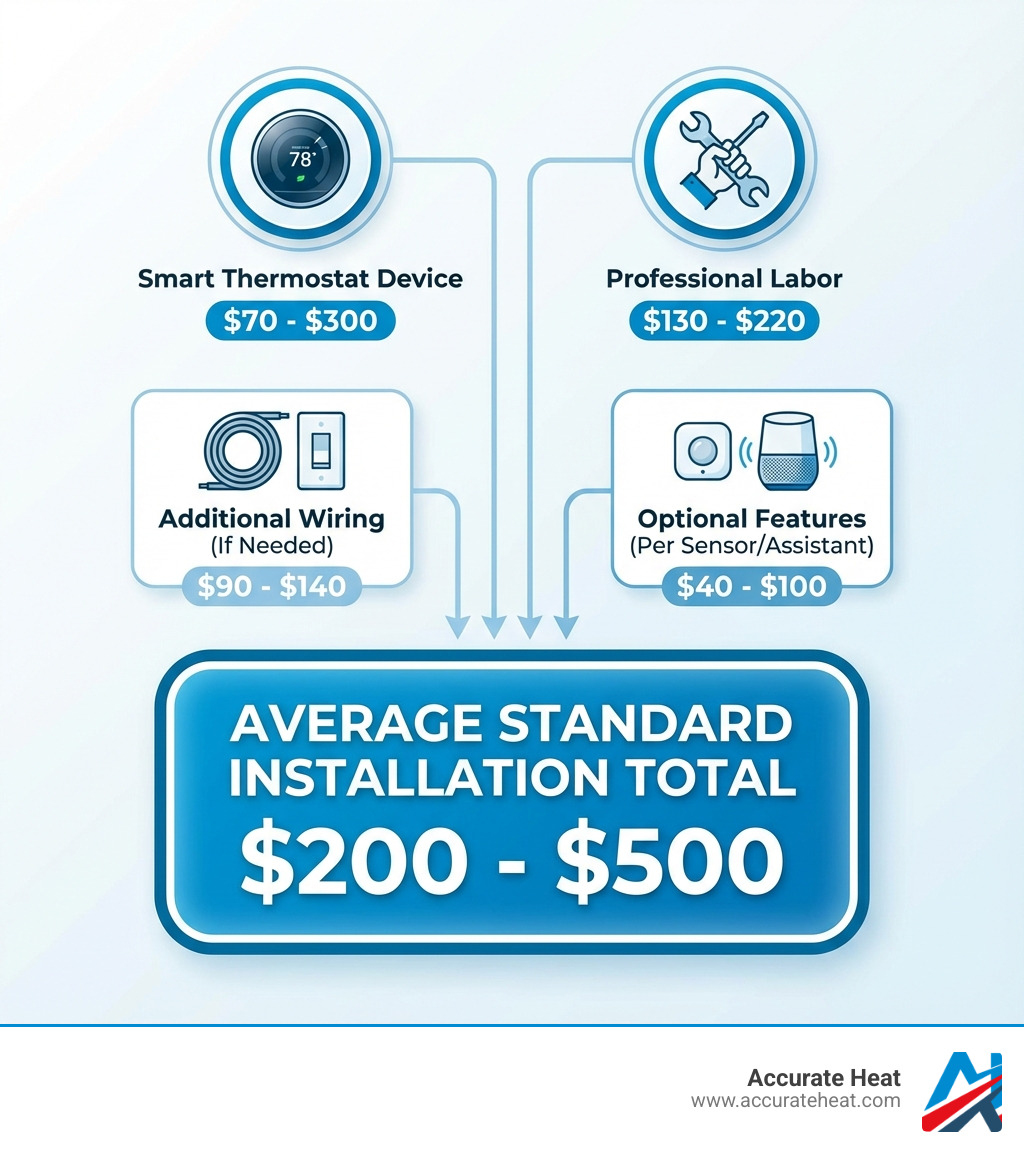
How much does it cost to install a smart thermostat? On average, homeowners pay between $200 and $500 for a complete smart thermostat installation, including both the device and professional labor. Here’s the quick breakdown:
| Cost Component | Price Range |
|---|---|
| Smart Thermostat Device | $70 – $300+ |
| Professional Labor | $130 – $220 |
| Total Installation Cost | $200 – $500 |
| High-End Models (with installation) | Up to $1,200 |
If you’re a Massachusetts homeowner thinking about upgrading to a smart thermostat, you’re probably wondering what you’ll actually pay. The good news? Smart thermostats aren’t just a tech upgrade—they’re an investment that can save you 8-15% on heating and cooling bills while making your home more comfortable.
But the total cost depends on more than just the price tag on the box. Your home’s wiring, HVAC system compatibility, and whether you need features like voice control or remote sensors all affect the final number.
Some installations are straightforward swaps that take an hour. Others require new wiring or system modifications that add time and cost. Understanding these factors helps you budget accurately and avoid surprises when the technician arrives.
In this guide, we’ll break down every cost factor so you know exactly what to expect—from basic installations to complex setups with all the bells and whistles.
Breaking Down the Total Cost of a Smart Thermostat
When we talk about how much it costs to install a smart thermostat, we’re looking at two main components: the smart thermostat device itself and the professional labor required for installation. While the average total cost for a smart thermostat installation typically falls between $200 and $500, prices can soar up to $1,200 for high-end models with advanced features and complex installation requirements. Our goal is to ensure you understand where these costs come from so you can make an informed decision for your Massachusetts home.
How Much Does the Smart Thermostat Device Itself Cost?
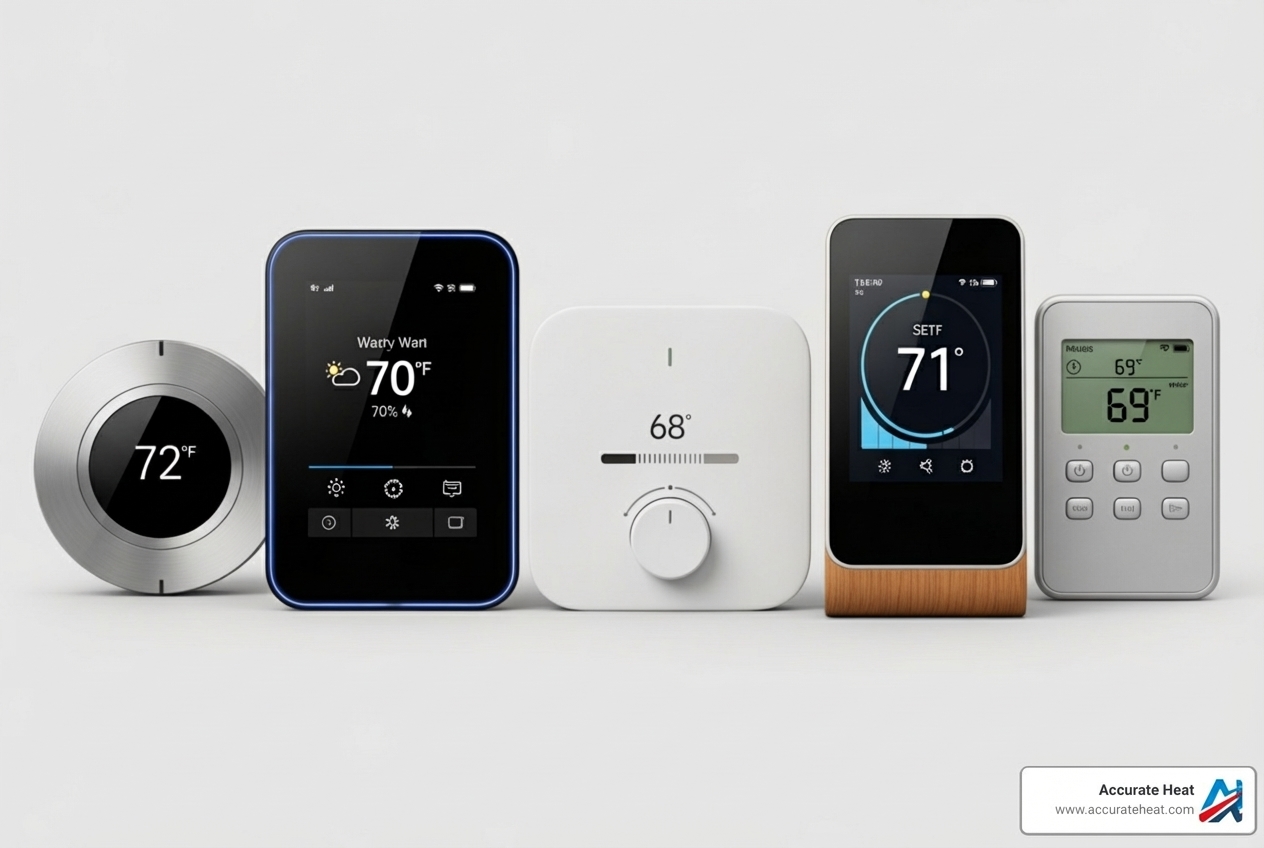
The smart thermostat device is the brain of your smart heating and cooling system, and its price can vary significantly based on brand, features, and capabilities. We’ve seen basic models start as low as $70, while top-tier options with advanced features can exceed $800 for the unit alone.
Let’s look at some typical price ranges for the devices we see in Massachusetts:
- Basic Models ($70 – $150): These often offer core smart features like Wi-Fi connectivity, remote control via an app, and basic scheduling. Examples include the Amazon Smart Thermostat ($79.99) or Sensi Smart Thermostat ($95.99). Wyze thermostats, for instance, range from $70 to $80 for the unit. Lux models can be found between $50 and $150.
- Mid-Range Models ($150 – $300): This category includes popular options that balance features and price. You’ll find learning capabilities, improved displays, and often better integration with other smart home systems. The Google Nest Thermostat ($105), Sensi Touch 2 Smart Thermostat ($120.39), ecobee3 Lite Smart Thermostat ($147.67), Google Nest Learning Thermostat (3rd generation) ($168), and Honeywell Home T9 Wi-Fi Smart Thermostat ($159.90) fall into this popular range.
- High-End Models ($300+): These thermostats come packed with advanced sensors, sophisticated learning algorithms, voice assistant integration, and premium designs. The ecobee Smart Thermostat Premium ($234.99) and Google Nest Learning Thermostat (4th generation) ($269.49) are examples of more advanced units. Some high-end models, particularly from brands like Daikin, can range from $300 to $800 for the unit, with installation potentially bringing the total to $1,000. These often provide the most comprehensive energy savings and comfort features.
The brand reputation also plays a role. Established names like Nest, Ecobee, and Honeywell often command a higher price due to their proven track record, extensive features, and robust app support.
What Are the Typical Labor Costs for Installation?
Once you have your smart thermostat, the next piece of the puzzle is getting it installed. Labor costs are a significant part of the overall expense, and they can vary based on who you hire and the complexity of the job.
In Massachusetts, you typically have a few options for professional installation:
- HVAC Technicians: These are often our top recommendation, as they have a deep understanding of your entire heating and cooling system. HVAC technicians in our area typically charge between $75 and $150 per hour.
- Electricians: For straightforward wiring, an electrician can also get the job done. Their hourly rates usually fall between $50 and $130.
- Handypersons: While handypersons might charge less, often $50 to $80 per hour, they may take longer if they’re not as practiced in installing thermostats, and they might not have the specialized HVAC knowledge an HVAC technician possesses.
Most standard smart thermostat installations take about one to two hours. This means the typical labor cost for a professional installation can range from approximately $130 to $220. However, if your installation requires additional wiring, system modifications, or relocation, the time and cost can increase.
What Factors Influence How Much It Costs to Install a Smart Thermostat?
Beyond the device and basic labor, several factors can influence the final price you’ll pay for a smart thermostat installation in your Massachusetts home. Understanding these can help you anticipate potential additional costs.
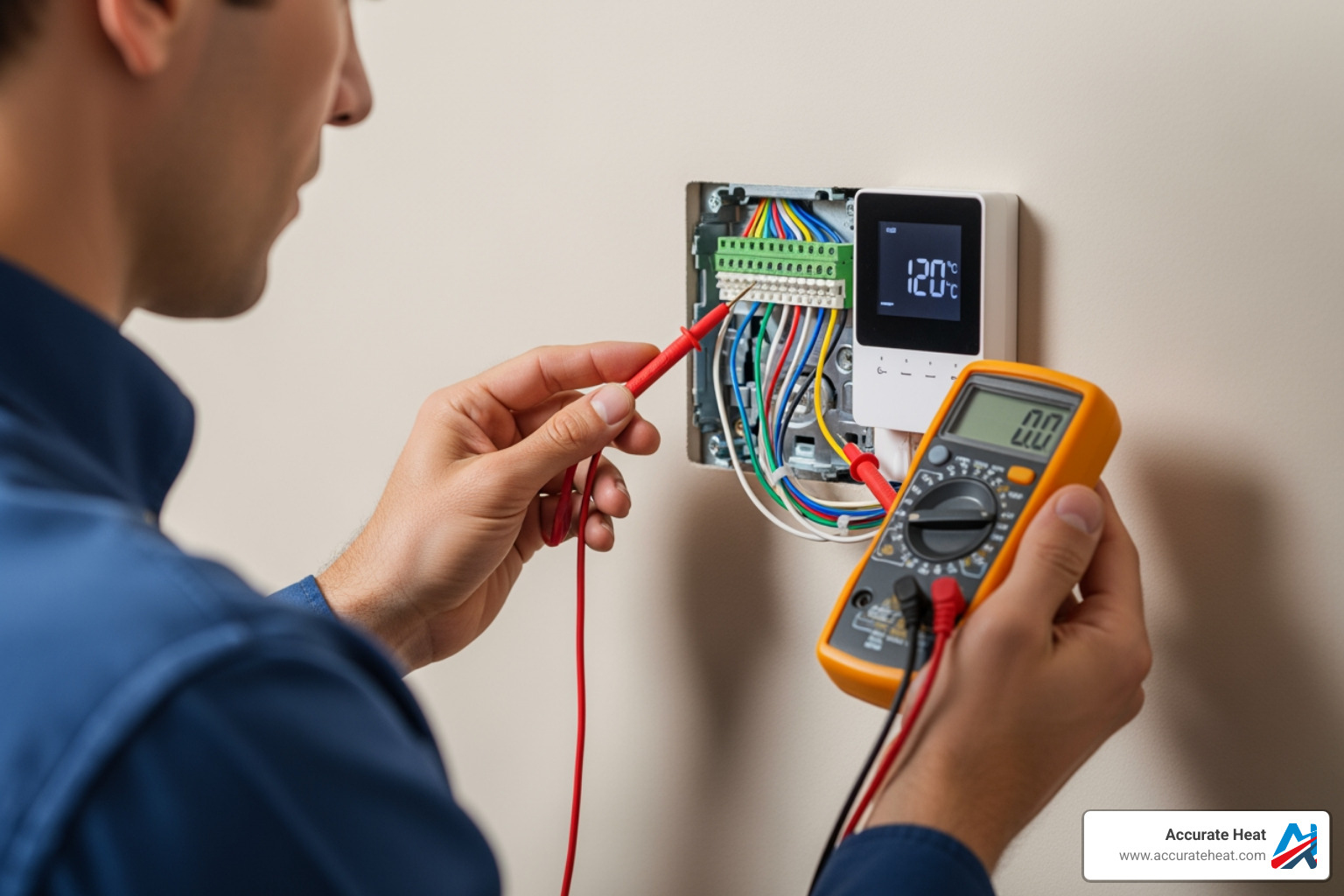
Here are the key cost factors we consider:
- HVAC System Compatibility: Not all smart thermostats work with all HVAC systems. Older systems or those with multi-stage heating/cooling might require specific thermostat models or additional components.
- Home’s Age & Wiring Condition: Older homes in Massachusetts, like many throughout Franklin and the surrounding towns, might have outdated wiring that isn’t compatible with modern smart thermostats. This often necessitates additional wiring work.
- Thermostat Location: If you want to move your thermostat to a new spot, that’s a bigger job than a simple swap. Relocating a thermostat can add $65 to $450 to the cost, depending on whether new wiring needs to be run through walls and if drywall patching is required.
How Much Does It Cost to Install a Smart Thermostat with Advanced Features?
Smart thermostats come with a dazzling array of features, and while these improve comfort and energy savings, they can also add to the unit’s price.
- Learning Capabilities: Many advanced models, like the Nest Learning Thermostat, observe your habits and automatically create a temperature schedule. This convenience often comes with a higher price tag for the unit.
- Geofencing: This feature uses your phone’s location to know when you’re home or away, adjusting temperatures automatically. While a software feature, it’s typically found on more advanced (and thus more expensive) models.
- Remote Sensors: Smart thermostat packages with smart sensors, designed to monitor temperature in different rooms, can increase the price by around $40 to $100 for each sensor. These are great for ensuring consistent comfort throughout your home.
- Voice Assistant Integration: Opting for a smart thermostat with a built-in voice assistant (like Amazon Alexa or Google Assistant) can raise the price by $50 to $100. Some even include speaker functionality, which can add an extra $35 to $75.
- Energy Usage Reports: Detailed energy tracking and reporting features are common in higher-end models, helping you understand and optimize your energy consumption.
These additional features, while beneficial, contribute to the overall cost of the smart thermostat device itself, rather than direct installation costs.
HVAC System & Wiring Complexity
This is where many unexpected costs can arise, especially in older Massachusetts homes.
- C-wire (Common Wire): Most modern smart thermostats require a C-wire to provide continuous power. If your current thermostat doesn’t have one (which is common in older homes), our technicians will need to install one. Adding wiring to accommodate a smart thermostat can cost $90 to $140. This is a crucial step to ensure your smart thermostat functions reliably without constantly draining its battery.
- Relocating a Thermostat: Sometimes, the best place for a smart thermostat isn’t where your old one was. Maybe it’s in a drafty hallway, or you want it in a more central location. Relocating a thermostat to another part of your house can cost $65 to $450, depending on whether you need to install new wiring or cut and patch drywall.
- Multi-Zone Systems: If your home has a multi-zone HVAC system, installing smart thermostats for each zone will increase your costs. A full multi-zone smart thermostat system can range from $2,000 to $12,500, as it involves multiple thermostats and potentially more complex wiring.
- Older HVAC Systems: While most HVAC systems are compatible with smart thermostats, some very old systems might require specific adapters or even minor upgrades to integrate seamlessly. Our technicians are experts at assessing these needs.
When choosing a smart thermostat, consider models with ENERGY STAR certified models. These models meet strict energy efficiency guidelines, potentially offering greater long-term savings, even if they have a slightly higher upfront cost.
DIY vs. Professional Installation: A Cost and Risk Analysis
One of the biggest decisions you’ll face when installing a smart thermostat is whether to tackle it yourself or hire a professional. There’s a clear difference in cost, but also in potential risks and peace of mind.
The Cost of DIY Installation
If you’re comfortable with basic electrical work and your current setup is relatively simple, you might be tempted to install a smart thermostat yourself. The primary saving here is on labor costs, which typically range from $130 to $220 for a professional installation.
For a DIY installation, you’d only pay for the smart thermostat device itself, which, as we’ve seen, can range from $70 to over $800. You’ll also need some basic tools like a screwdriver and possibly a voltage tester. If your system lacks a C-wire, you might be able to use a C-wire adapter kit, but these can be tricky to install correctly and aren’t always a reliable long-term solution.
However, consider the time investment. While a professional can often complete a straightforward installation in 1-2 hours, a DIYer might spend much longer troubleshooting, especially if unexpected wiring issues arise.
When to Hire a Professional
While DIY can save money upfront, we generally recommend professional installation for smart thermostats, especially in Massachusetts homes where wiring can be older or HVAC systems more complex.
Here’s why hiring a professional is often the smarter choice:
- Complex Wiring: If your home has complex or non-standard wiring, or if you lack a C-wire, a professional HVAC technician or electrician will know exactly how to safely and correctly handle the installation. Adding a C-wire can be a delicate process, and mistakes can damage your HVAC system.
- No C-wire: As mentioned, if your system doesn’t have a C-wire, a professional can install one reliably, ensuring your smart thermostat has consistent power. This avoids issues like your thermostat constantly dying or your HVAC system behaving erratically.
- Multi-Zone HVAC: Installing multiple smart thermostats for a multi-zone system requires a deeper understanding of your HVAC setup to ensure all zones communicate correctly and function efficiently.
- Peace of Mind: A professional installation ensures the job is done safely and correctly, minimizing the risk of electric shock, tripping circuit breakers, or damaging your expensive HVAC system or the new thermostat. Plus, many manufacturers recommend professional installation to maintain warranty validity.
- Ensuring Correct Setup: Our technicians will not only install the thermostat but also help you set up the app, program initial schedules, and ensure it’s communicating properly with your HVAC system. They can also perform compatibility checks to make sure your new thermostat is the right fit for your specific heating and cooling unit.
The difference in how much it costs to install a smart thermostat yourself versus hiring a pro often comes down to weighing potential savings against potential risks and the value of expert knowledge. For us, ensuring your system runs optimally and safely is always the priority.
The Long-Term Value: Savings, Rebates, and ROI
While the initial cost to install a smart thermostat is an important consideration, it’s crucial to look beyond the upfront expense and consider the long-term value. Smart thermostats offer significant return on investment (ROI) through energy savings, increased home value, improved comfort, and even extended system longevity.
Potential Energy Savings
This is where smart thermostats truly shine. They are designed to optimize your heating and cooling, which accounts for a large percentage of your Massachusetts utility bill.
- Reduced Heating and Cooling Bills: According to the Department of Energy (DOE) statistics, simply using a programmable thermostat can help you save up to 10% on your heating and cooling costs. Smart thermostats, with their advanced features like learning capabilities, geofencing, and remote sensors, often surpass this.
- Average Savings: Studies show that homes with smart thermostats report an average of 8% to 15% reduction in annual heating and cooling costs. In some cases, savings can be as high as 26%, potentially saving Massachusetts homeowners $50 to $250 per year. For example, if you reduce your AC usage by just one hour per day, you could save $65 to $110 over the summer.
- Tracking Energy Consumption: Many smart thermostats provide detailed energy usage reports, allowing you to track your consumption and identify areas for further optimization. This transparency empowers you to make smarter energy choices.
By intelligently managing your HVAC system, a smart thermostat can pay for itself in energy savings over a few years, making it a very smart investment for your home.
Rebates and Incentives
To further sweeten the deal and reduce the upfront cost to install a smart thermostat, many local utility companies and state programs offer rebates and incentives.
In Massachusetts, programs like Mass Save® are excellent resources. Mass Save® offers rebates and low-interest financing for qualifying high-efficiency HVAC equipment, including smart thermostats. According to Mass Save®, using a smart thermostat can save households up to 10% annually on energy bills. These incentives can significantly reduce your initial outlay, shortening the payback period and making the upgrade even more attractive.
We encourage our customers in Franklin and throughout Massachusetts to check the Mass Save® website or inquire with their local utility provider about current rebate programs. Our team can also help guide you on eligible models and how to apply for these valuable savings.
Frequently Asked Questions about Smart Thermostat Costs
We get a lot of questions about smart thermostats, and we’re always happy to provide clear answers. Here are some of the most common inquiries regarding how much it costs to install a smart thermostat and its overall value.
How does the cost of installing a smart thermostat compare to a traditional one?
The cost to install a smart thermostat is generally higher than for a traditional, non-programmable, or even a basic programmable thermostat.
- Traditional Thermostats: The devices themselves are quite inexpensive, often ranging from $15 to $150. Installation is typically simpler, making DIY an easier option or professional labor costs lower due to less complexity. The average thermostat replacement cost for a traditional model runs around $183, ranging between $113 and $264.
- Smart Thermostats: As we’ve discussed, the device alone can cost $70 to over $800, and professional installation averages $200 to $500.
While the upfront cost is higher for smart thermostats, their long-term value is significantly greater. Traditional thermostats offer fewer features and no remote control or learning capabilities. The advanced energy-saving features of smart thermostats mean they can often pay for their higher initial cost through reduced energy bills in just a few years, offering a much better return on investment and improved comfort.
Do I need an HVAC technician to install a smart thermostat?
While some tech-savvy homeowners can install a smart thermostat themselves, we highly recommend using an HVAC technician for installation, especially in the Massachusetts area.
Here’s why:
- System Compatibility Knowledge: Our HVAC technicians understand the intricacies of various heating and cooling systems. They can ensure your chosen smart thermostat is fully compatible with your specific furnace, AC, or heat pump, preventing operational issues down the line.
- Electrical Expertise: Although thermostats typically use low-voltage wiring, incorrect installation can still damage the thermostat or, more critically, your HVAC system. An HVAC technician or electrician has the expertise to handle the wiring safely and correctly, especially if a C-wire needs to be installed.
- When Additional Help Is Needed: If your home lacks a C-wire, has multi-zone heating, or requires the thermostat to be relocated, an HVAC professional is essential. They can efficiently run new wiring, patch walls, and configure complex systems, ensuring everything works seamlessly.
- Warranty Protection: Many HVAC system and thermostat manufacturers require professional installation for warranty validity.
So, while you might save a few dollars attempting a DIY, the peace of mind, proper functionality, and protection of your HVAC investment make professional installation a wise choice.
Are smart thermostats worth the investment?
Absolutely! We firmly believe that smart thermostats are a worthwhile investment for most homeowners in Massachusetts.
- Energy Savings Payback: The most compelling reason is the potential for significant energy savings. As the Department of Energy highlights, smart thermostats can reduce your heating and cooling bills by 8-15%, often paying for themselves within a few years.
- Convenience and Control: Imagine adjusting your home’s temperature from your smartphone while you’re commuting home, or having it automatically adjust when you leave for work. This level of convenience and remote control is a game-changer.
- Improved Home Comfort: Features like remote sensors and geofencing ensure your home is always at the perfect temperature, no matter which room you’re in or whether you’re there.
- Potential Increase in Property Value: Smart home technology, including smart thermostats, is increasingly attractive to potential buyers. It signals a modern, energy-efficient home, which can improve your property’s marketability.
- Smart Home Integration: Smart thermostats seamlessly integrate with other smart home devices, creating a cohesive and automated living environment.
Considering the long-term benefits of reduced energy costs, improved comfort, and increased home value, the initial cost to install a smart thermostat is a smart investment that pays dividends for years to come.
Upgrade Your Home with Confidence
Navigating the costs of home improvements can feel daunting, but when it comes to how much it costs to install a smart thermostat, we hope this guide has given you clarity. The key takeaway is that while the initial investment might be higher than a traditional thermostat, the long-term benefits—from significant energy savings to unparalleled comfort and control—make it a truly valuable upgrade for your Massachusetts home.
At Accurate Heat, we understand the unique needs of homeowners in Franklin, Norfolk, Medway, and beyond. Our expertise ensures that your smart thermostat installation is handled with precision, care, and a deep understanding of your HVAC system. We’re here to help you make a smart investment that will improve your home’s efficiency and your family’s comfort for years to come.
Ready to take control of your home’s climate and energy usage?
Get a professional HVAC installation quote from our expert team today!