Why Your Home’s Heating System Needs Regular Professional Attention
Heating system inspection is a professional safety and performance evaluation of your home’s heating equipment, typically conducted annually before winter. It includes checking critical components like the heat exchanger, burners, electrical connections, and venting system to ensure safe operation and optimal efficiency.
Key benefits of regular heating inspections:
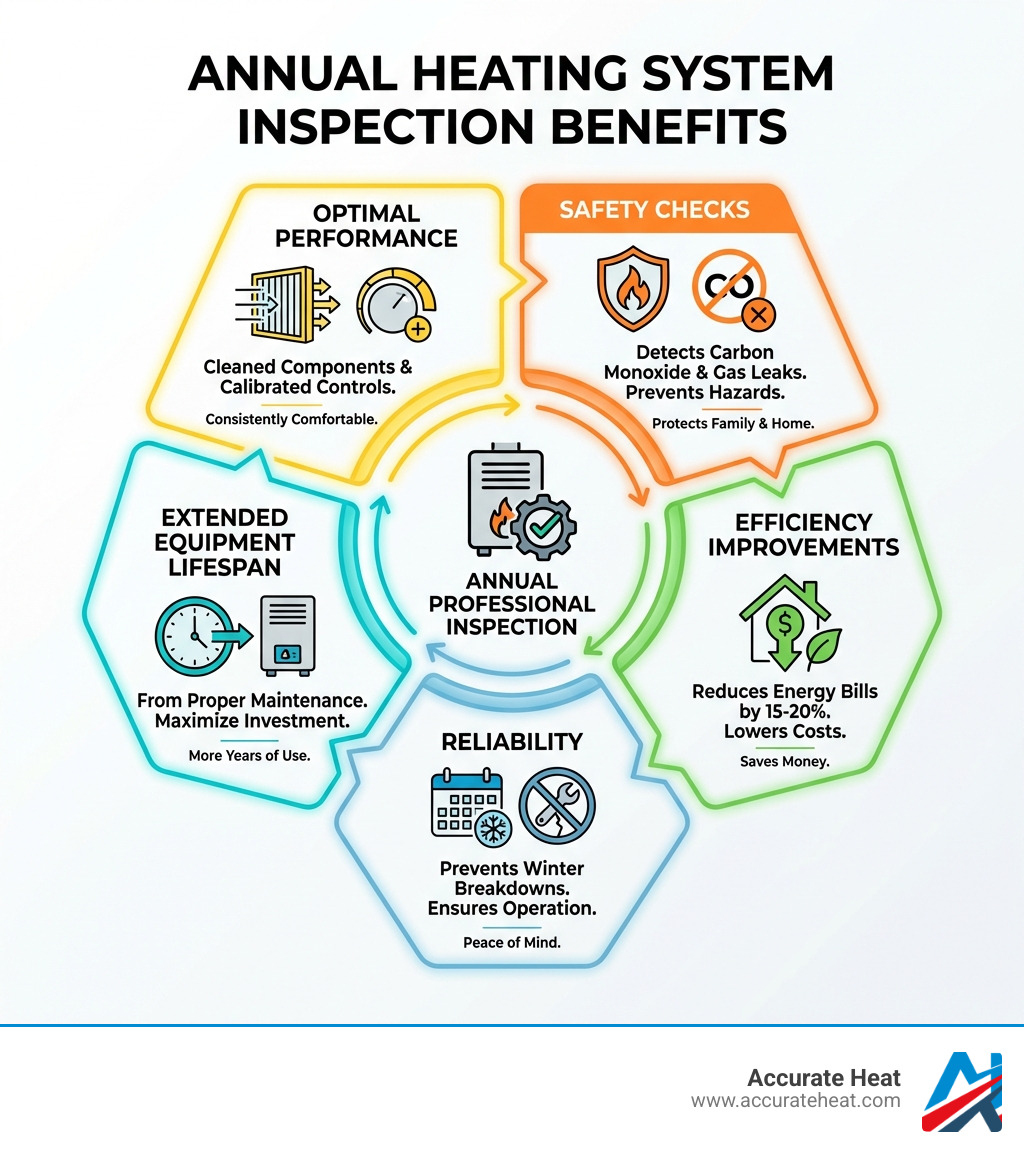
- Safety: Identifies carbon monoxide leaks, gas leaks, and fire hazards before they threaten your family
- Cost savings: Prevents expensive emergency repairs and reduces monthly energy bills by 15-20%
- Reliability: Catches small issues before they cause system failures during Massachusetts winters
- Longevity: Extends equipment life from 10-15 years to 15-20 years with proper maintenance
- Peace of mind: Ensures your system is ready when temperatures drop below freezing
As a Houstonian you surely know that for the majority of the year, your heater will go unused. The same is true for Massachusetts homeowners—but when that first cold snap hits, you need your heating system working perfectly. A furnace that sat idle all summer can develop issues that only become apparent when you desperately need heat.
Most heating system inspections take 45-90 minutes and cost between $75-$200, depending on your system type and location. Professional technicians check everything from thermostat calibration to heat exchanger integrity, ensuring your system operates safely and efficiently throughout the heating season.
The stakes are high. Holes or cracks in venting or heat exchangers can lead to poisonous carbon monoxide gas leaks. A furnace firing at 100,000 BTUs per hour burns about 100 cubic feet of gas every hour—any combustion issues create immediate safety concerns for your family.
Why Regular Heating System Inspection Matters
Living in Massachusetts, we know that our heating systems aren’t just a luxury—they are a survival tool. Whether you are in Franklin, Norfolk, or Medway, the winter design temperatures often drop below freezing, and your home needs a reliable heat source to maintain a comfortable 68°F. A professional heating system inspection ensures your unit can handle the heavy lifting required during a New England blizzard.
The primary reason for an inspection is safety. Neglecting maintenance can lead to severe risks, including electrical fires from frayed wiring and gas leaks from corroded connections. Most importantly, a cracked heat exchanger can allow carbon monoxide—an odorless, colorless, and deadly gas—to seep into your living spaces. Regular inspections include testing for these leaks and verifying that your carbon monoxide detectors are functioning correctly.
Beyond safety, there is the matter of your wallet. A clean, well-tuned furnace or boiler operates more efficiently. When dust accumulates on the blower motor or the air filter is clogged, the system has to work twice as hard to move air, which spikes your energy bills. By catching minor wear and tear early, you avoid the “emergency” price tag of a 2:00 AM repair call in January.
For more details on why this is so critical in our local climate, check out Why Regular Heating Maintenance is Essential in Massachusetts. You can also review this Scientific research on gas furnace safety to see the technical safety standards professionals follow.
Signs Your Home Needs a Heating System Inspection
Sometimes, your furnace tries to tell you it’s struggling. If you listen closely (and maybe use your nose), you can catch problems before the system quits entirely. Here are the most common red flags we see in homes from Bellingham to Holliston:
- Unusual Noises: If you hear banging, screeching, or rattling, something is loose or broken. A screeching sound often points to a failing blower motor belt, while banging could indicate delayed ignition.
- Strange Odors: A faint “dusty” smell is normal when you first turn the heat on for the year. However, a persistent burning smell or the scent of rotten eggs (which indicates a gas leak) requires an immediate inspection.
- Rising Energy Bills: If your gas or electric bill is climbing but you haven’t changed your habits, your system is losing efficiency.
- Uneven Heating: If your living room is a sauna but your bedroom is an icebox, you likely have ductwork leaks or a failing blower.
- Frequent Cycling: If the furnace turns on and off every few minutes (short-cycling), it may be overheating due to a dirty filter or a faulty sensor.
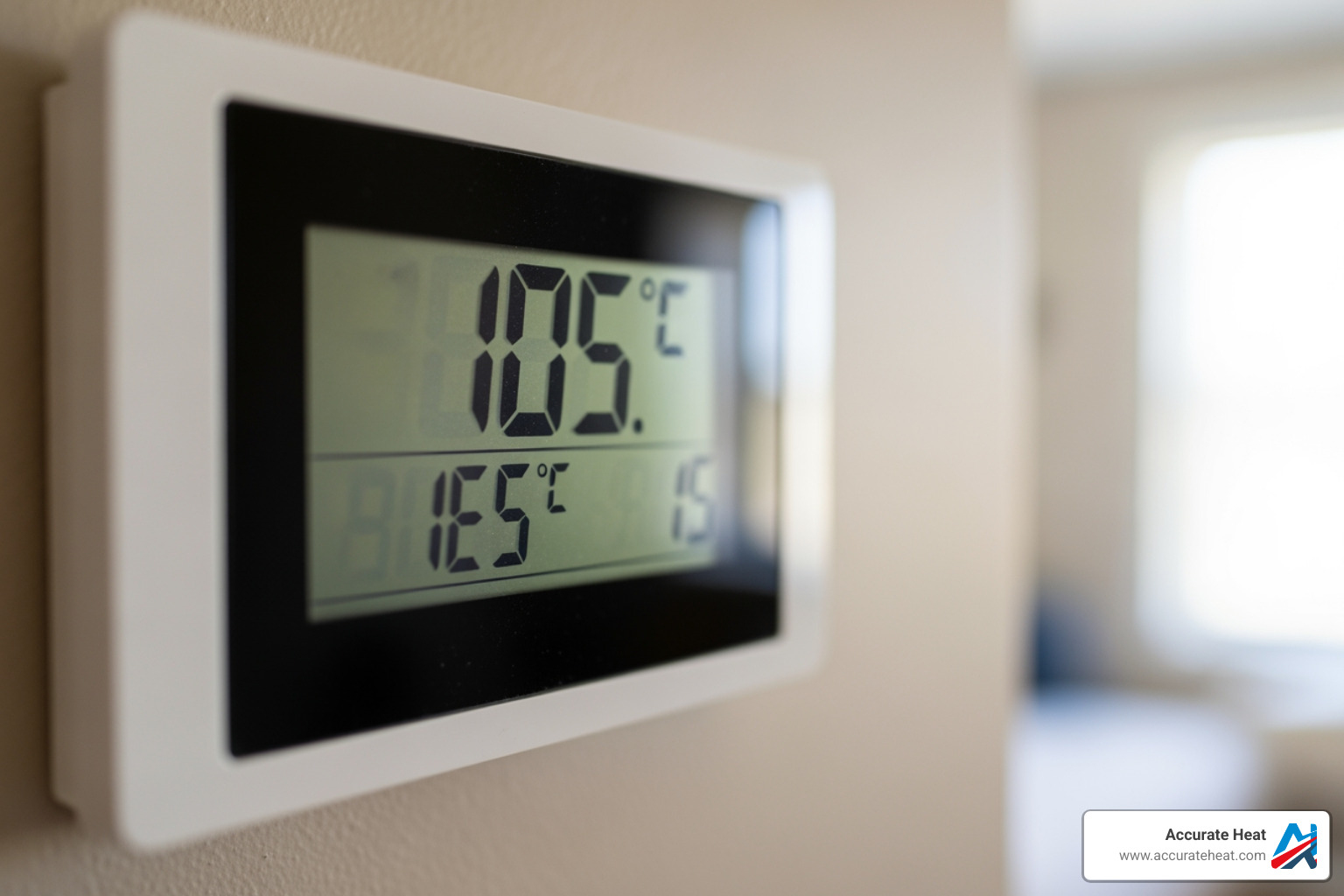
If your thermostat is showing one temperature but the room feels completely different, that’s another sign of a calibration issue. For a deeper dive into these symptoms, read our Signs Your Furnace Needs Repair: Troubleshooting Guide.
What to Expect During a Professional Heating System Inspection
When we arrive at your home for a heating system inspection, we aren’t just glancing at the unit. We perform a comprehensive evaluation of the entire system. While a basic furnace inspection focuses on the heating unit itself, a full HVAC inspection includes the air conditioning components, ductwork, and ventilation systems.
| Feature | Furnace Inspection | HVAC Inspection |
|---|---|---|
| Focus | Heating unit only (Gas/Oil/Electric) | Heating, Cooling, and Ventilation |
| Duration | 45–60 Minutes | 60–90 Minutes |
| Key Checks | Burners, Heat Exchanger, Pilot | Coils, Refrigerant, Duct Integrity |
| Best For | Annual fall maintenance | Comprehensive home health check |
We recommend looking for technicians with NATE (North American Technician Excellence) or Red Seal certifications. These qualifications ensure the person working on your gas lines and electrical components has the rigorous training required to keep your home safe. For more on what a professional tune-up entails, see our page on Furnace Maintenance.
Core Components of a Professional Heating System Inspection
During a professional visit, we focus on several “make or break” components:
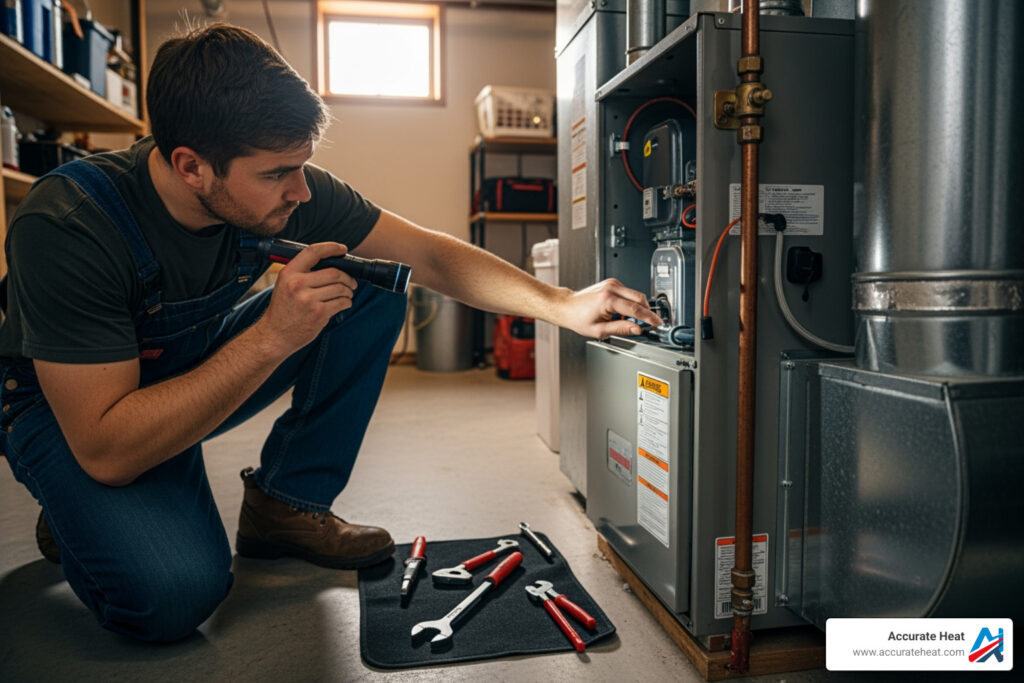
- The Heat Exchanger: This is the heart of your furnace. We inspect it for cracks or rust. Even a hairline fracture can leak carbon monoxide into your home.
- Burners and Ignition System: We clean the burners to ensure proper combustion. We also check the flame sensor and ignitor; if these are dirty, your furnace might blow cold air.
- Blower Motor: We check the blower wheel for dirt accumulation. A dirty motor runs hot and uses more electricity.
- Flue Pipe and Venting: We ensure the exhaust gases are actually leaving your house. We look for blockages, rust, or improper sloping in the vent pipes.
- Gas Valves and Piping: We check for leaks and ensure the gas pressure is set correctly.
- Electrical Connections: We tighten loose wires and evaluate safety features like the high-limit switch, which shuts the furnace down if it overheats.
DIY Maintenance and Homeowner Checks
While we always recommend a professional heating system inspection once a year, there are several things you can do to keep your system happy between visits. Think of it like brushing your teeth between dental check-ups!
The most important DIY task is replacing your air filter. In most Massachusetts homes, you should check your filter every 30 days and replace it at least every three months. A clogged filter is the #1 cause of furnace failure because it restricts airflow, causing the heat exchanger to overheat and potentially crack.
You should also ensure that your vents and registers are not blocked by furniture or rugs. In your outdoor unit (if you have a heat pump), make sure leaves and snow aren’t piling up against the fins. For more tips, see our Heating Maintenance Services in MA page.
DIY Steps for a Basic Heating System Inspection
Before the cold weather hits in Foxboro or Wrentham, try this 3-step test:
- The Thermostat Test: Switch your thermostat to “Heat” and set it 10 degrees higher than the current room temperature. You should hear the system rumble to life within a minute.
- The Vent Check: Walk around and feel the air coming out of the registers. It should feel warm (not just “not cold”) within a few minutes.
- The Visual Inspection: Shut off the power to the unit and look for obvious signs of trouble. Are there soot marks around the furnace cabinet? Is the external unit level? If a condenser isn’t level, the compressor can fail prematurely.
Essential DIY Tools:
- A flashlight (to see into the dark corners of the cabinet)
- A screwdriver (to tighten the thermostat housing)
- A soft brush (to dust off the external fins)
- A butter knife (to gently straighten any bent fins on the outdoor unit)
Understanding Technical Standards and Safety Codes
Heating systems are governed by strict codes to ensure they don’t become hazards. For example, the National Standards for the Physical Inspection of Real Estate (NSPIRE) and HUD have specific deficiency criteria. If a heating source isn’t working between October 1 and March 31, it is considered a “Life-Threatening” deficiency that must be corrected within 24 hours.
One technical term you might hear us use is Delta T. This is the temperature difference between the air going into your furnace (return air) and the air coming out (supply air). For a properly functioning system, we typically look for a 30-degree difference. If the Delta T is too high, your airflow is likely restricted; if it’s too low, your furnace might be undersized or failing.
We also categorize furnaces by their venting requirements:
- Category I: These are standard furnaces that operate with negative vent pressure and don’t produce condensate.
- Category IV: These are high-efficiency units that produce “condensing” flue gases (water). These must be vented with PVC pipe rather than metal, and they require a proper drainage system for the acidic condensate water.
Safety codes also require a sediment trap (also called a drip leg) on the gas line. This is a small “T” joint that catches moisture and debris before it can enter the sensitive gas valve. We also check for proper CSST (Corrugated Stainless Steel Tubing) bonding, which protects your gas lines from electrical surges during lightning storms—a common issue in our part of the country.
For those interested in the rigorous standards we follow, you can read the Scientific research on NSPIRE heating standards.
Frequently Asked Questions about Heating Inspections
How often should I have my heating system inspected?
You should have your heating system inspection performed once a year. The best time is in the late summer or early fall (September or October), before you need to turn the heat on for the season. This allows time for any necessary repairs before the local HVAC companies get slammed with emergency calls during the first freeze.
How much does a professional heating system inspection cost?
In the Massachusetts area, a standard inspection typically costs between $75 and $200. This is a small investment compared to the $5,000 to $10,000 cost of a full furnace replacement. Some companies offer “30-point” tune-ups for as low as $69 during the off-season.
How long does the inspection process take?
A thorough inspection usually takes between 45 and 90 minutes. If the system is in an easy-to-reach spot like a clean basement, it goes faster. If we have to crawl into a tight attic or crawlspace in a historic home in Lexington or Concord, it may take a bit longer.
Conclusion
At Accurate Baker Elman, we understand that your home’s comfort depends on a system that works silently and safely in the background. With over 30 years of experience serving Franklin and the surrounding Massachusetts communities, we’ve seen everything from “octopus” gravity furnaces to modern high-efficiency heat pumps.
As a Mitsubishi Electric Elite Diamond Contractor, we pride ourselves on providing expert, honest, and timely solutions. Whether you need a routine heating system inspection or 24/7 emergency service during a February cold snap, we are here to help. Don’t wait until you’re shivering under three blankets—schedule your annual check-up today.
For more information on keeping your home warm, visit our Heating Repair Services in MA page. We serve a wide range of locations, including Norfolk, Medway, Millis, Holliston, and beyond. Let us help you ensure your home stays a cozy sanctuary all winter long.