
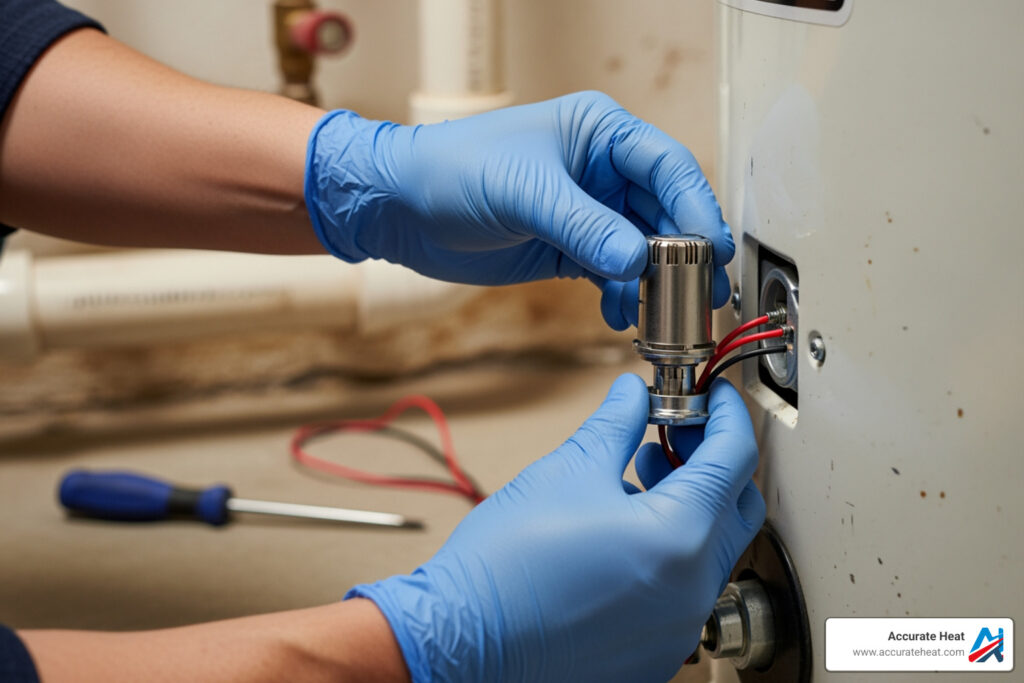
When Your Hot Water Stops Working: Understanding Thermostat Failures
Thermostat water heater replacement is often the solution for lukewarm showers, no hot water, or sudden high energy bills. A faulty thermostat can’t properly regulate water temperature, leading to frustration and wasted energy.
Quick Answer: What You Need to Know
- For Electric Water Heaters: Most homeowners can replace a thermostat themselves with basic tools and safety precautions.
- For Gas Water Heaters: Always hire a professional—the thermostat is integrated into the gas valve, and mistakes can cause dangerous gas leaks.
- Typical Cost: DIY thermostat parts run $20-$50; professional installation ranges from $150-$350.
- Time Investment: Expect 1-2 hours for a DIY electric thermostat replacement.
- When to Replace the Whole Unit: If your water heater is over 10 years old, full replacement may be more cost-effective.
A common issue shared online is hot water running cool during a second shower—a classic sign of thermostat failure.
Your water heater’s thermostat is its brain, telling the heating elements or gas burner when to turn on and off. When it fails, you might get water that’s never hot enough, fluctuating temperatures, or a constantly running heater that drives up energy bills.
For electric water heaters, this is a repair many Massachusetts homeowners can tackle themselves. The process involves shutting off power, removing access panels, and swapping the thermostat. However, safety is critical when working with high-voltage electricity and hot water.
For gas water heaters, the thermostat is part of the gas control valve. Replacement involves working with gas lines, so a misstep could cause a dangerous gas leak. This job is for licensed professionals only.
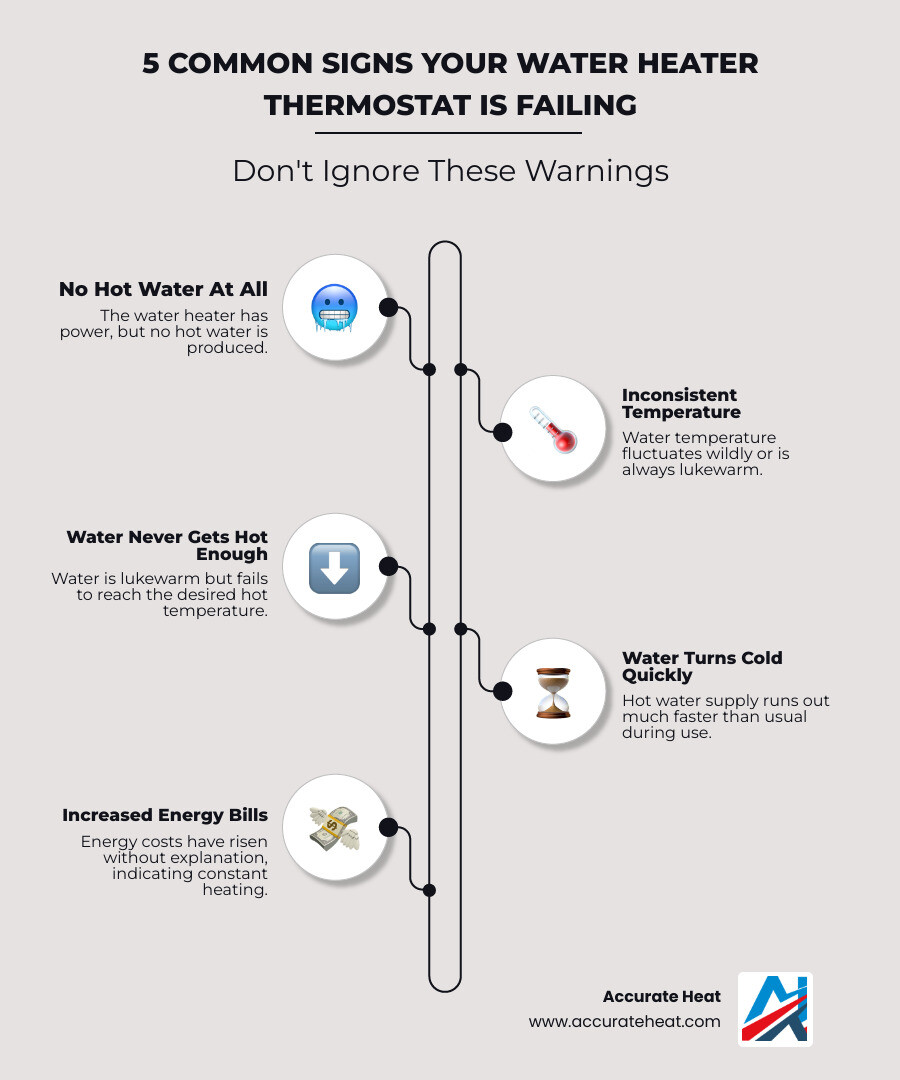
Is Your Water Heater Thermostat Faulty? Key Signs and Tests
When your water heater acts up, the thermostat is often the culprit. Identifying a faulty thermostat is the first step toward getting your hot water back. Here are the key signs of a malfunction:
- No Hot Water: The most obvious sign. If your heater has power but produces no hot water, the thermostat might not be signaling the heating source to activate.
- Water Too Hot: Conversely, if your water is scalding, the thermostat might be stuck on, continuously heating the water and creating a dangerous situation.
- Water Temperature Fluctuates: One moment it’s hot, the next it’s lukewarm. This indicates a thermostat struggling to maintain a steady temperature.
- Insufficient Hot Water: If hot water quickly turns cold, it’s a common symptom for electric models, often pointing to a bad lower thermostat or heating element. As one homeowner noted, “When the water starts hot and then gets cold, you’ll need a new lower thermostat and element.”
- High Energy Bills: A sudden spike in utility bills could be a thermostat that’s constantly running or heating inefficiently.
How a Water Heater Thermostat Works
A water heater thermostat is a temperature-sensing switch that tells the heating source (electric elements or a gas burner) when to turn on and off.
Most electric water heaters have two thermostats (upper and lower), each controlling a heating element. The upper thermostat heats the top of the tank first. Once that water is hot, it sends power to the lower thermostat to heat the rest of the tank. This non-simultaneous design provides hot water quickly from the top of the tank.
Gas water heaters integrate the thermostat into the gas control valve assembly. A sensor extends into the tank, and when the water cools, it signals the valve to open, igniting the burner. Once hot, the valve closes. Due to this integrated design, a failed thermostat requires replacing the entire gas control valve assembly.
How to Test a Water Heater Thermostat
Safety first: Always shut off the power supply to the water heater before any testing or replacement.
- Shut Off Power: Go to your home’s main electrical panel and turn off the circuit breaker for your water heater. For gas heaters, turn the gas valve to “pilot” or “off.”
- Verify Power is Off: Use a voltage tester or multimeter to confirm the power is off. This step is non-negotiable.
- Access Thermostats: For electric models, remove the access panels and insulation on the side of the tank to expose the thermostats.
- Test for Continuity (Electric): Disconnect the thermostat wires. Set your multimeter to ohms (Ω) and touch the probes to the terminals. A reading near zero means continuity; an “OL” (open loop) or infinite reading indicates a faulty thermostat.
- Test for Voltage (Electric): Visually inspect the thermostat for burning or corrosion. Try pressing the reset button (if present). If it trips repeatedly, the thermostat or element could be faulty.
- Check Heating Elements (Electric): A faulty element can mimic a thermostat issue. Test the heating elements with an ohm meter. A reading of 10-16 ohms is typical for a 240V element; no reading or a very high reading indicates a bad element.
If you’re uncomfortable with these steps or the problem persists, it’s always best to call a professional.
DIY Electric Thermostat Water Heater Replacement: A Step-by-Step Guide
Replacing an electric water heater thermostat can be a manageable DIY project for homeowners with basic electrical knowledge who prioritize safety. This guide will walk you through the steps for a successful thermostat water heater replacement.
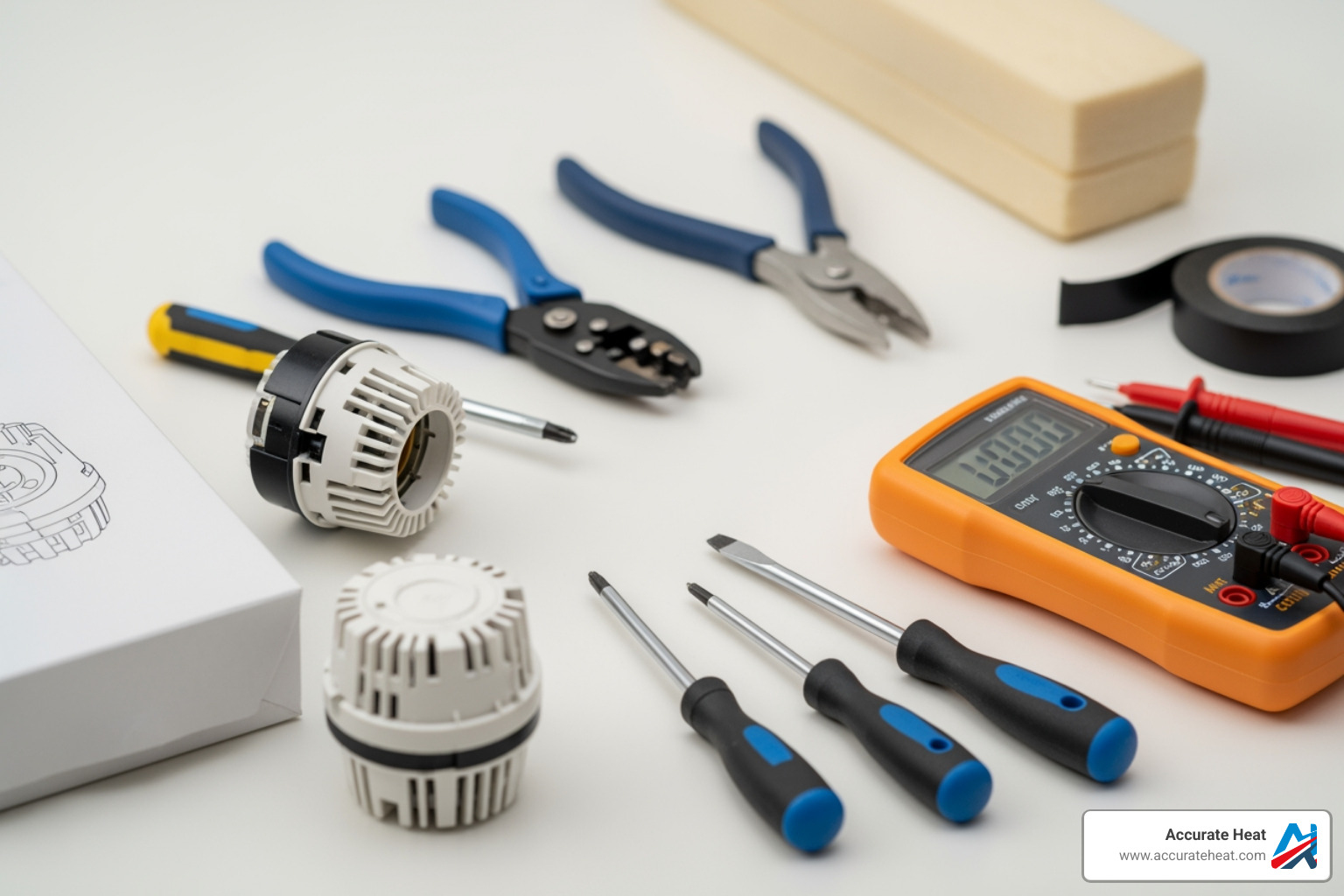
Tools and Materials Needed
Gathering the right tools beforehand makes the job smoother and safer.
- New Thermostat(s): Ensure it’s the correct type (upper/lower, single/double pole) and voltage for your model. Taking the old part to a hardware store in Franklin, MA, helps ensure a perfect match.
- Multimeter/Voltage Tester: Essential for verifying the power is off.
- Screwdrivers: Phillips and flathead.
- Needle-Nose Pliers: For manipulating wires.
- Wire Strippers (if needed)
- Wire Labels or Electrical Tape & Marker: To mark wires before disconnecting.
- Camera Phone: To photograph wiring before disassembly.
- Safety Glasses and Work Gloves
- Non-Contact Voltage Detector: For an extra layer of safety.
- Insulation: To replace any damaged insulation.
Preparing for Your Thermostat Water Heater Replacement
Proper preparation is vital.
- Shut Off Power: At your home’s electrical panel, switch the water heater’s circuit breaker (usually a double-pole) to the “OFF” position.
- Verify Power is Off: Use a multimeter to confirm no current is flowing to the water heater’s wires, checking all thermostat terminals.
- Drain Some Water (Optional but Recommended): Draining a few gallons from the tank can reduce the risk of spillage.
- Remove Access Panels: Remove the metal access panels on the side of the water heater. Behind them, remove the insulation and plastic safety cover to expose the thermostat.
- Photograph Wiring: Before disconnecting anything, take clear photos of the wiring as a reference.
- Label Wires: We also recommend labeling each wire with tape and a marker to prevent confusion.
Installing the New Thermostat
- Disconnect Wires: Referring to your photos and labels, carefully disconnect the wires from the old thermostat.
- Remove Old Thermostat: Thermostats are usually held by metal clips. Gently pry or twist to release the old thermostat, being careful not to damage nearby components.
- Install New Thermostat: Slide the new thermostat into the bracket, ensuring it sits flush against the tank to accurately sense water temperature.
- Reconnect Wires: Using your labels and photos, reconnect the wires to the new thermostat, ensuring all connections are tight.
- Replace Insulation and Panels: Replace the insulation, plastic safety cover, and the outer metal access panel.
Finalizing Your Thermostat Water Heater Replacement
A few final steps will get your water heater running again.
- Restore Power: Go back to the circuit breaker and switch it to the “ON” position.
- Set Temperature: Set the thermostat to 120°F (49°C) to prevent scalding while providing ample hot water.
- Test Hot Water: Wait an hour for the water to heat, then test a hot water faucet. If it’s heating correctly, you’ve successfully completed the replacement!
- Check for Proper Operation: Check for unusual noises or issues. If you encounter problems, call our experts. Accurate Heat provides comprehensive Water Heater Installation Services in MA and can assist with any follow-up needs.
Gas Water Heaters: Special Considerations and Dangers
While replacing an electric thermostat can be a DIY task, gas water heaters are different. The risks of natural gas or propane make this a job for licensed professionals.
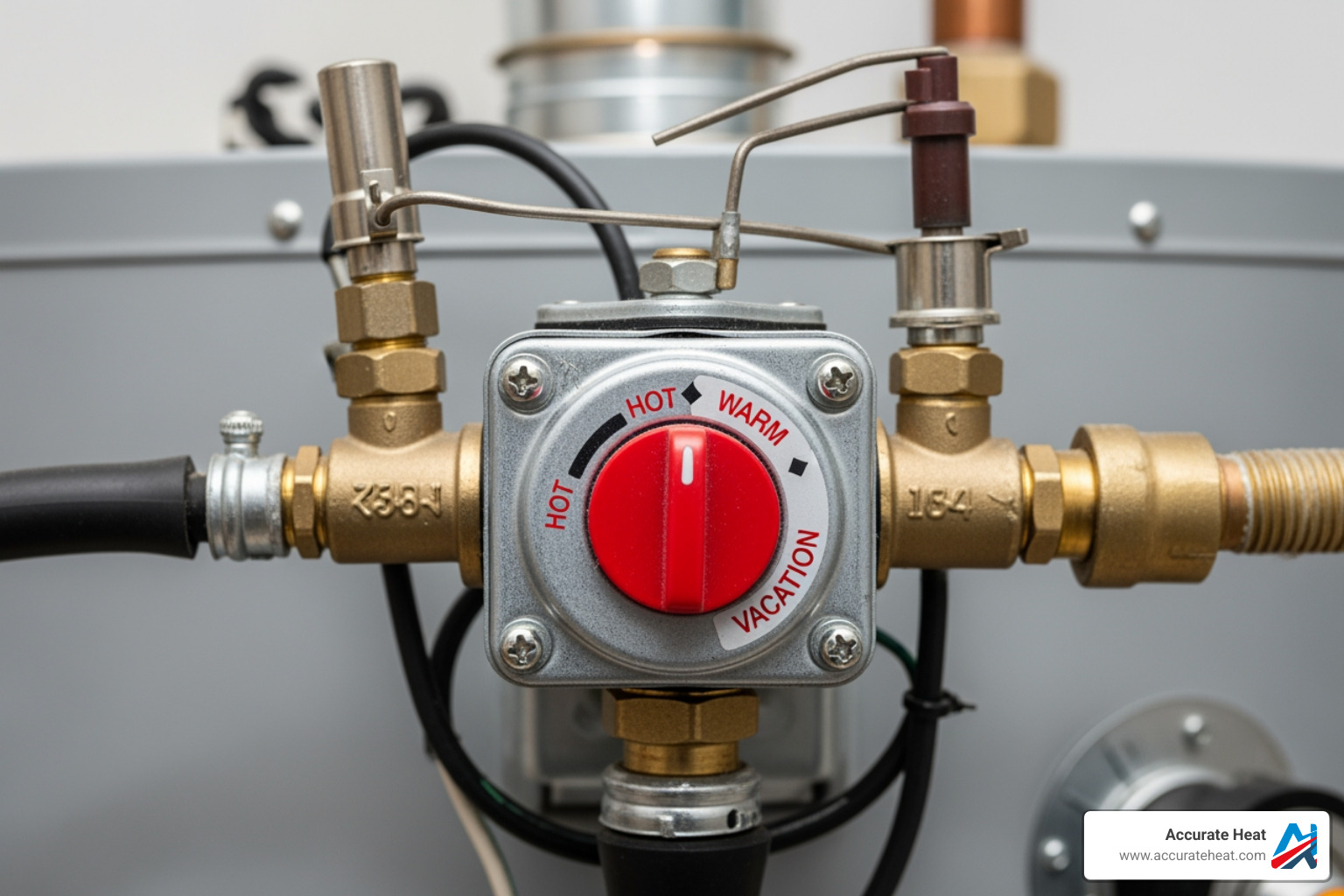
A gas water heater’s thermostat is part of the gas control valve unit. This assembly controls gas flow, the pilot light, and includes safety features like the thermocouple. The primary dangers include:
- Gas Leaks: Incorrectly handling gas lines can lead to flammable and explosive gas leaks.
- Carbon Monoxide Risk: A faulty installation can lead to improper combustion, producing deadly, odorless carbon monoxide.
- Pilot Light Issues: Incorrectly relighting the pilot light is also a safety hazard.
Why Gas Thermostat Replacement is a Job for Professionals
Due to the integrated assembly and severe risks, we strongly advise against a DIY thermostat water heater replacement on a gas unit.
- Integrated Gas Valve Assembly: The thermostat is part of a complex unit. Replacing the thermostat means replacing the entire assembly.
- Risk of Gas Leaks: Working with gas lines requires special tools and training to create leak-proof connections. A small leak can be catastrophic.
- Specialized Tools and Knowledge: Professionals have the right equipment and expertise to handle gas lines, test for leaks, and ensure proper ventilation.
- Local Codes and Permits: Massachusetts has strict codes for gas appliance repairs. A licensed pro ensures compliance, which is crucial for safety and insurance. DIY work can lead to fines or voided warranties.
When it comes to gas water heater issues, trust the experts. Our team at Accurate Heat provides reliable Heating Repair Services throughout Massachusetts.
When to Call a Professional for Any Thermostat Replacement
Even for electric water heaters, calling a professional is sometimes the smartest choice. Contact us if:
- You’re Uncomfortable with Electricity: If you’re nervous about high-voltage wiring, don’t risk it.
- You Have a Gas Water Heater: This is always a job for a licensed professional.
- The Problem Persists After DIY Replacement: It could be a more complex issue like a bad heating element or sediment buildup.
- You Notice Signs of a Larger Issue: Leaks, rumbling, rusty water, or a burning smell are red flags that require expert diagnosis.
- Your Water Heater is Over 10 Years Old: If your unit is over 10 years old, it’s nearing the end of its life. As the U.S. Department of Energy notes, it may be time to consider replacing it. A new thermostat might be a temporary fix for an aging unit. Learn more here: When Should You Replace Your Water Heater?
Choosing a Replacement and Understanding the Costs
Deciding between DIY and professional replacement involves several factors. Here’s a comparison for your Massachusetts home:
| Feature | DIY Thermostat Replacement (Electric Only) | Professional Thermostat Replacement (Electric or Gas) |
|---|---|---|
| Pros | Cost savings on labor, sense of accomplishment, immediate fix if parts are available. | Safety, expertise, compliance with codes, warranty on work, peace of mind, suitable for all water heater types. |
| Cons | Risk of electrical shock, incorrect installation, potential for further damage, not suitable for gas units, no warranty on labor. | Higher upfront cost, scheduling time, may suggest full water heater replacement if age/condition warrants. |
| Cost | $20 – $50 (part only) | $150 – $350+ (part + labor) |
| Time Commitment | 1-2 hours | Varies based on scheduling |
How to Choose the Right Replacement Thermostat
Selecting the correct thermostat is crucial for function and safety.
- Electric vs. Gas: Electric thermostats are separate parts, while gas thermostats are integrated into the gas control valve. Ensure you get the right type.
- Upper vs. Lower (Electric): For dual-element electric heaters, determine if you need an upper or lower thermostat. Symptoms like lukewarm water (upper) or hot water turning cold (lower) can help diagnose the faulty part.
- Single vs. Double Pole (Electric): Match the existing thermostat type: single-pole or double-pole.
- Matching the Old Model: The best approach is to take the old thermostat with you to ensure you match the brand, model, voltage, and type. Choosing a thermostat from the same manufacturer is often best for compatibility.
- Compatibility: Always check your water heater’s manual or the manufacturer’s website for compatibility. Ensuring your replacement thermostat is compatible is key for this repair, just as proper sizing is for overall efficiency, as noted by the Department of Energy: Sizing a New Water Heater.
Cost Breakdown: DIY vs. Professional Installation
The financial aspect is a key part of the decision.
- Thermostat Part Cost: A new thermostat is inexpensive, usually costing $20 to $50. This makes a DIY electric thermostat water heater replacement a budget-friendly repair.
- Professional Labor Cost: Professional installation, recommended for gas units or if you’re uncomfortable with electrical work, costs more. In Massachusetts, expect to pay $150 to $350+, depending on job complexity and location (e.g., Franklin, MA).
While professional installation costs more upfront, it provides value through proper installation, safety code adherence, and a warranty. Promptly fixing a faulty thermostat also lowers energy bills. Exploring Energy Efficient Heating Solutions is a smart move for Massachusetts homeowners.
Frequently Asked Questions about Water Heater Thermostats
We hear a lot of questions about water heater thermostats from homeowners across Massachusetts. Here are some of the most common ones:
Can a faulty thermostat cause my energy bills to increase?
Yes. A faulty thermostat can get stuck in the “on” position, causing the water heater to run continuously. This wastes energy and leads to higher utility bills. Replacing it restores efficiency and lowers costs.
How long does a water heater thermostat last?
A thermostat’s lifespan varies but is often shorter than the water heater’s 8-12 year life. Water quality, usage, and manufacturing quality are all factors. It’s not uncommon for a thermostat to be replaced during the heater’s life.
Is it worth replacing the thermostat on an old water heater?
This is a critical question. If your water heater is over 10 years old, it’s near the end of its lifespan. A thermostat water heater replacement might be a short-term fix, but it may not be cost-effective as other parts could soon fail.
In these cases, replacing the entire unit with a new, energy-efficient model is often more prudent. ENERGY STAR certified models offer significant long-term savings. For instance, a heat pump water heater can save a household of four over $330 annually, and federal tax credits of up to $2,000 are available on eligible models through December 31, 2032. We can help you explore options for Replacing Your Heating System and decide if a full replacement is your best investment.
Conclusion
Knowing how to handle a thermostat water heater replacement is valuable for Massachusetts homeowners. A DIY replacement for an electric unit can be cost-effective if you prioritize safety, always shutting off and verifying the power is off before starting.
For gas water heaters, the stakes are higher. The dangers of gas leaks and carbon monoxide mean this is a job for licensed professionals only.
Whether you’re tackling an electric thermostat yourself or need expert assistance with a gas unit, Accurate Heat is here to help. We provide reliable HVAC and plumbing services in Franklin, MA, and surrounding areas to keep your systems safe and efficient. Contact us for expert advice, diagnostics, or professional repair and installation services.