Why Hiring the Right AC Installation Contractors Matters for Your Home
AC installation contractors are licensed HVAC professionals who supply, size, and install cooling systems in residential homes — and choosing the right one makes a big difference in comfort, energy bills, and system lifespan.
Here’s what to look for when hiring an AC installation contractor:
- Valid licenses and certifications (state HVAC license, EPA 608, NATE certification)
- Proven local experience with your region’s climate and building codes
- Verified customer reviews with consistently high ratings
- Transparent, upfront pricing with no hidden fees
- Manufacturer warranties plus a workmanship guarantee
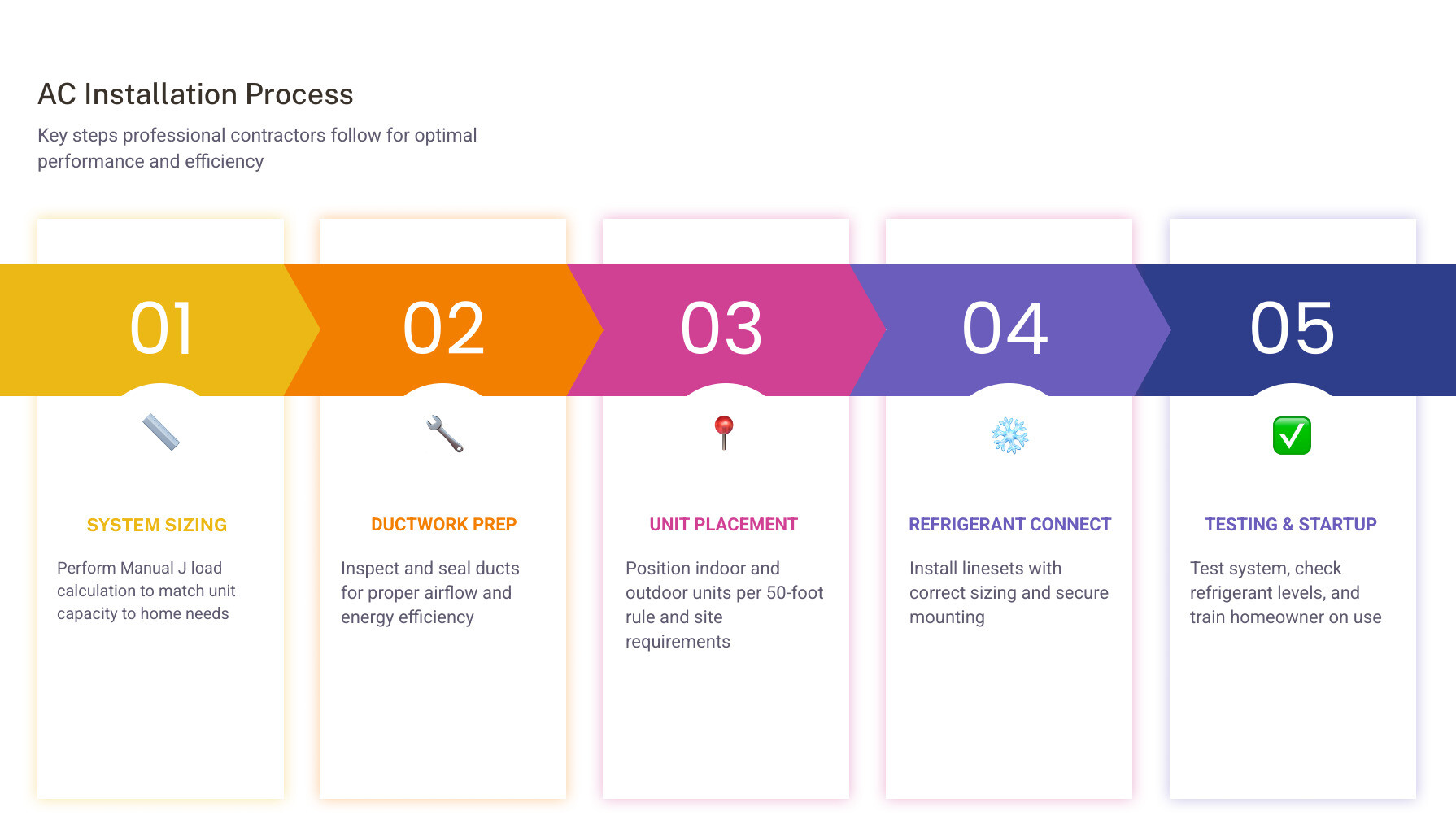
- Proper load calculation (Manual J) to size your system correctly
- Financing options if needed, including rebates like Mass Save
Most homeowners don’t think much about their AC — until it stops working on the hottest day of the year.
Getting a new system installed isn’t just about picking a unit and scheduling a crew. The contractor you choose directly affects how well your system performs, how long it lasts, and how much you’ll spend on energy every month.
Modern AC units can last 15 to 20 years when installed correctly. A poor installation can cut that lifespan significantly — and lead to higher utility bills, uneven cooling, and expensive repairs down the road.
This guide walks you through everything you need to know to find a qualified, trustworthy AC installer in Massachusetts.
How to Choose the Best AC Installation Contractors for Your Home
Choosing between various ac installation contractors can feel like a high-stakes game of “spot the difference.” On the surface, many companies seem to offer the same metal boxes and copper pipes. However, the technical expertise behind the installation is what determines whether your home stays a crisp 70 degrees or becomes a humid swamp during a Norfolk County heatwave.
When we look at what separates an elite installer from a “chuck-in-a-truck” operation, it starts with legal and professional standing. In Massachusetts, a legitimate contractor must hold a state-issued license. But we believe you should look further. Top-tier pros carry NATE (North American Technician Excellence) certification, which is the gold standard for technical competency in the HVAC industry.
Furthermore, look for contractors who adhere to the Scientific research on HVAC standards provided by the ACCA (Air Conditioning Contractors of America). These standards, including Manual J, S, and D, are the “laws of physics” for cooling. If a contractor tries to eyeball your home’s size instead of performing these calculations, it’s a major red flag.
Local expertise is equally vital. Massachusetts weather is unique; we deal with high humidity in the summer and salt air in coastal areas like Quincy or Braintree. A local expert understands how these regional climate factors affect equipment longevity. For those in our service area, you can find more info about AC installation services tailored specifically to the Massachusetts landscape. Finally, always check for an A+ rating from the Better Business Bureau (BBB) to ensure the company has a history of resolving customer concerns honestly.
Evaluating Credentials and Reviews for AC Installation Contractors
Before you sign a contract, you need to verify that the team entering your home is trustworthy. A 5-star experience isn’t just about the cooling; it’s about the punctuality, the cleanliness of the job site, and the transparency of the communication.
Here is a checklist of essential credentials your contractor should possess:
- Massachusetts State HVAC/Refrigeration License: Legal permission to perform the work.
- EPA 608 Certification: Required by federal law for anyone handling refrigerants.
- Liability Insurance and Workers’ Comp: Protects you from financial responsibility if an accident occurs on your property.
- NATE or Manufacturer-Specific Training: Such as being a Mitsubishi Electric Elite Diamond Contractor.
We always recommend that homeowners read verified reviews on platforms like Google or Angi. Look for patterns in the feedback—do customers mention that the technicians wore floor protectors? Did they explain how to use the new thermostat? You can request a quote from top-rated pros to see how different companies handle the initial consultation.
If you are considering a more modern approach to cooling, such as ductless systems, specialized knowledge is required. We’ve compiled tips for hiring a ductless heat installer to help you navigate the specific certifications needed for those high-efficiency units.
Understanding Sizing and Technical Standards Used by AC Installation Contractors
One of the most common mistakes unqualified installers make is “oversizing” the unit. You might think a bigger AC is better, but an oversized system will “short-cycle”—turning on and off rapidly. This fails to remove humidity, increases wear and tear, and sends your electric bill skyrocketing.
To avoid this, professional ac installation contractors use Manual J Load Calculations. This isn’t just about square footage; it accounts for:
- The orientation of your home (which rooms face the sun).
- Insulation levels in your attic and walls.
- The number and type of windows.
- Local Massachusetts climate data.
Once the load is calculated, the contractor helps you choose between system types. Here is a quick comparison:
| Feature | Central Air Conditioning | Ductless Mini-Split |
|---|---|---|
| Installation Requirement | Requires existing ductwork | No ducts needed; wall-mounted |
| Zoning | Usually one or two zones | Individual room control |
| Aesthetic | Hidden (vents only) | Visible indoor units |
| Efficiency | High (up to 20+ SEER) | Ultra-High (up to 30+ SEER) |
| Best For | Whole-home cooling | Additions, older homes, or specific zones |
For more details on how these systems operate, check out more info about ductless mini-split systems. Choosing the right SEER (Seasonal Energy Efficiency Ratio) rating is also crucial. While a higher SEER unit costs more upfront, the energy savings over 15 years in a town like Newton or Wellesley can be thousands of dollars.
Preparing Your Home and Ductwork for Installation
If you are opting for a central AC system, your existing ductwork is the “veins” of the system. If the ducts are leaky, undersized, or clogged, your brand-new AC will struggle to perform.
A professional inspection of the ductwork is a mandatory first step. Contractors will look for disconnected joints or areas where air is escaping into your attic or crawlspace. In many older Massachusetts homes, the ducts were originally designed for heating only; because cold air is denser and harder to move, these ducts may need “upsizing” or sealing to handle a modern AC’s airflow requirements.
Placement of the units is another technical detail where pros shine. The “50-foot rule” is a common industry guideline; generally, the distance between the indoor evaporator coil and the outdoor condenser should be kept as short as possible—ideally under 50 to 60 feet—to prevent refrigerant cooling loss. If the units are too far apart, the system has to work much harder to move the refrigerant, decreasing efficiency.
If your home’s current setup is outdated, you might want to look into more info about AC upgrades to see how modernizing your air distribution can improve your overall comfort.
Maximizing Value: Costs, Timing, and Long-Term Maintenance
Investing in a new AC system is a significant financial decision. To get the most value, you need to look beyond the initial price tag and consider the total cost of ownership over the next two decades.
Navigating Installation Costs and Financing Options
The cost of hiring ac installation contractors varies based on several factors:
- System Size: Larger homes require higher-capacity units.
- Efficiency Rating: Higher SEER ratings typically involve more advanced technology and higher costs.
- Ductwork Condition: If you need new ducts, the price will increase.
- Labor: Hourly rates for HVAC pros in the MetroWest and Greater Boston area typically range from $50 to $150, though most installations are quoted as a flat-fee project.
Fortunately, there are ways to offset these costs. In Massachusetts, the Mass Save program offers substantial rebates and 0% HEAT Loan financing for high-efficiency heat pumps and cooling systems. We highly encourage our neighbors in Franklin, Medfield, and beyond to explore financing options for new systems to make these upgrades more affordable.
Reputable contractors will always provide upfront pricing. This means a written proposal that details the equipment, the labor, the permit fees, and the electrical work required. This prevents “sticker shock” once the job is finished.
The Professional Installation Process and Timeline
A standard AC installation is a choreographed dance of electrical work, plumbing (for condensate lines), and mechanical assembly. For a straightforward replacement, you can expect the process to take about 8 hours—basically one full workday. However, if you are installing a brand-new system in a home that never had AC, or if extensive ductwork is needed, it can take 1 to 2 days.
The typical process includes:
- Site Protection: Laying down drop cloths to protect your floors.
- Removal: Decommissioning and hauling away the old unit and hazardous refrigerants.
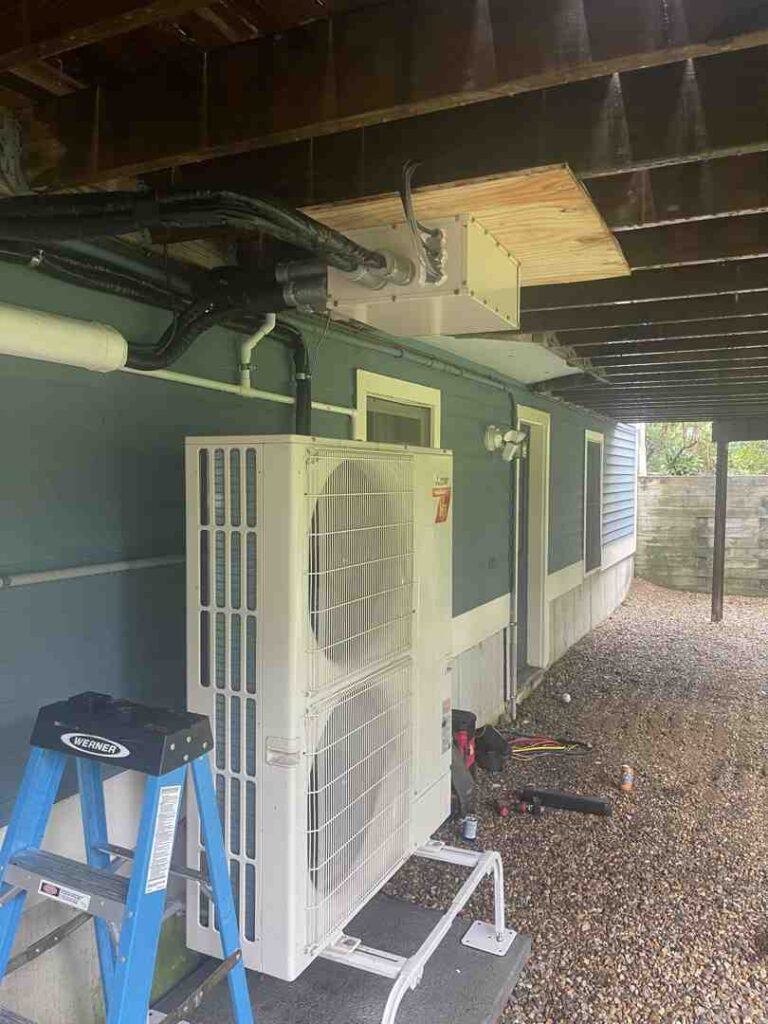
- Placement: Setting the new indoor and outdoor units on level, vibration-absorbing pads.
- Connections: Running the copper refrigerant lines, electrical wiring, and drain lines.
- Vacuuming the System: Removing air and moisture from the lines before charging with refrigerant.
- Testing: Measuring airflow, pressures, and temperatures to ensure factory-spec performance.
- Training: Showing you how to operate your new thermostat and maintain your filters.
For a deeper dive into what happens during the day of the job, you can find more info about HVAC install services.
Post-Installation Care and Maintenance Tips
Once your system is humming along, the goal is to keep it that way. At Accurate Baker Elman, we’ve seen that the number one cause of premature AC failure is simple neglect—specifically, dirty filters.
To ensure your system reaches that 20-year milestone, follow these contractor-recommended tips:
- Change Filters Regularly: Every 1 to 3 months depending on pets and allergies.
- Clear the Outdoor Unit: Keep at least two feet of clearance around your outdoor condenser. Remove leaves, grass clippings, and snow.
- Schedule Annual Tune-Ups: Just like a car, your AC needs a professional check-up once a year to clean the coils and check refrigerant levels.
- Monitor Performance: If you notice new noises or a sudden spike in your utility bill, call for service immediately.
Consistent care is so important that we offer specialized more info about AC maintenance for our local clients. Regular maintenance not only preserves your warranty but can also reduce your energy consumption by up to 15%.
Finding the right ac installation contractors doesn’t have to be a headache. By focusing on credentials, technical standards like Manual J, and long-term maintenance, you can ensure your home remains a sanctuary of cool comfort for years to come.
Ready to upgrade your home comfort? Schedule your AC installation service with our expert team today!