
Why Understanding Air Ducts Replacement Cost Matters for Your Massachusetts Home
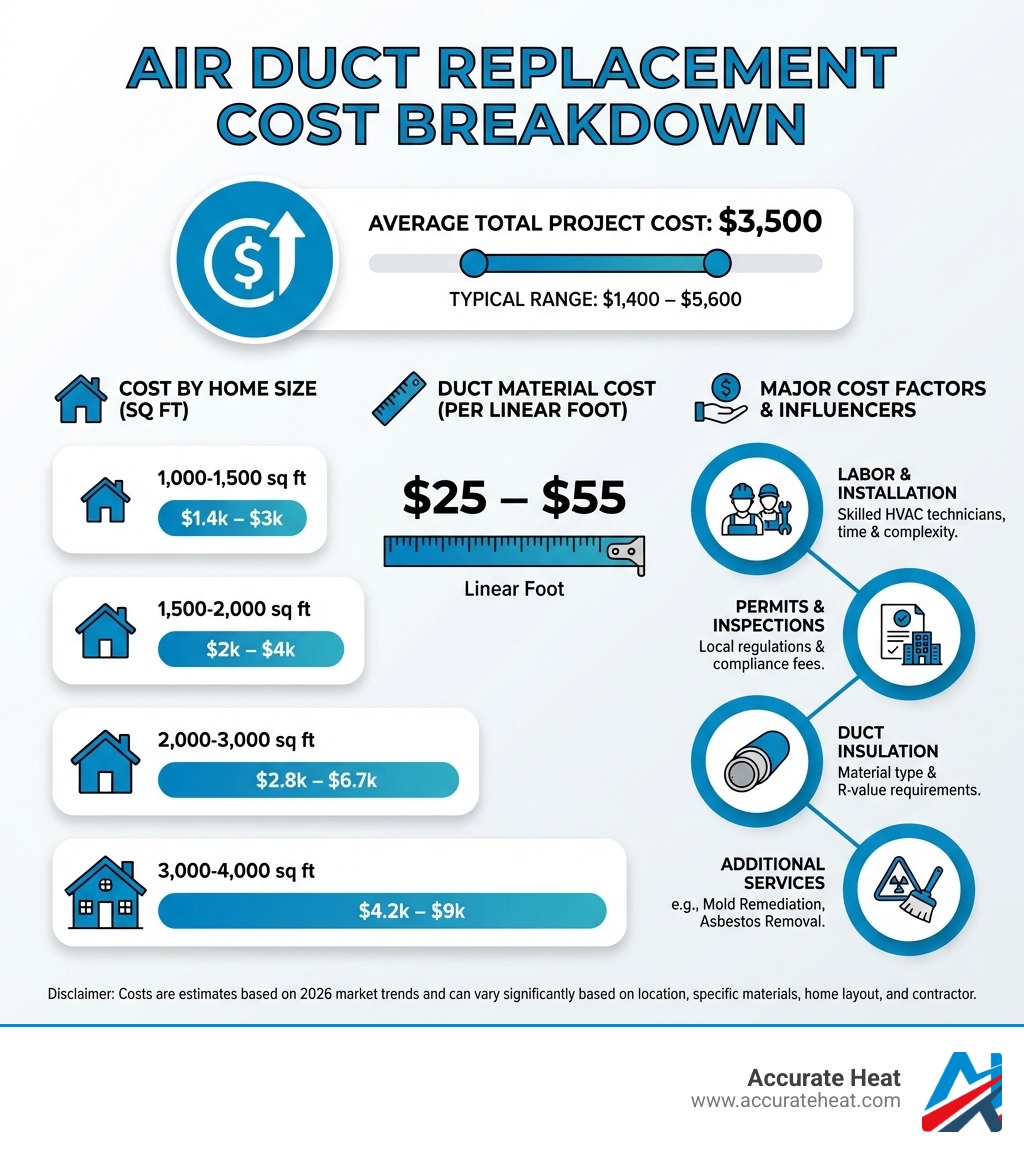
Air ducts replacement cost typically ranges from $1,400 to $5,600 for most homes, with an average project costing around $3,500. However, your specific cost depends on several factors including your home’s size, duct material, and location accessibility.
Quick Cost Overview:
- Average Total Cost: $3,500
- Typical Range: $1,400 – $5,600
- Cost Per Linear Foot: $25 – $55
- By Home Size:
- 1,000-1,500 sq ft: $1,400 – $3,000
- 1,500-2,000 sq ft: $2,000 – $4,000
- 2,000-3,000 sq ft: $2,800 – $6,700
- 3,000-4,000 sq ft: $4,200 – $9,000
If you’re a Massachusetts homeowner dealing with uneven temperatures, rising energy bills, or excessive dust, your ductwork might be the culprit. Your air ducts work as your home’s respiratory system—circulating heated and cooled air to every room. When they fail, so does your comfort.
Many homeowners are surprised to learn that old or leaky ducts can reduce HVAC efficiency by up to 20%. That means you’re literally heating or cooling the outdoors while your utility bills climb higher. In harsh Massachusetts winters, inefficient ductwork doesn’t just waste money—it puts your family’s comfort and safety at risk.
Understanding what you’ll actually pay for duct replacement helps you budget properly and avoid surprises. The cost varies significantly based on your home’s layout, the materials used, and whether you need additional work like asbestos removal or mold remediation.
This guide breaks down every factor that influences your air ducts replacement cost, helping you make informed decisions about this important home investment.
Breaking Down the Air Ducts Replacement Cost
When we talk about the air ducts replacement cost, it’s rarely a single, fixed number. Instead, it’s a dynamic figure influenced by numerous elements unique to your home and the scope of the project. Think of it like building a custom home – the base price is just the beginning.

The average total project cost for air duct replacement typically hovers around $3,500, but we’ve seen projects range anywhere from $1,400 on the low end to $9,000 or more for larger, more complex installations. This broad range highlights why a detailed assessment is crucial.
One of the most significant factors is your home’s size. Larger homes naturally require more linear feet of ductwork, which directly translates to higher material and labor costs. Here’s a general idea of how home size affects the total air ducts replacement cost:
- 1,000 to 2,000 sq ft homes: $1,400 to $4,500
- 2,000 to 3,000 sq ft homes: $2,800 to $6,700
- 3,000 to 4,000 sq ft homes: $4,200 to $9,000
Another critical factor is the location of your existing ductwork within your home. Ducts located in easily accessible areas, like an unfinished basement, will naturally be less expensive to replace than those tucked away in a cramped attic or hidden behind finished walls. The accessibility challenges directly impact the labor required.
- Ducts in walls or ceilings: $1,000 to $4,000 to replace
- Ducts in basements: $1,800 to $3,100 to replace (unfinished basements on the lower end, finished on the higher)
- Ducts in attics: $2,200 to $5,600 to replace
- Ducts in crawlspaces: $3,000 to $7,300 to replace
Labor costs are a substantial portion of the overall air ducts replacement cost. Our HVAC professionals in Massachusetts typically charge $50 to $150 per hour, or we might quote a flat fee of $5 to $10 per linear foot for installation labor. This rate can increase significantly for complex layouts, hard-to-reach areas, or if extensive demolition and repair work are needed to access the old ducts. The more time and specialized skill required, the higher the labor portion of your bill will be.
Key Factors Influencing Your Air Ducts Replacement Cost
Beyond the sheer size and location, the type of materials we use for your new ductwork plays a pivotal role in the final cost. Each material has its own advantages, lifespan, and price point. Here’s a breakdown of common duct materials and their characteristics:
| Duct Material | Cost Per Linear Foot | Lifespan | Key Characteristics |
|---|---|---|---|
| Flexible, Non-Insulated | $1 – $3 | 10 years or less | Most affordable, easy to install in tight spaces, but prone to kinks and less efficient. |
| Flexible, Insulated | $2 – $4 | 15 – 25 years | Better energy efficiency than non-insulated flex, good for complex runs, but still prone to damage. |
| Fiberglass (Duct Board) | $4 – $6 | 10 – 30 years | Good insulation properties, quieter, lightweight. Can be prone to moisture damage if not properly maintained. |
| Sheet Metal (Galvanized Steel/Aluminum) | $7 – $13 | 20 – 50+ years | Most durable, best airflow, excellent energy efficiency, but more expensive and harder to install. |
Sheet metal ducts, typically made from galvanized steel or aluminum, are the premium choice. They offer superior durability and airflow, leading to excellent energy efficiency and a long lifespan—often exceeding 20 years, even up to 50 with proper maintenance. While they come with a higher upfront air ducts replacement cost of $7 to $13 per linear foot, their longevity and performance can make them a wise long-term investment for your Massachusetts home.
Fiberglass ducts, often referred to as duct board, range from $4 to $6 per linear foot. These ducts offer good insulation properties, are quieter than metal, and are relatively lightweight. They typically last around 10 to 30 years. If fiberglass ducts get wet or moldy, they cannot be effectively cleaned and usually require replacement.
Flexible ducts, available in both insulated and non-insulated versions, are the most cost-effective option, ranging from $1 to $3 per linear foot for non-insulated and $2 to $4 per linear foot for insulated. They are easy to install in complex layouts and tight spaces, making them popular for connecting rigid ducts to registers. However, they have the shortest lifespan, often 10 years or less for non-insulated, and up to 25 for insulated. We often use a combination of materials, for instance, sheet metal for long, straight sections and flexible ducts for intricate connections.
Beyond materials, the overall ductwork layout complexity significantly impacts the cost. A straightforward, simple layout with minimal turns and obstacles will be less costly than a system requiring custom fabrication, multiple zones, or intricate routing around existing structures. Historic homes or those with unique architectural features in Massachusetts often necessitate custom ductwork, which can increase costs by up to 50% due to extra design, ordering, and installation steps.
Accessibility challenges, as mentioned earlier, also play a huge role. If our team needs to work in tight crawl spaces, steer through finished walls, or spend extra time protecting your home during installation, these factors will add to the labor hours and, consequently, your total air ducts replacement cost.
Additional Factors That Affect the Air Ducts Replacement Cost
When planning for air duct replacement, it’s easy to focus solely on the ducts themselves. However, several other costs can arise, turning a seemingly simple project into a more extensive one. We always aim to provide a transparent estimate that includes these potential additional expenses:
Permit Fees: In Massachusetts, most significant HVAC projects, including full ductwork replacement, require local building permits. These fees vary widely by municipality but can range from $50 to $1,500. Permits ensure that the work meets local building codes and safety standards, and skipping them can lead to fines, difficulties with home resale, and even insurance issues. We handle all necessary permitting to ensure your project is fully compliant.
Insulation R-value: While some duct materials, like fiberglass duct board, offer inherent insulation, many systems benefit from additional insulation, especially when ducts run through unconditioned spaces like attics, crawl spaces, or basements. Adding new insulation can impact the total air ducts replacement cost by $800 to $2,000 on average, or $2 to $4 per linear foot for materials. The R-value (a measure of thermal resistance) of the insulation can also affect costs, with higher R-values adding $200 to $1,700 to the total, but offering greater energy savings in the long run.
Asbestos Removal: For older homes in Massachusetts, particularly those built before the 1970s, there’s a risk of asbestos-containing materials being present, often found in insulation or tape wrapped around older ductwork. If we find asbestos, professional abatement is legally required for safety. Asbestos removal can add up to $2,200 (sometimes ranging from $1,000 to $3,000) to your project. This is a critical safety concern, and we ensure proper handling. For more information on the dangers, you can refer to the Hazards of asbestos in construction.
Mold Remediation: Moisture intrusion or leaks can lead to mold growth within ductwork, especially in humid environments. If mold is present, it must be thoroughly remediated before new ducts are installed to prevent health issues and recontamination. Mold remediation can significantly increase costs, potentially adding up to $6,000 (with ranges from $450 to $6,000) to the total project. We can perform inspections and recommend trusted mold remediation specialists if needed.
Drywall and Ceiling Repairs: Accessing existing ductwork often requires cutting into walls or ceilings, especially for systems routed through living areas. After the new ducts are installed, these areas will need repair. Drywall repair typically costs between $150 and $325, while ceiling repairs can range from $300 to $1,200, depending on the extent of the damage and finish required. We’ll include these potential costs in our comprehensive estimate.
Adding New Vents or Registers: If you’re looking to improve airflow to specific rooms or add new zones, you might want to install additional vents or registers during the replacement. Each new vent can add $250 to $500 to your air ducts replacement cost. While this adds to the upfront expense, it can greatly improve comfort and airflow balance throughout your home.
When to Repair vs. Replace Your Air Ducts
It’s a common dilemma for homeowners: should we repair our existing ductwork or invest in a full replacement? Understanding the typical lifespan of air ducts and recognizing the warning signs can help us make the most cost-effective decision for your Massachusetts home.
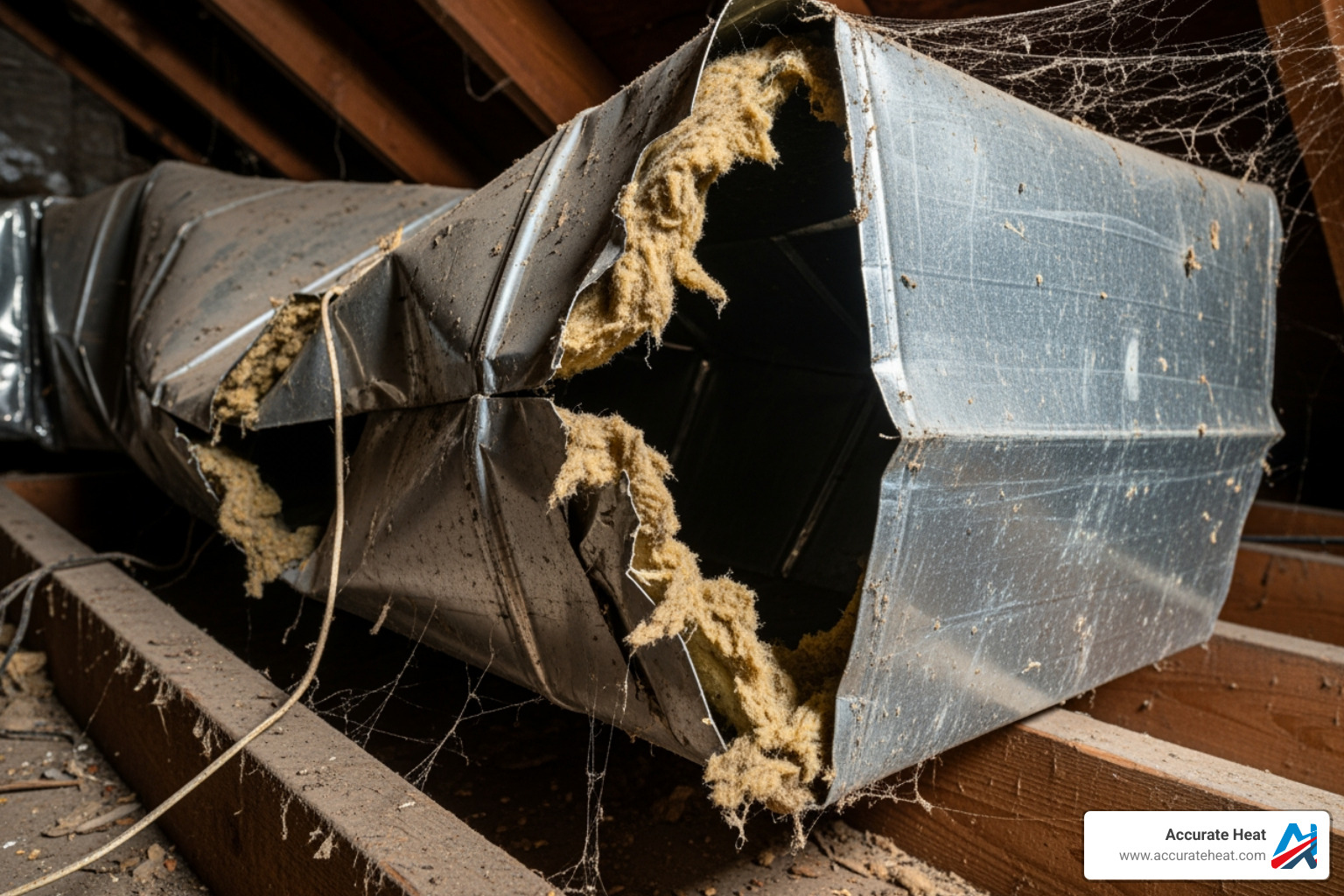
Generally, air ducts are built to last, but not forever. Their lifespan can vary significantly based on material and quality, but you can typically expect them to perform well for 10 to 25 years. Flexible ducts often have a shorter lifespan (around 10 years or less for non-insulated, 15-25 for insulated), while robust sheet metal ducts can last 20 to 50+ years with proper care.
So, how do you know if your ducts are nearing the end of their useful life? Here are some clear signs that indicate your air ducts might need attention, or even a full replacement:
- Uneven Temperatures: Are some rooms consistently too hot or too cold, no matter how much you adjust the thermostat? This “hot and cold spot” phenomenon often points to leaky, improperly sized, or damaged ducts causing inefficient air distribution.
- High Energy Bills: A sudden or gradual increase in your heating and cooling costs, without a corresponding change in usage or utility rates, is a major red flag. Leaky ducts can waste up to 20% of your conditioned air, forcing your HVAC system to work harder and longer.
- Noisy Ducts: Hearing whistling, rattling, or banging sounds when your HVAC system runs can indicate loose connections, vibrating components, or blockages within the ductwork.
- Excessive Dust: If your home seems unusually dusty, even after regular cleaning, it might be a sign that dust and debris are entering your duct system through cracks and gaps, or that your ducts are simply accumulating too much grime.
- Pest Infestations: Unwanted guests like rodents or insects can find their way into damaged ductwork, building nests and leaving behind droppings that contaminate your indoor air.
- Visible Damage: Look for obvious signs of wear and tear, such as rust, kinks, tears, disconnected sections, or sagging flexible ducts in accessible areas like your basement or attic.
Deciding Between Repair and Full Replacement
Making the call between repairing and replacing your ductwork boils down to the extent of the damage, the age of your system, and long-term cost-effectiveness.
For minor issues, repairs can be a great solution. For example, duct sealing can address small leaks and loose connections. Manual sealing, using mastic or specialized tape, can cost anywhere from $400 to $1,900, while aerosol-based sealing methods can range from $1,300 to $3,000. Minor and average ductwork repairs, like fixing a small tear or reconnecting a section, typically cost between $300 to $900. If only a small section of your ductwork is damaged, a partial replacement might also be a cost-effective option, focusing on the problematic area rather than the entire system.
However, there are clear instances when a full replacement becomes necessary and more cost-effective in the long run:
- Old Age (15+ Years): If your ductwork is nearing or past its typical lifespan (15-20 years for most materials), the cumulative wear and tear, coupled with outdated design, often makes replacement a better investment than continuous repairs.
- Widespread Damage: If we find extensive rust, numerous leaks, collapsed sections, or widespread deterioration throughout your system, patching it up might be like putting a band-aid on a broken bone. A full replacement ensures a fresh start.
- Mold Growth: This is a serious health concern. If mold is present throughout your ductwork, especially in porous materials like fiberglass or flexible ducts, cleaning is often ineffective. The EPA explicitly states that if insulation in air ducts gets wet or moldy, it cannot be effectively cleaned and should be removed and replaced. You can find more details on this guidance from the EPA guidance on mold in ducts.
We’ll provide a thorough assessment of your existing ductwork to help you understand the pros and cons of repair versus replacement, ensuring you make an informed decision that suits your budget and long-term home comfort goals.
Smart Savings: DIY vs. Professional Installation and Other Tips
When considering the air ducts replacement cost, many homeowners might wonder if they can save money by tackling the project themselves. While we appreciate a good DIY spirit, we strongly advise against attempting a full air duct replacement.
Professional installation by certified HVAC technicians offers numerous benefits. We have the specialized knowledge, tools, and experience to correctly size, design, and install a duct system that optimizes airflow, maximizes energy efficiency, and complies with all local Massachusetts building codes. This ensures your HVAC system performs at its best, providing consistent comfort and lower energy bills.
The risks of DIY air duct replacement are substantial and often lead to more costly problems down the line:
- Code Violations: Ductwork installation is subject to strict building codes. Improper DIY work can lead to failed inspections, fines, and the need for costly re-installation by professionals.
- Poor Efficiency: Incorrectly sized or installed ducts can lead to significant air leaks, poor airflow, and uneven heating and cooling, completely negating any potential savings and causing your HVAC system to work harder.
- System Damage: A poorly designed or installed duct system can put undue strain on your HVAC unit, leading to premature breakdowns and expensive repairs to your furnace or AC.
- Voided Warranties: Many HVAC system warranties require professional installation of all components, including ductwork. DIY work could void these valuable warranties.
- Safety Hazards: Working with sheet metal can be dangerous, and improper sealing can lead to indoor air quality issues.
Instead of DIY, we recommend exploring other smart ways to save on your air ducts replacement cost:
- Bundling with HVAC Replacement: If your HVAC system is also old or inefficient, consider replacing both the unit and the ductwork at the same time. Many contractors offer discounts or more attractive pricing for bundled services, potentially saving you around 15% on labor costs. It also ensures optimal system compatibility and efficiency from day one.
- Scheduling During Off-Peak Seasons: HVAC companies often have busier periods during extreme summer and winter months. Scheduling your duct replacement during off-peak times, such as late spring (April-May) or early fall (September-October), can sometimes lead to potential savings of $500 to $1,000 as contractors may offer discounts to fill their schedules.
Maximizing Efficiency and Reducing Long-Term Costs
Investing in new, properly installed ductwork is more than just an expense; it’s an investment in your home’s long-term comfort, efficiency, and indoor air quality.
The benefits of new ductwork are clear and impactful:
- Improved HVAC Efficiency: New ducts are designed for optimal airflow, minimizing leaks and ensuring that conditioned air reaches every corner of your home efficiently. This means your furnace and air conditioner don’t have to work as hard, extending their lifespan.
- Reduced Leaky Duct Energy Loss: Old, leaky ducts can result in a substantial amount of energy loss – up to 20% of your conditioned air simply escapes into unconditioned spaces. This is money literally flying out of your wallet. By sealing these leaks and replacing inefficient ducts, you’re preventing this waste. The Benefits of duct sealing from ENERGY STAR highlight how significant these savings can be.
- Long-Term Utility Savings: With a more efficient duct system, your HVAC unit consumes less energy to maintain your desired temperature. This translates directly into lower heating and cooling bills, which can add up to substantial savings over the years, especially in Massachusetts where energy costs can be high. In fact, new ductwork can lower your heating and cooling bills by 10% to 30%.
- Improved Indoor Air Quality: Old ducts can accumulate dust, allergens, mold spores, and even pest debris, which then get circulated throughout your home. New, clean ducts, combined with proper sealing, significantly reduce the circulation of these contaminants, leading to cleaner, healthier indoor air for your family.
By focusing on these long-term benefits, the upfront air ducts replacement cost becomes a valuable investment that pays dividends in comfort, health, and energy savings for years to come.
Frequently Asked Questions about Air Duct Replacement
We know you have questions, and we’re here to provide clear, straightforward answers about air duct replacement.
How long does air duct replacement take?
The project timeline for air duct replacement varies depending on the size and complexity of your home’s system. For a basic duct system with an easily accessible layout, we might complete the job in 1 to 2 days. However, for larger homes, complex layouts, or systems requiring extensive demolition and repair (like ducts in finished walls or ceilings), the process could take up to 4 days or even a full week. Most jobs are completed efficiently within two to four days. Factors affecting duration include the number of HVAC units, the type of duct material being installed, and the crew size. We’ll provide a clear timeline estimate after our initial assessment.
Should I replace my ductwork when I get a new HVAC system?
This is a question we hear often, and the answer is frequently “yes!” While it’s not always strictly necessary, replacing your ductwork when you upgrade to a new HVAC system offers significant benefits.
Firstly, it ensures system compatibility and peak performance. Your new, high-efficiency HVAC unit is designed to work with a properly sized and sealed duct system. Pairing a brand new, efficient unit with old, leaky, or improperly sized ducts is like buying a Ferrari and putting bicycle tires on it – it won’t perform as intended.
Secondly, you can often achieve cost savings by bundling the two projects. As mentioned, many contractors offer a more attractive price for combined services, potentially saving you on labor.
Finally, doing both simultaneously ensures that your entire heating and cooling infrastructure is new, optimized, and covered by consistent warranty considerations.
However, there are exceptions. If your existing ducts are less than 10 years old, well-maintained, properly sized for your new HVAC unit, and show no signs of damage or leaks, we might recommend keeping them. We’ll conduct a thorough inspection to advise you on the best course of action.
Does homeowners insurance or a home warranty cover duct replacement?
This is a crucial question, and the answer often depends on the specifics of your policy and the cause of the duct damage.
Typically, homeowners insurance generally does not cover air duct replacement that is a result of normal wear and tear, old age, or lack of maintenance. However, if your ductwork is damaged due to a sudden and accidental event covered by your policy, such as a fire, a burst pipe causing water damage, or extreme weather events (like a tree falling on your home and damaging attic ducts), then you may qualify for coverage. We recommend asking your insurance company directly to confirm coverage for specific damage scenarios. Documenting the damage with photos and professional assessments is key.
Home warranty policies are different. These are service contracts that cover the repair or replacement of certain home systems and appliances that break down due to normal wear and tear. Whether your home warranty covers air duct replacement depends entirely on the terms and conditions of your specific contract. Some plans offer comprehensive HVAC coverage that includes ductwork, while others might have exclusions or caps on coverage amounts. It’s essential to review your contract carefully to understand what’s covered, what the service fees are, and any limitations before assuming coverage.
Get an Expert Assessment for Your Ductwork
Understanding the potential air ducts replacement cost is the first step, but getting an accurate, personalized estimate for your Massachusetts home requires a professional touch. The importance of a professional evaluation cannot be overstated. Our expert technicians don’t just look at the visible ducts; we assess your entire HVAC system, consider your home’s unique layout, and perform calculations to ensure proper sizing and optimal airflow design.
This detailed assessment helps us provide accurate cost estimates that account for all factors, from material choices and labor to potential additional costs like permits or remediation. It also ensures that your new duct system is designed for maximum efficiency and comfort, preventing future issues and maximizing your energy savings.
For a reliable and honest assessment of your home’s ductwork in Franklin, Norfolk, Medway, Medfield, Wrentham, Bellingham, Millis, Holliston, Hopkinton, Foxboro, Newton, Waltham, Watertown, Belmont, Dedham, Charlestown, Framingham, Brighton, Needham, Norwood, Westwood, Stoughton, Sharon, Canton, Mansfield, Walpole, Quincy, Norton, Wellesley, Dover, Randolph, Winchester, Arlington, Braintree, Wayland, Sudbury, Lexington, Easton, Weymouth, and throughout Massachusetts, trust the experts at Accurate Baker Elman. With over 30 years of experience, we’re dedicated to providing expert, honest, and timely solutions for your home comfort needs.
Schedule your HVAC service today and let us help you breathe easier and save money.