Are Tankless Water Heaters Good? Here’s What You Need to Know First
Are tankless water heaters good for your home? The short answer is: yes, for most homeowners — but it depends on your household’s hot water habits, budget, and existing setup.
Here’s a quick snapshot to help you decide:
| Factor | Tankless | Traditional Tank |
|---|---|---|
| Energy efficiency | 8%–34% more efficient | Less efficient due to standby heat loss |
| Lifespan | 20+ years | 10–15 years |
| Hot water supply | Continuous (on demand) | Limited by tank size |
| Upfront cost | Higher | Lower |
| Space required | Wall-mounted, compact | Large floor footprint |
| Maintenance | Annual descaling required | Periodic flushing |
| Best for | Small-to-large homes with moderate use | Homes with tight budgets or high simultaneous demand |
Heating water accounts for roughly 18% of a typical household’s energy use. That’s not a small number — especially during a Massachusetts winter when your system is working overtime.
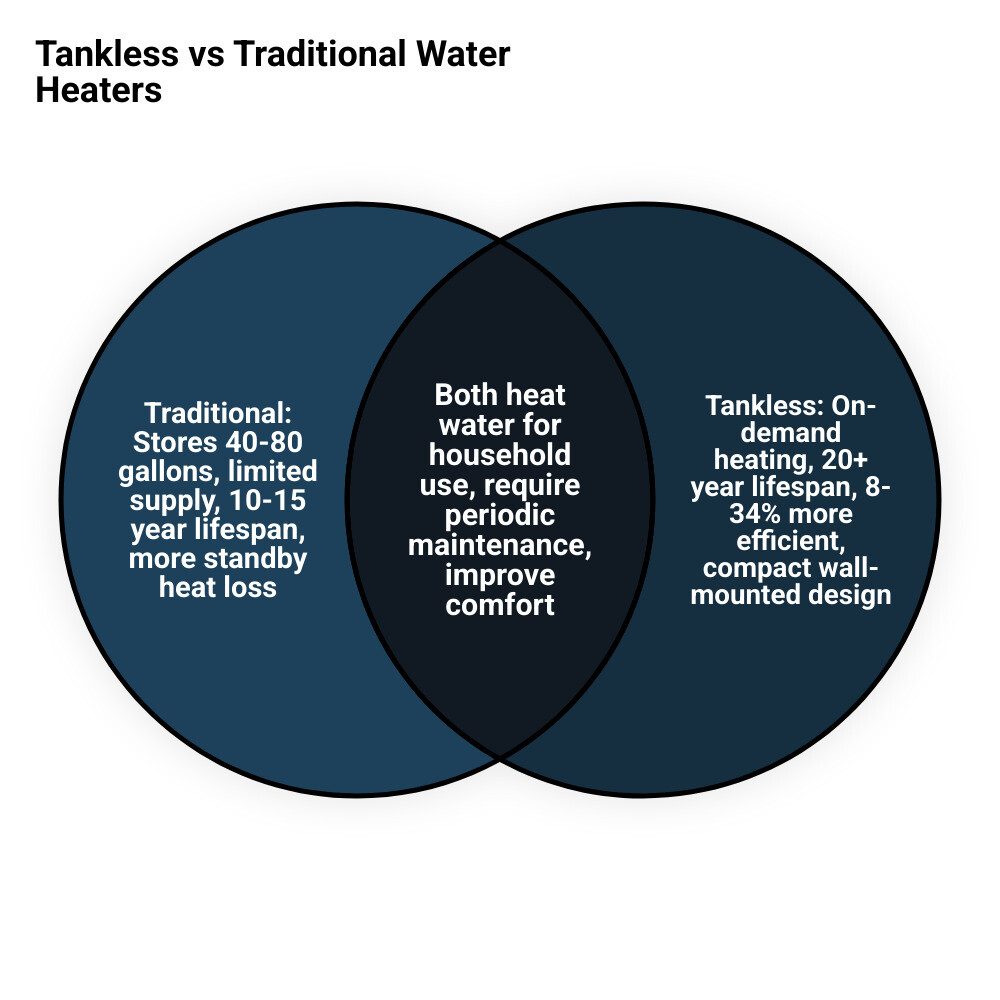
Traditional tank water heaters store 40–80 gallons of water and keep it hot around the clock, even when nobody’s home. That constant reheating is called standby energy loss, and it quietly drains your utility bill every single day.
Tankless water heaters work differently. They heat water only when you turn on the tap — no storage, no standby waste. That’s why they’re often called “on-demand” heaters.
But they’re not a perfect fit for every home. Flow rate limits, higher upfront costs, and installation requirements can all affect whether going tankless is the right call for your situation.
This guide breaks it all down clearly so you can make a confident choice.
Basic are tankless water heaters good vocab:
Are Tankless Water Heaters Good? Tankless vs. Traditional Systems
When you start comparing water heaters, it helps to look at them through a practical lens. Think of a traditional tank water heater as a giant, insulated thermos. It heats up dozens of gallons of water and keeps it hot, waiting for you to use it. If you have a large family taking back-to-back morning showers, that thermos eventually runs empty, leaving the last person in line with an icy surprise.
A tankless water heater, on the other hand, acts more like an on-demand heating engine. It doesn’t store a single drop of hot water. Instead, when you turn on a hot water tap, cold water travels into the unit, where a powerful gas burner or electric element instantly warms the water to your set temperature.
Understanding the Core Differences and Lifespan
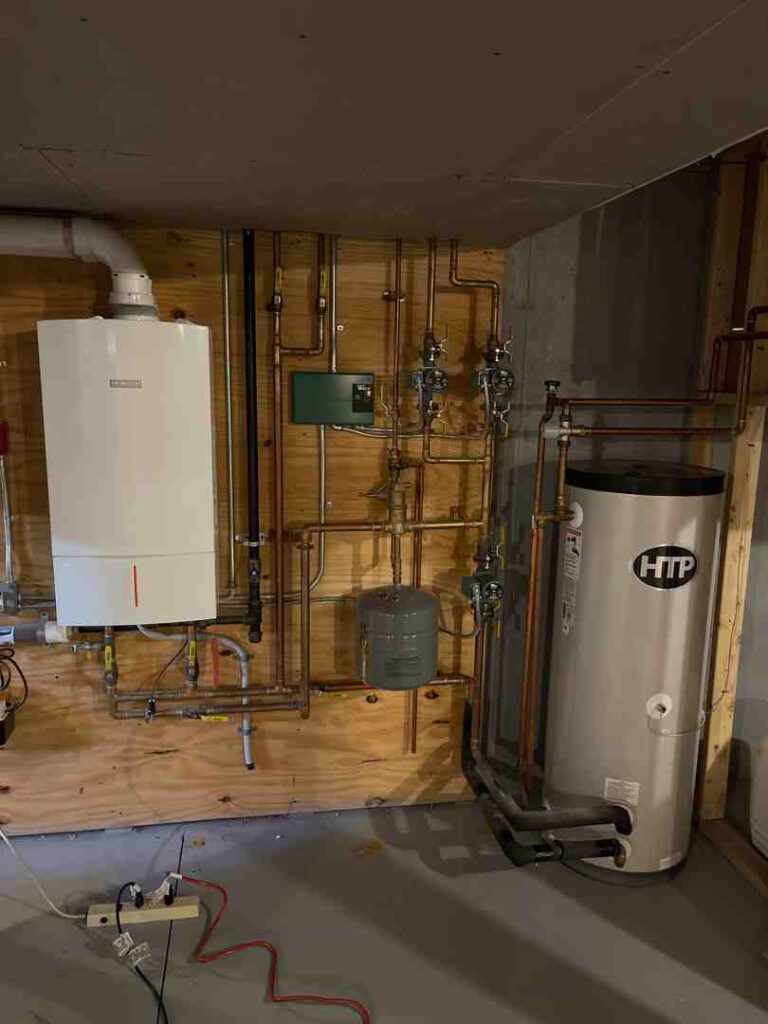
The physical differences between these two systems translate directly into how much space you save and how long your investment lasts. Traditional tanks are heavy, floor-standing giants that can easily eat up a 5-foot closet or a major corner of your basement. Tankless units are compact, suitcase-sized boxes mounted directly to the wall, freeing up valuable floor space.
But the real kicker is how long they last. Because traditional tanks constantly hold water, they are highly susceptible to rust, corrosion, and sediment buildup. Even with regular maintenance, a standard tank water heater typically has a lifespan of only 10 to 15 years.
Tankless models boast a much longer life expectancy. Because they do not store water, their internal parts experience far less corrosive wear and tear. Most tankless water heaters easily last more than 20 years with proper care. To dive deeper into how these lifespans play out over time, check out our guide on Tankless vs Traditional Water Heaters.
Why Energy Efficiency Proves Are Tankless Water Heaters Good Options
If you are looking to trim down your monthly utility bills, the efficiency numbers for tankless systems are highly compelling. Since they completely eliminate standby energy loss, they use significantly less fuel than their tanked counterparts.
According to data from the Tankless or Demand-Type Water Heaters | Department of Energy , the efficiency gains depend on how much water your household uses daily:
- For lower-use homes (using 41 gallons or less of hot water daily), tankless models can be 24% to 34% more energy efficient than conventional storage tank heaters.
- For higher-use homes (around 86 gallons per day), they still achieve an impressive 8% to 14% energy efficiency increase.
By only consuming energy when hot water is actively flowing, you stop paying to heat water while you are asleep, at work, or away on vacation. If you want to learn more about how these efficiency gains translate to real-world savings, read about Why Your Next Water Heater Should Probably Be Tankless.
Sizing, Flow Rates, and Simultaneous Hot Water Demand
While the promise of “unlimited hot water” is a major selling point, it comes with an important catch: flow rate limits. A tankless water heater can provide hot water indefinitely, but it can only produce a certain amount of it at the exact same time.
Most residential tankless water heaters typically provide hot water at a rate of 2 to 5 gallons per minute (GPM). Gas-fired models generally offer higher flow rates than electric ones, but even the strongest units have their limits.
For example, if one family member is taking a shower (using roughly 2 GPM) while the washing machine is running a hot cycle (using another 1.5 to 2 GPM), you may push a single tankless unit to its capacity. If a third person turns on a hot water faucet, the system might struggle to maintain the desired temperature, resulting in a temporary drop in water warmth—a phenomenon sometimes called the “cold water sandwich” effect.
To prevent this, proper sizing is absolutely essential. For larger households in Massachusetts with multiple bathrooms, we often recommend installing a larger gas unit or even zoning your home with multiple smaller point-of-use units. For a detailed breakdown of this performance debate, see The Great Water Heater Debate: Why Tankless Might or Might Not Be Your Best Bet.
Evaluating the Pros, Cons, Costs, and Maintenance Requirements
Transitioning to a tankless system is a great long-term move, but it requires understanding the complete picture. You must weigh the undeniable perks—like endless hot water and lower energy bills—against the initial installation requirements and ongoing maintenance.

Upfront Costs, Infrastructure Upgrades, and Financial Incentives
The most common hurdle for homeowners is the initial upfront cost. Purchasing a tankless unit and hiring a professional to install it is a larger investment than simply swapping out an old storage tank.
The installation process is also more complex. Because tankless gas units require a massive burst of heat to warm water instantly, they need much larger burners. This often means we must resize your existing gas lines to ensure proper fuel delivery. Additionally, these units require specialized Category III or IV venting to safely exhaust combustion gases, which may require drilling new venting pathways through your home’s exterior walls.
Fortunately, there are several ways to offset these initial installation expenses:
- Federal Tax Credits: Under the current 2026 energy guidelines, homeowners can claim federal tax credits (such as the 25C credit) for installing qualifying high-efficiency water heaters.
- Local Rebates: In Massachusetts, utility programs like Mass Save offer generous rebates for switching to high-efficiency heating and water systems.
Over its 20+ year lifespan, the combination of lower energy bills, rebates, and avoided tank replacement costs makes the math work in your favor. To learn more about what goes into these setup requirements, read Continuous Hot Water: A Deep Dive Into Installation Price Tags.
Hard Water Impacts and Essential Maintenance Protocols
Another critical factor to consider is your local water quality. Many towns in Massachusetts experience hard water, which is rich in minerals like calcium and magnesium.
When hard water is heated instantly inside a tankless system, these minerals crystallize and cling to the heat exchanger. Over time, this mineral scale acts as an insulating barrier, forcing the system to work harder to heat the water. If left unchecked, scale buildup can trigger system fault codes, lower your flow rate, and significantly shorten the unit’s lifespan.
To protect your investment, we recommend two main strategies:
- Install a Water Softener: A whole-home water treatment system is the gold standard for neutralizing hard water before it ever reaches your heater.
- Annual Descaling and Flushing: You must flush your tankless system at least once a year. This maintenance process involves pumping white distilled vinegar through the heat exchanger for about an hour to dissolve mineral scale.
For a complete look at what it takes to install and preserve these systems, explore Everything You Need to Know About Tankless Water Heater Installation.
The Final Verdict: Are Tankless Water Heaters Good for Your Budget?
So, are tankless water heaters good for your home and budget? If you plan to stay in your home for several years, value the convenience of continuous hot water, and want to lower your monthly carbon footprint, a tankless water heater is an exceptional investment.
At Accurate Baker Elman, we have spent over 30 years helping homeowners in Franklin, Newton, Waltham, Framingham, and throughout Massachusetts find the perfect comfort solutions. As a trusted local provider and a Mitsubishi Electric Elite Diamond Contractor, we bring the expertise, honesty, and 24/7 emergency service you need to make the right choice for your household.
Ready to explore your options and see how much you could save on energy bills? Contact us today to learn more about our professional Tankless Water Heater Services and schedule your in-home consultation.