
Getting Started: Your Guide to Tankless Water Heater Installation
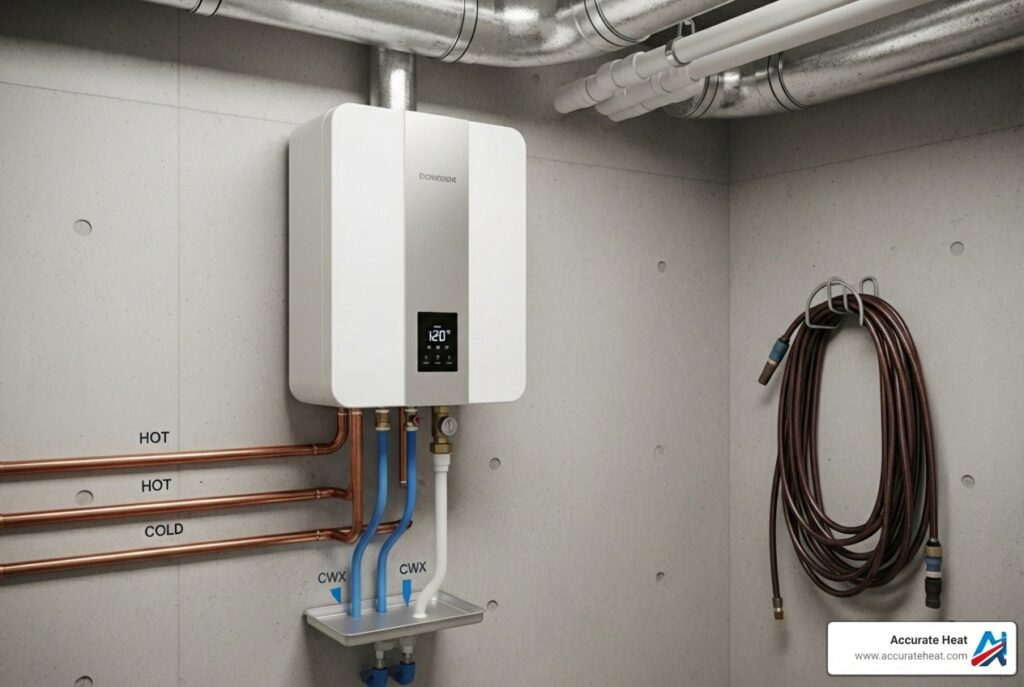
A tankless water heater installation provides on-demand hot water, ending the frustration of running out. Unlike traditional tanks that constantly store and reheat water, a tankless system heats water instantly when you need it. This offers several key advantages:
- Endless Hot Water: Enjoy a continuous supply, even with multiple showers running.
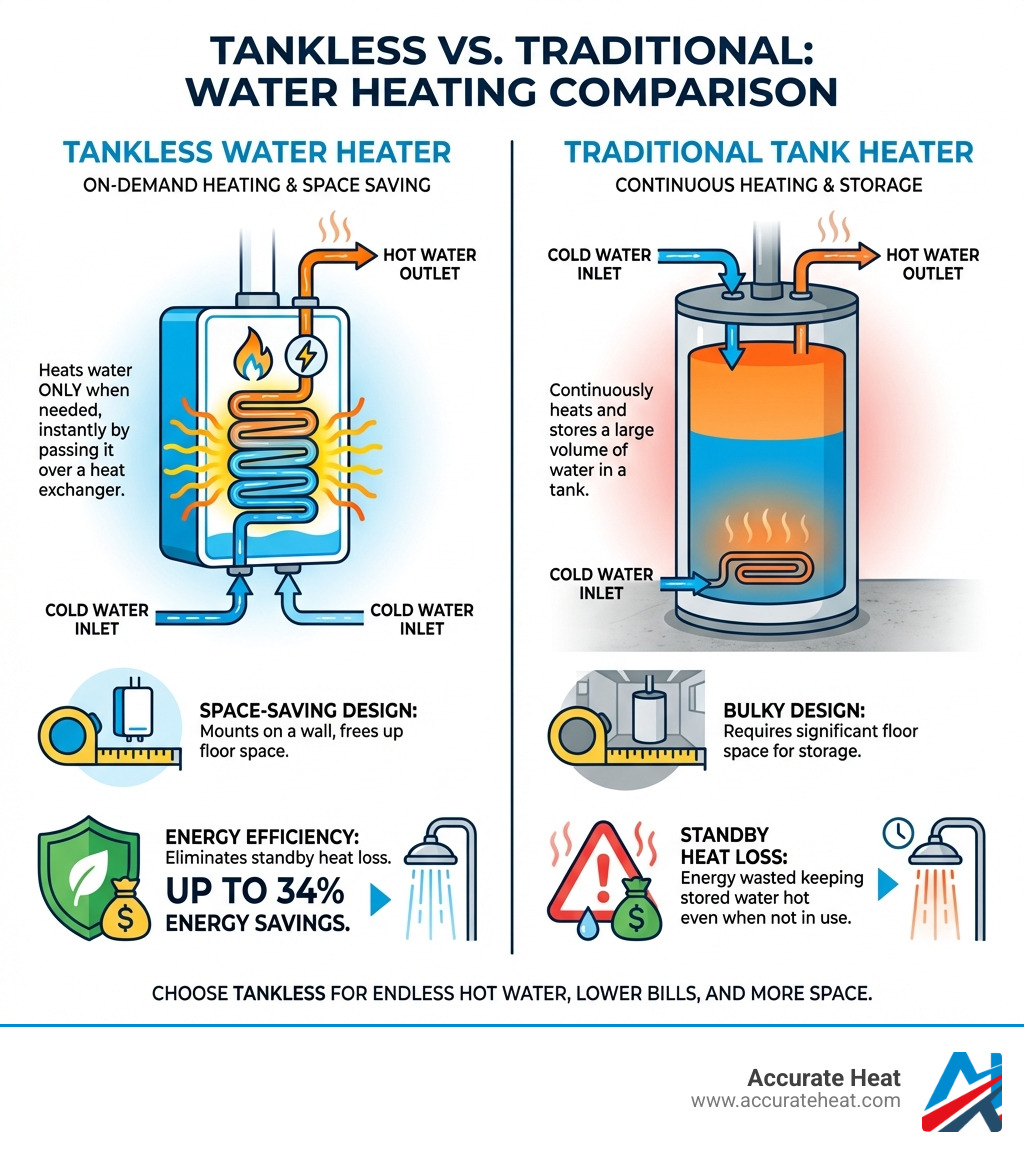
- Energy Efficiency: By eliminating standby heat loss, tankless units can save you up to 34% on energy bills.
- Space Saving: These compact, wall-mounted units free up valuable floor space.
- Longer Lifespan: Tankless heaters typically last 15-20 years, significantly longer than traditional models.
For Massachusetts homeowners, the appeal is clear: hot water only when you need it, which saves energy and money. This guide covers everything from choosing the right model (gas vs. electric) to sizing, costs, and the importance of professional installation.
Before You Install: Key Considerations for a Tankless Water Heater
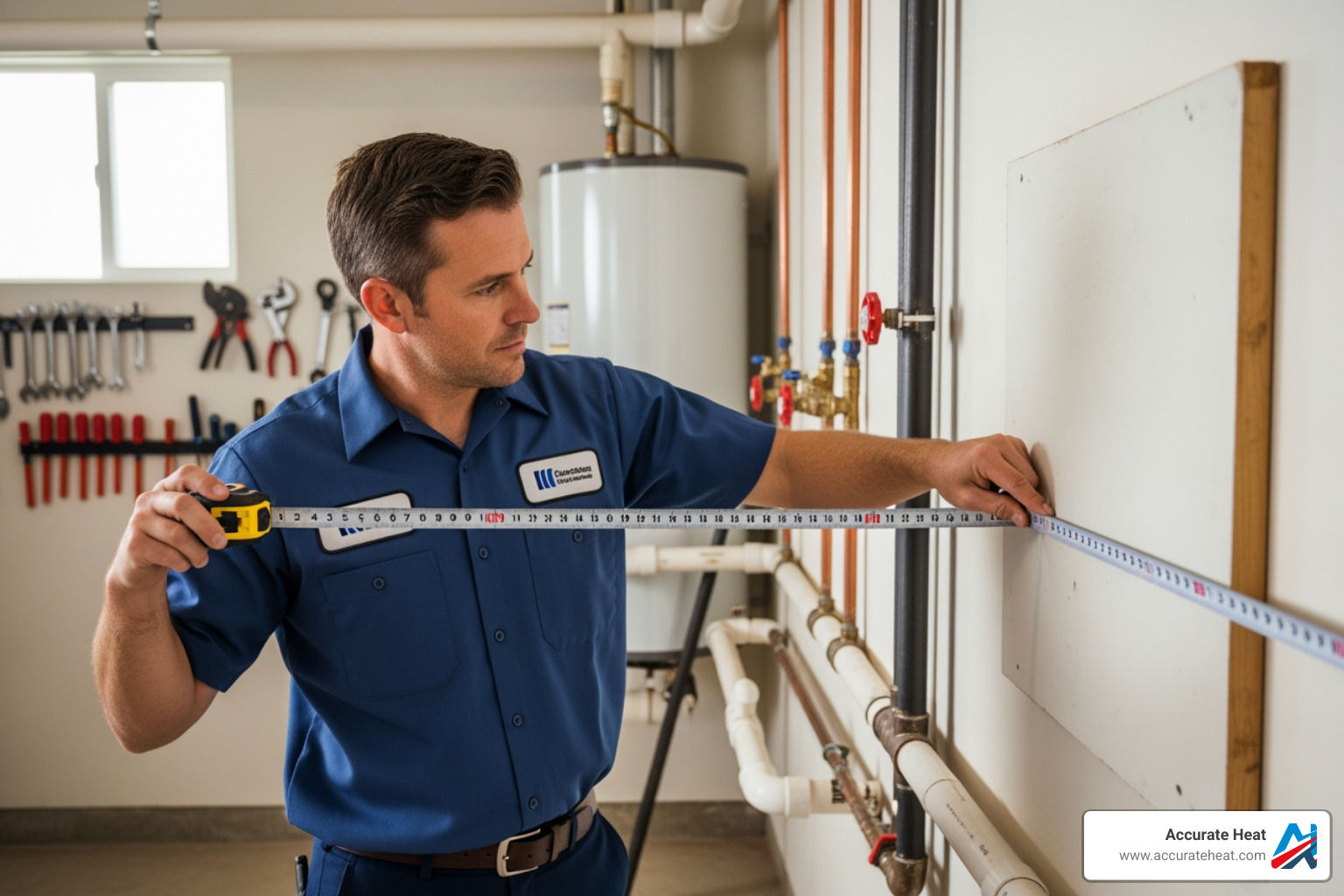
Before starting, a successful tankless water heater installation in your Massachusetts home requires careful planning. To ensure you pick the right unit and have a smooth, compliant installation, you must consider sizing, fuel type, location, venting, and local codes.
Switching from a traditional tank to a tankless system is a significant upgrade. While tanks constantly heat stored water, causing standby heat loss, tankless units activate only when you need hot water. This difference impacts everything from energy bills to system longevity. For a deeper dive, explore our guide on Tankless vs. Traditional Water Heaters.
Sizing Your Unit: Getting the Flow Rate and Temperature Rise Right
Proper sizing is one of the most critical steps in a tankless water heater installation. Unlike tank heaters sized by gallon capacity, tankless units are sized by flow rate (GPM) and temperature rise (Delta T). An incorrect size can result in lukewarm showers or insufficient hot water.
First, determine your Flow Rate (GPM), or Gallons Per Minute. This is the maximum amount of hot water your home might use at once. Add up the GPM for fixtures you might use simultaneously (e.g., a shower at 2.5 GPM and a dishwasher at 2.0 GPM would be 4.5 GPM). For help, PlumbingSupply.com has an excellent Tankless Water Heater Sizing Guide.
Next is Temperature Rise (Delta T). This is how much the heater must warm your water, from the incoming cold temperature to your desired output (usually 120°F). In Massachusetts winters, incoming water can be 40°F, requiring an 80°F temperature rise and a more powerful unit.
For some homes, a single whole-house unit is perfect. For larger homes with high demand, a central unit combined with smaller point-of-use (POU) heaters for distant faucets can provide instant hot water and reduce wait times.
Gas vs. Electric: Which Fuel Type is Best for Your Home?
The choice between gas and electric influences installation costs, operating expenses, and performance. The best option for your Massachusetts home depends on your existing utilities and needs.
Let’s look at a quick comparison:
| Feature | Gas Tankless Water Heater | Electric Tankless Water Heater |
|---|---|---|
| Unit Cost | $1,000 – $2,800 (non-condensing), $1,500 – $3,200 (condensing) | $500 – $1,500 |
| Installation | Higher complexity due to gas line and venting requirements; often requires gas line upgrades | Simpler if electrical panel can handle load; may require significant electrical upgrades |
| Efficiency | Generally higher GPM and faster recovery for whole-house use; more efficient for high demand | Can be very efficient for point-of-use; less efficient for whole-house, recovers slower |
| Venting | Required (Category III stainless steel, direct/power vent); impacts location | Not required; allows for more flexible installation locations |
| Fuel Type | Natural gas or propane | Electricity |
| Operating Cost | Can be lower than electric for whole-house, depending on gas prices | Can be higher than gas for whole-house, depending on electricity prices and usage |
| Power Outage | Will not work without electricity for controls/ignition | Will not work |
Gas Tankless Water Heaters (natural gas or propane) are typically more powerful, offering higher flow rates ideal for whole-house applications in larger Massachusetts homes. However, their tankless water heater installation cost is usually higher due to the need for a dedicated gas line (often an upgrade to 3/4-inch) and specialized venting. They also require electricity for their controls and ignition.
Electric Tankless Water Heaters are generally less expensive to purchase and install if your electrical system can handle the load. They don’t require venting, offering more placement flexibility. However, they draw significant power, and an electrical service upgrade might be necessary, adding to the cost. Electric models are often more suitable for point-of-use applications or smaller homes.
When choosing, consider your home’s infrastructure, local utility costs, and hot water habits. If you have natural gas, a gas unit often provides the best long-term value for a whole-house system.
Location, Venting, and Code Requirements
Choosing the right spot and ensuring proper venting are crucial for safety, efficiency, and compliance with Massachusetts building codes.
Location: Tankless units are compact and wall-mounted, freeing up space. Indoor locations like basements or utility closets are common. Consider proximity to major hot water fixtures to minimize wait times. Outdoor installations are less common in Massachusetts due to freezing temperatures.
Venting: This is a primary concern for gas models. They require specific venting, such as a direct vent or power vent system using Category III stainless steel, to move exhaust safely outdoors. High-efficiency condensing units also produce acidic condensate that must be drained and neutralized to protect plumbing.
Combustion Air: Gas units need fresh air for combustion. “Sealed combustion” units draw air from outside, while others pull air from the room, which must have adequate ventilation.
Permits and Codes: This is non-negotiable in Massachusetts. A permit is required for most new water heater installations, ensuring your tankless water heater installation meets all local plumbing, electrical, and gas codes. Failure to obtain one can lead to fines or insurance problems. At Accurate Heat, we are experts in navigating these local regulations. For questions about code compliance, contact our team for Plumbing Services in MA.
The Ultimate Guide to Tankless Water Heater Installation
Now that we’ve covered the crucial planning stages, let’s get into the details of the tankless water heater installation itself. Whether it’s a gas or electric unit, safety is paramount. Professional installation is strongly recommended to ensure everything is done correctly and safely, especially when dealing with gas lines and high-voltage electricity.
Before any work begins, essential safety steps include shutting off the gas, water, and electrical supply to the old unit. Removing the old tank is heavy, messy work that involves draining it and disconnecting all lines—a task best left to professionals familiar with safe handling and disposal.
The benefits of professional installation go beyond just getting the job done. Licensed plumbers and HVAC technicians, like our team at Accurate Heat, are trained to handle the complexities of these systems, ensuring adherence to all local Massachusetts codes, proper sizing, and safe operation. This peace of mind is priceless. If you’re looking for expert assistance, our team offers comprehensive Water Heater Installation Services in MA.
Essential Tools and Materials
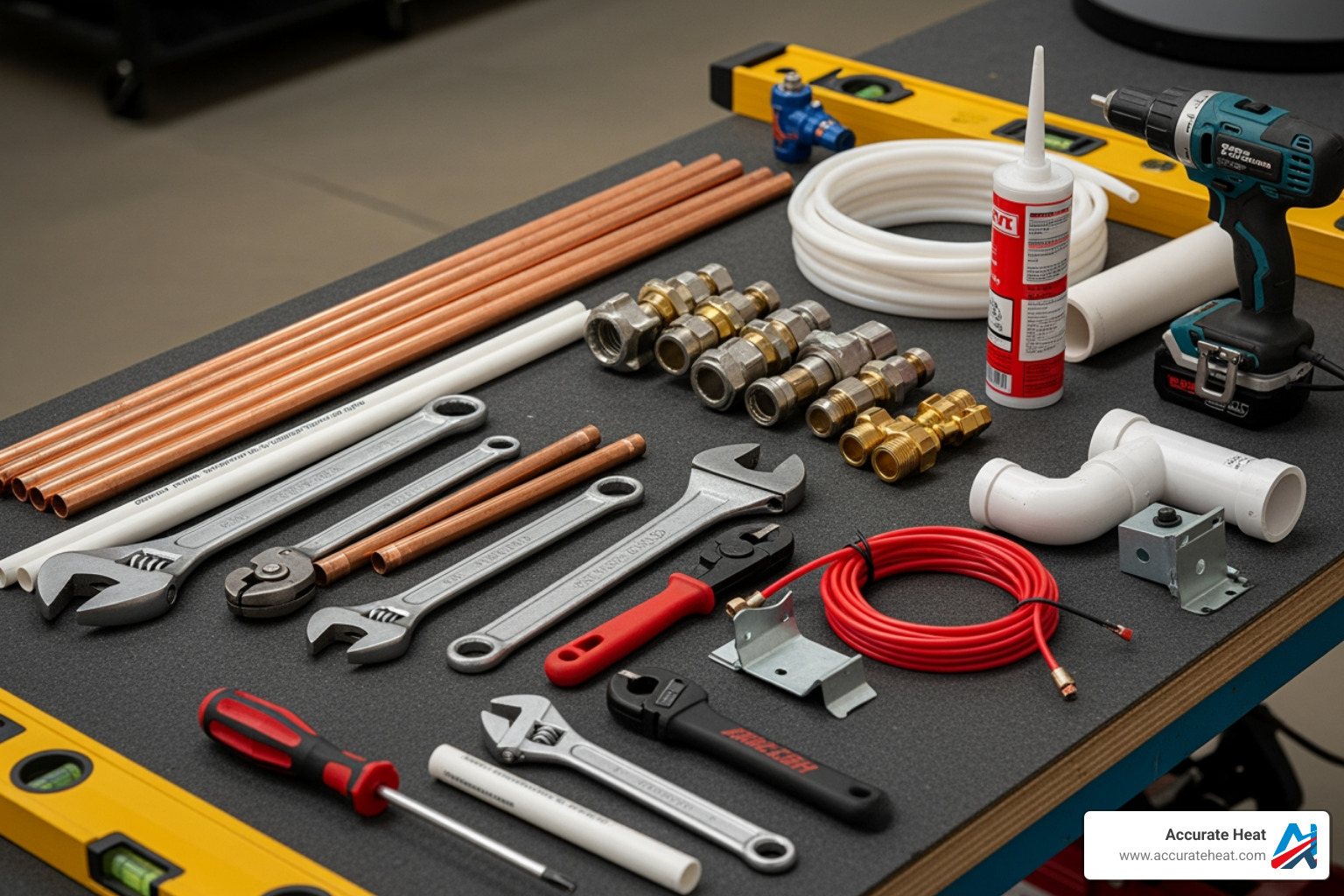
A successful tankless water heater installation requires the right tools and materials. Here’s a general list of what you or your professional installer will need:
- Pipe cutters: For precise cuts on copper or PEX piping.
- Wrenches: Adjustable, pipe, and crescent wrenches for various connections.
- Pliers: Channel locks and other types for gripping and tightening.
- Screwdrivers: Phillips and flathead for mounting and electrical work.
- Level: To ensure the unit is mounted perfectly straight.
- Drill: For mounting brackets and making pilot holes.
- Teflon tape (PTFE tape): For sealing threaded plumbing connections.
- Pipe dope (pipe joint compound): Provides an extra seal on gas lines and water connections.
- Copper piping or PEX tubing: For connecting water lines.
- Flexible connectors: Stainless steel or corrugated copper for easy connection to water lines.
- Shutoff valves: Ball valves for isolating water supply to the unit.
- Sediment trap: Required on gas lines to catch debris before it enters the unit.
- Gas union: For connecting the gas line to the unit.
- Pressure relief valve (T&P valve): A safety device for electric units, if not built-in.
- Vent piping (for gas units): Category III stainless steel, specific to the unit’s venting requirements.
- Electrical wire, conduit, and breakers: Sized appropriately for the unit’s electrical load.
- Mounting hardware: Strong bolts or screws to secure the unit to wall studs.
- Drain pan: If installing in an area where leaks could cause damage.
Step-by-Step Gas Tankless Water Heater Installation
Installing a gas tankless water heater is a complex process that involves plumbing, gas, and electrical work. This is why professional tankless water heater installation is highly recommended for gas models.
- Mounting the Unit: First, the unit is securely mounted to a wall using appropriate hardware, ensuring it’s level and in a location compliant with local codes and manufacturer clearances.
- Connecting Water Lines: The cold water inlet and hot water outlet lines are connected. This typically involves installing service valves (shutoff valves) that allow for easy isolation and maintenance (like flushing). Flexible connectors often make this step easier.
- Installing Shutoff Valves: Dedicated cold and hot water shutoff valves are installed on the service lines to the unit. This is critical for future maintenance.
- Connecting the Gas Line: A dedicated gas line, often upgraded to 3/4-inch, is run to the unit. A sediment trap and a gas shutoff valve are installed immediately upstream of the unit. All gas connections are sealed with appropriate pipe sealant.
- Installing the Vent System: The specialized Category III stainless steel vent pipe is installed, running from the unit directly outside. This involves careful planning for wall or roof penetrations, ensuring proper slope, and adherence to all manufacturer and code requirements for length and elbows. For condensing units, the condensate drain line is also installed.
- Making Electrical Connections: Even gas units require a standard electrical outlet for their electronic controls, ignition, and fan. A dedicated circuit may be necessary depending on the unit’s specifications.
- Testing for Leaks: Once all connections are made, the water supply is turned on and all plumbing connections are checked for leaks. For gas lines, a soapy water solution is applied to all joints; bubbles indicate a leak. Open flames must never be used to check for gas leaks.
- Power Up and Test: Finally, power is supplied to the unit, and it’s tested for proper operation, including ignition, temperature settings, and hot water delivery.
Step-by-Step Electric Tankless Water Heater Installation
While generally simpler than gas units, electric tankless water heater installation still requires careful attention to electrical safety and proper plumbing.
- Mounting the Unit: The compact electric unit is mounted securely to a wall in a convenient location. Since no venting is required, placement is more flexible, but proximity to your main electrical panel can save on wiring costs.
- Connecting Water Supply Lines: The cold water inlet and hot water outlet lines are connected to the unit. Shutoff valves are installed for easy servicing.
- Installing Pressure Relief Valve: If not integrated into the unit, a temperature and pressure (T&P) relief valve must be installed on the hot water outlet line, as required by code, to prevent excessive pressure buildup.
- Flushing the System: Before powering on, the system is flushed to remove any air from the pipes and ensure a steady water flow.
- Making Electrical Connections: This is the most critical part of an electric tankless installation. Electric tankless heaters draw a significant amount of power (often requiring multiple dedicated 30–60 amp breakers). The unit is connected to your home’s electrical panel with appropriately sized wiring and new breakers.
- Sizing the Breaker: The electrical panel must have sufficient capacity, and correctly sized breakers are installed to protect the circuit. If your home’s electrical service (for example, 100-amp) is insufficient, an upgrade to 200-amp service might be necessary, which can be a substantial additional cost.
- Grounding the Unit: The unit must be properly grounded according to electrical codes to ensure safety.
- Power Up and Test: Once all electrical and plumbing connections are secure and verified, the breaker is turned on, and the unit is tested for proper function and hot water delivery.
Understanding the Costs and Benefits
Investing in a tankless water heater installation is a decision that balances upfront costs with long-term benefits. While the initial price can be higher than a traditional tank, the savings and comfort often make it a worthwhile upgrade for Massachusetts homeowners.
Breaking Down the Cost of Installation
The total cost of a tankless water heater installation can vary, but it’s important to understand the components that make up the price.
- Unit Price Ranges:
- Electric units: Typically range from $500 – $1,500.
- Gas units (non-condensing): Range from $1,000 – $2,800.
- Condensing Gas units: Usually cost $1,500 – $3,200.
- Professional Labor Costs: Professional installation usually adds $500 – $1,500, but can be higher for complex jobs.
- Gas Line Upgrades: If your existing gas line isn’t sufficient (many homes have 1/2-inch lines, but tankless units often need 3/4-inch), this can add $800 – $2,000.
- Electrical Panel Upgrades: For electric units, an electrical service upgrade can cost around $1,000 or more.
- Venting Materials: For gas units, specialized stainless steel venting can add $300 – $800.
- Permit Fees: Local permits in Massachusetts typically range from $100 – $300.
Overall, a full tankless water heater installation typically runs $1,200 – $3,500. While this might seem steep, it’s an investment in your home’s efficiency and comfort.
Long-Term Benefits: Why Make the Switch?
Despite the initial investment, the long-term benefits of a tankless water heater are compelling for Massachusetts homeowners.
- Energy Efficiency up to 34%: Tankless units heat water on demand, eliminating the “standby heat loss” of traditional tanks. The U.S. Department of Energy states this can boost efficiency by up to 34%, leading to lower utility bills.
- Endless Hot Water Supply: This is a beloved benefit. Enjoy a continuous supply of hot water, no matter how many showers are taken or appliances are running.
- Longer Lifespan: Tankless water heaters are built to last. With proper maintenance, they typically last 15-20 years, which is significantly longer than the average 7-15 year lifespan of a traditional tank heater.
- Space-Saving Design: Their compact, wall-mounted design frees up valuable floor space that a bulky traditional tank would occupy.
Switching to a tankless system is not just about saving money; it’s about upgrading your home’s comfort and efficiency. For more ideas on how to make your home systems greener, check out our Tips for a Greener Plumbing System.
Post-Installation: Maintenance and Professional Care
Once your tankless water heater installation is complete, the journey isn’t over. Like any sophisticated appliance, tankless units require regular maintenance to ensure optimal performance, efficiency, and longevity. Neglecting maintenance can lead to reduced efficiency, costly repairs, and even void your warranty.
The most critical maintenance task for tankless water heaters is descaling, also known as flushing. Minerals found in your water, especially in areas with hard water, can build up inside the heat exchanger. This “limescale” reduces the unit’s efficiency and can eventually damage components. The frequency of descaling depends on your water hardness, but generally, it’s recommended annually. This process involves circulating a descaling solution (often vinegar) through the unit to dissolve mineral deposits.
Beyond descaling, regular maintenance includes:
- Checking filters: Many units have water filters that need to be cleaned or replaced periodically.
- Inspecting vents: For gas units, ensuring the vent system is clear of obstructions and in good condition is crucial for safe operation.
- Inspecting for leaks: A quick visual check for any signs of leaks around connections.
- Checking combustion air intake (for gas units): Ensure it’s clear and unobstructed.
Regular plumbing maintenance is a must for all your home systems in Massachusetts, and your tankless water heater is no exception. For more insights into keeping your home’s plumbing in top shape, we encourage you to read our guide on Why Regular Plumbing Maintenance is a Must in Massachusetts.
Professional vs. DIY Installation: Safety and Warranty
While the idea of a DIY project can be appealing for cost savings, a tankless water heater installation is generally not a task for the average homeowner. The complexities involved in plumbing, gas, and electrical work present significant risks.
DIY Risks:
- Gas Leaks and Carbon Monoxide (CO): Incorrect gas line connections or improper venting for gas units can lead to dangerous gas leaks or carbon monoxide poisoning, which is odorless and deadly.
- Electrical Shock: High-voltage electrical connections for both gas and electric units pose a serious risk of electrical shock if not handled by a qualified electrician.
- Water Damage: Improper plumbing connections can result in leaks, leading to costly water damage and potential mold growth in your home.
- Voiding Manufacturer Warranty: Most tankless water heater manufacturers require professional installation by a licensed technician for the warranty to remain valid. A DIY installation could leave you without coverage for future repairs.
- Code Compliance Issues: Local building codes in Massachusetts are stringent. A DIY installation might not meet these codes, leading to failed inspections, fines, or even requiring the removal and re-installation of the unit by a professional.
Benefits of Licensed Plumbers: Hiring a licensed plumber or HVAC technician, like those at Accurate Heat, offers numerous advantages:
- Expertise: We have over 30 years of experience in Franklin and throughout Massachusetts, ensuring your installation is done right the first time.
- Safety: Professionals are trained in all safety protocols for gas, electrical, and plumbing work, minimizing risks.
- Code Compliance: We are knowledgeable about all local codes and permit requirements, ensuring your installation passes inspection.
- Warranty Protection: Professional installation keeps your manufacturer’s warranty intact.
- Efficiency: We can properly size and optimize your unit for maximum energy efficiency and performance.
- Peace of Mind: You can rest easy knowing your hot water system is installed correctly and safely.
At Accurate Heat, we specialize in tankless water heater installation and services across Massachusetts, from Franklin to Newton. Our Mitsubishi Electric Elite Diamond Contractor status means we bring a high level of expertise to every job. When it comes to something as critical as your home’s hot water, trust the professionals. Explore our dedicated Tankless Water Heater Services for more information.
Frequently Asked Questions about Tankless Water Heaters
We often get a lot of questions from homeowners in Massachusetts considering a tankless water heater. Here are some of the most common ones:
Do tankless water heaters work during a power outage?
No. Tankless heaters rely on electricity to power controls, fans, and gas valves, so they stop working during an outage. Even gas-fired models need electricity for ignition and operation.
How long do tankless water heaters last compared to traditional tanks?
Tankless water heaters have a significantly longer lifespan, typically lasting 15-20 years or more with proper maintenance. This is 5-10 years longer than the average 7-15 year lifespan of a traditional tank heater.
Are permits required for a tankless water heater installation?
Yes, most municipalities require a permit for a new water heater installation, especially when changing fuel types or modifying plumbing, gas, or electrical lines. This ensures the work meets local safety codes.
Conclusion
A tankless water heater installation is more than just an appliance upgrade; it’s an investment in your Massachusetts home’s comfort, efficiency, and future. We’ve explored the significant benefits, from endless hot water and considerable energy savings (up to 34%!) to their impressive 15-20 year lifespan and space-saving design. While the planning and installation process involves crucial considerations like sizing, fuel type, venting, and understanding local codes, the long-term rewards are well worth it.
The complexities of working with gas lines, high-voltage electricity, and intricate plumbing mean that professional installation isn’t just recommended—it’s essential for safety, code compliance, and preserving your warranty. For expert advice and reliable installation in Massachusetts, explore our expert tankless water heater services. Our experienced team at Accurate Heat is ready to ensure your transition to on-demand hot water is seamless and worry-free.