Why Radiant Heating Repair Doesn’t Have to Ruin Your Day
Radiant heating repair is something most Massachusetts homeowners will face at least once — and the good news is that many common issues can be spotted and resolved quickly with the right approach.
Before diving in, here’s a fast-reference guide to the most common radiant heating problems and what to do first:
| Problem | Likely Cause | First Step |
|---|---|---|
| Cold spots on the floor | Air in lines, failed zone valve | Bleed air, check zone valves |
| No heat at all | Thermostat fault, boiler issue | Check thermostat settings and boiler display |
| Rising energy bills | Pump running constantly, boiler inefficiency | Schedule a diagnostic inspection |
| Gurgling or banging sounds | Air lock or pressure issue | Check system pressure, purge air |
| Uneven heating between rooms | Blocked manifold circuit, pump failure | Inspect manifold and circulation pump |
| Wet spots or damp floor | Tubing leak | Shut down system, call a professional |
Radiant floor systems are actually remarkably durable. Hydronic systems — the kind that circulate warm water through PEX tubing under your floor — can last 30 to 40 years or more when properly maintained. Electric systems are simpler but have their own failure points.
The tricky part? When something goes wrong, the source of the problem is often hidden beneath several inches of concrete or subfloor. That makes diagnosis feel overwhelming.
But it doesn’t have to be. Most issues follow predictable patterns, and a simple daily check routine can catch small problems before they become expensive ones.
This guide walks you through exactly how to troubleshoot your radiant floor system, step by step — and helps you know when it’s time to call in a pro.
Essential Steps for Radiant Heating Repair
When your floor stops providing that signature warmth, the first step isn’t to grab a jackhammer. Instead, we use a systematic approach to diagnostics. Most systems rely on thermal mass—the ability of your floor (concrete, tile, or wood) to store and release heat. Because this process is slow (often taking 1–3 hours to warm up), troubleshooting requires a bit of patience.
To understand what might be failing, it helps to know which system you have. Hydronic systems use a boiler and pumps, while electric systems use cables or mats.
| Component | Hydronic System | Electric System |
|---|---|---|
| Heat Source | Boiler or Water Heater | Electrical Grid |
| Distribution | PEX Tubing & Manifolds | Resistance Cables or Mats |
| Common Failure | Pump, Zone Valve, Air Lock | Broken Cable, Thermostat Sensor |
| Longevity | 30–40+ Years | 20–30 Years |
Identifying Common System Failure Symptoms
The most frequent sign that you need radiant heating repair is uneven heating. If one room is toasty while the kitchen remains a literal “cold feet” zone, you likely have a blocked circuit or a failing zone valve.
According to scientific research on radiant heat efficiency, these systems are significantly more efficient than forced air because they eliminate duct losses. However, if you notice rising energy bills without a change in the weather, your boiler might be short-cycling or a pump may be struggling to move fluid.
Keep an ear out for noisy operation. While radiant systems are famously quiet, gurgling or “knocking” sounds usually indicate air trapped in the lines. For hydronic owners, a sudden pressure drop on your boiler’s gauge is a red flag that there may be a leak somewhere in the loop.
Hydronic vs. Electric Diagnostic Methods
Diagnosing these two systems requires different “detective” tools. For electric systems, a multimeter is essential for performing continuity and resistance checks. If the resistance readings don’t match the manufacturer’s specifications, there’s likely a break in the heating element.
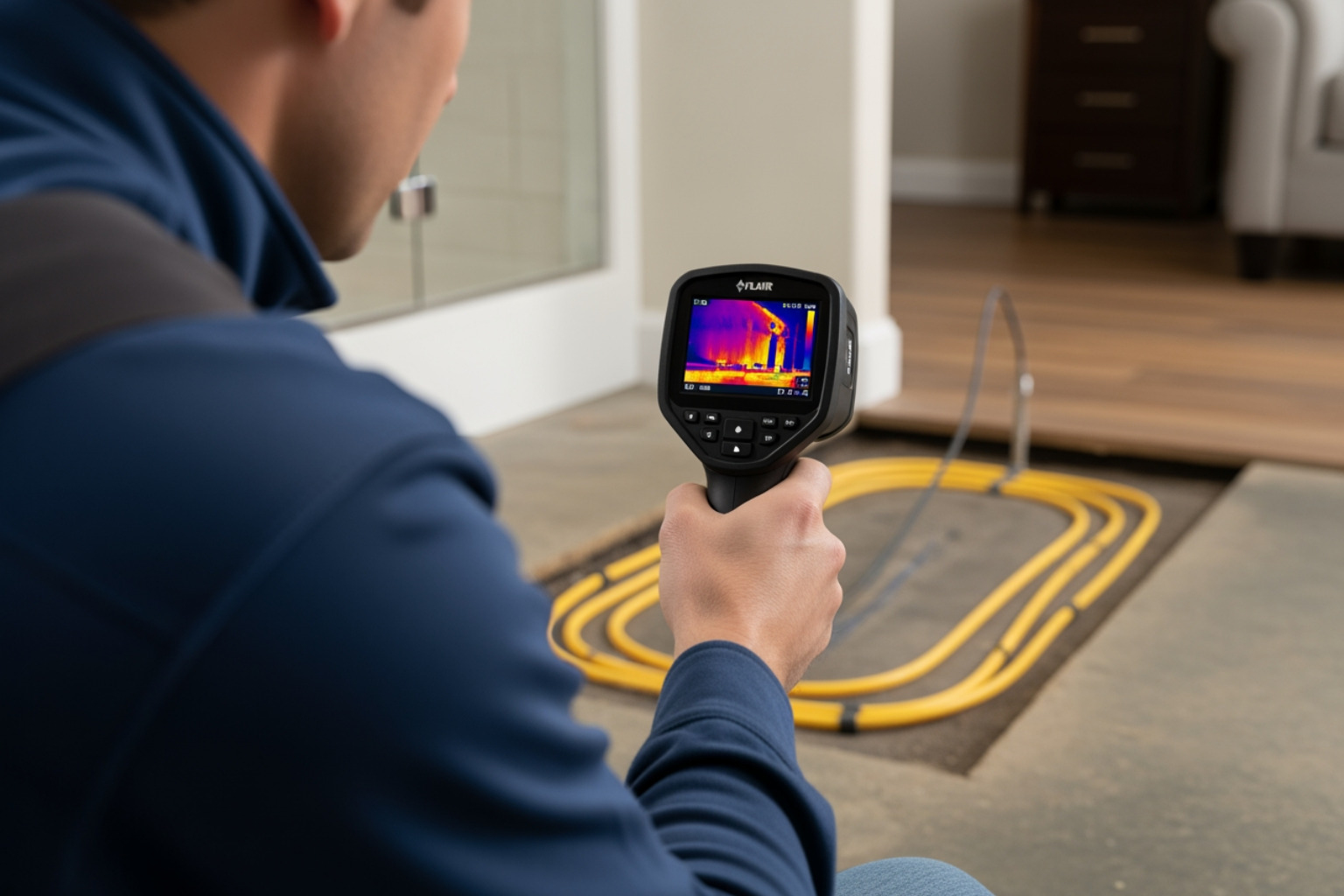
For hydronic systems, we rely heavily on thermal imaging. This allows us to “see” through your floor to ensure water is flowing through every loop. We also check the manifold—the “control center” where all the tubes meet. If one tube feels cold to the touch while others are warm, that specific zone is the culprit.
Beyond comfort, scientific research on indoor air quality benefits shows that radiant systems are superior for allergy sufferers because they don’t circulate dust. Ensuring your system is properly diagnosed keeps your air clean and your home healthy.
Step-by-Step DIY Troubleshooting Guide
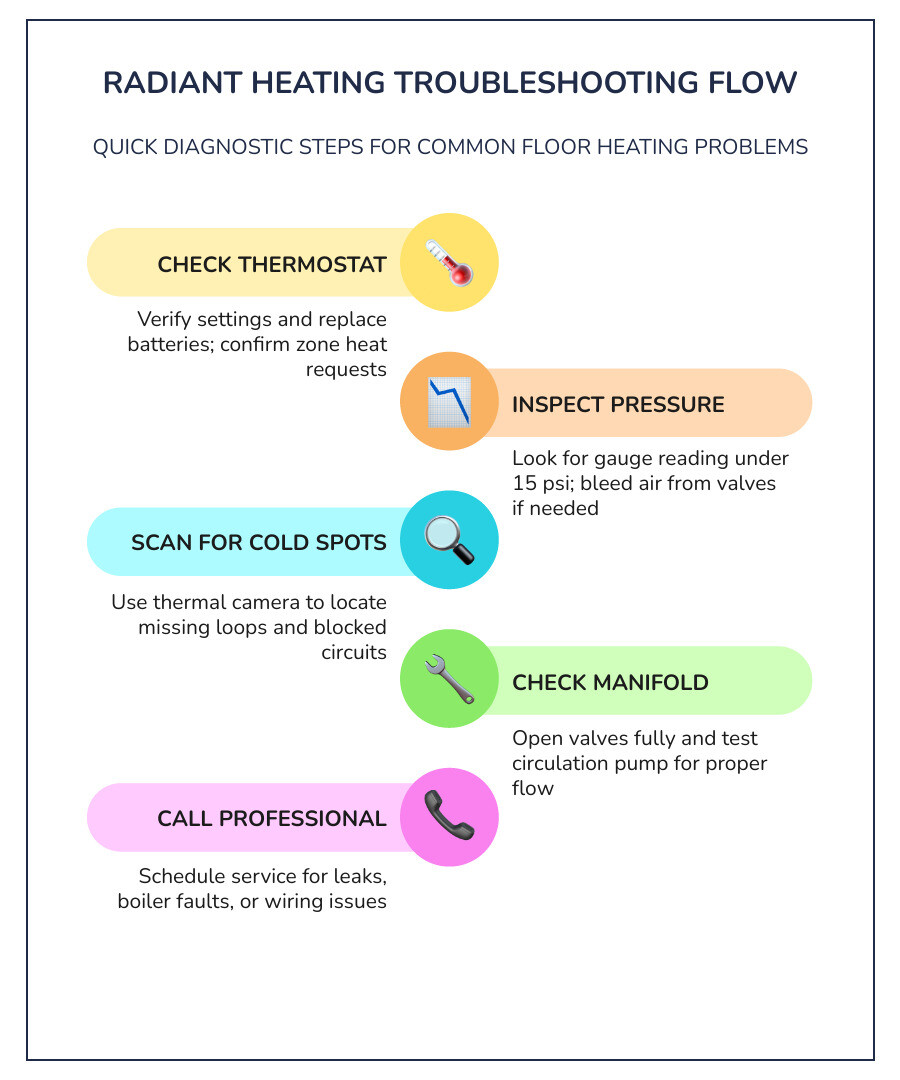
You can often resolve minor issues in under an hour by following these steps:
- Check the Power: It sounds simple, but check your circuit breakers. A tripped breaker can shut down an entire electric mat or the circulator pump on a boiler.
- Thermostat Reset: Ensure your thermostat is actually calling for heat. Sometimes a simple battery change or a factory reset solves “no heat” issues.
- Bleed the Air: If you have a hydronic system and hear gurgling, you may need to purge air. Locate the air bleed valve on your manifold and carefully release the trapped air until a steady stream of water appears.
- Sensor Cleaning: For electric systems, ensure the floor sensor hasn’t been covered by a thick rug or furniture, which can “trick” the system into thinking the floor is warmer than it is.
- Visual Leak Inspection: Check around your boiler and manifold for any signs of moisture.
For more detailed tips on general system health, check out our guide on Common Heating Repair Issues and How to Troubleshoot Them.

Professional Maintenance and Long-Term Care
While DIY checks are great for daily monitoring, long-term reliability depends on professional care. In Massachusetts, our winters are unforgiving, and your radiant system works hard from October through April.
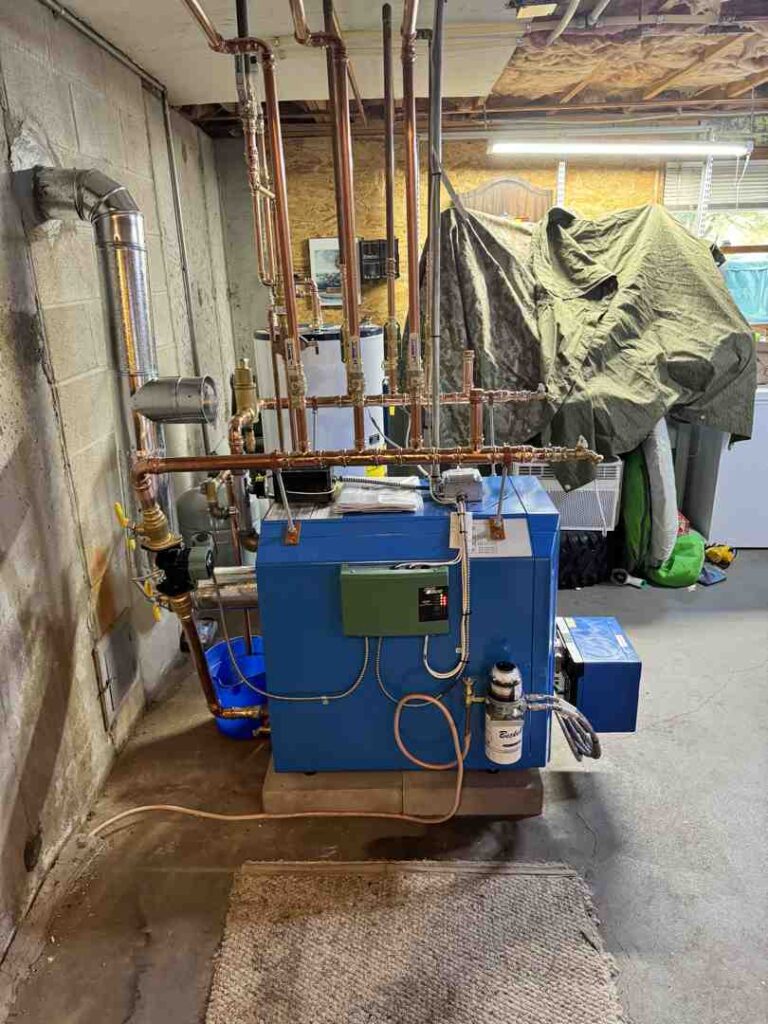
Systems using PEX tubing with oxygen barriers are designed to prevent internal rust and corrosion, but they still require annual tuning. You can learn more about how we keep these systems running in our article on Boiler Repair Service: Keeping Your Home Warm and Your Wallet Happy.
Understanding Radiant Heating Repair Costs and Factors
When a repair moves beyond a simple DIY fix, it’s helpful to know what to expect. On average, homeowners pay around $1,300 for radiant heating repair, though minor fixes like a thermostat replacement can be much lower.
Factors influencing the cost include the type of system (hydronic repairs are often more complex than electric), the size of the zone, and the accessibility of the components. We generally recommend the “50% rule”: if the cost of a repair exceeds 50% of the cost of a new system, and your system is over 15–20 years old, it may be time to discuss a replacement. For more information on our general repair approach, visit our Heating Repair Services page.
When to Call a Professional for Radiant Heating Repair
There are certain situations where DIY is simply too dangerous or complex. You should call us immediately if you encounter:
- Electrical Hazards: Burning smells or sparks from the thermostat or control board.
- Subfloor Leaks: If you see damp spots on your hardwood or “heaving” in your tile, you have a leak that requires specialized thermal imaging and repair kits.
- Boiler Failure: If your boiler won’t fire or is leaking, this requires a licensed technician.
- Manifold Cracks: Any damage to the central distribution hub needs professional replacement to avoid flooding.
For urgent issues, we offer Emergency Heating Services in MA to ensure your home doesn’t freeze during a cold snap.
Preventative Maintenance to Avoid Future Issues
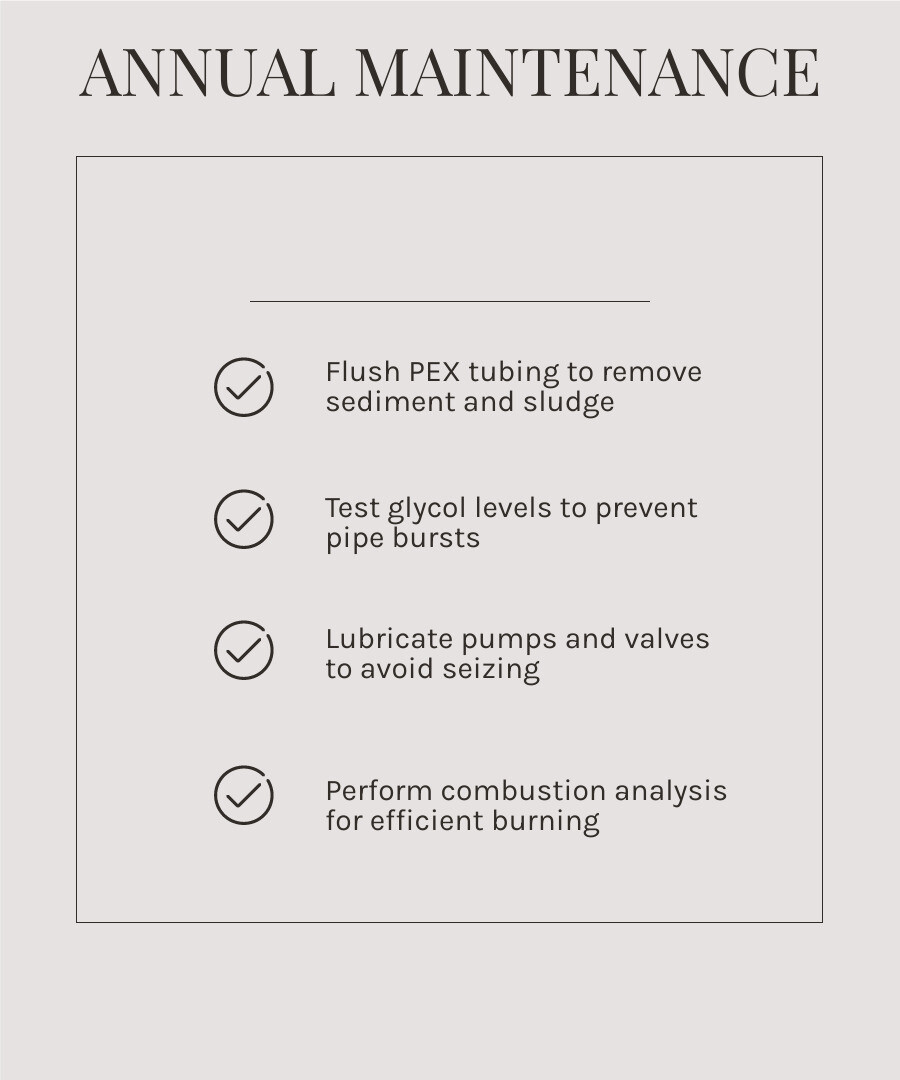
At Accurate Baker Elman, we’ve spent over 30 years helping neighbors in Franklin, Newton, and throughout the MetroWest area stay warm. We recommend an annual maintenance plan, which typically involves:
- System Flushing: Removing sediment and “sludge” that can clog PEX tubing.
- Glycol Testing: In hydronic systems, we check the antifreeze levels to ensure your pipes won’t burst if the power goes out.
- Pump & Valve Lubrication: Ensuring the moving parts of your manifold and boiler don’t seize up.
- Combustion Analysis: For gas-fired boilers, ensuring the system is burning fuel efficiently.
As a Mitsubishi Electric Elite Diamond Contractor, we pride ourselves on expert, honest service. Whether you are in Dedham, Westwood, or Medfield, regular maintenance is the best way to ensure your system reaches its 30-to-40-year potential.
If you’re noticing cold toes or a silent boiler this May 2026, don’t wait for the first frost of next winter. Check your thermostat, look for leaks, and if the problem persists, reach out to us for professional Heating Repair Services. We’re here to make sure your home remains the comfortable sanctuary it’s meant to be.