

Why Fast Action on a Fix Pipe Leak Can Save Your Home
Fix pipe leak issues fast—that’s the golden rule for Massachusetts homeowners. A slow drip or a sudden burst can quickly escalate from a minor nuisance to major water damage, mold growth, and costly repairs.
Quick Answer: How to Fix a Pipe Leak Temporarily
- Turn off the water supply at the nearest valve or main shut-off
- Drain the pipes by opening faucets
- Clean and dry the damaged area
- Apply a temporary fix:
- Epoxy putty for small cracks and pinhole leaks
- Pipe clamps with rubber gaskets for larger cracks on straight sections
- Self-fusing silicone tape for low-pressure leaks and joints
- Call a licensed plumber for permanent repair
Even a small, unseen leak can waste hundreds of gallons of water, spike your utility bills, and silently damage your home’s structure by creating the perfect environment for mold and mildew. Acting quickly is essential to prevent rotting wood and other significant damage.
This guide will walk you through identifying pipe leaks, taking immediate emergency steps, applying temporary repairs, and knowing when to call in professional help. We’ll also cover prevention strategies to protect your home from future leaks.
The stakes are real: Massachusetts homes face unique challenges from freezing temperatures and aging infrastructure. Understanding how to respond to a pipe leak can mean the difference between a quick fix and thousands of dollars in water damage restoration.
First Signs of Trouble: Identifying a Pipe Leak
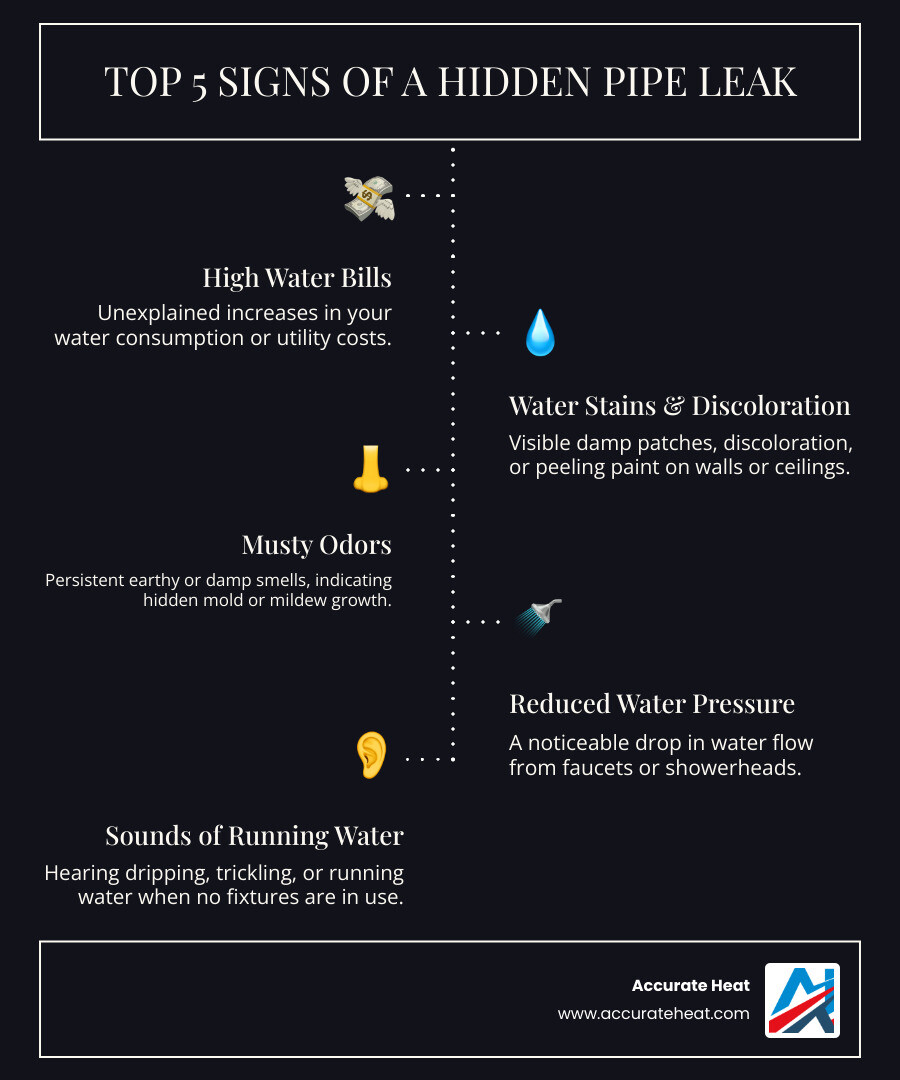
Before we can fix pipe leak problems, we first need to find them. Sometimes, a leaking pipe is obvious, but often, leaks are sneaky, hiding behind walls or under floors. Recognizing these common signs is the first step in preventing extensive damage.
Let’s break down what to look for:
Visible Signs:
- Puddles or Dripping: The most obvious sign is seeing water under sinks, near appliances, or dripping from an exposed pipe. Don’t ignore even small drips.
- Dripping Sounds: You might hear a drip, drip, drip from behind a wall or in a quiet area, signaling a hidden leak.
Hidden Signs:
- Musty Odors: A musty or earthy smell often indicates mold or mildew growth from a hidden leak.
- Wall and Ceiling Stains: Discolored patches, water stains, or peeling paint on walls or ceilings point to a leak behind the surface.
- Warped or Damaged Flooring: Buckling hardwood, lifting vinyl, or damp carpet can be caused by a leak in the subfloor.
- Peeling Paint or Wallpaper: Moisture from a leak can cause paint to bubble or wallpaper to detach.
High Water Bills:
An unexplained spike in your water bill is a strong indicator of a hidden leak. If your usage habits are the same but your bill is higher, water is likely being wasted somewhere in your system.
How to Test for Hidden Leaks: The Water Meter Test
A simple way to confirm a hidden leak is to perform a water meter test:
- Ensure all water-using appliances and faucets are off.
- Locate your home’s main water meter.
- Record the current reading or check if the leak indicator is spinning.
- Wait for 15-30 minutes without using any water.
- Check the meter again. If the reading has changed or the indicator is still spinning, you likely have a leak.
Typical Causes of Pipe Leaks:
Understanding why pipes leak can help with prevention. Common culprits in Massachusetts homes include:
- Corrosion: Older galvanized pipes rust over time, and even copper can corrode from acidic water, leading to pinhole leaks.
- High Water Pressure: Pressure above 80 psi strains pipes and joints, increasing the risk of leaks and bursts.
- Clogs: Blockages create pressure buildup that can stress pipes and cause leaks.
- Damaged Joints: As the weakest points in a plumbing system, joints can deteriorate from pressure and temperature changes.
- Freezing Temperatures: A major concern in Massachusetts, frozen water expands inside pipes, causing them to burst. This is common in uninsulated areas like basements or exterior walls.
- Foundation Shifts: Ground movement can stress buried pipes, leading to slab leaks.
Identifying Your Pipe Material
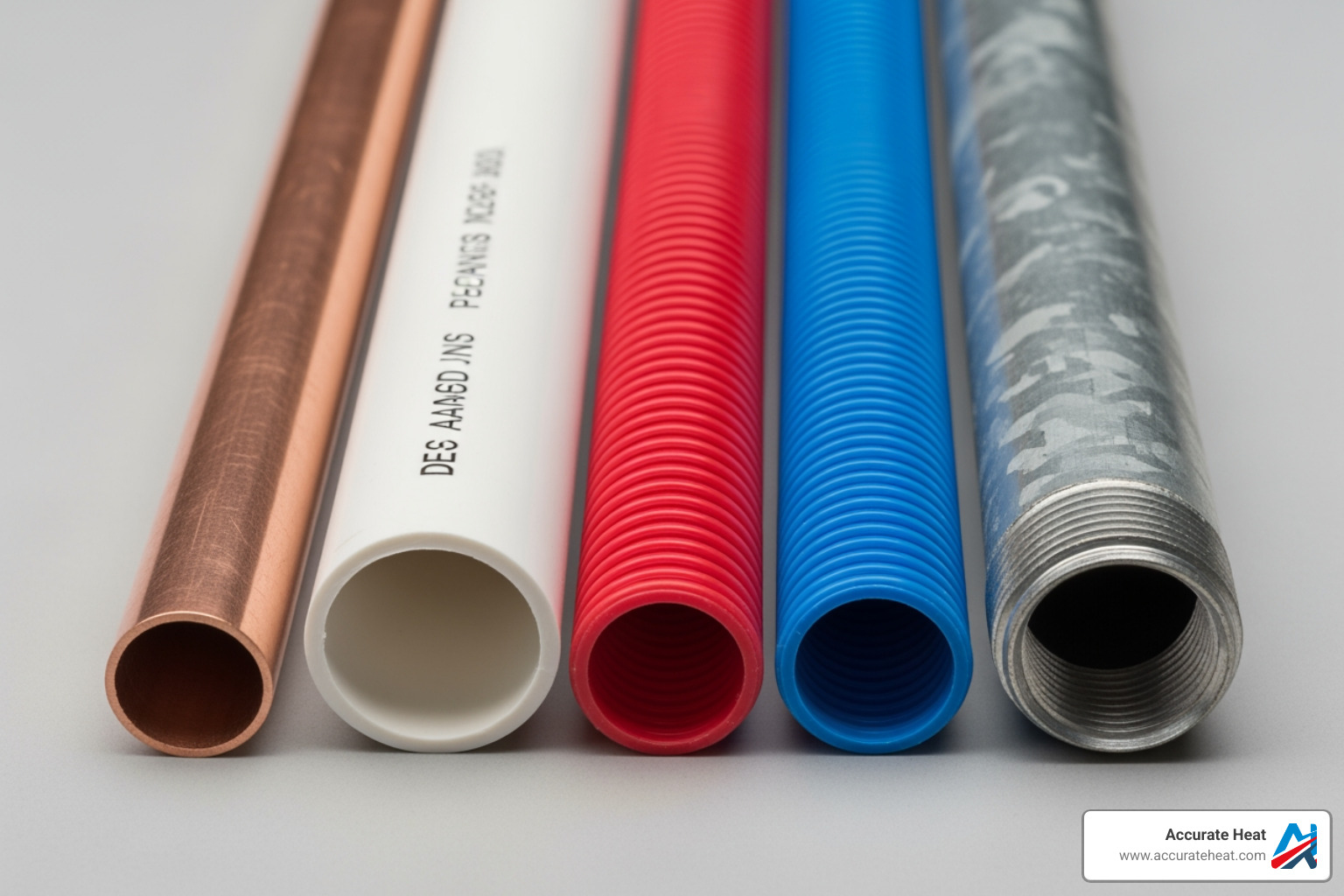
Knowing your pipe material is crucial for repairs. Most Massachusetts homes have one or more of these types:
- Copper: Reddish-brown, turning greenish over time. Used for water supply lines.
- PVC (Polyvinyl Chloride): Rigid white plastic pipes used for drain, waste, and vent (DWV) systems.
- CPVC (Chlorinated Polyvinyl Chloride): Similar to PVC but for hot and cold water.
- PEX (Cross-linked Polyethylene): Flexible plastic tubing, usually red (hot) or blue (cold), for water supply lines.
- Galvanized Steel: Grayish, heavy metal pipes in older homes, prone to rust.
Long-Term Consequences of Ignoring Leaks
Ignoring a leak can lead to devastating consequences:
- Structural Damage: Rotting wood, damaged drywall, and weakened structural integrity.
- Mold and Mildew: Persistent moisture creates a breeding ground for mold, which can cause health issues.
- Pest Infestations: Damp areas attract pests like termites and cockroaches.
- High Water Bills: A continuous leak means continuously wasted money.
- Decreased Property Value: Water damage and mold can significantly reduce your home’s value.
Quick action protects your biggest investment: your home.
Emergency Response: What to Do Immediately
If you find a leak, don’t panic. Your immediate goal is to stop the water flow to minimize damage. Acting fast makes a huge difference.
Step 1: Shut off the water
This is the most critical first step to prevent further damage.
- Fixture-Specific Valves: For leaks under a sink or behind a toilet, look for a small shut-off valve on the wall or floor connected to that fixture. Turning this will stop water to that specific area.
- Main Shut-Off Valve: If there’s no local valve, the leak is severe, or you can’t find the source, turn off your home’s main water supply. This valve is typically in the basement, crawl space, near your water heater, or outside near the water meter. Knowing its location before an emergency is invaluable.
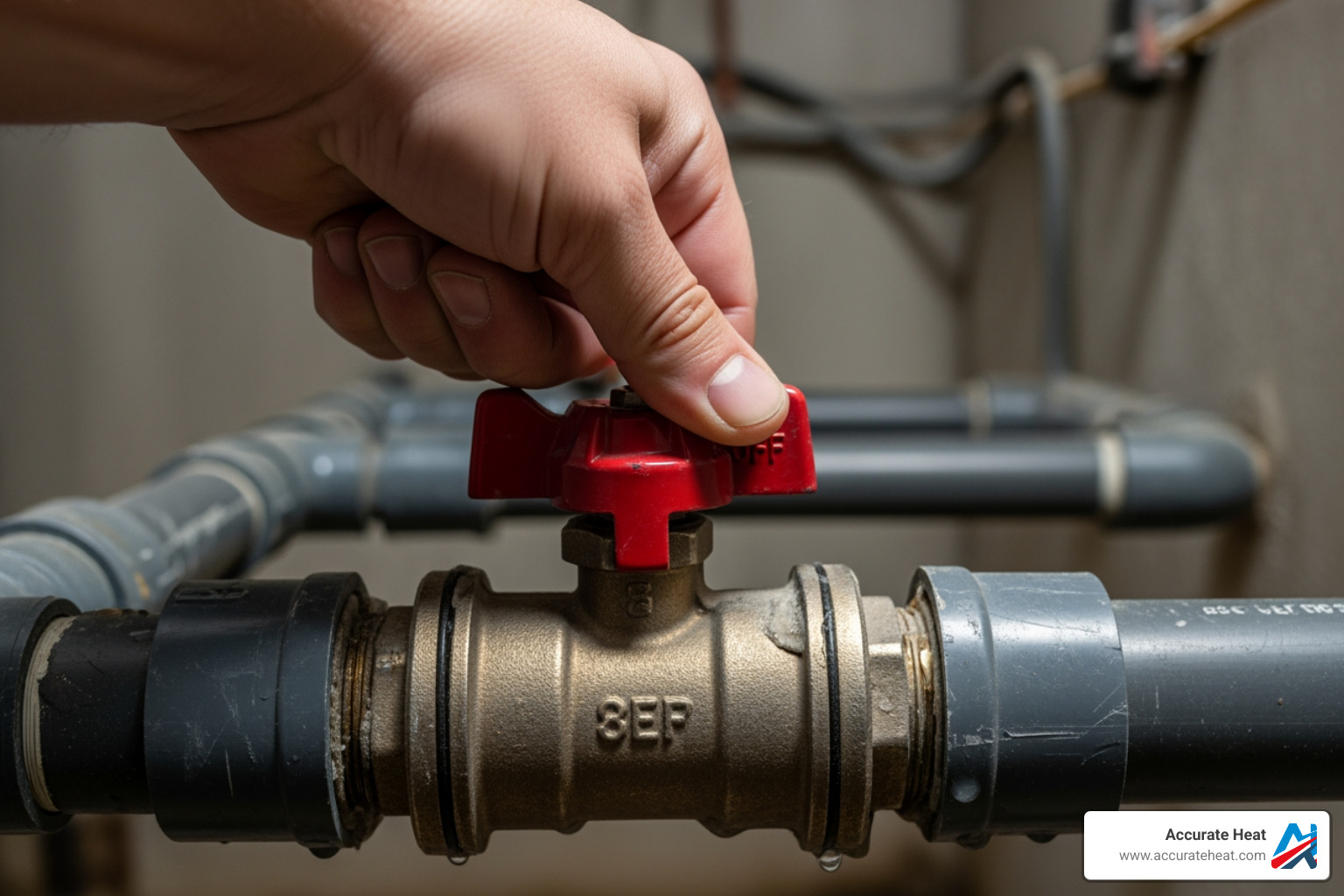
Once located, turn the valve clockwise until the water stops. For a visual guide, check out this video: Finding & Turning Off your Home’s Water Shut-Off Valve
Step 2: Drain the system
After shutting off the main supply, open faucets on the lowest floor of your home. This helps drain remaining water from the pipes, relieving pressure and preventing more leakage.
Step 3: Control the damage
While the water drains, mitigate existing damage:
- Buckets and Towels: Place buckets under the leak and use towels or a wet-dry vacuum to soak up standing water.
- Remove Water-Damaged Items: Move furniture, rugs, and other belongings away from the affected area.
- Document the Damage: Take photos and videos of the leak and any resulting damage for insurance claims.
Step 4: Ensure electrical safety
If the leak is near electrical outlets or appliances, immediately turn off power to that area at the electrical panel. Water and electricity are a dangerous combination, so prioritize safety.
By following these steps, you’ve contained the emergency and bought time to plan a temporary fix pipe leak solution.
Your Temporary Toolkit: How to Fix a Pipe Leak Until a Pro Arrives
Now that the immediate crisis is under control, apply a temporary fix pipe leak solution. These are temporary repairs designed to stop the leak until a professional plumber can perform a permanent fix. Always plan for a proper, long-lasting solution, as leaving a temporary patch can lead to more damage.
Preparation Steps for Any Temporary Repair:
Proper preparation is key for a successful temporary patch:
- Clean the Pipe: Use a rag to remove any dirt, rust, or debris from around the leak.
- Dry the Pipe: Ensure the pipe surface is as dry as possible, as many materials won’t bond to wet surfaces.
- Roughen Surface (Optional): Lightly sanding the pipe surface can help materials like epoxy putty get a better grip.
Now, let’s explore some common temporary repair methods:
Using Epoxy Putty to fix a pipe leak
Epoxy putty is a versatile compound for small cracks or pinhole leaks on metal and plastic pipes.
- Best For: Pinhole leaks, small cracks.
- Pipe Types: Copper, PVC, CPVC, Galvanized.
- Materials Needed: Two-part epoxy putty, nitrile gloves.
- How to Use:
- Wearing gloves, cut off a piece of epoxy putty.
- Knead the putty until it’s a uniform color and feels warm.
- Press the putty firmly over the leak, molding it to cover the damaged area completely with a 1/2-inch layer.
- Allow it to cure as per the manufacturer’s instructions (usually within an hour).
For a visual demonstration, you can watch: How to Use Oatey Epoxy putty
Using Pipe Clamps and Sleeves to fix a pipe leak
Pipe repair clamps (or sleeves) are excellent for larger cracks or holes on straight pipe sections, creating a tight mechanical seal.
- Best For: Larger cracks or holes on straight pipe sections.
- Pipe Types: Works on most pipe materials (metal, plastic); match the clamp size to your pipe diameter.
- Materials Needed: Pipe repair clamp with rubber gasket, screwdriver or wrench.
- How to Use:
- Clean and dry the pipe surface.
- Place the clamp’s rubber gasket over the leak.
- Position the metal clamp around the pipe and gasket.
- Tighten the bolts evenly to create a secure seal, but don’t overtighten.
Using Self-Fusing Silicone Tape
Self-fusing silicone tape bonds to itself to create a watertight seal. It’s useful for low-pressure leaks, joints, or awkward areas.
- Best For: Low-pressure leaks, joints, and irregularly shaped areas.
- Pipe Types: Effective on metal (copper, galvanized) and plastic (PVC, PEX) pipes.
- Materials Needed: Self-fusing silicone tape.
- How to Use:
- Clean and dry the pipe surface.
- Begin wrapping a few inches before the leak, stretching the tape tightly.
- Overlap each layer by about half the tape’s width, continuing a few inches past the leak.
- The tape fuses to itself, creating a solid seal. Press the end firmly to secure it.
Comparing Temporary Pipe Leak Repair Methods
| Method | Best For | Pipe Types | Ease of Use |
|---|---|---|---|
| Epoxy Putty | Pinhole leaks, small cracks | Copper, PVC, CPVC, Galvanized | Easy |
| Pipe Clamps & Sleeves | Larger cracks, holes on straight sections | Most pipe materials | Moderate |
| Self-Fusing Silicone Tape | Low-pressure leaks, joints, awkward angles | Metal (Copper, Galvanized), PVC, PEX | Easy |
These temporary solutions can hold for weeks or months, buying you crucial time until a professional can perform a permanent repair. However, remember they are not permanent solutions.
DIY vs. Calling a Professional: Knowing Your Limits
While temporary fixes are helpful, it’s critical to know when a DIY repair is appropriate versus when to call a professional plumber. Not every fix pipe leak scenario is a DIY job.
Scenarios for DIY Repair (Temporary Fixes):
- Minor Drips: A slow drip from an exposed, easily accessible pipe that you can patch with epoxy putty or silicone tape.
- Accessible Pipes: Leaks on pipes that are clearly visible and easy to reach, such as under a sink or in an open basement.
- Loose Fittings: Sometimes, a leak is just a loose connection that needs tightening with a wrench. Applying plumber’s tape (PTFE tape) can also improve the seal.
- Pinpoint Leaks: Small pinhole leaks that can be sealed with epoxy putty or a pipe clamp.
These fixes buy you time and prevent further damage until a professional from Accurate Heat arrives.
When to Call a Professional Plumber:
However, many situations require a licensed professional for a proper, long-lasting repair. Here’s when to call a plumber:
- Burst Pipes: A burst pipe is a serious emergency requiring professional replacement.
- Leaks Inside Walls, Ceilings, or Underground: Hidden leaks are difficult to locate and repair without specialized equipment. Opening walls yourself can cause more damage.
- Widespread Corrosion: If one pipe leaks from corrosion, others are likely compromised and may need replacement. A plumber can assess the entire system.
- Unknown Leak Source: If your water meter test confirms a leak but you can’t find it, a professional has the tools for leak detection.
- Persistent Leaks: If a pipe keeps leaking despite temporary repairs, it signals a deeper problem.
- Lack of Confidence or Tools: If you’re unsure or don’t have the right tools, it’s safer to call a pro.
- Gas Lines: Never attempt to repair a gas line leak yourself. This is an immediate emergency requiring a certified professional.
The Role of a Professional Plumber:
A professional plumber from Accurate Heat is an expert who can:
- Diagnose: Accurately identify the root cause of the leak.
- Permanent Repairs: Replace damaged pipe sections or re-solder connections for a lasting, code-compliant solution.
- Test Pressure Levels: Ensure your water pressure is within a safe range to prevent future leaks.
- Code Compliance: Ensure all repairs meet local Massachusetts plumbing codes for safety and home value.
Don’t let a small leak turn into a costly catastrophe. For reliable, expert plumbing solutions in Massachusetts, we’re here to help. Find more about our services: Trusted Plumbing Services in MA
Proactive Plumbing: How to Prevent Future Leaks
Preventing a fix pipe leak situation is better than repairing one. With some foresight, you can protect your home from water damage.
Here are our best practices for protecting your Massachusetts home from future pipe leaks:
- Regular Inspections: Periodically inspect exposed pipes under sinks and in basements or crawl spaces. Look for drips, water stains, corrosion, or musty odors.
- Manage Water Pressure: High water pressure (above 80 psi) stresses your plumbing system and increases leak risk. Consider installing a water pressure regulator to keep pressure between 40-80 psi.
- Winterization and Pipe Insulation: This is critical for Massachusetts homeowners due to freezing temperatures. Insulate pipes in unheated areas like basements, crawl spaces, and exterior walls. Before the first freeze, disconnect garden hoses and insulate outdoor spigots.
- Address Clogs Safely: Clogged drains create pressure buildup that stresses pipes. Avoid harsh chemical drain cleaners, which can corrode pipes. Use a drain snake or plunger instead.
- Know Your System’s Age: If your home has older galvanized or copper pipes, they are prone to corrosion. Consider discussing replacement options with a plumber if you have recurring leaks.
- Install a Water Softener (If Needed): Hard water contributes to pipe corrosion. A water softener can extend the life of your plumbing.
- Schedule Routine Maintenance: Scheduling routine maintenance with a licensed plumber like Accurate Heat is the best way to detect and fix minor issues before they become major problems. We can perform thorough inspections to ensure your system is in top condition.
Maintaining your pipes and addressing potential issues early can save you time, money, and the hassle of a leak. Learn more about the benefits of professional maintenance: Why Regular Plumbing Maintenance is a Must in Massachusetts
Frequently Asked Questions about How to Fix a Pipe Leak
We’ve covered a lot about how to fix pipe leak issues. Here are some common questions we hear from homeowners:
How long can a temporary pipe repair last?
A temporary repair’s lifespan depends on the method, pipe type, water pressure, and leak severity. Epoxy putty, clamps, or silicone tape can last for weeks or months, but they are not permanent solutions. They are meant to buy you time until a professional can perform a permanent repair. Delaying a proper fix can lead to more severe damage.
Can I fix a leaking pipe behind a wall myself?
We strongly advise against a DIY fix pipe leak attempt for pipes behind a wall. Hidden leaks pose several challenges:
- Difficulty in Location: Pinpointing the exact source without specialized equipment is very difficult.
- Structural Damage: Opening walls or ceilings can cause significant damage to your home.
- Mould Risk: Hidden leaks often lead to mold growth that requires professional remediation.
- Specialized Skills: Repairing pipes within walls requires professional expertise to ensure a lasting, code-compliant repair.
- Further Damage: An improper repair can worsen the problem, leading to more extensive water damage.
This type of repair is best left to a professional plumber with the right tools and expertise.
What is the most common cause of pipe leaks in older homes?
In older Massachusetts homes, the most common cause of pipe leaks is corrosion, especially in homes with:
- Galvanized Steel Pipes: Common in homes built before the 1960s, these pipes rust from the inside out, leading to pinhole leaks or bursts.
- Aging Copper Pipes: Over decades, copper can corrode due to mineral deposits from hard water or acidic water conditions, causing pinhole leaks.
Beyond corrosion, deteriorated pipe joints and high water pressure also contribute significantly to leaks in older plumbing systems.
Stop the Drip for Good
Finding a leaky pipe can be alarming, but with the right knowledge and quick action, you can prevent a small drip from becoming a flood. We’ve walked through how to identify the signs of a leak, what immediate steps to take, the temporary fixes that can buy you time, and crucially, when call in the professionals.
Remember these key takeaways:
- Act Fast: As soon as you notice a leak, containing it is your top priority.
- Temporary Fixes are Just That: Use epoxy putty, pipe clamps, or silicone tape to stop the immediate flow, but understand these are not permanent solutions.
- Know Your Limits: For complex issues, hidden leaks, or any repair you’re uncomfortable with, calling a professional is always the safest and most effective choice.
- Prevention is Key: Regular inspections, managing water pressure, and proper winterization are your best defense against future leaks.
Ignoring a leaking pipe, even a seemingly minor one, can lead to significant water damage, mold growth, increased utility bills, and costly repairs down the line. Don’t let a small leak compromise the safety and integrity of your Massachusetts home.
For reliable, expert plumbing solutions in Massachusetts, trust the experienced team at Accurate Heat. With over 30 years of experience, our licensed professionals are ready to provide expert, honest, and timely solutions for all your plumbing needs.