
When Your Heat Goes Out: Understanding the Boiler Pilot Light
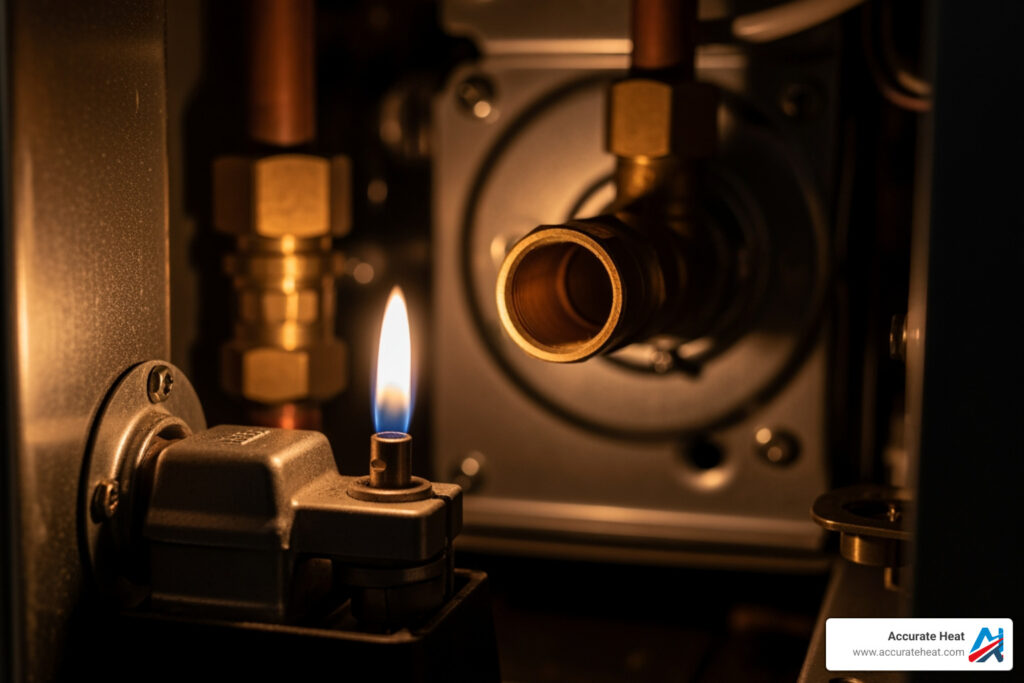
A boiler pilot light is a small flame that ignites the gas in your boiler to heat your home and water. If you’re experiencing no heat on a cold Massachusetts night, a pilot light that’s gone out is often the culprit.
Quick Answer: How to Know If Your Pilot Light Is Out
- No heat or hot water in your home
- Remove the access panel on your boiler (usually at the bottom or front)
- Look for a small blue flame near the gas control valve
- If you don’t see a flame, your pilot light is out
- If you smell gas (like rotten eggs), leave immediately and call your utility company
Nothing beats the feeling of a warm home during a New England winter. But when you wake up to a cold house and your boiler isn’t working, it’s usually because that small but critical flame has been extinguished.
The good news? Relighting a pilot light is often something you can do yourself, as long as you follow proper safety precautions. However, understanding when to call a professional is just as important as knowing how to relight it.
In this guide, we’ll walk you through exactly what a pilot light is, why it goes out, and how to safely get your heat back on. We’ll also cover the warning signs that mean you should step back and call in an expert.
Understanding Your Boiler’s Ignition System
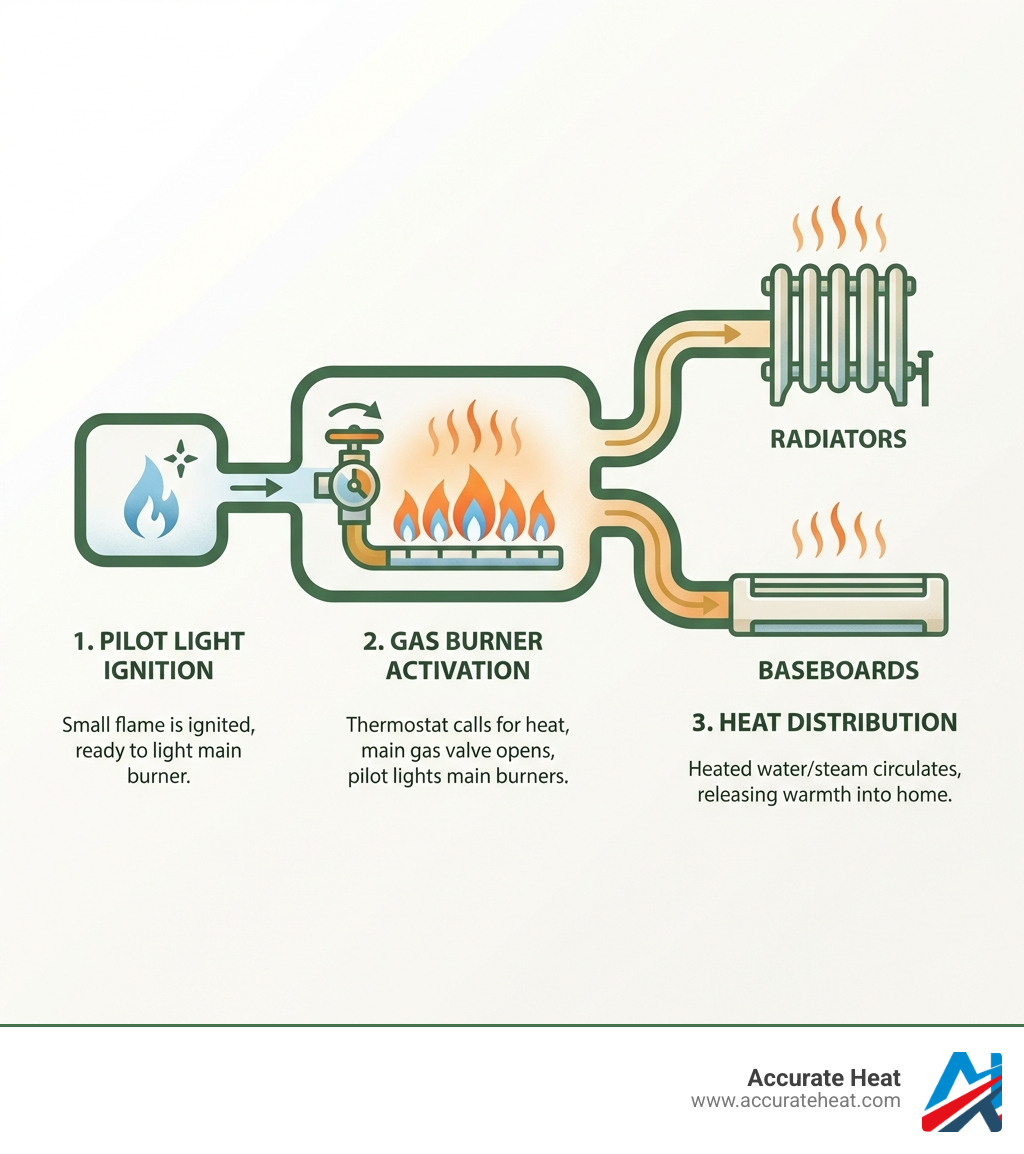
At its heart, a boiler pilot light serves as the ignition source for your boiler’s main gas burners. It’s a fundamental component in many gas-fired boilers, particularly older models. This small, continuous flame ensures that when your thermostat calls for heat, the gas released into the main burner is immediately ignited, preventing dangerous gas buildup and providing instant warmth.
The purpose of a pilot light is to provide a constant source of ignition for the burner to heat the air that flows into your home or the water that circulates through your heating system. You can learn more about the purpose of a pilot light here.
Over the years, boiler technology has evolved, leading to different types of ignition systems. We primarily distinguish between two types: manual (standing pilot) and automatic (electronic ignition).
Older vs. modern boilers:
While older boilers commonly feature a standing boiler pilot light that burns continuously, modern boilers often use electronic ignition systems. These newer systems, which include spark igniters and hot surface igniters, only activate when heat is needed, making them more energy-efficient.
Here’s a quick comparison of the two:
| Feature | Manual (Standing Pilot) System | Automatic (Electronic Ignition) System |
|---|---|---|
| How it Works | A small flame burns continuously, igniting the main burner when needed. | Ignites only when heat is called for, using a spark or hot surface. |
| Pros | Simple design, easy to understand, often found in older, robust units. | More energy-efficient, no wasted gas from a constant flame, improved safety. |
| Cons | Consumes gas 24/7 (less efficient), prone to being blown out by drafts. | Higher initial cost, more complex components can be more expensive to repair. |
How to Tell if Your Pilot Light Is Out
The most obvious sign that your boiler pilot light is out is a lack of heat or hot water in your home. If your radiators are cold or your tap water isn’t warming up, it’s time for an investigation.
To confirm, you’ll need to perform a visual inspection:
- Locate your boiler’s access panel. This is usually found on the bottom or front of the unit. You may need a screwdriver to remove it, or it might simply unclip.
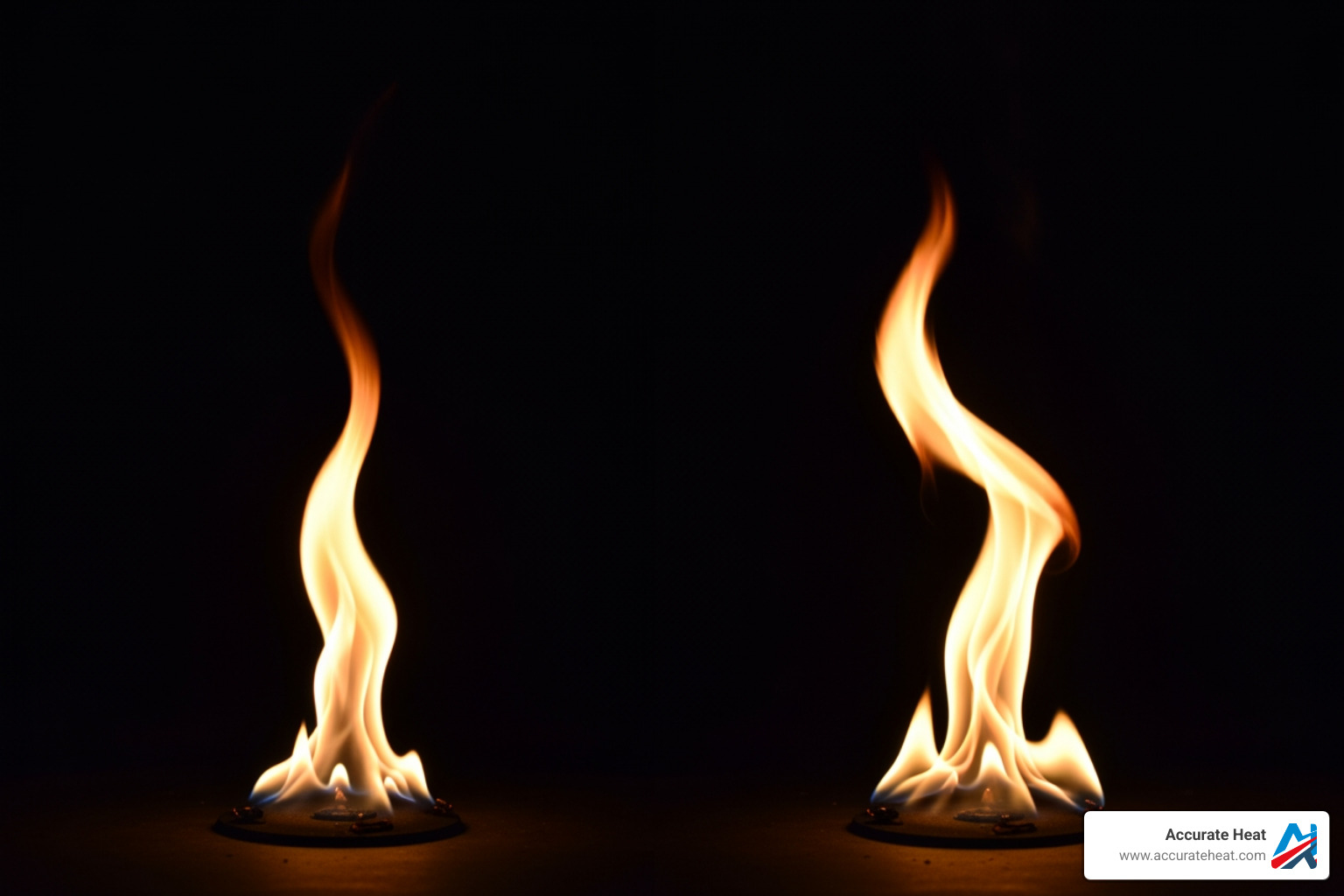
- Look inside for a small blue flame near the gas control valve. This flame, typically about an inch high, should be steady and vibrant.
- If you don’t see any flame, or if you see a weak, flickering, or yellow/orange flame, your boiler pilot light is either out or malfunctioning.
In some cases, if you have a boiler that also controls a blower fan (less common for traditional boilers but present in some heating systems), you might notice the fan still running but no heat being produced. This further indicates an ignition problem.
Manual vs. Automatic Pilot Lights
Understanding whether your boiler has a manual or automatic pilot light is crucial before attempting any troubleshooting. The relighting procedures differ significantly, and attempting to manually light an automatic system can be dangerous.
Manual (Standing) Pilot Light:
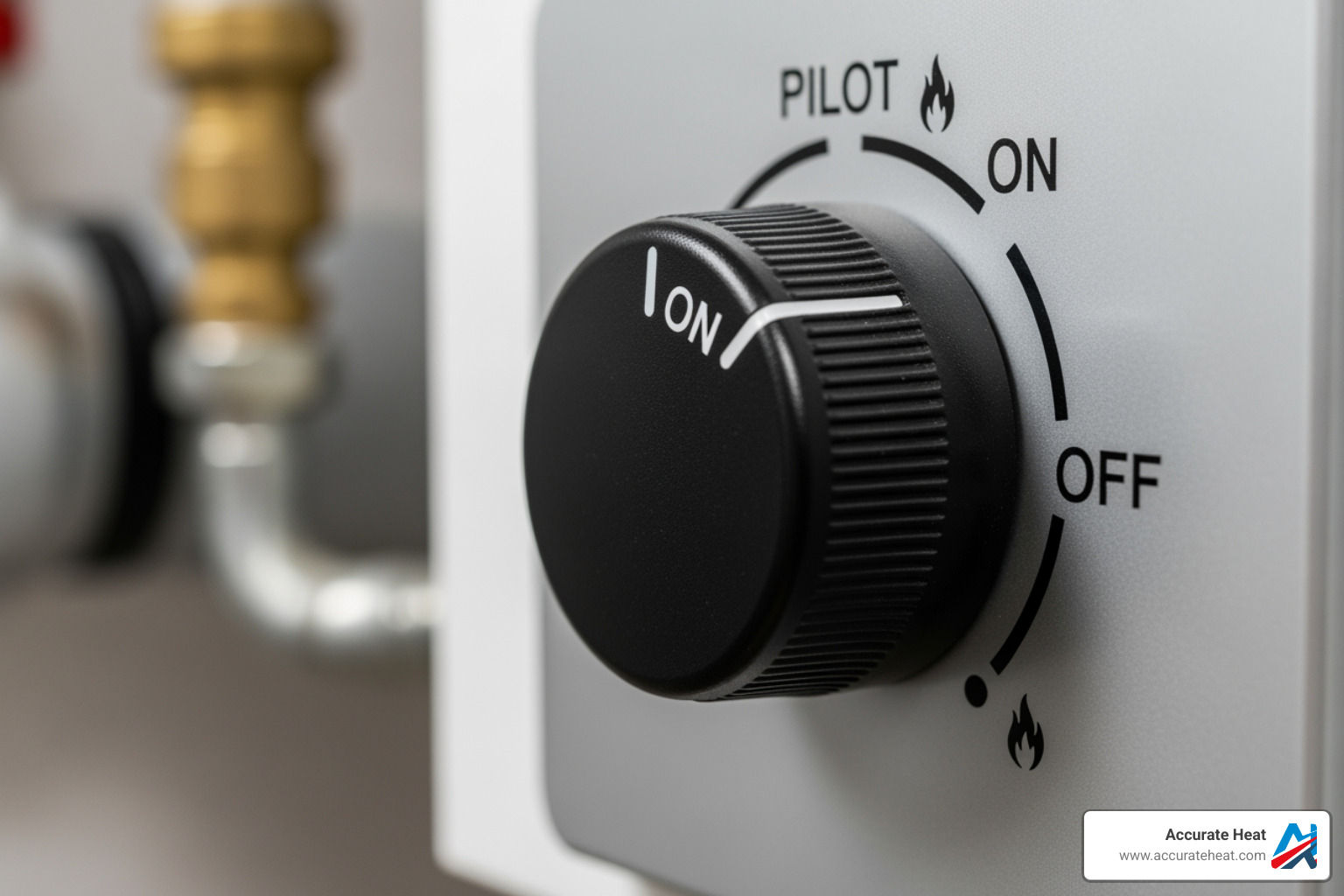
These systems are common in older boilers. A standing boiler pilot light means there’s a small flame that burns constantly, 24 hours a day, 7 days a week. It draws a tiny, continuous stream of gas to stay lit. You’ll typically find a gas control knob with three settings: “OFF,” “PILOT,” and “ON.”
Automatic (Electronic Ignition) System:
Modern boilers, particularly those designed for higher efficiency, often employ electronic ignition. These systems do not have a continuously burning flame. Instead, they use an electrical spark or a hot surface igniter to light the main burner only when heat is required.
- Spark Igniter: Creates a spark to ignite the gas.
- Hot Surface Igniter: A component that heats up to a glow, igniting the gas.
- Intermittent Pilot: A type of electronic ignition where a pilot flame is lit only when the thermostat calls for heat, and then extinguishes once the main burner is lit or the heating cycle ends.
If you have an automatic system, you typically won’t see a “PILOT” setting on your gas control knob (it will usually just have “OFF” and “ON”), and you will never attempt to light it manually. Instead, these systems have a reset procedure.
Common Causes and Safety Risks of an Extinguished Pilot Light
It’s normal for your boiler pilot light to go out every once in a while. However, if it’s happening frequently, it’s a sign of an underlying issue that needs attention.
Here are the most common reasons a boiler pilot light goes out:
- Gas supply issues: If the gas supply to your home is interrupted or if there’s low gas pressure, the pilot light won’t receive enough fuel to stay lit. A faulty gas regulator, often located outside your home, can also cause this, potentially affecting multiple gas appliances.
- Strong drafts: A sudden gust of wind, a strong draft from an open window, or even a faulty flue venting system can blow out the delicate pilot flame. If your boiler is in a drafty area, this could be a frequent problem.
- Dirty pilot orifice: Over time, the tiny opening of the pilot orifice can become clogged with soot, dirt, or debris. This restricts the gas flow, leading to a weak, flickering, or yellow flame that is easily extinguished.
- Faulty thermocouple: The thermocouple is a crucial safety device. It’s a small rod positioned in the pilot flame that senses heat. If the pilot light is lit, the thermocouple generates a small electrical current that keeps the gas valve open. If the pilot goes out, the thermocouple cools, and the gas valve closes, shutting off the gas supply for safety. If the thermocouple is bent, dirty, or damaged, it might incorrectly sense that the flame is out, even if it’s lit, causing the gas valve to close.
- Bad gas regulator: As mentioned, an issue with the gas regulator that controls the pressure of gas entering your home can lead to insufficient gas reaching your boiler’s pilot light. If other gas appliances are also experiencing issues, this is a strong indicator.
Why Safety Is Critical
Whenever you’re dealing with gas appliances, safety must be your absolute top priority. An extinguished boiler pilot light isn’t just an inconvenience; it can pose serious risks.
- Gas leaks and explosion risk: If your pilot light goes out and the safety mechanism (like the thermocouple) fails to shut off the gas, unburnt natural gas can accumulate in your home. Natural gas often has a distinctive “rotten egg” smell added to it specifically to alert you to leaks. If you smell gas, do not attempt to relight the pilot, flip light switches, or use any electrical devices. Evacuate your home immediately and call your utility company or emergency services from a safe distance. An accumulation of gas can lead to a dangerous explosion.
- Carbon monoxide (CO) poisoning: Even if the gas valve shuts off, a malfunctioning boiler can be a source of carbon monoxide (CO) gas. CO is an odorless, colorless, and tasteless gas, making it extremely dangerous. It’s often called the “silent killer.” Incomplete combustion, often indicated by a yellow or orange pilot flame, can produce CO. Symptoms of CO poisoning include headaches, nausea, dizziness, confusion, and fatigue. If you suspect CO poisoning, get fresh air immediately and seek medical attention. We recommend installing carbon monoxide detectors on every level of your home for your safety. Learn more about carbon monoxide (CO) poisoning.
- Soot or stains: Black soot or stains around your boiler or on the walls nearby can be a visual indicator of improper combustion and a potential CO leak.
- Yellow flame warning: A healthy boiler pilot light flame should be steady and blue. A flickering, weak, or yellow/orange flame is a strong warning sign of incomplete combustion, which can produce carbon monoxide.
Here’s a list of crucial safety dos and don’ts:
- DO read your boiler’s owner’s manual before attempting any relighting.
- DO ensure the area is well-ventilated before and during the relighting process.
- DO wait 10-15 minutes after turning off the gas to allow any residual gas to dissipate.
- DO use a long-handled lighter or fireplace match to protect your hands.
- DO NOT attempt to relight the pilot light if you smell gas. Evacuate immediately.
- DO NOT use any electrical devices, light switches, or phones if you smell gas.
- DO NOT apply brute force or oil to any part of your boiler.
- DO NOT ignore a pilot light that frequently goes out or burns with a yellow/orange flame.
- DO NOT attempt to manually light an automatic (electronic ignition) system.
How to Safely Relight Your Boiler Pilot Light
Before we dive into the step-by-step instructions, remember: safety first! Always prioritize your well-being and that of your family.
General Safety Precautions:
- Read your manufacturer’s manual: Every boiler is slightly different. The instructions on your specific model will always take precedence over general guidance. Look for a label on the boiler itself or consult the manual.
- Perform a smell test for gas: If you detect any odor of natural gas (like rotten eggs), STOP IMMEDIATELY. Do not proceed. Evacuate your home, call your gas company or emergency services, and do not re-enter until declared safe by professionals.
- Ventilate the area: If there’s no gas smell, open nearby windows and doors to ensure good airflow.
- Wait 10-15 minutes: After turning off the gas (as instructed below), allow this time for any lingering gas fumes to dissipate. This is a critical safety step to prevent ignition of accumulated gas.
- Tools needed: A long-handled lighter or fireplace match is recommended to safely ignite the pilot flame without burning yourself.
Step-by-Step: Relighting a Manual Boiler Pilot Light
If your boiler has a manual (standing) pilot light, follow these steps carefully:
- Locate the gas control knob: This knob typically has settings for “OFF,” “PILOT,” and “ON.”
- Turn the knob to “OFF”: This stops the flow of gas to both the pilot and the main burner.
- Wait for gas to dissipate: Allow at least 10 to 15 minutes for any residual gas to clear from the combustion chamber. This is crucial for safety.
- Turn the knob to “PILOT”: After the waiting period, turn the knob to the “PILOT” setting.
- Press and hold the knob: Firmly press down on the gas control knob. This manually opens the gas valve to allow gas to flow to the pilot light.
- Ignite the pilot flame: While still holding the knob down, use your long-handled lighter or match to ignite the pilot opening. You should see a small blue flame appear.
- Hold knob for 30-60 seconds: Once the pilot is lit, continue to hold the knob down for another 30 to 60 seconds. This allows the thermocouple to heat up and “prove” the flame, signalling to the system that it’s safe to keep the gas valve open. If the flame goes out when you release the knob, the thermocouple might be faulty (see troubleshooting below).
- Release the knob slowly: Gently release the gas control knob. The pilot flame should remain lit. If it goes out, repeat steps 4-8.
- Turn the knob to “ON”: Once the pilot light is stable and burning steadily, turn the gas control knob from “PILOT” to “ON.” Your boiler should now be ready to operate and respond to your thermostat.
Resetting an Automatic (Electronic Ignition) System
For boilers with electronic ignition, the process is different. Never attempt to manually light an automatic pilot light. These systems are designed to ignite automatically, and manual intervention can be dangerous.
- Locate the power switch: Find the electrical power switch for your boiler (often on a wall nearby or on the unit itself).
- Turn the boiler off: Switch the boiler’s electrical power to the “OFF” position.
- Turn the gas valve off: Locate the main gas shut-off valve for the boiler and turn it to the “OFF” position.
- Wait 10-15 minutes: Just like with manual systems, allow this time for any unburnt gas to dissipate.
- Turn the gas valve on: Turn the main gas shut-off valve back to the “ON” position.
- Turn the boiler power on: Switch the boiler’s electrical power back to the “ON” position.
- Listen for clicks: The automatic ignition system should now attempt to light the pilot (or directly ignite the main burner). You might hear a series of clicking sounds as it tries to spark.
- Check for error codes: If the boiler doesn’t ignite, check the display panel for any error codes. These codes can provide valuable information for diagnosis. If it fails to ignite after 30 seconds or if the clicking sound doesn’t stop, turn the boiler off and call a professional.
Troubleshooting and When to Call a Professional
While relighting a boiler pilot light can be a straightforward DIY task, there are times when professional help is essential. Knowing when to step back and call us at Accurate Baker Elman is key to both your comfort and safety.
When DIY ends and professional help begins:
- Relighting fails: If you’ve followed the steps for your manual pilot light carefully and it simply won’t ignite after a couple of attempts, there’s likely an underlying issue.
- Pilot won’t stay lit: This is a classic sign of a faulty thermocouple. If the pilot lights but goes out as soon as you release the gas control knob, the thermocouple isn’t doing its job.
- Weak or yellow flame: A healthy pilot flame is strong and blue. If yours is weak, flickering, or yellow/orange, it indicates incomplete combustion, a dirty orifice, or potentially a carbon monoxide risk. This needs professional assessment.
- Gas smell persists: If you ever smell gas, even faintly, after attempting to relight or at any other time, evacuate immediately and call the gas company. Do not attempt further troubleshooting.
- Frequent outages: If your boiler pilot light keeps going out repeatedly (more than once a quarter, as some sources suggest), it’s not a normal occurrence. This points to a recurring problem like a persistent draft, a failing component, or gas supply issues that require expert diagnosis.
- Error codes on automatic systems: If your electronic ignition boiler displays an error code and won’t reset, it’s time for a professional.
What Is a Thermocouple and How Does It Affect Your Boiler Pilot Light?
We’ve mentioned the thermocouple several times, and for good reason! It’s a small but mighty safety sensor. This metallic rod is positioned so its tip is constantly bathed in the heat of the boiler pilot light.
How it works: When heated by the pilot flame, the thermocouple generates a tiny electrical current. This current signals to the gas valve that a flame is present, keeping the main gas supply open. If the pilot flame goes out for any reason, the thermocouple cools down, the electrical current stops, and the gas valve automatically closes. This safety feature prevents unburnt gas from flowing into your home, averting dangerous gas leaks and potential explosions.
Signs of a faulty thermocouple:
The most common symptom of a failing thermocouple is when your boiler pilot light lights successfully, but then goes out as soon as you release the gas control knob. This means the thermocouple isn’t generating enough current to hold the gas valve open. It can also be bent out of position, coated in dirt, or simply worn out.
Cleaning a Dirty Pilot Orifice
A dirty pilot orifice is a surprisingly common reason for a weak or extinguished boiler pilot light. Soot, dust, or other debris can accumulate in the tiny opening, restricting the gas flow and causing a poor flame.
How to clean it (cautiously):
- Turn off the gas: Ensure the gas supply to your boiler is completely off and wait 10-15 minutes.
- Locate the pilot orifice: This is the small opening where the pilot flame emerges.
- Clear debris: You can carefully use a thin piece of wire, a paper clip, or even a drinking straw to gently clear any visible debris from the orifice. Be extremely careful not to enlarge the opening or damage any components.
- Blow away soot: After clearing, you can use a can of compressed air (designed for electronics, not a regular air compressor) to blow away any remaining soot or dirt.
When to leave it to a pro: If the orifice is severely clogged, difficult to access, or if you’re uncomfortable with the process, it’s always best to leave this to a professional. Damaging the orifice can lead to improper combustion and safety hazards.
Frequently Asked Questions about Boiler Pilot Lights
We hear a lot of questions about boiler pilot lights, especially as the Massachusetts winter approaches. Here are some of the most common ones we get:
How much gas does a standing pilot light use?
This is a great question, especially for those concerned about energy efficiency and cost. A standing boiler pilot light burns continuously, and while it’s a small flame, that constant consumption adds up.
According to industry statistics, pilot lights burn about 600 BTUs of gas an hour. This equates to 14,400 BTUs daily, and a whopping 432,000 BTUs monthly. In terms of energy efficiency, this continuous burn is why electronic ignition systems are gaining popularity. They only light when needed, leading to little to no wasted gas. For a detailed comparison of electronic ignition vs. standing pilot, you can refer to dedicated guides. While units with electronic ignition might have a higher upfront cost, their improved efficiency can lead to long-term savings on your energy bills.
What color should my pilot light flame be?
A healthy boiler pilot light flame should be steady and blue. This indicates efficient and complete combustion of the natural gas. Think of a clean-burning gas stove burner – that’s the color you want to see.
Signs of a problem:
- Yellow or orange flame: This is a significant warning sign. A yellow or orange flame indicates incomplete combustion, which can lead to the production of dangerous carbon monoxide. It often suggests a dirty pilot orifice, lack of sufficient oxygen, or an imbalance in the gas-to-air mixture. If you see this, turn off your boiler and call us immediately.
- Flickering or weak flame: A pilot light that isn’t strong and steady can be easily extinguished by drafts or might not be hot enough to properly activate the thermocouple. This could be due to a dirty orifice, low gas pressure, or other issues.
Is it dangerous if my pilot light goes out?
Yes, it absolutely can be dangerous if your boiler pilot light goes out, especially if safety mechanisms fail.
Potential dangers include:
- Gas accumulation: If the pilot light goes out and the thermocouple (or other safety valve) fails to close the gas supply, natural gas can continue to flow into your home. This accumulation creates a significant explosion risk.
- Carbon monoxide risk: As discussed, an improperly burning pilot light (yellow or orange flame) or a malfunctioning boiler can produce carbon monoxide. While the pilot light itself going out typically means no combustion (and thus no CO from the pilot), a boiler that struggles to light or has other issues can still pose a CO risk.
Immediate action required: Due to these potential hazards, if you find your pilot light is out, it’s crucial to address it promptly and safely. If you smell gas, evacuate immediately. If there’s no gas smell, follow our relighting instructions carefully. If the pilot light repeatedly goes out or burns with an abnormal color, call a professional. Your safety is our top concern.
Stay Warm and Safe with Professional Boiler Service
We understand that a cold house in the middle of a Massachusetts winter is more than just uncomfortable; it can be a real emergency. While knowing how to safely relight your boiler pilot light can be a valuable skill, it’s equally important to recognize when to call in the experts. Your safety and the efficient operation of your heating system are paramount.
Regular maintenance is the best defense against unexpected boiler issues, including a frequently extinguished pilot light. Our team at Accurate Baker Elman provides reliable HVAC and plumbing services across Franklin, Norfolk, Medway, Medfield, Wrentham, Bellingham, Millis, Holliston, Hopkinton, Foxboro, Newton, Waltham, Watertown, Belmont, Dedham, Charlestown, Framingham, Brighton, Needham, Norwood, Westwood, Stoughton, Sharon, Canton, Mansfield, Walpole, Quincy, Norton, Wellesley, Dover, Randolph, Winchester, Arlington, Braintree, Wayland, Sudbury, Lexington, Easton, and Weymouth. With over 30 years of experience, we’re here to ensure your home stays warm and safe, even through the harshest New England winters.
If your pilot light won’t stay lit, burns with an odd color, or if you’re ever in doubt about the safety of your boiler, don’t hesitate. We offer 24/7 emergency service and are committed to providing expert, honest, and timely solutions for your home comfort needs.
Don’t let a stubborn pilot light leave you in the cold. Schedule professional heating repair services in MA with Accurate Baker Elman today.