Why the 2026 Nor’easter Is a Serious Threat to Your Home’s Heating System
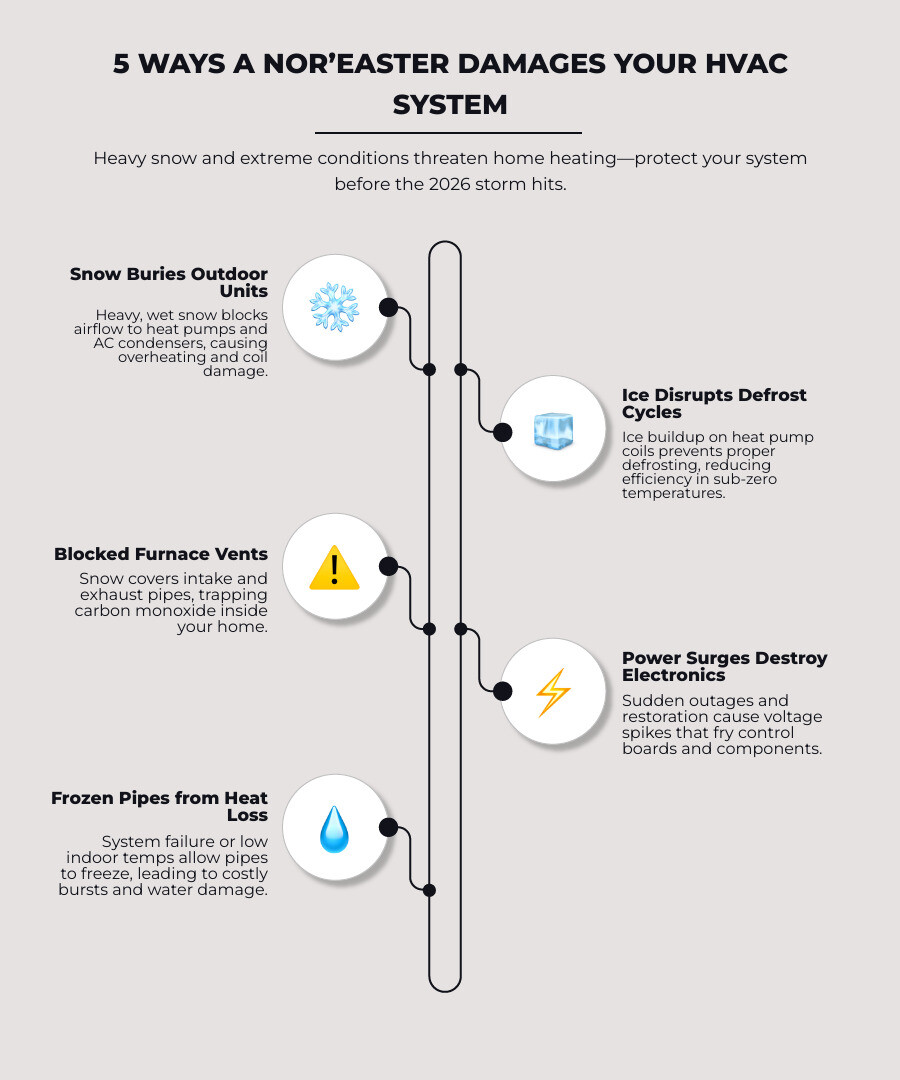
How to Protect Your HVAC System During the 2026 Nor’easter Snowstorm comes down to five key actions you can take right now:
- Schedule a professional HVAC inspection before the storm arrives
- Clear snow and maintain 18 inches of clearance around outdoor units
- Check and clear furnace intake and exhaust pipes to prevent CO buildup
- Keep indoor temperatures above 70°F to protect pipes and maintain heat
- Install surge protectors and test backup power before the storm hits
Nor’easters are not ordinary winter storms. They can bring hurricane-force winds, heavy snowfall, and blizzard conditions that last for several days. For Massachusetts homeowners, that means your HVAC system faces serious risks — from snow-buried outdoor units and blocked furnace vents to frozen pipes and power surges.
The stakes are real. Power outages during major storms can stretch from hours to days or even weeks. And a blocked furnace exhaust pipe isn’t just an HVAC problem — it can become a carbon monoxide emergency.
The good news? A few smart steps taken before the storm makes landfall can protect your system, keep your family warm, and prevent costly repairs.
How to Protect Your HVAC System During the 2026 Nor’easter Snowstorm
Living in Massachusetts, we are no strangers to the “perfect storm.” From Franklin to Norfolk and Medway to Newton, we know that a Nor’easter isn’t just a snow event; it’s a test of our home’s resilience. When the 2026 Nor’easter arrives, the combination of moisture from the Atlantic and cold Canadian air creates a recipe for heavy, wet snow that can weigh down branches and bury your outdoor equipment.
To truly understand How to Protect Your HVAC System During the 2026 Nor’easter Snowstorm, we need to look at the system as a whole. It isn’t just about the unit sitting in your yard; it’s about the vents on the side of your house, the thermostat on your wall, and the ductwork in your attic. According to experts, How to Stormproof Your Home’s HVAC System, According to Experts, proactive measures are the only way to ensure your system doesn’t fail when the mercury drops.
Essential Pre-Storm Preparations and Maintenance
The best time to fix a furnace is when you don’t need it. As the storm approaches, we recommend a quick “self-audit” of your system.
- Check Your Air Filters: A dirty filter restricts airflow. During a Nor’easter, your system will already be working overtime. Don’t make it struggle against a clogged filter.
- Listen for Unusual Noises: If your system is banging, whistling, or grinding, it’s crying for help. These sounds often indicate a loose belt or a failing motor—components that are likely to give out completely under the stress of extreme cold.
- Seal the Gaps: Cold air infiltration is the enemy of efficiency. Use silicone caulk or expansion foam to fill cracks around windows and doors. Applying weather stripping to doors, especially basement doors, can prevent a sudden pipe freeze.
We can’t emphasize enough the importance of preparing your HVAC system for cold weather. A professional inspection can identify worn capacitors or frayed wires that the untrained eye might miss. In fact, regular heating maintenance is essential in Massachusetts because our winters are uniquely harsh on mechanical systems.
Protecting Outdoor Units from Snow and Ice
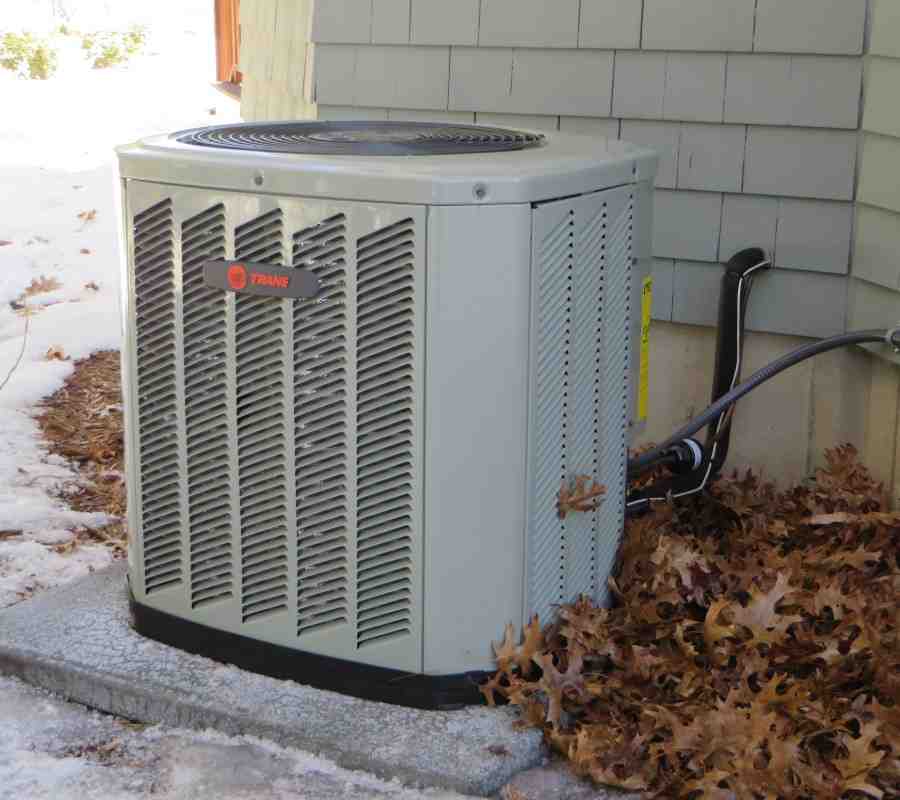
Your outdoor condenser (for AC) or heat pump is built to be outside, but it isn’t a submarine. It needs to breathe. When heavy snow piles up, it can block the intake of air, causing the motor to burn out or the system to shut down entirely.
One of the best upgrades for Massachusetts homeowners is the installation of snow legs. These risers lift your unit 6 to 12 inches off the ground, keeping it above the average snowfall and preventing it from being encased in a block of ice.
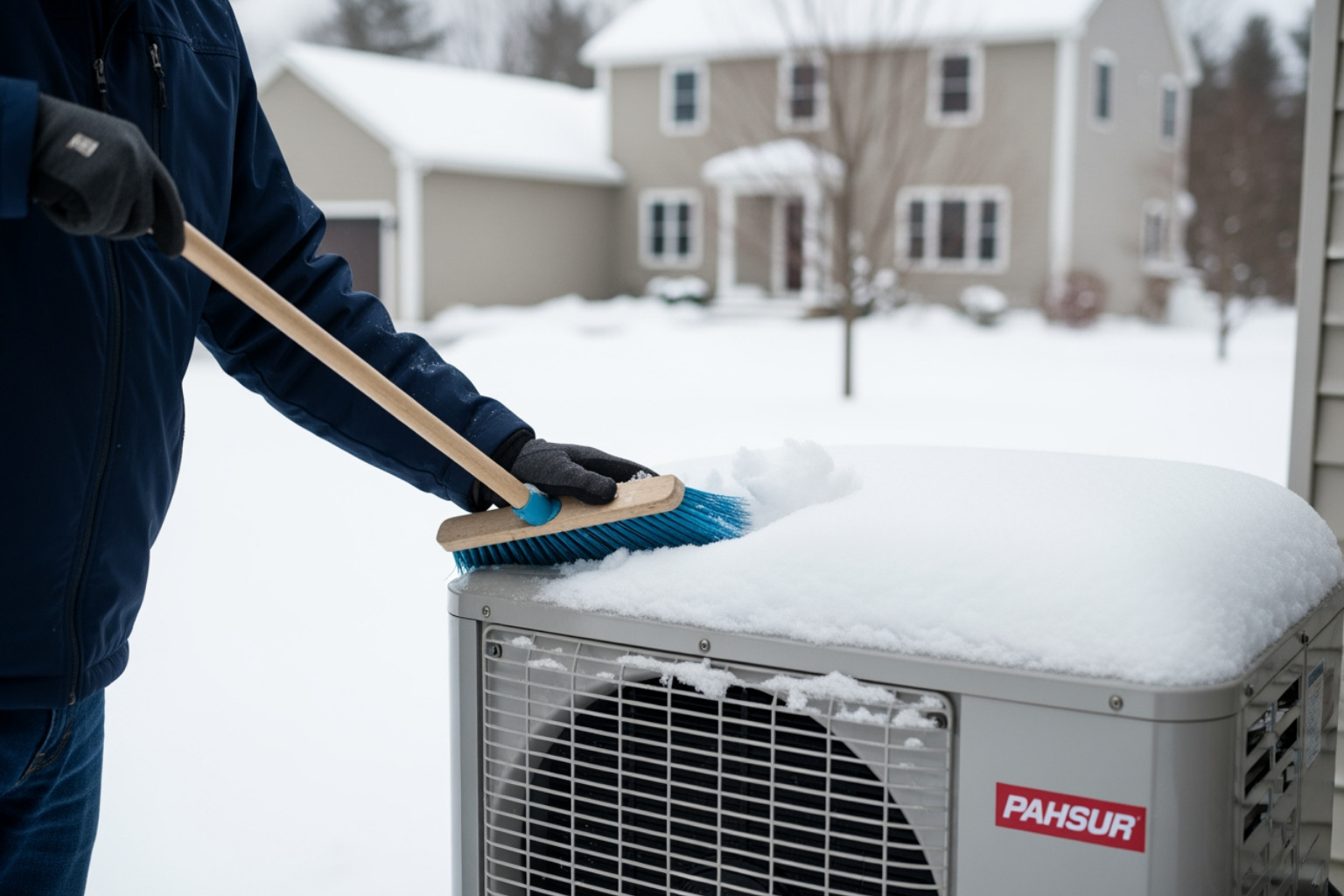
The 18-Inch Rule: Always maintain at least 18 inches of clear space around your outdoor unit. This allows for proper airflow and ensures that the unit can move heat effectively.
A Note on Covers: While it’s tempting to wrap your unit in a plastic tarp, please don’t! Airtight covers trap moisture, which leads to rust and corrosion. Even worse, they provide a cozy, dry hotel for rodents like squirrels and mice who love to chew on electrical wiring. If you must cover your unit to protect it from falling icicles, use a mesh-style cover that allows for ventilation.
For more specific tips on navigating our local climate, check out our guide on how to get your heating system ready for Massachusetts winter.
Managing Heat Pumps and Defrost Cycles in Extreme Cold
If you have a modern heat pump, you might be worried about it “quitting” during a blizzard. The truth is that modern inverter technology has changed the game. Many systems we install at Accurate Baker Elman can effectively heat homes even when it’s -22°F outside.
During a Nor’easter, you might see “smoke” coming from your heat pump. Don’t panic! This is usually just steam. Your unit has a built-in defrost mode. It temporarily reverses the flow of refrigerant to melt ice off the outdoor coils.
| Feature | Standard Heat Pump | Modern Inverter Heat Pump |
|---|---|---|
| Operating Range | Struggles below 30°F | Heats down to -22°F |
| Efficiency | Drops significantly in cold | Maintains high efficiency |
| Compressor | Single speed (On/Off) | Variable speed (Precise) |
| Comfort | May need “Emergency Heat” | Provides steady, consistent heat |
Emergency Heat: Only use the “Emergency Heat” or “Auxiliary Heat” setting if your primary system has actually failed. This setting uses electric resistance strips—essentially a giant toaster—and it will cause your utility bills to skyrocket.
Critical Safety Steps and Post-Storm Recovery
Safety is our primary concern during any major weather event. While we want you to stay warm, we also want you to stay safe from the “silent killers” associated with winter storms.
Preventing CO Poisoning: How to Protect Your HVAC System During the 2026 Nor’easter Snowstorm Vents
High-efficiency furnaces use PVC pipes that exit through the side of your home rather than up a chimney. These are your intake and exhaust vents. If a snowdrift blocks these pipes, carbon monoxide (CO) can back up into your living space.
- Locate your vents: Know where they are before the snow starts falling.
- Clear them often: During the storm, safely head outside and clear any snow away from these pipes.
- Check your detectors: Ensure you have working CO detectors on every level of your home, especially near sleeping areas.
Blocked vents are one of the most common heating problems in Massachusetts, but they are entirely preventable with a quick sweep of a broom.
Handling Power Outages and Frozen Pipes
The U.S. Energy Information Administration notes that while the average customer loses power for about two hours a year, major events like Nor’easters can leave homes dark for days.
To protect your HVAC system’s sensitive electronics, we recommend installing a whole-home surge protector. When power flickers or returns after an outage, a “spike” can fry control boards.
The 70°F Rule: If you know a storm is coming, bump your thermostat up to 70°F or higher. This “pre-heats” the thermal mass of your home. If the power goes out, it will take much longer for the house to reach the danger zone for frozen pipes. Never set your thermostat below 55°F during the winter, as this significantly increases the risk of a pipe burst in uninsulated areas like crawlspaces.
If your heat fails and the indoor temperature drops, shut off your main water valve and open your faucets to drain the lines. This prevents the pressure buildup that causes pipes to explode. For backup, a battery-powered heater or a properly vented generator can be a lifesaver.
Post-Storm Inspection: How to Protect Your HVAC System During the 2026 Nor’easter Snowstorm Aftermath
Once the winds die down and the sun comes out, it’s time to assess the damage.
- Visual Check: Look for bent fins on your outdoor unit or any signs that the unit shifted on its pad.
- Debris Removal: Clear away any fallen branches or leaves that the wind may have whipped into the unit.
- Check for Moisture: If your basement flooded, do not turn your furnace back on until it has been inspected. Water and electricity are a deadly combination.
If you notice anything unusual—strange smells, new noises, or a system that simply won’t kick on—don’t hesitate to contact us. At Accurate Baker Elman, we provide emergency heating services in Massachusetts to ensure your family isn’t left in the cold. Whether you need a quick tune-up or expert HVAC repair, our team of Mitsubishi Electric Elite Diamond Contractors is here to help.
Summary: Your Nor’easter Checklist
As the 2026 Nor’easter approaches, keep this checklist handy to ensure you’ve done everything possible to protect your home:
- [ ] Change air filters and clear debris within 18 inches of the outdoor unit.
- [ ] Verify that all CO and smoke detectors have fresh batteries.
- [ ] Seal gaps around windows and doors with weather stripping.
- [ ] Locate and clear furnace intake/exhaust vents after every 3-4 inches of snow.
- [ ] Set the thermostat to at least 70°F before the storm hits.
By taking these steps, you aren’t just protecting a piece of equipment; you’re ensuring the safety and comfort of your family. Stay warm, stay safe, and remember that we are always here to help our neighbors in Franklin and the surrounding communities weather the storm.