

Understanding the Geothermal HVAC Installation Process
Geothermal HVAC installation uses the earth’s stable underground temperature to efficiently heat and cool your home. Unlike traditional systems, geothermal exchanges heat with the ground via buried pipes called ground loops.
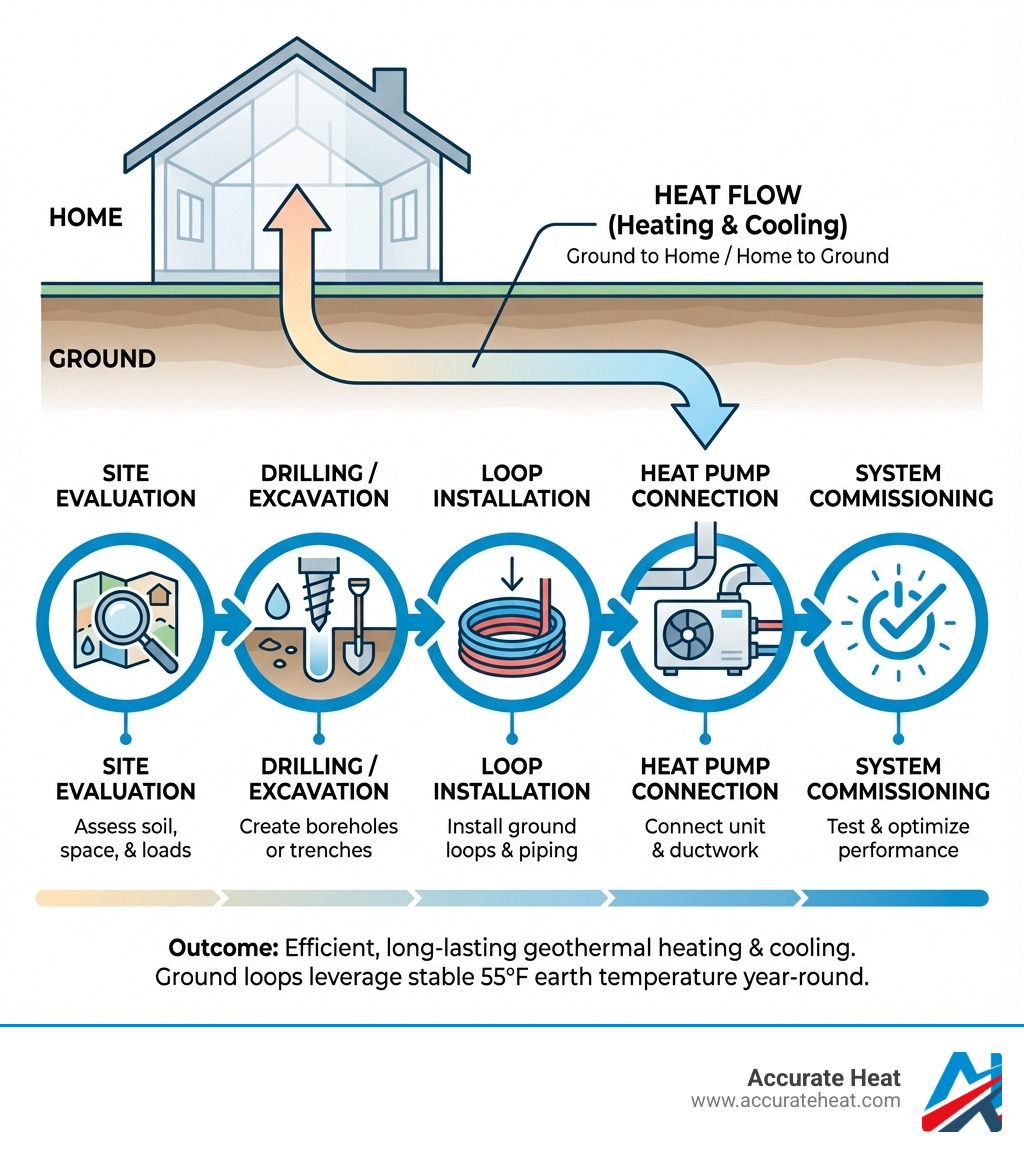
The installation process typically includes:
- Site Evaluation – Assessing soil conditions, available space, and heating/cooling loads
- System Design – Selecting loop type (horizontal, vertical, or pond/lake) and sizing equipment
- Ground Loop Installation – Drilling boreholes or excavating trenches for underground piping
- Interior Connection – Installing the heat pump unit and connecting to existing ductwork
- Testing and Commissioning – Ensuring proper system operation and efficiency
The process differs for new construction versus retrofit projects, which require more planning around existing structures. Upfront costs range from $15,000 to $35,000, but homeowners can reduce energy bills by up to 65% compared to conventional systems.
A successful installation depends on proper site analysis and loop configuration. These systems use the earth’s constant 55°F temperature for 300-600% efficiency, far surpassing traditional air-source systems (175-250%).
Understanding these methods helps Massachusetts homeowners make an informed decision. Indoor units last about 25 years, while ground loops can exceed 50 years.
How Geothermal Systems Harness Earth’s Energy
Geothermal HVAC systems operate on a simple principle: the earth’s stable temperature. A few feet underground, the temperature stays around 55°F year-round in Massachusetts, despite extreme weather. This stable temperature is key to their high efficiency. In summer, the ground is cooler than the air; in winter, it’s warmer. This makes the earth a thermal battery, ready to absorb or release heat.
The Geothermal Heat Pump Cycle
A geothermal system transfers heat rather than generating it. Unlike furnaces that burn fuel, ground-source heat pumps (GSHPs) move existing heat between your home and the earth.
Here’s how it works:
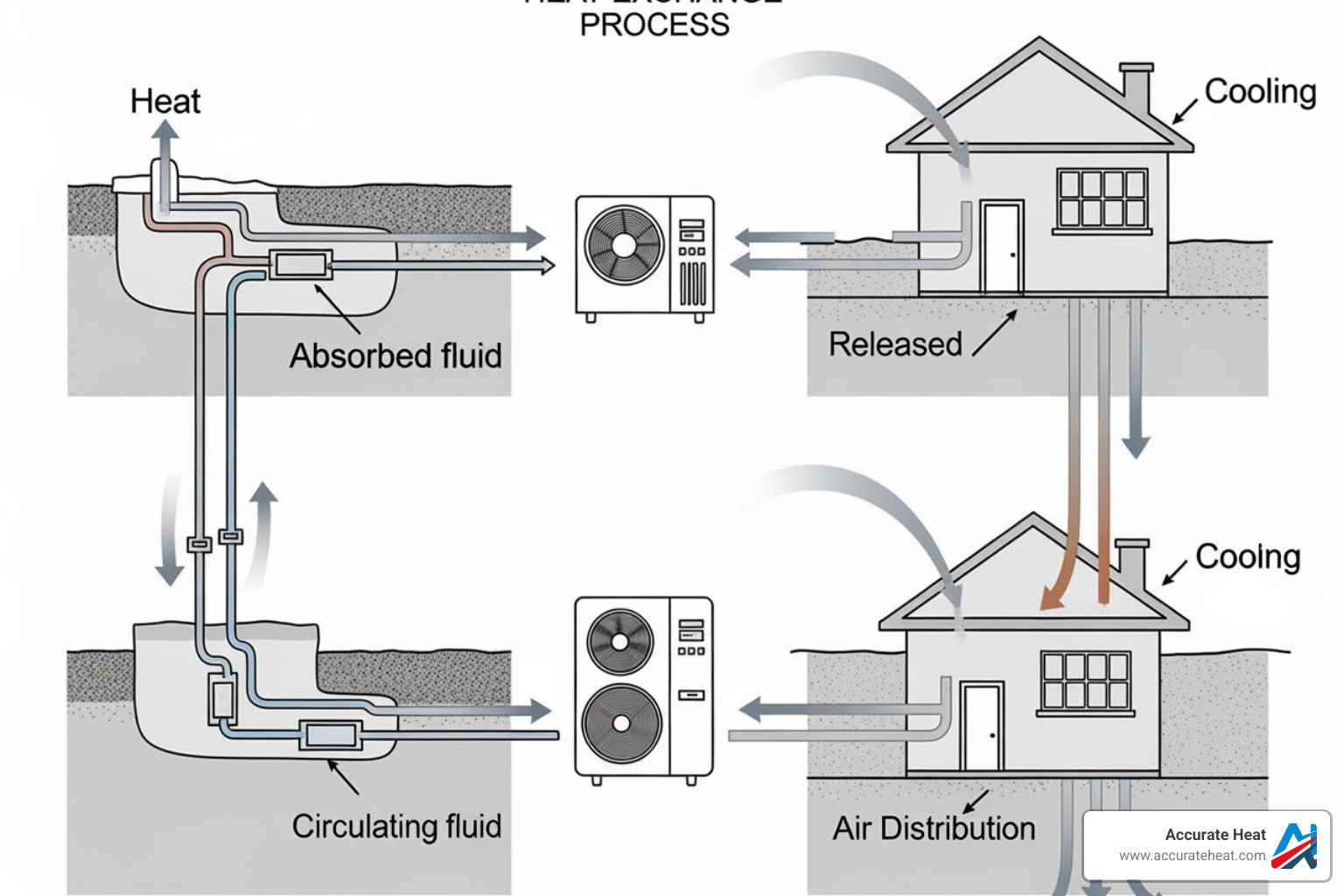
- Winter Heating: A fluid in the ground loop absorbs heat from the earth. This heat is transferred to a refrigerant in the indoor heat pump, which compresses to become hotter. The concentrated heat warms the air distributed through your ductwork. The cooled fluid returns to the ground loop to absorb more heat.
- Summer Cooling: The process reverses. The heat pump extracts heat from your home’s air and transfers it to the fluid in the ground loop. The fluid carries the heat into the cooler earth. The now-cooled fluid returns to absorb more indoor heat. Excess heat can be used by a desuperheater to provide free hot water.
This heat transfer is highly efficient. Ground-source heat pumps are 300% to 600% efficient, compared to 175% to 250% for air-source heat pumps. For every unit of electricity used, they deliver three to six units of energy from the ground.
For a more in-depth look at the science behind these systems, the U.S. Department of Energy provides excellent resources on Geothermal Heat Pumps explained by the DOE.
Understanding the Core Components
A geothermal system has three main components:
- The Ground Loop System: This underground pipe network circulates fluid to exchange heat with the earth. It’s the system’s primary heat exchanger.
- The Geothermal Heat Pump Unit: This indoor unit, similar to a furnace, contains the compressor and fan. It transfers heat between the loop fluid and your home’s air, then distributes the conditioned air.
- The Distribution System: This is typically the home’s ductwork for forced-air systems. Geothermal can also integrate with hydronic systems like radiant floor heating.
- Desuperheater (Optional): This add-on uses excess heat from the summer cooling cycle to pre-heat your domestic hot water, providing 25% to 50% of your needs for free.
Geothermal vs. Traditional HVAC Systems
When choosing a new HVAC system, it’s helpful to compare geothermal to conventional options. Though the initial cost is higher, the long-term benefits often make geothermal a smarter choice.
Here’s a quick comparison:
| Feature | Geothermal HVAC | Air-Source Heat Pump | Traditional Furnace/AC |
|---|---|---|---|
| Efficiency | 300-600% efficient due to stable ground temperatures. | 175-250% efficient. Less efficient in extreme temperatures. | 80-98% (furnace). Creates heat instead of transferring it. |
| Lifespan | Indoor unit: 20-25 years. Ground loop: 50+ years. | 10-15 years for both indoor and outdoor units. | Furnace: 15-20 years. AC Unit: 10-15 years. |
| Operating Cost | Lowest cost; up to 50-70% savings on bills. | Moderate cost. Can be high in extreme weather due to auxiliary heat. | Highest cost due to fuel consumption and lower efficiency. |
| Environmental Impact | Zero direct emissions. Significantly reduces carbon footprint. | Lower emissions than furnaces, but efficiency drops in extreme weather. | Highest emissions from burning fossil fuels and high electricity use. |
| Noise Level | Extremely quiet. No noisy outdoor condenser unit. | Moderate to loud outdoor unit. | Moderate to loud outdoor AC unit, furnace fan noise. |
| Maintenance | Minimal. Ground loop virtually maintenance-free. Indoor unit requires standard filter changes and periodic checks. | Regular outdoor coil cleaning, filter changes, and professional tune-ups. | Regular filter changes, professional tune-ups for both furnace and AC. |
| Comfort | Consistent, even temperatures. | Can have temperature swings in extreme weather. | Consistent, but less even temperatures and higher energy use. |
| Installation | Higher initial cost; requires excavation/drilling. | Generally lower initial cost, simpler installation. | Moderate initial cost, straightforward installation. |
The Geothermal HVAC Installation Process: A Step-by-Step Guide
A geothermal HVAC installation is a significant project. At Accurate Heat, we ensure a smooth, transparent process for our Massachusetts customers. Our approach is meticulous and customized for your property, from new builds in Franklin to retrofits in Dedham.
Step 1: Site Evaluation and System Design
Before work begins, a thorough site evaluation and system design are essential. We gather information to ensure your system is perfectly sized and configured for your home.
- Property Analysis: We assess your property’s land, landscaping, utilities, and water bodies. In Massachusetts areas like Bellingham or Wrentham, rocky soil is common and influences loop design.
- Soil Thermal Conductivity: How well soil conducts heat is vital. Different soil types affect heat transfer efficiency and the required length of ground loops.
- Load Calculations (ACCA Manual J): We calculate your home’s precise heating and cooling needs using industry-standard software. This considers insulation, windows, and more to determine the exact thermal load.
- Equipment Sizing (ACCA Manual S): Based on load calculations, we accurately size the heat pump. Incorrect sizing leads to discomfort or inefficiency. We use manufacturer data to ensure a perfect match.
- Loop Field Design: We design the optimal loop configuration (horizontal, vertical, or pond/lake) for your property. Vertical loops are often best for limited space or challenging soil.
- Permit Acquisition: We handle all necessary local permits for your geothermal HVAC installation, ensuring compliance with Massachusetts regulations.
Step 2: Ground Loop Installation Methods
This is the most visible part of the installation, involving excavation or drilling. The method depends on your property and the system design.
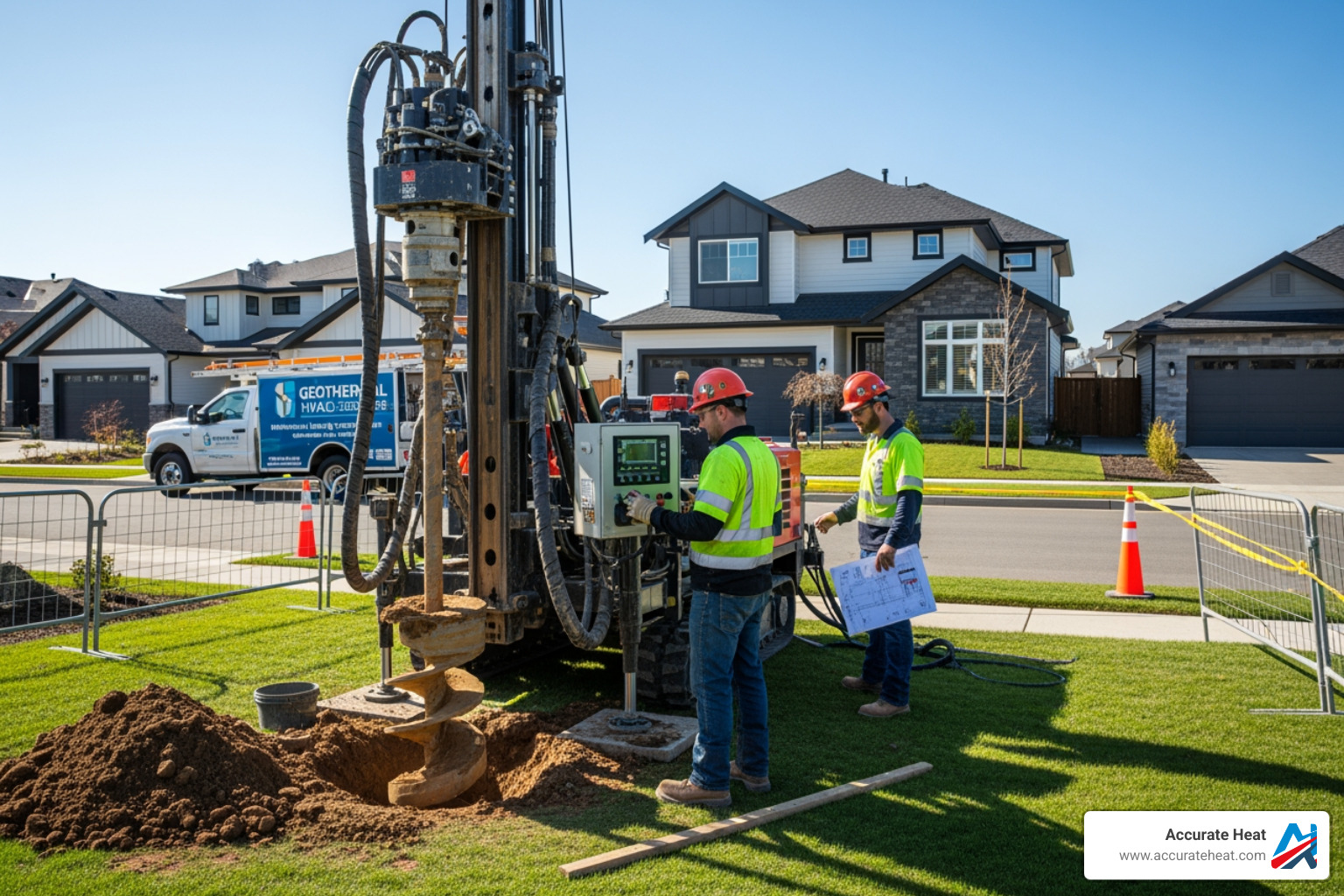
- Excavation for Horizontal Loops: If you have ample land, we can excavate trenches 4-6 feet deep to lay pipes. A “Slinky™” coil configuration fits more pipe in a smaller area. For new construction, loops can sometimes be placed in foundation trenches to reduce costs.
- Drilling for Vertical Loops: Ideal for smaller lots, rocky soil (common in Holliston or Hopkinton), or to minimize landscape disruption. We drill narrow boreholes 150-250 feet deep and insert U-shaped loops. This is preferred for dense areas or established landscapes.
- Pipe Fusion and Testing: Pipes are joined using heat fusion for leak-proof joints. The loop system is then pressure-tested for integrity before being buried, ensuring long-term reliability.
- Backfilling and Grouting: Horizontal trenches are backfilled and compacted. Vertical boreholes are filled with a thermal grout to ensure excellent heat transfer between the pipes and the earth.
- Landscape Restoration: After installation, we work to restore your landscape, minimizing disruption and leaving your property tidy.
Step 3: Interior Geothermal HVAC Installation and Connection
With the ground loops in place, we move indoors to install the heat pump and connect it to your home’s infrastructure.
- Heat Pump Unit Placement: The quiet indoor unit is installed in a utility room, basement, or closet, often replacing an old furnace. There is no noisy outdoor condenser.
- Connecting to the Ground Loop: Pipes from the ground loop are brought inside and connected to the heat pump. The system is then filled with heat-transfer fluid.
- Ductwork Modification for Retrofits: In retrofits, we may modify existing ductwork (per ACCA Manual D) to ensure optimal airflow, comfort, and efficiency.
- Electrical Wiring: Our certified electricians handle all necessary wiring, ensuring safe and compliant connections to your home’s electrical panel.
- Control System Setup: We install and configure your thermostat and control system, often integrating smart home technologies for convenient and efficient operation.
- System Flushing and Charging: Before final commissioning, the loop is flushed to remove air and debris. An EPA-certified technician then precisely charges the refrigerant lines according to manufacturer specifications, a critical step for efficiency and longevity.
Types of Ground Loops: Which is Right for Your Property?
Choosing the right type of ground loop is a pivotal decision in any geothermal HVAC installation. This choice is influenced by your property’s size, soil conditions, budget, and access to water bodies. We’ll help you find the best fit for your Massachusetts home.
Closed-Loop Systems
Closed-loop systems are the most common type. A heat-transfer fluid (water and antifreeze) circulates through a continuous buried pipe loop. The fluid never touches the earth, making these systems reliable and safe.
- Horizontal Loops: These systems require significant land for excavated trenches. They are typically installed 4 to 6 feet deep. The “Slinky™” method fits more pipe in a shorter trench. Horizontal loops are generally less expensive than vertical loops if you have enough space and suitable soil.
- Vertical Loops: Ideal for properties with limited land or rocky soil (common in Medway or Foxboro, Massachusetts), vertical loops involve drilling deep boreholes (150-250 feet). Though drilling costs more, they offer excellent performance in a small footprint and are preferred in suburban settings.
- Pond/Lake Loops: If your property has a suitable pond or lake, this can be a cost-effective option. Coils of pipe are submerged at least eight feet deep. This requires a nearby body of water meeting minimum size and quality standards.
Open-Loop Systems
Open-loop systems use groundwater directly as the heat-transfer fluid. They are less common but can be highly efficient if conditions are right.
- Groundwater as Heat Source: This system draws water from a well, runs it through the heat pump, and discharges it to a return well or surface water.
- Well Requirements: This system requires an adequate supply of clean groundwater. Water quality is crucial to prevent mineral buildup in the heat exchanger.
- Water Quality and Volume: Before considering an open-loop system, we test your well water for quality and volume.
- Discharge Regulations: Massachusetts has strict groundwater discharge regulations. We ensure full compliance and handle all permits for open-loop systems.
For a comprehensive overview of different geothermal technologies, including open-loop systems, the US EPA overview of geothermal technologies provides valuable information.
Costs, Benefits, and Code Compliance
A geothermal HVAC installation is a long-term investment with significant advantages. While upfront costs are higher, the long-term savings and environmental benefits are substantial.
Understanding the Investment and Long-Term Savings
Initial costs in Massachusetts range from $10,000 to $35,000+, depending on system size and complexity. This is higher than conventional systems ($5,000-$12,000), but the investment pays off long-term.
- Energy Bill Reduction: Customers often reduce heating and cooling bills by 50-70%. This leads to a quick payback period, after which the savings are pure profit.
- Federal Tax Credits: Federal tax credits significantly offset the initial investment. We can help you steer these incentives.
- State and Local Incentives: Massachusetts and other states offer rebates that, combined with federal credits, make geothermal more affordable. We can guide you on programs available in towns like Dedham and Franklin.
- Increased Home Value: A geothermal system adds significant value to your home, with its efficiency, longevity, and eco-friendliness being strong selling points.
Key Benefits of Geothermal Technology
The advantages of geothermal extend beyond cost savings to comfort, sustainability, and peace of mind.
- Energy Efficiency (COP 3.0-4.5): Geothermal systems are 300-600% efficient, delivering 3 to 4.5 units of heat for every unit of electricity used, far surpassing traditional HVAC.
- System Longevity (25 years indoor, 50+ years loop): Geothermal systems are built to last. Indoor units have a 20-25 year lifespan, while the underground loops can last over 50 years. This means fewer replacements and a stable investment.
- Quiet Operation: With no noisy outdoor condenser, geothermal systems are remarkably quiet. All mechanical components are indoors, ideal for noise-sensitive properties.
- Environmental Impact (Zero Carbon Emissions): Geothermal systems are among the most eco-friendly HVAC solutions, producing zero direct carbon emissions. A single system can reduce emissions equivalent to taking two cars off the road annually, significantly lowering your carbon footprint.
- Consistent Comfort: Geothermal systems provide consistent, even heating and cooling by using the earth’s stable temperature, avoiding the fluctuations common with air-source systems in extreme weather.
Navigating Codes and Regulations for a Geothermal HVAC Installation
Compliance with codes and regulations is essential for safety, efficiency, and longevity. Our team at Accurate Heat is well-versed in the codes governing geothermal installations in Massachusetts.
- Local Permits: We secure all necessary local permits before work begins. Our experience across Franklin, Dedham, and other service areas ensures a smooth process.
- International Residential Code® (IRC): The International Residential Code® (IRC) has requirements for heating and cooling equipment (Chapter 14) to ensure safe, efficient installation.
- International Mechanical Code® (IMC): The International Mechanical Code® (IMC) outlines standards for hydronic piping (Chapter 12) and other mechanical aspects to ensure reliability.
- Energy Conservation Codes (IECC): The 2024 International Energy Conservation Code® (IECC) sets minimum performance ratings. Geothermal systems easily meet or exceed these efficiency requirements.
- International Green Construction Code® (IgCC): For high-sustainability projects, the International Green Construction Code® (IgCC) provides guidelines that align perfectly with geothermal technology’s goals.
We ensure every aspect of your geothermal installation meets or exceeds critical industry standards, including ACCA Manuals S and D, and ANSI/CSA/IGSHPA C448.
Frequently Asked Questions about Geothermal Systems
We often hear similar questions from our customers in Massachusetts when they’re considering a geothermal HVAC installation. Here are some of the most common ones:
How does a geothermal system perform in extreme weather?
Geothermal systems excel in extreme weather because they rely on stable underground temperatures, unlike air-source heat pumps which are affected by fluctuating outdoor air temperatures, ensuring consistent performance year-round. While the air temperature outside might swing from 90°F in the summer to below 0°F in the winter, the ground just a few feet down remains a consistent 55°F. This means your geothermal system always has a stable source of heat (in winter) or a stable place to reject heat (in summer), allowing it to maintain peak efficiency regardless of how crazy the New England weather gets. Our customers in places like Stoughton and Sharon truly appreciate this reliable, unwavering comfort.
What maintenance does a geothermal system require?
Maintenance for a geothermal system is surprisingly minimal, especially compared to traditional HVAC. The underground loop is virtually maintenance-free; once installed, it can last for 50 years or more with no intervention required. The indoor unit, similar to a traditional furnace or air handler, requires periodic checks and filter changes. We recommend annual professional tune-ups to ensure optimal performance and catch any minor issues before they become major. This low-maintenance aspect is one of the many reasons homeowners love geothermal.
Can a geothermal system provide hot water for my home?
Yes, many geothermal systems can be equipped with a “desuperheater” which uses excess heat captured during the summer cooling cycle to heat your home’s water for free. During the summer, as your geothermal system cools your home, it’s extracting heat from your indoor air and moving it into the ground. A desuperheater diverts some of this otherwise “waste” heat to your hot water tank, pre-heating your domestic water supply. This means you get a significant portion (25-50%) of your hot water needs met without additional energy consumption, which is a fantastic bonus, especially in the warmer months.
Conclusion: Is Geothermal the Right Choice for Your Home?
As we’ve explored, a geothermal HVAC installation offers a compelling blend of innovation, efficiency, and sustainability. For homeowners in Massachusetts, from Newton to Norwood, it represents a smart investment in long-term comfort and significant energy savings.
We’ve seen how these systems leverage the earth’s stable underground temperatures to provide consistent heating and cooling with remarkable efficiency (300-600%). We’ve digd into the meticulous installation process, from initial site evaluation and design to the careful placement of ground loops and the precise connection of indoor units. And we’ve highlighted the undeniable benefits: dramatically lower utility bills, exceptional longevity (50+ years for ground loops!), whisper-quiet operation, and a significantly reduced carbon footprint.
Choosing geothermal means choosing a technology that is kind to your wallet and the planet. It’s a system that provides unwavering comfort, even in the face of extreme weather, and adds substantial value to your home.
At Accurate Heat, we’re proud to be your trusted partner for geothermal HVAC installation throughout Massachusetts. As a Mitsubishi Electric Elite Diamond Contractor, our expertise, honest approach, and timely solutions ensure your project is handled with the highest standards of quality and professionalism.
If you’re ready to explore the possibilities of geothermal for your home, we’re here to help. Schedule your geothermal consultation in Dedham, MA today or reach out to us to learn more about how we can bring this incredible technology to your property.