Why Understanding Furnace Repair Prices Matters for Massachusetts Homeowners
When your heating system fails during a cold Massachusetts winter, the last thing you want is a surprise bill. Understanding furnace repair prices helps you make informed decisions when you need them most.
Quick Answer: What to Expect for Furnace Repair Costs
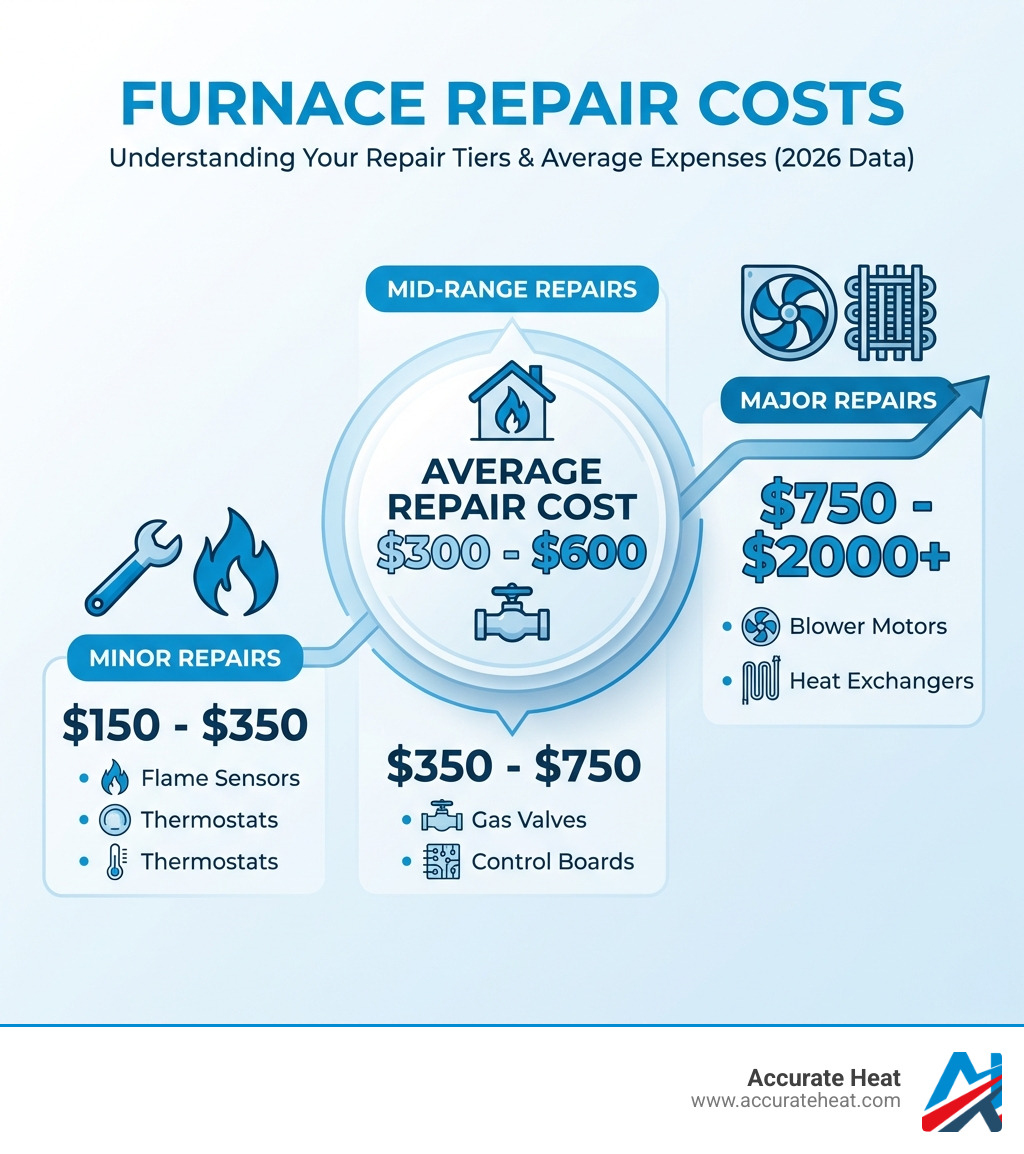
- Average repair cost: $300–$600 for common issues
- Typical range: $130–$900 depending on the problem
- Service call/diagnostic fee: $50–$150 (often applied toward repair)
- Labor rates: $75–$150 per hour
- Emergency service: Add $100–$300+ for after-hours or holiday calls
The cost of fixing your furnace depends heavily on what’s broken. A simple flame sensor cleaning might run $100–$300, while replacing a major component like a heat exchanger can cost $1,500–$3,500. The age of your system, its fuel type (gas, electric, or oil), and when you need service all play a role in the final bill.
Knowing whether you’re facing a minor, mid-range, or major repair helps you budget and decide if a repair is more cost-effective than a full replacement. Minor repairs like thermostat issues are typically under $350, while major jobs like replacing a blower motor can exceed $750.
Understanding the Key Factors That Determine Furnace Repair Prices
When your furnace stops working, the repair cost isn’t a one-size-fits-all number. Several key factors influence the final bill, especially here in Massachusetts. Understanding them can help you anticipate the expense.
- Labor Rates & Service Fees: Most HVAC companies charge a diagnostic fee ($50–$200) to identify the problem. At Accurate Heat, we often apply this fee to the final repair cost. The technician’s hourly rate, typically $75–$150, covers their expertise and tools. Expect to pay more for emergency or after-hours service, which can include a surcharge of $100–$300 or higher hourly rates.
- Furnace Type: The type of furnace you own significantly impacts repair costs.
- Gas furnaces: The most common type, with repairs generally ranging from $200 to $1,200.
- Electric furnaces: Simpler in design, often leading to lower repair costs, typically $150 to $900.
- Oil furnaces: More complex and can require specialized parts, with repair costs typically between $200 and $1,400.
- System Age & Part Availability: A furnace’s age is a critical factor. Most gas furnaces last 15-20 years. As a unit gets older, parts can become scarce and more expensive. An aging, inefficient furnace may also need more frequent repairs, making a replacement a more economical choice in the long run.
- Warranty Status: If your furnace is still under a manufacturer’s or labor warranty, it could significantly reduce or even eliminate your out-of-pocket costs for covered repairs.
A Breakdown of Common Furnace Problems and Their Repair Costs
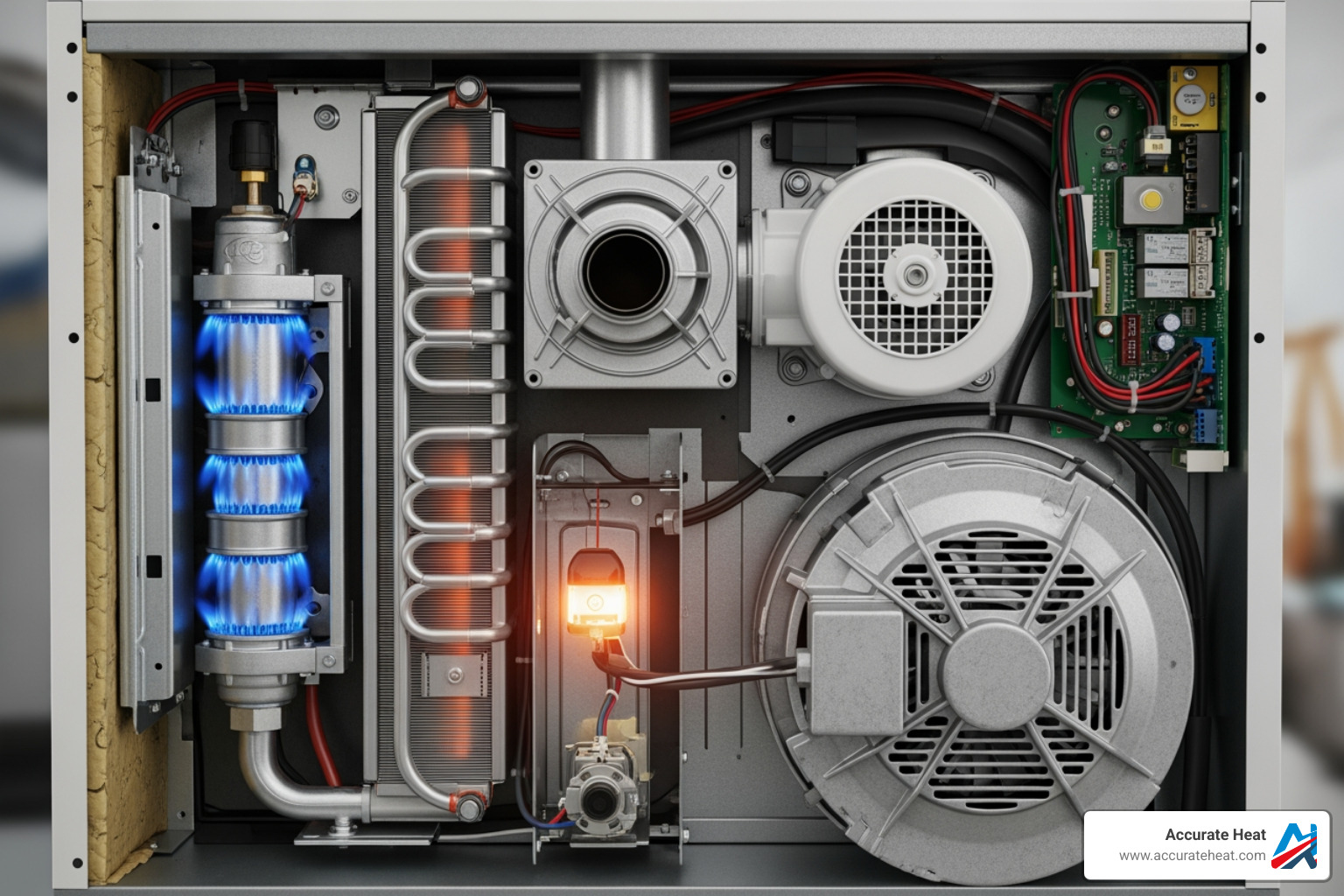
When your furnace starts acting up, it’s often a specific component that’s failed. Understanding these common issues and their associated repair costs can help you anticipate expenses and have a more informed conversation with your technician.
Signs Your Furnace Needs Repair
Your furnace usually gives clues before it stops working. Ignoring these can lead to more expensive repairs. Look out for:
- Strange noises: Grinding, screeching, or banging sounds often point to mechanical problems like a failing motor or loose parts.
- Unusual smells: A rotten egg smell can indicate a gas leak—if you smell this, evacuate immediately and call for emergency service. An electrical or metallic smell could mean overheating components.
- Inconsistent heating: If your furnace blows cold air or some rooms are colder than others, it could be a thermostat issue, a clogged filter, or a problem with the blower motor.
- High energy bills: A sudden spike in your heating costs suggests your furnace is losing efficiency and needs a check-up.
- Frequent cycling: A furnace that turns on and off too often (short-cycling) may have a faulty thermostat, a clogged filter, or an oversized system.
- Yellow pilot light: On older furnaces, the pilot light should be blue. A yellow or flickering flame is a serious safety hazard, indicating a potential carbon monoxide leak. Turn off your furnace and call a professional immediately.
Comparing Common Furnace Repair Prices by Part
Here’s a breakdown of common furnace repair issues and their estimated costs in Massachusetts, including parts and labor. These are averages and can vary based on your specific furnace model, technician rates, and the complexity of the job.
| Furnace Component / Issue | Estimated Cost Range (Parts & Labor) | Notes |
|---|---|---|
| Thermostat Replacement | $100 – $400 | A simple fix for heating inconsistencies. Smart thermostats cost more but can save money long-term. |
| Flame Sensor Cleaning/Replacement | $80 – $250 | A common repair for furnaces that won’t stay lit. Cleaning is cheaper than a full replacement. |
| Ignitor Replacement | $150 – $350 | If your furnace clicks but won’t light, a faulty ignitor is a likely culprit. This is a frequent wear-and-tear item. |
| Gas Valve Replacement | $300 – $750 | This critical component controls the flow of gas. A faulty valve is a safety issue that needs immediate attention. |
| Blower Motor Repair/Replacement | $450 – $2,000 | The blower motor circulates air. A replacement is a significant expense, often making you consider a new furnace. |
| Control Board Replacement | $400 – $1,000 | The “brain” of the furnace. A complex and often costly repair, especially on newer, high-efficiency models. |
| Heat Exchanger Replacement | $1,500 – $3,500+ | A cracked heat exchanger is a serious carbon monoxide hazard. Due to the high cost, this repair often leads to a full furnace replacement. |
Repair or Replace? Making the Right Financial Decision
One of the toughest decisions a homeowner faces is whether to repair an ailing furnace or invest in a new one. While a repair might seem cheaper upfront, it can be a temporary fix for a system that’s on its last legs. Here’s how to make a smart financial choice.
When Repair is the Smart Choice
In many cases, a straightforward repair is the most logical option. Consider repairing your furnace if:
- The furnace is under 10 years old: Most furnaces have a lifespan of 15-20 years. A breakdown in the first decade is often due to a single faulty part, not systemic failure.
- The repair is minor and inexpensive: If the estimated repair cost is less than a quarter of the price of a new furnace (e.g., a flame sensor or ignitor), a repair is usually worthwhile.
- The unit is still under warranty: If parts or labor are covered by a warranty, repairing is almost always the best choice.
- It’s the first major issue: If your furnace has been reliable until now, a one-time repair can often get it back to running smoothly for several more years.
When Replacement is More Cost-Effective
Sometimes, putting more money into an old furnace is like throwing good money after bad. It’s often better to replace your furnace when:
- The furnace is over 15 years old: As a furnace ages, its efficiency drops, and the likelihood of multiple component failures increases.
- The heat exchanger is cracked: This is a serious safety hazard that can leak carbon monoxide into your home. The repair is so expensive that it almost always makes more sense to replace the entire unit.
- The repair cost is high: A common rule of thumb is the 50% rule: If a repair costs 50% or more of the price of a new furnace, replacement is the better long-term investment.
- Your energy bills are rising: A steady increase in your heating bills, despite regular maintenance, is a clear sign of declining efficiency. A new, high-efficiency furnace can lead to significant long-term savings.
- You’re facing frequent breakdowns: If you’re calling for repairs every winter, the cumulative costs and inconvenience add up. A new, reliable system provides peace of mind and predictable performance.
For more information on when to upgrade your system, the U.S. Department of Energy provides excellent guidance on their Energy Saver website.
Navigating the Repair Process: From Diagnosis to Done
Once you’ve decided to repair your furnace, the next step is finding a qualified professional to do the job right. Here’s how to steer the process smoothly and avoid common pitfalls.
Choosing a Qualified and Trustworthy Technician
Not all HVAC technicians are created equal. To ensure you get reliable service, look for a company that is:
- Licensed and Insured: This is non-negotiable. It protects you from liability and ensures the technician meets state and local standards.
- Well-Reviewed: Check online reviews and ask for references. A company with a long history of positive customer feedback is a good sign.
- Transparent with Pricing: A reputable company will provide clear, upfront pricing. Be wary of technicians who are vague about costs or pressure you into immediate decisions.
- Provides Written Estimates: Always get a detailed, written estimate before authorizing any work. This should outline the parts, labor, and total cost.
- Follows Industry Standards: Top-tier companies often adhere to best practices, such as those outlined by the Air Conditioning Contractors of America (ACCA).
Understanding Warranties, Diagnostic Fees, and Hidden Costs
- Warranties: Ask about both parts and labor warranties. A manufacturer’s warranty may cover the part, but you might still be responsible for the labor cost. A good contractor will also offer a warranty on their own workmanship.
- Diagnostic Fees: Most companies charge a fee to come to your home and diagnose the problem. This fee, typically between $50 and $200, often gets applied to the total cost if you proceed with the repair.
- Potential for Extra Costs: Sometimes, a repair may require bringing other parts of your system up to current building codes, which can add to the cost. Ask your technician about this possibility.
- Avoiding Scams: Beware of high-pressure sales tactics, such as a technician claiming your furnace is a critical danger and must be replaced immediately. Always get a second opinion, especially for major repairs like a heat exchanger replacement.
Conclusion
Understanding the potential costs of a furnace repair can help you feel more in control when your heat goes out. While minor fixes can be relatively inexpensive, major component failures can be costly. The key is to weigh the age of your system, the cost of the repair, and your long-term energy savings to decide whether to repair or replace.
Proactive maintenance is the best way to prevent unexpected breakdowns and extend the life of your furnace. But when you do need a repair, don’t delay—a small problem can quickly become a large, expensive one.
For expert, honest, and timely furnace repair in Franklin, Medway, Norfolk, and throughout Massachusetts, trust the licensed professionals at Accurate Heat. We offer transparent, upfront pricing and 24/7 emergency service to get your heat back on when you need it most.
Schedule your heating service today
A Breakdown of Common Furnace Problems and Their Repair Costs
When your furnace starts acting up, it’s often a specific component that’s failed. Understanding these common issues and their associated repair costs can help you anticipate expenses and have a more informed conversation with your technician.
This section details the most frequent issues homeowners face and the typical costs to fix them, including parts and labor.
Signs Your Furnace Needs Repair
Before we dig into specific costs, let’s talk about the symptoms. Your furnace usually gives you clues that something is amiss before it completely breaks down. Ignoring these signs can lead to more extensive and costly repairs down the line. Here are some common indicators that your furnace needs attention:
- Strange noises: Is your furnace suddenly making grinding, screeching, hissing, rattling, or clanking sounds? These often point to mechanical problems like a failing motor bearing, a loose component, or issues with the blower fan. A loud bang at startup could indicate delayed ignition.
- Unusual smells: While a slight burning smell when the furnace first kicks on for the season is usually just dust burning off, other odors are red flags. A rotten egg smell suggests a gas leak (call us immediately and evacuate your home!), an electrical burning smell could mean overheating components or wiring issues, and a chemical or metallic smell might indicate a fluid leak or a part burning out.
- Inconsistent heating: Are some rooms warm while others remain chilly? Is the furnace blowing cold air? This could be a thermostat issue, a clogged filter restricting airflow, or a problem with the heat exchanger or blower motor.
- High energy bills: If your heating costs are inexplicably rising without a change in usage, your furnace might be working harder than it should to maintain temperature, indicating a loss of efficiency or an underlying problem.
- Frequent cycling: A furnace that turns on and off too frequently (short-cycling) or runs constantly without reaching the set temperature is inefficient and likely has a problem with the thermostat, airflow, or internal components.
- Yellow pilot light: For older furnaces with a pilot light, it should always be a strong blue flame. A yellow or flickering pilot light indicates a ventilation problem and a potential carbon monoxide leak, which is a serious safety hazard. If you notice this, turn off your furnace immediately and call us.
Comparing Common Furnace Repair Prices by Part
Here’s a breakdown of common furnace repair issues and their estimated costs in Massachusetts, including parts and labor. These are averages, and actual costs can vary based on your specific furnace model, technician rates, and the complexity of the job.
| Furnace Component / Issue | Estimated Cost Range (Parts & Labor) | Notes |
|---|---|---|
| Thermostat Replacement | $100 – $400 | A simple fix for heating inconsistencies. Smart thermostats cost more but can help improve comfort and reduce energy use over time. |
| Flame Sensor Cleaning/Replacement | $80 – $250 | A common repair for furnaces that will not stay lit. Cleaning is usually on the lower end of the range; full replacement is more. |
| Ignitor Replacement | $150 – $350 | If your furnace clicks but will not light, a faulty ignitor is a likely culprit. Ignitors are wear-and-tear items that often fail after years of use. |
| Gas Valve Replacement | $300 – $750 | This critical component controls the flow of gas to the burners. Because it is directly tied to safety, failures should be addressed promptly by a licensed professional. |
| Blower Motor Repair/Replacement | $450 – $2,000 | The blower motor pushes heated air through your ductwork. Simple repairs or capacitor replacements fall on the low end, while full replacement of variable-speed motors on newer systems can be at the high end. |
| Control Board Replacement | $400 – $1,000 | The “brain” of the furnace that coordinates all functions. Costs vary based on brand, furnace efficiency level, and how complex the electronics are. |
| Heat Exchanger Replacement | $1,500 – $3,500+ | A cracked heat exchanger is a serious carbon monoxide hazard. Because replacement is labor-intensive and expensive, many homeowners choose a full furnace replacement instead, especially on older systems. |