
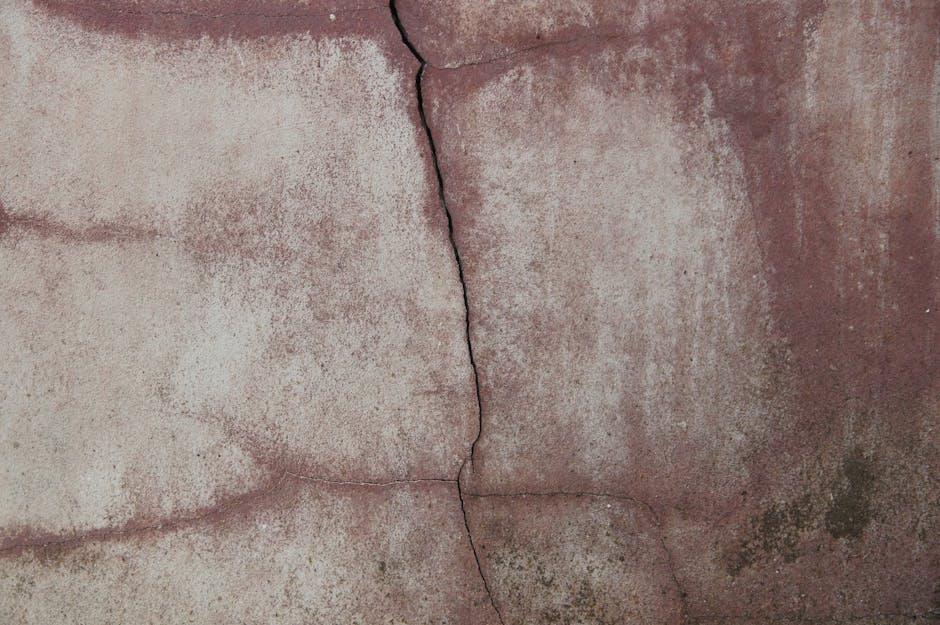
Why Foundation Cracks and Water Intrusion Matter to Massachusetts Homeowners
Foundation crack leak issues affect over half of all homes with basements, and in Massachusetts, where harsh winters and freeze-thaw cycles are the norm, these problems can escalate quickly from a minor nuisance to a major structural threat.
Quick Answer: What You Need to Know About Foundation Crack Leaks
- Most Common Signs: Water pooling in your basement, damp spots on walls, musty odors, mold growth, or an unexplained spike in your water bill
- Main Causes: Hydrostatic pressure from poor drainage, soil movement beneath your home, and seasonal freeze-thaw cycles
- Severity Indicators: Horizontal cracks or any crack wider than 1/4 inch are serious; vertical hairline cracks under 1/8 inch are often cosmetic
- Typical Repair Costs: DIY fixes start around $75-$200 for minor cracks; professional structural repairs range from $400 to $20,000+ depending on severity
- When to Call a Pro: Immediately if you see horizontal cracks, bowing walls, or active water leaking through foundation cracks
OK, so you’re in the basement one morning to grab something from storage. Heading back upstairs you have one of those “wait a minute…” moments and think, “Did I see a crack in the wall?” You go back down with a flashlight, and sure enough, there it is—a crack running through your foundation wall, and worse, there’s a damp spot around it.
Foundation cracks are one of the most common and concerning problems homeowners face. Whether it starts as a thin line in the basement wall or a large diagonal crack across a foundation corner, it raises immediate questions: Is this normal? What caused it? How bad can it get?
Water and foundations don’t mix. When water finds its way through foundation cracks, it doesn’t just create a mess. It can damage your flooring, encourage mold growth, compromise your home’s structural integrity, and even affect your indoor air quality. For Massachusetts homeowners dealing with saturated spring soil, summer storms, and winter freeze-thaw cycles, understanding these leaks isn’t just helpful—it’s essential.
This guide will walk you through everything you need to know about foundation crack leak issues. You’ll learn how to identify different types of cracks, understand what causes them, find both DIY and professional repair methods, and most importantly, learn how to prevent them from happening in the first place.
Identifying the Problem: Signs and Types of Foundation Cracks
The first step to addressing a foundation crack leak is recognizing the signs. Sometimes a leak is obvious, like a puddle in the basement after a heavy rain. Other times, it’s more subtle, a “sneaky” leak that can go unnoticed for a while, quietly causing damage. Early detection saves time, money, and stress, which is why we always encourage homeowners to be vigilant.
Here are the most common indicators that you might have a foundation crack leak:
- Visible Water or Damp Spots: This is the most straightforward sign. Pooling water in your basement, wet spots on walls, or even damp, discolored areas on carpets or flooring can all point to water intrusion.
- Musty Smells: A persistent musty odor in your basement or lower levels often indicates the presence of moisture and potentially mold or mildew growth, even if you can’t see the water source.
- Mold or Mildew Growth: Visible patches of mold or mildew on walls, floors, or stored items are a definitive sign of excessive moisture. Mold requires moisture, a food source, oxygen, and warmth to grow, and a foundation crack leak provides the perfect conditions.
- Stains on Walls: Water stains, especially near the bottom of basement walls, can indicate where water is entering or has entered. These might be dark, wet patches or lighter, dried efflorescence.
- Uneven or Sagging Floors: While less common as an initial sign, significant water damage from a long-term leak can affect wooden support beams, causing floors above to become uneven or sag.
- Sticking Doors or Windows: Foundation movement caused by water issues can sometimes manifest as windows and doors that suddenly stick or don’t close properly, particularly on the lower levels of your home.
- Unexplained Spike in Water Bills: If your water bill suddenly increases without a change in usage, it could be a sign of a hidden plumbing leak within or beneath your foundation, which can contribute to a foundation crack leak.
How to Spot a Foundation Crack Leak
Beyond the general signs of moisture, specific clues can help you pinpoint a foundation crack leak:
- Water in Basement: Whether it’s a trickle down a wall or standing water on the floor, any water in your basement is a red flag.
- Wet Spots on Walls: Look for wet spots or stains on the foundation walls themselves. These might be directly on a crack or spread out from it.
- Efflorescence (White Powder): This is a common mineral deposit left behind when water evaporates from concrete or masonry surfaces. It looks like a white, powdery, or crystalline substance. Efflorescence is a clear indication that moisture is migrating through your foundation, even if you don’t see active dripping. We clean it with a dilute solution of white vinegar and water.
- Peeling Paint or Warped Paneling: If you have finished basement walls, peeling paint, bubbling wallpaper, or warped wood paneling can hide a foundation crack leak behind the cosmetic surface.
Structural vs. Non-Structural Cracks: What’s the Difference?
Not all cracks are created equal. Some are merely cosmetic, while others signal serious structural problems that demand immediate attention. Understanding the difference is crucial for any homeowner in Massachusetts.
Here’s a breakdown of common crack types and their implications:
| Crack Type | Appearance (Width, Direction) |
| Crack Type | Appearance (Width, Direction) | Seriousness Level | Common Cause | Common Cause |
| Horizontal Cracks | Often wider than a quarter inch, running across the foundation wall. | Extremely Serious | Unbalanced soil and hydrostatic water pressure, often linked to freeze-thaw cycles in Massachusetts. |
| Stair Step Cracks | Found in block foundations, running along the mortar joints in a stair-step pattern. | Serious | Foundation settlement, moisture problems, or expansive soils. |
| Vertical Cracks | Running straight up and down the foundation wall, typically less than 1/8 inch wide. | Less Serious | Natural concrete curing process or minor settlement over time. |
| Diagonal Cracks | Running at an angle (up to 30 degrees from vertical), typically less than 1/8 inch wide. | Less Serious | Natural concrete curing or minor settlement. |
| Hairline Cracks | Very fine, barely visible cracks, often appearing within the first year of new construction. | Usually Cosmetic | Concrete settling and drying. |
| Shrinkage Cracks | Vertical cracks that form as concrete dries and loses moisture, similar to hairline cracks. | Usually Cosmetic | Concrete shrinkage during curing. |
| Foundation Slab Cracks | Cracks that appear in the concrete basement floor or slab, varying in width and severity. | Variable | Concrete curing, slab settlement, frost heave, or underlying plumbing issues. |
Crack Width Indicators: Don’t Guess, Measure!
When assessing a crack, its width is one of the most important factors:
- Hairline Cracks (less than 1/16 inch or 1-2mm): These are often cosmetic. If they’re not growing and aren’t leaking, they’re typically not a major concern.
- The Coin Test: If you can fit a coin (like a quarter) into any of the cracks, it’s generally time to call for a professional inspection and repair options. The National Association of Home Builders (NAHB) standard for cracks in interior slabs requires repairing cracks that exceed three-sixteenths inches wide or high (vertical displacement).
- The 1/4 Inch Rule: Cracks wider than 1/4 inch are almost always structural and require immediate professional attention.
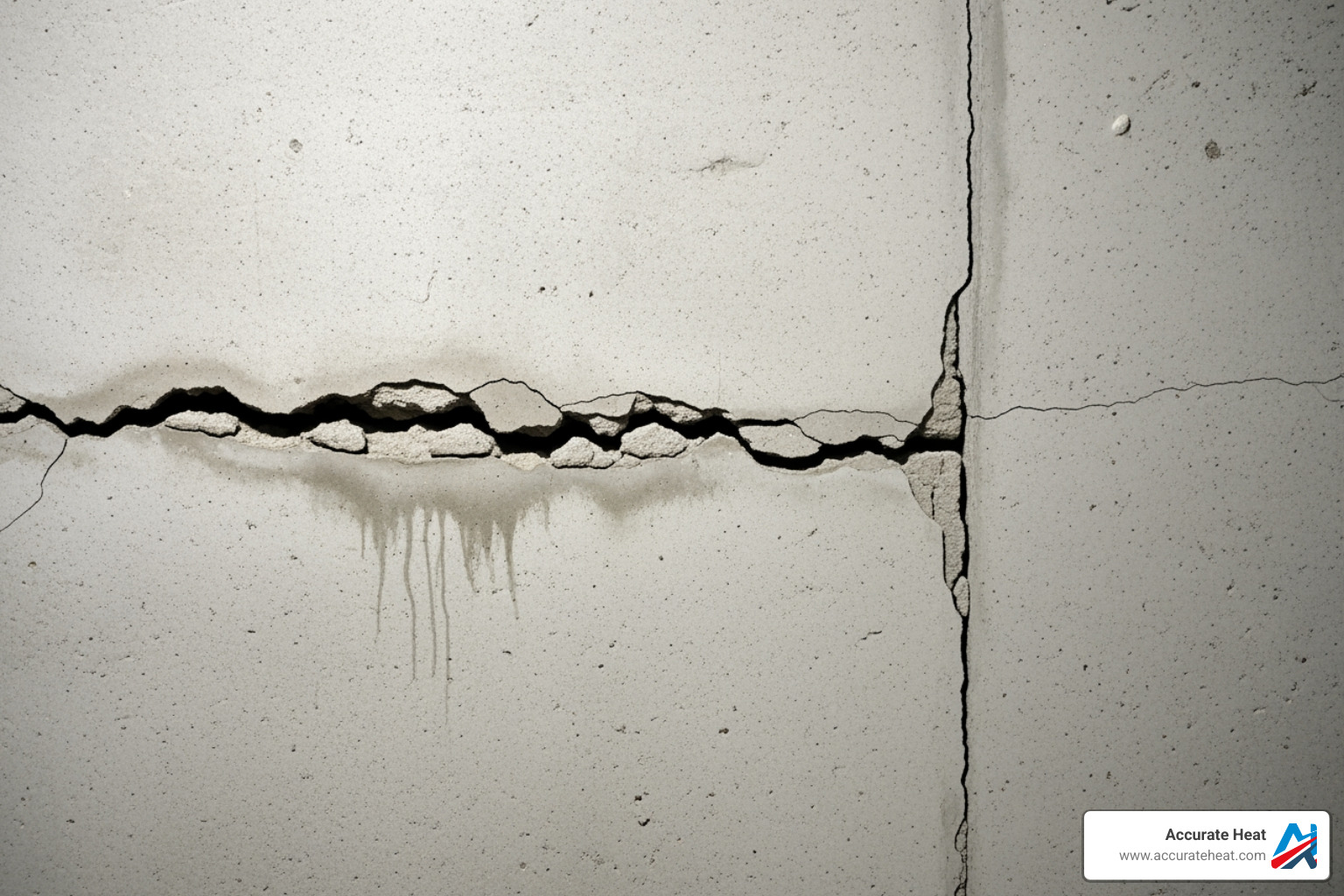
A non-structural foundation crack leak is one that doesn’t compromise the structural integrity of your home but can still allow water to enter during rainstorms or snowmelt. Structural cracks, on the other hand, pose a significant risk to your home’s stability and should be addressed by an expert without delay.
What Causes a Foundation Crack Leak?
Understanding the root causes of a foundation crack leak is paramount. It’s like a doctor diagnosing an illness; you can’t truly treat it effectively without knowing what’s causing it. Patching a crack without addressing the underlying issue is often a temporary fix, leading to recurring problems and potentially more extensive damage down the road.
For homeowners in Massachusetts, a proper diagnosis before any repair is critical due to our climate’s impact on soil and foundations.
External Pressures: Soil, Water, and Weather
Many foundation crack leak issues originate from forces acting on your home’s exterior:
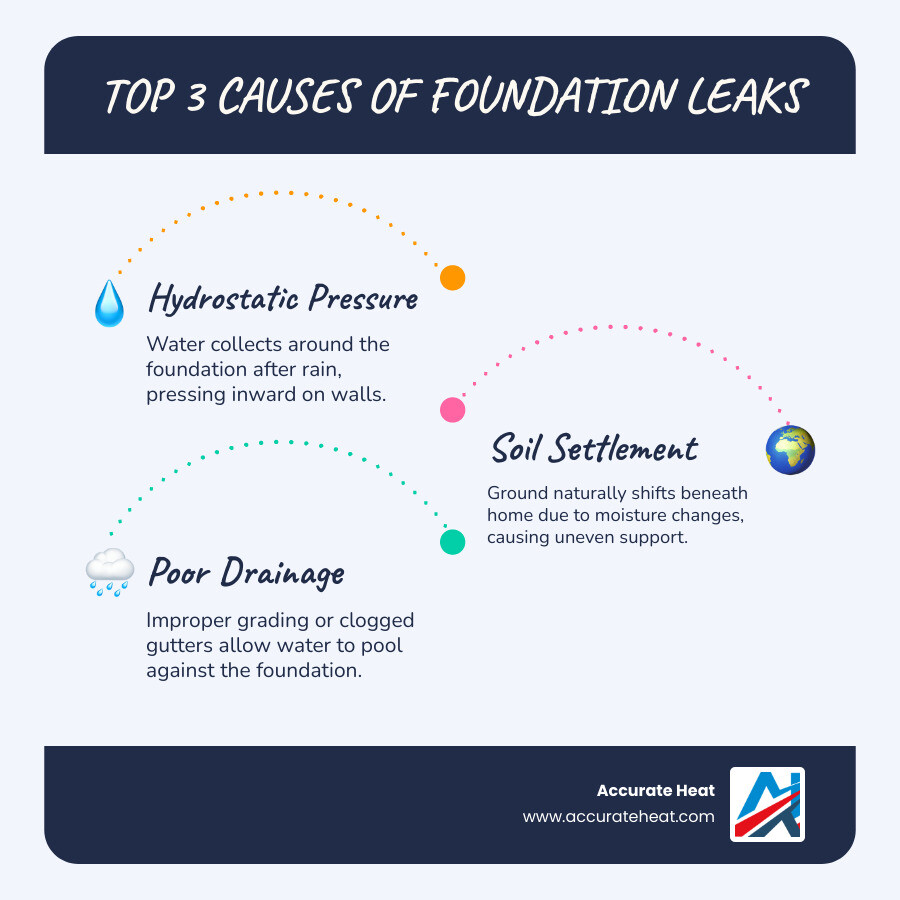
- Hydrostatic Pressure Explained: When water collects around your foundation after rain or snowmelt, it doesn’t just sit there—it presses against the foundation walls. This is called hydrostatic pressure. Over time, this constant force can cause walls to bow inward or crack horizontally, creating openings for water to seep through.
- Soil Movement and Settlement: The soil beneath your home is rarely static. Over time, it naturally shifts due to changes in moisture, gravity, and compaction. This is one of the leading causes of foundation cracks. When different parts of your house settle at uneven rates, it’s called differential settlement, which can lead to significant cracks and openings where water enters.
- Clay-Rich Soil Issues: Many areas, including parts of Massachusetts, have clay-rich soil. This type of soil expands significantly when wet and shrinks dramatically when dry. This constant expansion and contraction puts immense pressure on foundation walls, often leading to vertical, diagonal, or even horizontal cracks.
- Freeze-Thaw Cycles: Our Massachusetts winters bring harsh temperatures and moisture. When water in the soil freezes, it expands, placing upward pressure on the foundation (known as frost heave) and outward pressure on walls. When it thaws, the soil settles again. This repeated cycle can stress your foundation, causing or widening cracks.
- Tree Root Intrusion: Large trees planted too close to the home are a surprisingly common source of foundation cracks. Roots can grow under your foundation in search of moisture, disturbing the soil, displacing pressure, and sometimes pushing directly against concrete, leading to diagonal cracks on one side of the house.
Internal and Construction-Related Issues
Sometimes, the cause of a foundation crack leak isn’t external but relates to the construction of your home or its internal systems:
- Concrete Curing and Shrinkage: Concrete cracks. It’s a fact of construction life. As concrete dries and cures, it loses moisture and naturally shrinks. This process can lead to minor hairline or shrinkage cracks, especially in new construction. While often cosmetic, these can become entry points for water if not sealed.
- Poor Ground Compaction: If the soil beneath your foundation wasn’t properly compacted before construction, it can settle unevenly over time, leading to differential settlement and subsequent cracking.
- Underground Plumbing Leaks: These are often silent culprits. A small leak in a supply line or drain pipe beneath the slab can soften the soil under one part of the foundation, causing it to sink and crack. These leaks can go unnoticed for extended periods, leading to significant damage and an unexplained increase in your water bill. If you suspect a plumbing issue is contributing to your foundation crack leak, it’s wise to consult experts. For more information about plumbing services and how we can help, please visit our plumbing page.
- Aging Concrete Deterioration: Concrete, like all materials, ages. Homes built 40+ years ago, common in many Massachusetts towns, may have foundations where the concrete has become more brittle and prone to cracking due to natural deterioration over time.
A Homeowner’s Guide to Foundation Repair Methods
Once you’ve identified a foundation crack leak and have an idea of its cause and severity, the next step is to consider repair. The approach to fixing a foundation crack leak depends heavily on whether the crack is non-structural or structural, and whether the repair is being done from the interior or exterior.
It’s important to remember that foundation problems are one of the most expensive issues to repair in your home. Sealing one or two small cracks might cost a few hundred dollars, but extensive crack repair and structural remediation can run into thousands. For instance, repairing a structural basement foundation can cost around $4,000-$5,000. If the repair requires machinery and engineers, you could be looking at $10,000-$20,000. That’s why early intervention is so valuable!
DIY Solutions for Minor Foundation Crack Leaks
For small, non-structural, vertical, or hairline cracks that are not actively leaking or showing signs of growth, a DIY approach might be feasible.
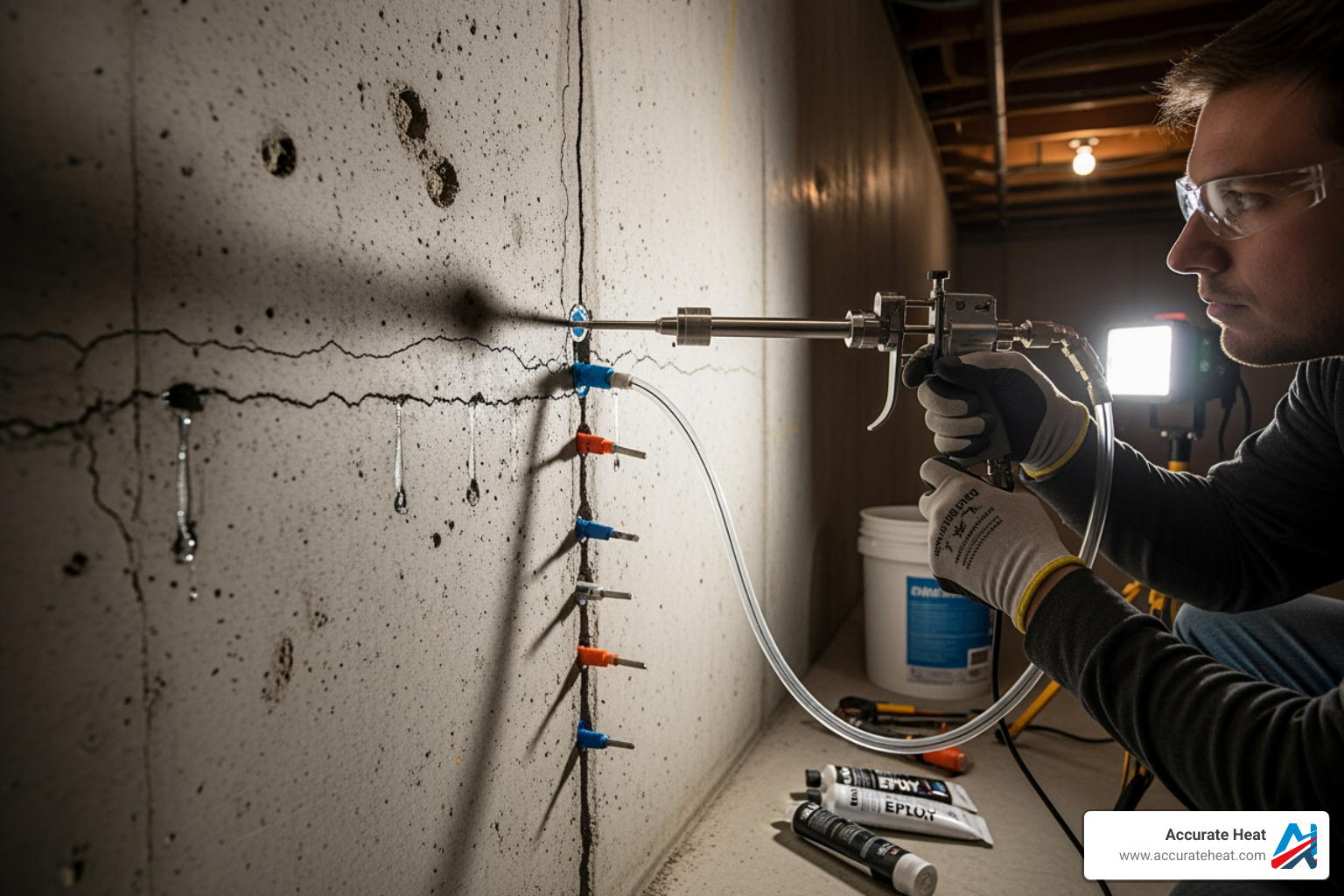
- Epoxy vs. Polyurethane Injection:
- Epoxy Injection: Best for dry, non-moving cracks. Epoxy is a strong adhesive that essentially glues the concrete back together, restoring its structural integrity in that spot.
- Polyurethane Injection: Ideal for cracks that are actively leaking or might experience some movement. Polyurethane is flexible and expands upon contact with water, filling the crack and creating a watertight seal. This makes it a great choice for wet non-structural cracks.
- Suitable for Non-Structural, Hairline Cracks: These DIY methods are generally recommended for vertical or diagonal cracks that are less than 1/8 inch wide and show no signs of structural compromise.
- DIY Kit Costs: DIY kits for crack injection typically start around $75. Professional crack injections start at $400.
- Step-by-Step Process Overview (General):
- Clean the Crack: Thoroughly clean the crack with a wire brush and remove any loose debris.
- Prepare the Surface: Apply a surface sealer (often included in kits) along the crack.
- Install Injection Ports: Place small plastic ports along the crack at regular intervals.
- Inject Material: Using a specialized applicator, inject the epoxy or polyurethane into the ports, starting from the bottom, until it oozes out of the next port.
- Cure and Finish: Allow the material to cure according to the manufacturer’s instructions, then remove the ports and clean up any excess.
Professional Methods for Serious Structural Damage
When a foundation crack leak indicates a serious structural issue, or if DIY attempts fail, it’s time to call in the professionals. These methods often require specialized equipment, expertise, and a thorough understanding of engineering principles.
- Exterior Waterproofing Membranes: This involves excavating the soil around your foundation to expose the exterior walls. A waterproof membrane (like Hydro Guard) is then applied, often in multiple layers, to create a seamless, impenetrable barrier against water. This is considered a highly effective solution for preventing water from reaching your foundation in the first place, bridging existing cracks or faults. Some commercial-grade products even offer 50-year protection against water penetration.
- Interior Drainage Systems (Drain Tile with Sump Pump): For basements, an interior perimeter drain tile system collects water that seeps through the foundation walls or floor. This water is then routed to a sump pump, which actively pumps it out of the basement and away from your home. This is often combined with other interior sealing methods.
- Sump Pumps: Crucial for managing collected water, a sump pump automatically activates when water reaches a certain level, preventing basement flooding. Regular checks ensure it’s operating correctly.
- Underpinning with Piers: For significant foundation settlement, underpinning involves extending the foundation deeper into stable soil. This can be done using:
- Helical Piers: Steel screws twisted into the ground for support.
- Push Piers: Hydraulically driven steel pilings used for foundation support.
- Carbon Fiber Reinforcement: For bowing or bulging basement walls caused by hydrostatic pressure, carbon fiber straps or strips can be epoxied to the interior wall surface. These provide incredible tensile strength, stabilizing the wall and preventing further inward movement. For walls that have moved less than 2 inches, carbon fiber can be an effective, low-profile solution.
- Channel Steel: If a foundation wall has moved or rotated more than 2 inches, channel steel affixed to footings and floor joists may be necessary for stabilization. This is a more robust solution for significant structural movement.
- Crack Standards from the NAHB: The National Association of Home Builders (NAHB) provides guidelines, stating that cracks in interior slabs exceeding three-sixteenths inches wide or high (vertical displacement) require repair. Professionals adhere to these and other industry standards to ensure lasting solutions.
When to Call a Professional for a Foundation Crack Leak
While we appreciate a good DIY project, some foundation crack leak issues are simply too serious to tackle on your own. It’s not just about stopping the water; it’s about preserving the structural integrity and safety of your home. You should always call a professional for foundation leak issues if you observe:
- Horizontal Cracks: These are almost always a sign of significant external pressure and potential structural compromise. They are extremely serious.
- Bowing or Bulging Walls: If your basement walls are visibly bowing inward or bulging, it indicates immense pressure from outside soil and requires immediate structural assessment.
- Cracks Wider Than 1/4 Inch: Any crack this wide or wider is considered structural and needs expert evaluation.
- Multiple Large Cracks: A network of large cracks suggests widespread foundation stress.
- Active Water Leaking Through Foundation Cracks: Especially if it’s a constant flow or occurs frequently.
- When You Suspect a Plumbing Leak is the Cause: Underground plumbing leaks require specialized detection and repair to prevent ongoing saturation of the soil around your foundation. For comprehensive plumbing leak detection and repair, our team at Accurate Heat is equipped to handle these complex issues.
Proactive Prevention: How to Stop Leaks Before They Start
An ounce of prevention is worth a pound of cure, especially when it comes to a foundation crack leak. Maintaining your home proactively can save you thousands of dollars and countless headaches down the line. The goal is simple: prevent water from reaching your foundation in the first place.
The Critical Role of Proper Drainage
Effective water management around your home is the first and most important line of defense against foundation leaks.
- Cleaning Gutters: Clogged gutters can cause rainwater to overflow and dump directly against your foundation. Regularly cleaning your gutters, especially in fall and spring, ensures water flows freely into downspouts.
- Extending Downspouts (6 Feet Rule): Ensure your rain gutter downspouts and extensions discharge water at least 6 feet away from the foundation. Water that pools near the foundation contributes to hydrostatic pressure and soil saturation.
- Proper Yard Grading: The ground around your house should slope away from the foundation. We recommend a slope of at least 6 inches for the first 10 feet away from the foundation. This directs rainwater away rather than allowing it to collect and seep down. If your yard slopes towards your house, you’re creating a perfect scenario for a foundation crack leak.
- French Drains: A French drain is a sloped trench filled with gravel and a perforated pipe that collects and diverts surface water and groundwater away from your foundation. This is an excellent solution for yards with persistent drainage issues.
Regular Home Maintenance and Monitoring
Beyond drainage, general home maintenance and keen observation are crucial.
- Inspecting Foundation Seasonally (Spring/Fall): Make it a habit to inspect your foundation walls and basement floor every spring and fall. Look for new cracks, changes in existing cracks, signs of moisture, or efflorescence. These periods of changing weather (post-winter thaw, pre-winter rains) are when foundations are most stressed.
- Monitoring Small Cracks for Growth: If you have hairline or minor vertical/diagonal cracks, mark them with a pencil or tape and note the date. Check them periodically (every few months) to see if they are widening or lengthening. If they grow, they may be progressing from non-structural to more serious issues.
- Regular Plumbing Inspections to Catch Hidden Leaks: Since underground plumbing leaks can be silent culprits, routine plumbing inspections can help catch small issues before they become major foundation crack leak problems. Our team at Accurate Heat provides comprehensive plumbing services, including leak detection, to ensure your home’s systems aren’t inadvertently contributing to foundation damage.
Conclusion: Protecting Your Home’s Foundation
A foundation crack leak can be a homeowner’s nightmare, but with the right knowledge and proactive steps, you can prevent significant damage and maintain the structural integrity of your home. We’ve walked through how to identify the problem, understand its causes, explore repair methods, and most importantly, implement preventative measures.
Early detection and timely action are your best allies. Ignoring a foundation crack leak won’t make it go away; it will only allow the problem to worsen, potentially leading to costly structural repairs, extensive water damage, and unhealthy indoor environments due to mold growth.
For peace of mind, especially if you suspect a plumbing issue is contributing to your foundation problems, it’s wise to consult experts. Our team at Accurate Heat has been providing reliable HVAC and plumbing services in Franklin and throughout Massachusetts for over 30 years. We offer expert, honest, and timely solutions for your home comfort, including professional plumbing inspections that can identify hidden leaks before they impact your foundation. Protect your home and your investment. Contact us for a professional plumbing inspection today.