
Why Bathroom Shower Repair Matters for Massachusetts Homeowners
Bathroom shower repair is one of those household tasks that can save you hundreds of dollars in wasted water and prevent serious damage to your home. A dripping showerhead might seem like a minor annoyance, but it can waste thousands of gallons of water per year and spike your utility bills. Even worse, leaks behind walls can lead to mold growth and structural damage that costs far more to fix than the original problem.
Most Common Shower Issues and Quick Fixes:
| Problem | Likely Cause | Quick Fix |
|---|---|---|
| Dripping showerhead | Mineral buildup or worn gasket | Soak in vinegar; replace O-ring |
| Leaky faucet handle | Faulty cartridge or worn washer | Replace cartridge or washer |
| Low water pressure | Clogged showerhead or valve | Clean with vinegar solution |
| Continuous drip when off | Bad shower valve | Replace valve cartridge |
| Water leaking from wall | Damaged valve or loose connection | Call a professional plumber |
The good news? Many shower repairs are surprisingly simple. You don’t need to be a plumbing expert to fix a leaky showerhead or replace a worn-out washer. With the right tools and a bit of know-how, you can tackle common issues yourself and save the cost of a service call.
That said, some problems—like leaks behind walls or faulty electric shower components—require professional expertise. Knowing when to DIY and when to call in the pros is crucial, especially in Massachusetts where harsh winters can turn a small leak into a frozen pipe disaster.
In this guide, we’ll walk you through the most common shower problems Massachusetts homeowners face, show you how to fix them yourself when possible, and help you understand when it’s time to call Accurate Heat’s expert plumbers for help.
Diagnosing the Drip: Signs You Need a Shower Repair
Before we dive into the nitty-gritty of bathroom shower repair, let’s talk about how to recognize when your shower needs attention. Catching problems early can save you a lot of headache and expense down the line. Here are the tell-tale signs that your shower is crying out for help:
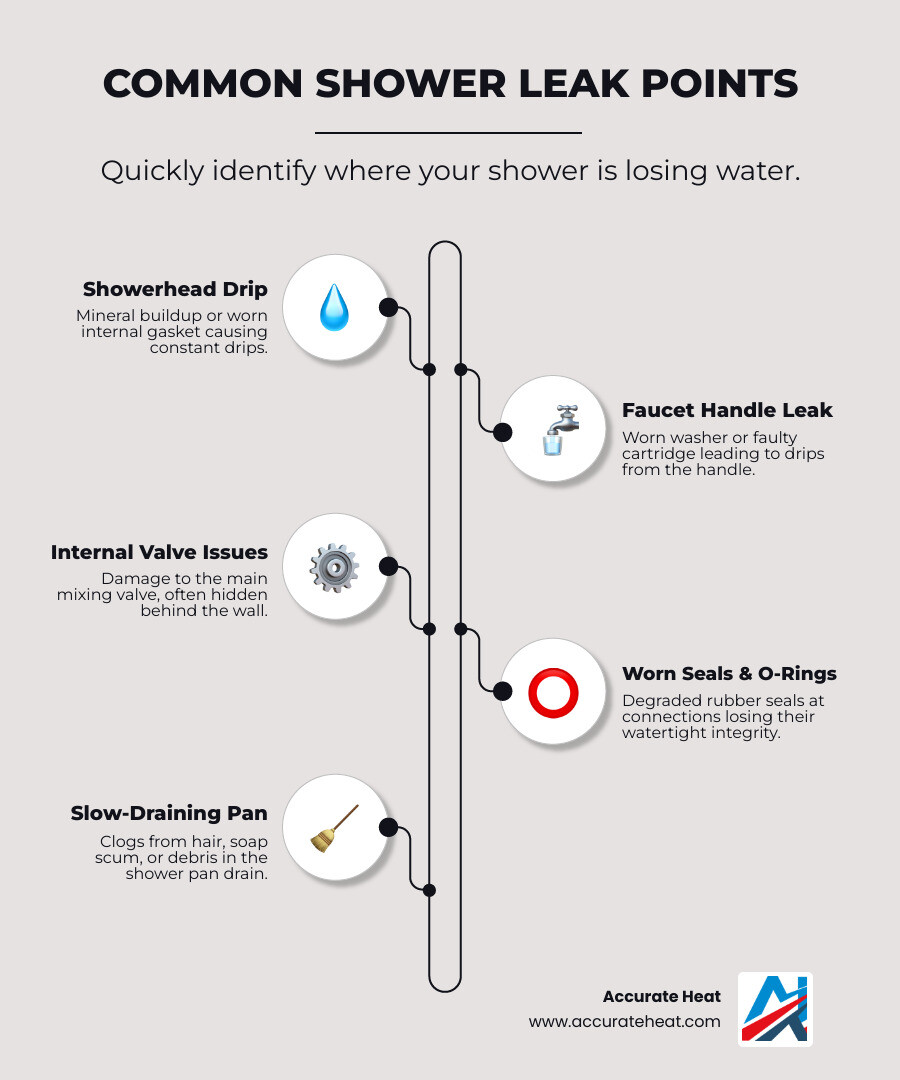
- Visible dripping: This is the most obvious sign. Whether it’s a constant drip, drip, drip from the showerhead or a slow leak from the faucet handles, visible water leakage means something isn’t right. Even a slight drip after turning off the shower can be normal due to residual water, but if it’s continuous, it’s a problem.
- Leaks from the wall: This is a serious indicator that you might have a hidden pipe leak or a problem with the shower valve behind the wall. Water stains on the wall or ceiling outside the shower are major red flags. This can quickly lead to structural damage and mold growth.
- Low water pressure: There’s nothing quite as disappointing as a weak shower stream. If you’re expecting a powerful spray but only get a trickle, your water pressure is suffering. This could be isolated to your shower or affecting your entire home.
- Inconsistent water temperature: Does your shower suddenly turn scalding hot or icy cold without warning? This often points to issues with your shower mixing valve or water heater.
- Strange noises: Hissing, banging, or whistling sounds coming from your shower pipes can indicate anything from loose pipes to excessive water pressure or even a burst pipe (though a burst pipe would likely have more immediate, dramatic signs like flooding).
- Stains on walls or ceiling: Water stains on the ceiling below your bathroom or on the walls adjacent to the shower are clear signs of a leak that needs immediate investigation.
- Slow draining: If water pools at your feet while showering and takes a long time to drain, you likely have a clogged shower drain.
Ignoring these signs can lead to bigger, more expensive problems. Our team at Accurate Heat offers comprehensive kitchen & bathroom plumbing services throughout Massachusetts, and we’ve seen how small issues can escalate.
Common Shower Repair Issues
From our experience serving Massachusetts communities, these are the most frequent bathroom shower repair issues:
- Leaky faucets: Caused by worn washers or faulty cartridges, wasting water and money.
- Clogged showerheads: Mineral buildup restricts water flow, causing erratic sprays.
- Faulty cartridges or valves: When these wear out, you’ll notice leaks, temperature swings, or trouble turning the water on/off.
- Worn-out seals and O-rings: These rubber parts degrade over time, causing leaks at connection points.
- Cracked tiles or grout: Allows water to seep behind walls, leading to water damage and mold.
- Clogged drains: Hair and soap scum are the usual culprits for slow drainage.
- Low water pressure problems: Can be caused by a clogged showerhead, main water supply issues, or water heater problems.
Tools and Materials for Basic Repairs
Having the right tools and materials makes any DIY job smoother. Here’s a basic toolkit for bathroom shower repair:

- Pliers and a Wrench: For gripping and turning. Wrap jaws with a cloth to protect finishes.
- Screwdrivers: Phillips and flathead for handle screws.
- Utility knife and caulk gun: For removing and applying caulk.
- Soft cloth/Nylon-bristled brush: For cleaning.
- Plumber’s tape (PTFE): To seal threaded connections.
- Replacement parts: Washers, O-rings, and the correct cartridge for your faucet model.
- Silicone caulk: To seal gaps and prevent water intrusion.
- White vinegar: For dissolving mineral buildup.
DIY Fixes for Common Shower Problems
Many bathroom shower repair issues are well within the capabilities of a diligent homeowner. With a bit of guidance, Massachusetts residents can resolve minor leaks and clogs themselves.
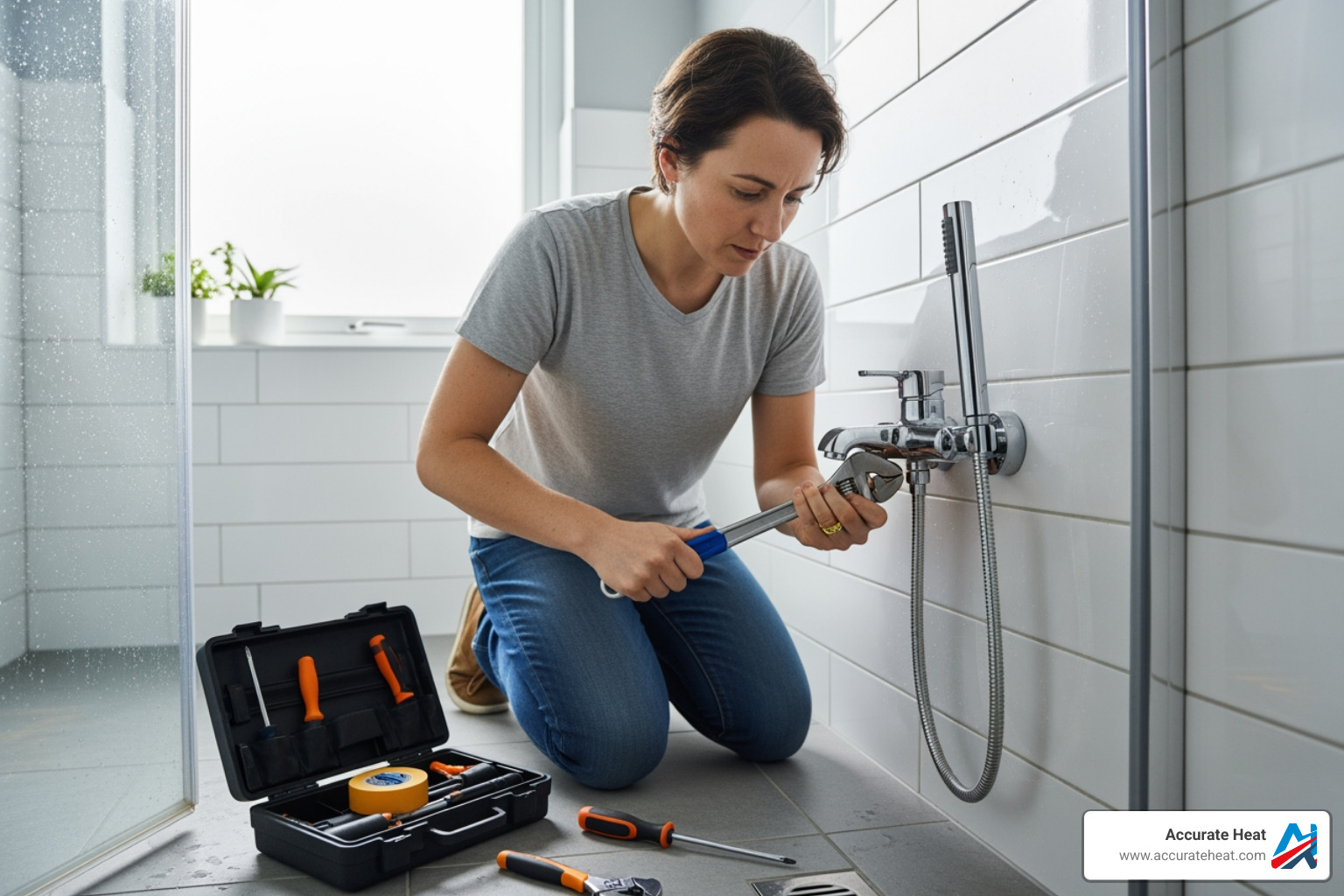
Safety first! Always turn off the water supply to your shower before beginning any repair. This usually means turning off the main water supply to your house. Once the water is off, open the faucet to drain any residual water and release pressure. Finally, place a rag over the drain to prevent small parts from falling in.
If you are new to home plumbing, you may also find it helpful to review a basic overview of plumbing so you understand how your shower ties into the rest of your home’s system.
How to Fix a Leaky Showerhead
A constantly dripping showerhead is not just annoying; it’s a major water waster. Most leaks stem from mineral buildup, a worn gasket, or a loose connection. Here’s how we recommend you tackle it:
- Clean the Showerhead: Mineral deposits are a common culprit. Unscrew the showerhead from the shower arm. If it’s stubborn, wrap a cloth around the connection and use pliers. Submerge the showerhead in a bowl of white vinegar overnight. The vinegar will dissolve hard water deposits. In the morning, scrub away any remaining residue with a nylon-bristled brush.
- Inspect and Replace the Gasket/O-ring: Inside the showerhead’s connection point, there’s usually a rubber gasket or O-ring that creates a seal. If it looks cracked, flattened, or worn, pry it out and replace it with a new one. Take the old one to the hardware store to ensure a perfect match.
- Apply New Plumber’s Tape: Before reattaching the showerhead, remove any old, frayed plumber’s tape from the threads of the shower arm. Wrap new PTFE thread seal tape around the threads clockwise, about three times. This ensures a tight, watertight seal.
- Reattach and Test: Screw the showerhead back onto the arm, hand-tightening it first, then giving it a gentle turn with a wrench (using a cloth to protect the finish). Turn the water supply back on and check for leaks.
For more detailed steps and visuals on showerhead repair, check out our comprehensive plumbing guides at Accurate Heat.
Tackling a Leaky Faucet and Replacing a Cartridge
Leaky shower faucets are often caused by a worn-out washer or a faulty cartridge. The repair process differs slightly depending on whether you have a single-handle or two-handle faucet.
For Two-Handle Faucets (Compression Faucets):
- Identify the Leaking Handle: Determine if the leak is from the hot or cold side.
- Remove the Handle: Pop off the decorative cap, unscrew the handle screw, and pull off the handle.
- Access the Stem: Remove the escutcheon (trim plate) and then unscrew the packing nut to reveal the faucet stem.
- Replace the Washer: Unscrew the stem and replace the small rubber washer at its base. Apply a thin layer of silicone faucet grease to the new washer for a better seal.
- Reassemble: Screw the stem back in, tighten the packing nut, replace the escutcheon, and reattach the handle.
For Single-Handle Faucets (Cartridge Faucets):
- Remove the Handle: Typically, there’s a small screw (often hidden under a decorative cap or plastic index tab) that holds the handle in place. Remove this screw and pull off the handle.
- Remove the Trim Plate: Unscrew and remove the faceplate or escutcheon.
- Access the Cartridge: You’ll see a metal sleeve covering the valve body. Remove any retaining clips or nuts that hold the cartridge in place.
- Remove and Replace the Cartridge: You might need a cartridge puller tool, especially if the old cartridge is stuck due to mineral buildup. Once removed, insert the new cartridge, ensuring it’s oriented correctly (often marked “HOT” for the hot water side).
- Reassemble and Test: Reattach any clips or nuts, replace the trim plate and handle, then turn on the water supply and check for leaks and proper function.
For a comprehensive guide on faucet repair techniques, visit our plumbing resources page.
Boosting Low Water Pressure
Low water pressure can turn a refreshing shower into a frustrating dribble. If your shower is lacking its usual oomph, here are some things we suggest you check:
- Clogged Showerhead: As discussed, mineral buildup is a prime suspect. If you haven’t already, clean your showerhead thoroughly with vinegar. This is the simplest and often most effective fix.
- Partially Closed Main Water Valve: It sounds simple, but sometimes the main water valve to your house or a specific zone isn’t fully open. Check the main shut-off valve (usually in your basement or utility area) to ensure it’s in the fully open position.
- Kinked Hose: If you have a handheld shower attachment, check for any kinks or damage in the hose that might be restricting water flow.
- Water Heater Sediment Buildup: Over time, sediment can accumulate in your water heater, reducing its efficiency and sometimes affecting hot water pressure. If low pressure primarily affects hot water, this could be the cause.
- Water Pressure Regulator Issues: Many homes in Massachusetts have a water pressure regulator where the main water line enters the house. If this device malfunctions, it can cause low water pressure throughout your home.
If these DIY checks don’t resolve the issue, it might be a more complex problem, such as a leak in your main water supply line or issues with your home’s pipes. For these situations, we recommend consulting our guide to Solve your plumbing issues with this guide.
Advanced Bathroom Shower Repair: Components and Considerations
Sometimes, a simple DIY fix isn’t enough. When the problem lies deeper within your shower’s plumbing system or involves specialized components, you might be looking at a more advanced bathroom shower repair. This often involves working behind the wall, where the risk of water damage becomes much higher.
Understanding these complex parts and knowing when to call a professional is crucial to prevent minor issues from becoming major disasters.
Repairing Shower Valves, Cartridges, and Arms
The heart of your shower’s water control lies in its valve system.
- Shower Valve Function: The shower valve mixes hot and cold water to your desired temperature and controls the flow. A faulty valve can lead to leaks, inconsistent temperatures, or a complete loss of water control. Repairing a shower valve often means replacing internal components like cartridges or pressure-balancing units.
- Cartridge Types: There are various types of cartridges (e.g., ceramic disc, pressure-balancing, thermostatic), each with specific repair needs. Identifying the correct type and brand is essential for a successful replacement. Reassembly is the reverse of disassembly, but ensuring gaskets are properly seated and the hot side of the valve is oriented correctly (usually to the left) is critical for proper function and to prevent drips.
- Shower Arm Replacement: The shower arm is the pipe extending from the wall to which your showerhead attaches. If it’s corroded, damaged, or you’re upgrading your shower, it might need replacement. The arm screws into a fitting inside the wall, often called a “drop ear 90.” Replacing it involves carefully unscrewing the old arm, cleaning the threads, applying plumber’s tape, and screwing in the new one. Care must be taken not to damage the internal fitting.
- Ensuring Compatibility of Parts: When replacing any internal component, especially cartridges or valves, ensuring the new part is an exact match for your existing fixture is paramount. Taking the old part to a plumbing supply store or a professional plumber like us in Massachusetts can ensure you get the right fit.
For all your plumbing needs, including advanced shower repairs, you can always count on our trusted plumbing services in MA.
Key Considerations for Your Bathroom Shower Repair
Beyond the basic fixtures, there are other crucial elements to consider, especially when dealing with specialized systems or structural components.
- Electric Shower Specifics: Electric showers heat water on demand, and their repair involves both plumbing and electrical components. If your electric shower is malfunctioning, issues could range from a faulty heating element to a problem with the solenoid valve (which controls water flow) or a thermal cut-out (TCO) that trips for safety reasons. Due to the electrical nature, we always recommend professional assistance for electric shower repairs. Attempting DIY electrical work can be dangerous.
- Tile and Grout Repair: While not directly plumbing, the integrity of your shower’s tiles and grout is vital for preventing water leaks. Cracked tiles or deteriorated grout can allow water to seep behind the shower walls, leading to unseen damage and mold. As part of a comprehensive bathroom shower repair, inspecting and resealing grout or replacing damaged tiles is often necessary.
- Waterproofing: Ensuring proper waterproofing behind your shower walls and floor is essential. If you’re undertaking a larger repair or renovation, confirming that these areas are adequately sealed will prevent future water damage.
The Pro vs. DIY Decision: Costs and Benefits
When faced with a bathroom shower repair, one of the first questions homeowners in Massachusetts ask is, “Should I fix it myself or call a professional?” There are clear benefits and drawbacks to each approach.
| Aspect | DIY Repair | Professional Repair |
|---|---|---|
| Cost | Generally lower (parts only) | Higher (parts + labor) |
| Time | Can be time-consuming; learning curve | Efficient; quick resolution |
| Complexity | Suitable for simple fixes (e.g., leaky head) | Handles complex issues (e.g., valve replacement) |
| Risk | Higher risk of error, further damage | Lower risk; expertise ensures proper fix |
| Warranty | No warranty on your work | Often comes with a warranty on parts and labor |
| Tools | Requires owning or renting tools | Plumber brings all necessary specialized tools |
| Peace of Mind | Varies by skill level and success | Guaranteed solution; no lingering worries |
The Financials of Bathroom Shower Repair
The cost of bathroom shower repair varies based on complexity, parts, and whether you DIY or hire a pro.
- Average Repair Costs:
- DIY Faucet/Showerhead Fix: $5 to $100 for parts like washers or gaskets.
- Professional Faucet/Showerhead Fix: $150 to $300, including labor and parts.
- Professional Valve Replacement: $300 to $600+, depending on valve type and access.
- Major Pipe Bursts: Can cost hundreds to thousands, especially if walls and water damage are involved.
- Factors Affecting Price: Plumber hourly rates in Massachusetts generally range from $75 to $200. The fixture brand, plumbing age, and problem accessibility also influence the total cost.
- Getting an Estimate: We always recommend getting a clear, written estimate before work begins to ensure transparency.
At Accurate Heat, we pride ourselves on offering affordable plumbing services in Massachusetts without compromising on quality.
When to Call a Professional Plumber
While we encourage homeowners to tackle minor bathroom shower repair tasks, there are definite times when calling in a professional is not just advisable, but essential.
- Leaks Behind Walls: If you suspect a leak behind your shower wall (e.g., water stains on the ceiling below, unexplained dampness), this is beyond a DIY fix. Hidden leaks can cause extensive, unseen damage.
- Major Pipe Bursts: A sudden drop in water pressure, hissing sounds, or visible flooding are signs of a burst pipe. This is an emergency that requires immediate professional attention to prevent catastrophic water damage. Remember to shut off your main water supply immediately if this happens.
- You Lack the Right Tools or Expertise: If you don’t have the specialized tools (like a cartridge puller) or feel uncomfortable with the repair process, it’s better to call a pro than risk further damage.
- DIY Attempts Fail: If you’ve tried to fix a problem yourself and the leak persists or worsens, it’s time to bring in the experts.
- Electrical Shower Issues: As mentioned, any issues with electric showers that might involve wiring or heating elements should always be handled by a qualified professional due to safety risks.
- Inconsistent Water Temperature or Pressure Issues Persist: If you’ve cleaned your showerhead and checked your main valve, but still have persistent issues with water temperature or pressure, there might be a deeper problem with your home’s plumbing system or water heater.
For complex jobs or when you need immediate assistance, our team offers Massachusetts emergency plumbing available 24/7. We’re here to help Franklin, Norfolk, and all our Massachusetts neighbors whenever plumbing emergencies strike.
Preventing Future Problems: Shower Maintenance Tips
An ounce of prevention is worth a pound of cure, especially when it comes to bathroom shower repair. Regular maintenance can significantly extend the life of your shower components and prevent those frustrating drips and leaks.
Here are our top tips for keeping your shower in tip-top shape:
- Regular Cleaning: Don’t just clean the visible surfaces. Periodically remove your showerhead and soak it in white vinegar to dissolve mineral buildup. Clean around the faucet handles and drain to prevent soap scum and hair accumulation.
- Check for Leaks: Make it a habit to visually inspect your shower for any signs of leaks. Look for drips from the showerhead, faucet handles, or any dampness around the base of the shower or where it meets the wall. Catching small drips early can prevent them from becoming bigger problems.
- Inspect Caulk and Grout: Over time, caulk and grout can crack or deteriorate, creating pathways for water to seep into walls and floors. Regularly inspect these seals. If you see any cracks or mold, remove the old caulk/grout and reapply fresh silicone caulk (which performs better than acrylic in wet environments) or grout.
- Use a Hair Trap: Hair is the number one culprit for clogged shower drains. A simple hair trap or drain cover can catch hair and prevent it from going down the drain, saving you from unpleasant clogs and the need for drain cleaning.
- Be Gentle with Handles: Avoid forcing stiff handles. If a handle is difficult to turn, it’s often a sign of a worn cartridge or mineral buildup, not something that needs more force. Forcing it can break internal components.
- Consider a Water Softener: If you live in an area with hard water (common in many parts of Massachusetts), a whole-house water softener can significantly reduce mineral buildup in your showerhead, faucets, and pipes, extending their lifespan.
By following these simple maintenance tips, you can greatly reduce the need for future bathroom shower repair. For more general plumbing maintenance advice, check out our guide on Why regular plumbing maintenance is a must.
Frequently Asked Questions about Shower Repair
How much does it cost to fix a leaking shower?
The cost varies from $5-$100 for a simple DIY fix like replacing a washer or gasket. Hiring a professional plumber can range from $150 to $400 or more, depending on the complexity of the issue, such as replacing a shower valve.
What are the signs of a bad shower valve?
Signs include a continuous drip even when the water is off, difficulty controlling water temperature, a sudden drop in water pressure, or a handle that is stiff or won’t turn properly.
Can I replace a shower cartridge myself?
Yes, replacing a shower cartridge is a common DIY project for those with intermediate skills. It requires turning off the water supply, removing the faucet handle and trim, and using a cartridge puller tool to extract and replace the old unit.
Don’t Let a Drip Ruin Your Day
We’ve covered a lot of ground today, from diagnosing those pesky drips to tackling common DIY fixes and understanding when to call in the pros for more advanced bathroom shower repair. Whether it’s a leaky showerhead, a stubborn faucet, or low water pressure, many shower problems can be resolved with a little knowledge and the right tools.
While DIY can save you money and give you a great sense of accomplishment, knowing your limits is key. For leaks behind walls, complex valve issues, or any electrical components (especially in electric showers), professional help ensures the job is done safely and correctly, preventing costly water damage and ensuring your home’s comfort.
At Accurate Baker Elman, we’re dedicated to providing expert, honest, and timely plumbing solutions for homeowners across Massachusetts, from Franklin to Newton and beyond. For complex jobs or simply for the peace of mind that comes with a guaranteed professional repair, our team is ready to help.
Don’t let a drip ruin your day—or your home. Contact our expert plumbers today! We provide fast, reliable service in Franklin, Norfolk, Medway, and communities throughout Massachusetts.