
Why Electric Furnace Repair Matters for Massachusetts Homeowners
Electric furnace repair is simpler than with gas models—no gas lines or pilot lights, just clean, electric-powered heat. When your furnace fails during a Massachusetts winter, knowing what to check first can save you money and discomfort.
Quick answers for common electric furnace problems:
- No heat at all? Check your circuit breaker (240V), thermostat batteries, and air filter first
- Blowing cold air? Likely a failed heating element, limit switch, or sequencer issue
- Strange noises? Could be loose panels, worn blower motor, or failing components
- Short cycling? Usually points to airflow restrictions or thermostat problems
- Burning smell? Dust burn-off is normal at startup; an electrical smell requires immediate attention
Electric furnaces are durable, often lasting 20–30 years. Unlike gas models, they don’t deal with flame corrosion or exhaust buildup, meaning fewer parts wear out prematurely.
When issues do arise, they’re often straightforward. Research shows heating element degradation accounts for 30–40% of electric furnace service calls. The good news is that many common problems have simple DIY fixes.
This guide covers warning signs, basic troubleshooting, and key repair decisions. You’ll learn what to check on your own, when to call an expert, and how to decide between repair and replacement.
Safety first: Electric furnaces use 240 volts. We’ll guide you through safe troubleshooting, common failures, and what professional technicians look for during service calls.
Introduction: Understanding Your Electric Furnace
In Massachusetts, electric furnaces are a popular, safe, and reliable choice, especially where natural gas is unavailable. They operate without open flames or exhaust, eliminating carbon monoxide risks and often lowering installation costs.
At its core, an electric furnace is a forced-air system that uses electric heating elements to warm air. A blower motor then distributes this air through ducts. When the thermostat calls for heat, the elements warm up, and the fan pushes air over them. This process is nearly 100% efficient at converting electricity to heat.
With no combustion chamber, heat exchanger, or flue pipe, electric furnaces require less routine upkeep than gas models. Still, problems can occur. Understanding the basics is key to effective electric furnace repair, helping you spot issues early to save on costly repairs and extend your system’s life.
Is Your Furnace on the Fritz? Common Signs and Symptoms
Recognizing early warning signs from your electric furnace can prevent minor issues from becoming major breakdowns. Here are common indicators that your furnace needs attention.
Telltale Noises and What They Mean
Any new or unusual sound beyond the typical hum of the blower motor is a sign your furnace needs attention.
- Rattling sounds: Often indicates loose panels, screws, or a component in the blower assembly. Tightening access panel screws may fix it.
- Squealing or grinding: Points to blower motor issues. Squealing could be a worn belt or bearings needing lubrication. Grinding suggests worn-out bearings, a serious problem requiring a professional.
- Buzzing or humming: A loud, persistent buzz (not a normal hum) can signal a failing capacitor, loose wire, or electrical arcing. This is a serious electrical issue requiring a professional.
- Clicking: Normal when the furnace cycles on/off. Rapid, continuous clicking without the furnace starting suggests a faulty control board or sequencer.
- Banging or popping: Usually caused by ductwork expanding and contracting. If excessively loud, it could indicate airflow problems.
For more insights into common heating problems, you can explore our guide on common heating problems in Massachusetts and how to solve them.
Warning Smells: When to Be Concerned
Different smells can indicate various furnace issues, from benign to urgent.
- Burning dust smell: Common at the start of the heating season as dust burns off the heating elements. The smell should fade within an hour. If it persists, it may signal excessive dust or restricted airflow. The US EPA notes this is a top reason for early-season service calls. Learn more about why you might smell burning dust from your heater.
- Metallic or electrical odor: A serious red flag. A plastic, ozone, or metallic smell indicates an overheating electrical component or short circuit. Immediately turn off the furnace at the thermostat and circuit breaker, then call a professional. This is a fire hazard, as aging electrical systems contribute to 14% of HVAC-related home fires.
- Musty smell: Indicates moisture or microbial growth in the ductwork or furnace, affecting air quality. Regular filter changes and duct cleaning can help. For more information, check out our resources on indoor air quality.
Performance Red Flags
Performance issues can cause discomfort and higher energy bills.
- Furnace won’t turn on: A completely unresponsive furnace could be a simple thermostat issue, a tripped breaker, or a major component failure.
- Blowing cold or lukewarm air: If the fan runs but the air is cold, the heating elements aren’t activating. This could be a faulty element, limit switch, or sequencer.
- Weak airflow: Weak airflow from vents points to a restriction, often a clogged filter, dirty blower fan, or ductwork issues.
- Short cycling: The furnace turns on and off frequently without heating the home. This often indicates airflow problems, an overheating furnace, or a faulty thermostat.
- Rising energy bills: Steadily climbing electricity bills suggest your furnace is losing efficiency due to aging parts, poor airflow, or needed maintenance.
- Uneven heating: Some rooms being warm while others are cold suggests poor heat distribution from leaky ducts, blocked vents, or an improperly sized system.
DIY Electric Furnace Repair: A Homeowner’s First-Response Checklist
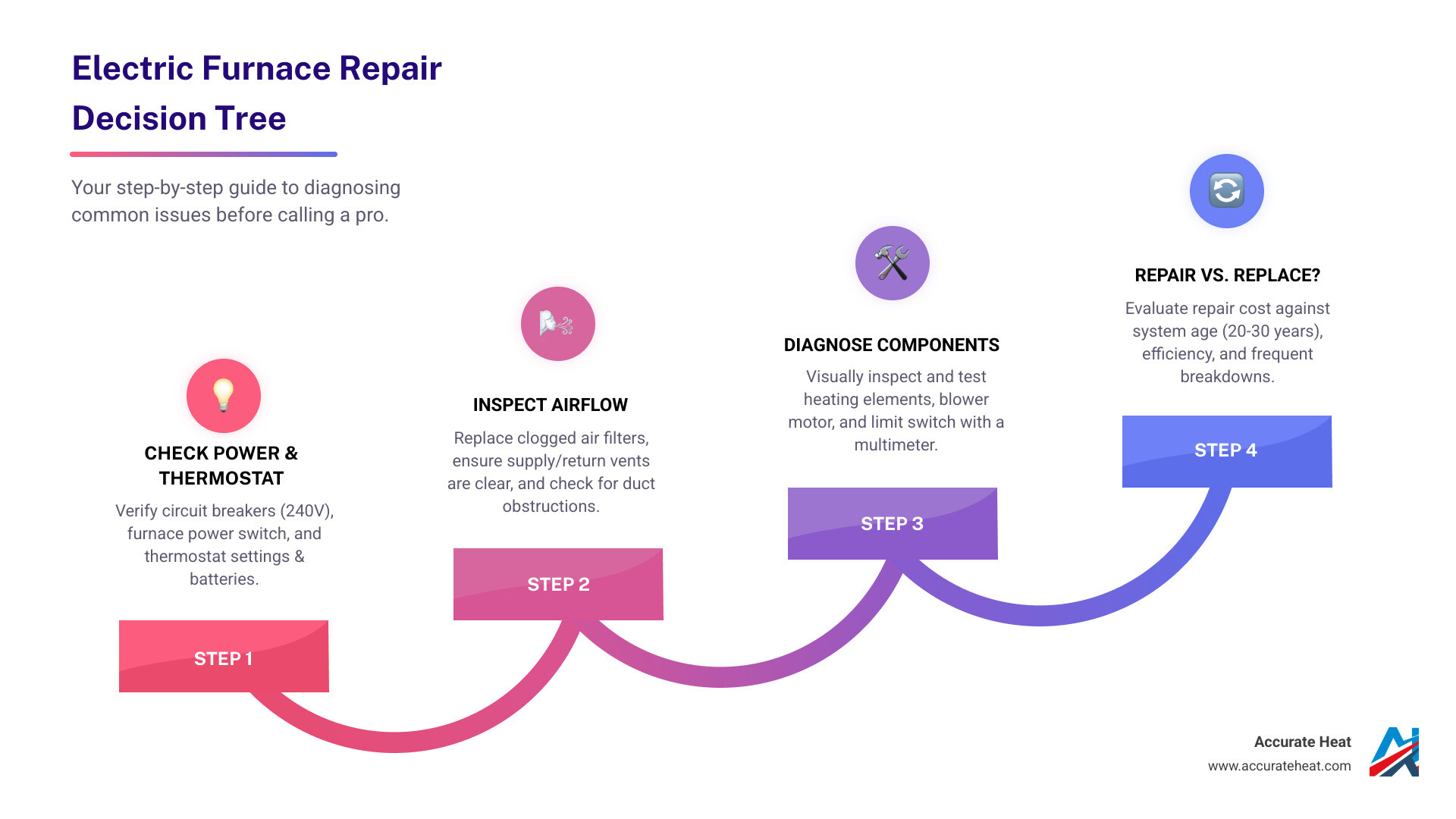
Before calling a professional, try these safe, basic troubleshooting steps. Many common electric furnace problems have simple solutions that don’t require specialized tools. Always remember, safety first!
Start with the Brain: Thermostat Troubleshooting
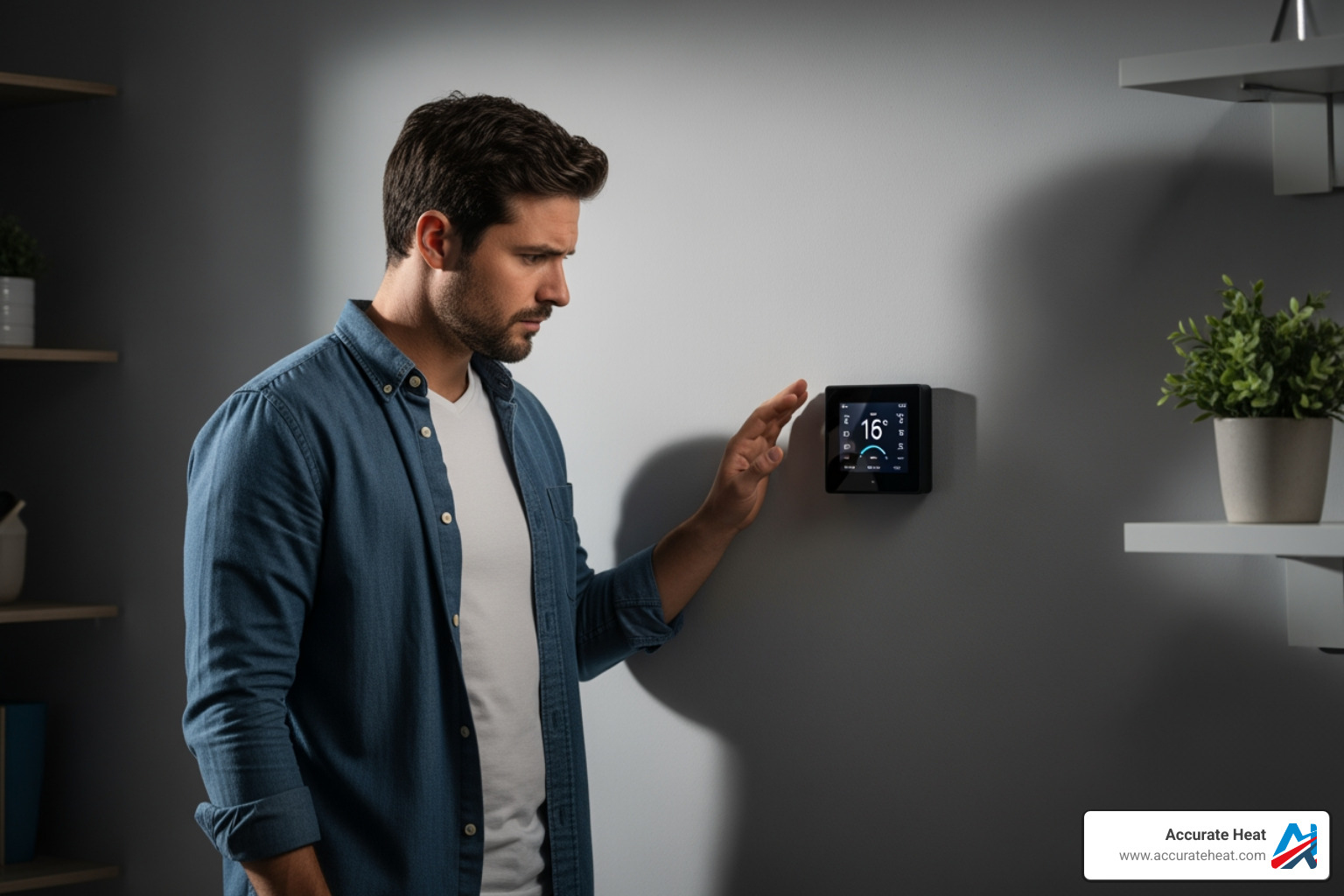
Your thermostat is the command center for your heating system. Often, the problem lies here, not with the furnace itself.
- Check batteries: Dead or low batteries are a common cause for an unresponsive furnace. Replace them with fresh ones.
- Verify settings (Heat/Auto): Set the thermostat to “Heat” and the fan to “Auto.” If the fan is “On,” it will run continuously, even without heat.
- Correct temperature setting: Set the temperature at least 3-5 degrees Fahrenheit higher than the current room temperature to trigger the furnace.
- Clean contacts: On older mechanical thermostats, remove the cover and gently clean dust from the contacts.
- Faulty wiring signs: With the power off at the breaker, check for loose or corroded wires behind the thermostat. For complex issues, call a professional.
For more in-depth guidance, explore our troubleshooting thermostat issues guide.
Checking for Power: Circuit Breakers and Fuses
Electric furnaces require significant power and have multiple layers of electrical protection.
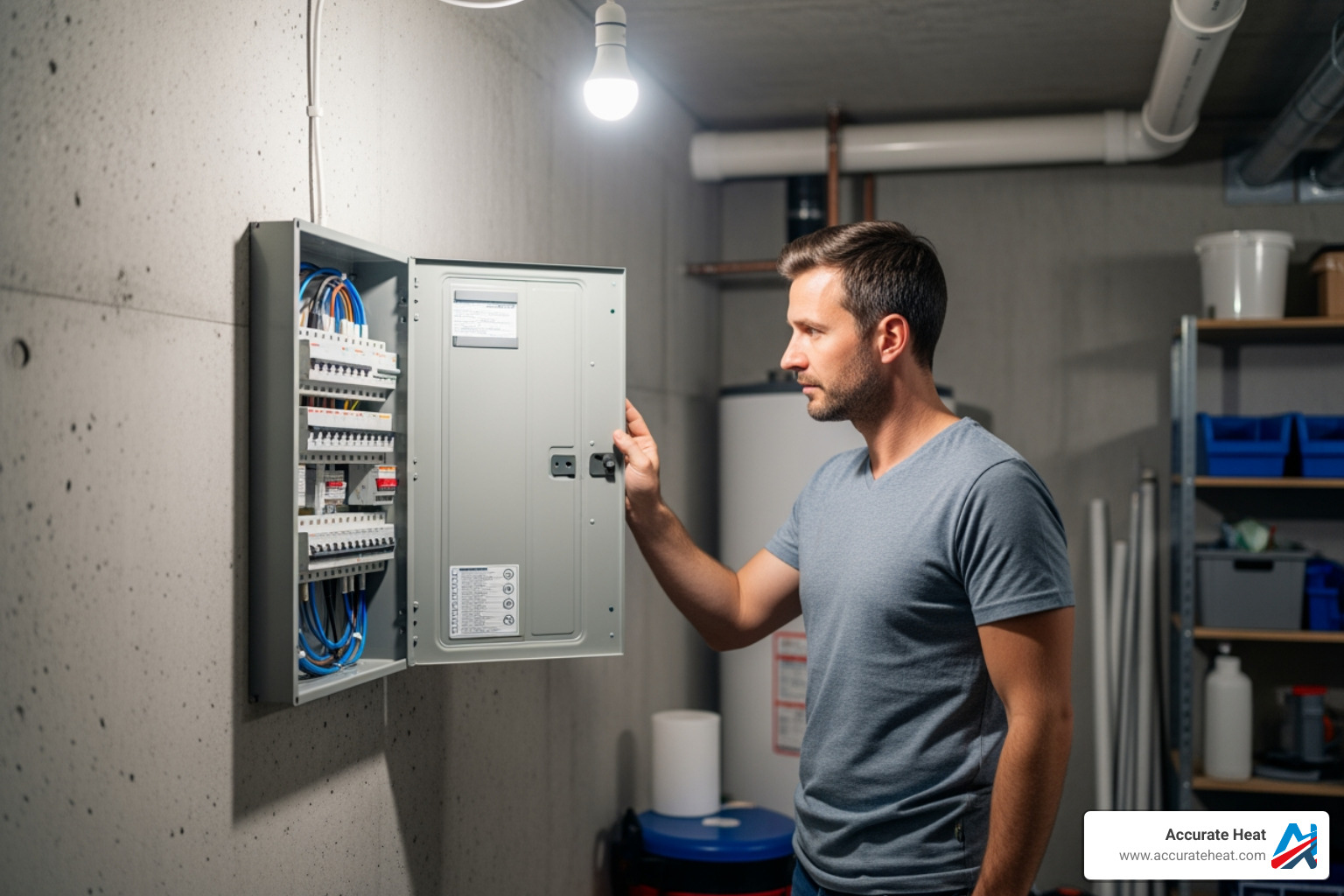
- Safety first (240 volts): Always turn off power at the main electrical panel before inspecting components. Electric furnaces use 240 volts.
- Locating the breaker panel: Find your main electrical panel and look for breakers labeled “Furnace,” “HVAC,” or “Heater.” Electric furnaces often have dedicated circuits.
- Resetting a tripped breaker: To reset a tripped breaker, push it firmly to “off,” then back to “on.” If it trips again immediately, do NOT reset it. This signals a serious electrical problem requiring a professional.
- Inspecting internal furnace fuses: After turning off power, check for internal fuses inside the furnace’s access panel. Replace any blackened or broken fuses with one of the exact same amperage.
- Furnace power switch: Check for a power switch on or near the furnace unit and ensure it’s in the “on” position.
The Importance of Airflow: Filters, Vents, and Ductwork
Proper airflow is crucial for efficiency and safety. Restrictions can cause overheating, reduced heat, and higher energy use.
- Clogged air filter replacement: A clogged air filter is a top cause of furnace problems. It restricts airflow, reduces efficiency, and can cause overheating. Replace your filter every 1-3 months during the Massachusetts heating season.
- Blocked supply and return vents: Ensure all supply and return vents are open and not blocked by furniture or rugs. Blocked vents cause uneven heating and reduce performance.
- Signs of leaky ducts: Leaky ducts can cause uneven heating and higher bills. According to ENERGY STAR, leaky ducts can waste up to 20% of total heated air. Sealing ducts improves efficiency and comfort.
- For comprehensive support with your home’s climate control, our team offers a range of HVAC services custom to the unique needs of Massachusetts homeowners.
Digging Deeper: Understanding and Inspecting Key Components
If basic troubleshooting fails, you can investigate internal components, but this requires more technical skill. Remember to always turn off power at the main breaker before opening your furnace cabinet!
Advanced Electric Furnace Repair: Diagnosing Key Components
Understanding the internal components can help you pinpoint the problem.
- Blower motor failure signs: The blower motor circulates air. Signs of failure include no airflow, weak airflow, strange noises, or a motor that hums but won’t spin. A humming motor that doesn’t start likely has failed windings and requires a professional.
- Limit switch function: This safety device monitors internal temperature, shutting off the heating elements to prevent overheating (often from poor airflow). A faulty switch can cause short cycling or a complete lack of heat.
- Sequencer role: Sequencers activate heating elements in stages to prevent a large power draw. A failed sequencer can result in some elements not turning on or the blower running without heat.
- Control board issues: The control board is the furnace’s “nervous system.” A fault can cause anything from inconsistent operation to a total shutdown. Look for visible burn marks on the board.
- Essential tools for diagnosis: For electrical diagnosis, a multimeter is indispensable for testing voltage and continuity. A flashlight is also helpful. Use these tools safely with the power off.
The Heart of the Heat: Checking the Heating Elements
Heating elements generate the furnace’s warmth. If they fail, you’ll have no heat.
- Visual inspection for breaks: With the power OFF at the main breaker, open the access panel and inspect the heating elements (coils or ribbons) for visible breaks, cracks, or burn marks. Burnout is common on older systems.
- Testing continuity with a multimeter: Use a multimeter to test a suspected faulty element:
- Turn off power: Absolutely crucial. Flip the main circuit breaker for the furnace to the OFF position.
- Access elements: Open the furnace panel and locate the heating elements.
- Disconnect wires: Disconnect one wire from each terminal of the heating element you want to test.
- Set multimeter: Set your multimeter to the ohms (resistance) setting.
- Test: Touch one probe to each terminal. A good element should show a resistance reading (typically 10-15 ohms). If the multimeter reads “OL” (open loop) or infinity, the element is broken and needs replacement.
- Heating element degradation research: A 2023 study found that heating element degradation accounts for 30–40% of electric furnace service calls, making it a common issue. If multiple elements fail, replacement may be more cost-effective than repair.
The Big Decision: Repair vs. Replacement
Homeowners with an aging electric furnace must eventually decide whether to repair or replace it. The decision involves long-term savings, comfort, and safety for your Massachusetts home.
When to Skip Electric Furnace Repair and Opt for Replacement
There comes a time when continued electric furnace repair is no longer cost-effective.
- The 50 Percent Rule: A good guideline: if a repair costs over 50% of a new furnace’s price and your system is over halfway through its lifespan, replacement is usually the smarter investment.
- Frequent breakdowns: If your furnace needs frequent repairs each season, it’s likely near the end of its life. A 2023 study shows systems over 20 years old have a 35% higher part failure rate.
- Rising energy costs: An aging furnace loses efficiency, leading to higher electric bills. Older systems can lose up to 25% of their original efficiency by year 20, consuming more power for the same heat output.
- Obsolete parts: For very old models, finding replacement parts can be difficult or impossible. If a key part fails and is obsolete, replacement is the only option.
For a broader understanding, refer to our guide on signs your HVAC system needs replacement.
Lifespan, Efficiency, and Safety Considerations
The repair vs. replace decision also depends on the furnace’s age, efficiency, and safety.
- Typical lifespan (20-30 years): Electric furnaces typically last 20–30 years with proper maintenance. If your unit is in this age range, a repair may only be a temporary fix.
- Efficiency loss in older systems: Older furnaces lose efficiency as parts wear. New models can reach nearly 100% conversion efficiency, while older ones may be at 80-85%. Replacing a 20-year-old system can lead to significant energy savings (up to 28% over its lifetime), which can offset the replacement cost, especially in Massachusetts.
- Safety risks of aging electrical components: Though generally safe, aging electric furnaces pose fire risks from worn wiring and failing components. These issues contribute to 14% of HVAC-related home fires. A new system provides safety and peace of mind.
Here’s a look at how repair costs can stack up against long-term replacement savings:
| Issue/Component | Average Repair Cost Range | Long-term Replacement Savings (Annual) |
|---|---|---|
| Thermostat | $100-$300 | $150-$300 (due to efficiency) |
| Blower Motor | $300-$700 | $150-$300 (due to efficiency) |
| Heating Element | $500-$1,200 | $150-$300 (due to efficiency) |
| Sequencer/Control Bd. | $250-$600 | $150-$300 (due to efficiency) |
| Major Electrical Fail | $800-$1,500 | $150-$300 (due to efficiency) |
| Frequent Repairs | Accumulated costs | Up to 28% lifetime energy savings |
Note: Repair costs are estimates. Savings with a new, high-efficiency unit can be substantial.
Considering a new unit? We offer comprehensive furnace replacement services to ensure your home stays warm and efficient.
Proactive Care: Maintenance and Professional Service
The best way to avoid unexpected electric furnace repair is through proactive maintenance. This extends your system’s life and ensures efficiency throughout the Massachusetts winter.
DIY Maintenance to Prevent Future Problems
You can perform several simple tasks to keep your furnace in top shape.
- Regular filter changes: This is the most important DIY task. A clean air filter ensures proper airflow, boosts efficiency, and prevents overheating. Check it monthly and replace it every 1-3 months during peak season.
- Cleaning the blower compartment: With the power off, periodically vacuum dust from the blower compartment. A clean blower improves airflow and reduces electricity use.
- Keeping the unit clear: Keep the area around your furnace clear of clutter and combustibles for proper airflow and safety.
- Tighten wiring terminals: (With power OFF at the breaker!) Annually, gently tighten wiring terminals on the control board and heating elements to prevent heat buildup and failure.
- Add a surge protector: A surge protector can shield your furnace’s sensitive electronics from damaging power surges.
DOE research shows prompt repairs can extend furnace life by up to 25%, while consistent maintenance can reduce failures by up to 75%. Learn more about why you need regular heating maintenance in Massachusetts.
What to Expect from a Professional Service Call
Some problems require a qualified HVAC technician. Here’s what to expect from an Accurate Heat service call:
- Component testing: Technicians test key components like heating elements, sequencers, and limit switches with professional tools, checking continuity and amperage.
- Amperage verification: We check the amperage draw of components to ensure they operate safely and efficiently, identifying failing parts.
- Airflow measurement: We measure system airflow and duct pressure to find restrictions, leaks, or blower issues affecting performance.
- Safety inspection: A safety inspection includes checking all electrical connections, wiring, and safety switches to ensure your system operates without hazards.
- Technician expertise: Our technicians quickly diagnose complex issues, spot signs of wear, and recommend the best solution—repair or replacement—while offering efficiency insights.
For peace of mind, scheduling professional maintenance annually is a smart investment. Explore our professional heating maintenance services.
Your Trusted Partner for Heating Solutions
Navigating electric furnace repair is easier with the right knowledge. This guide has covered warning signs, a DIY checklist for thermostats, breakers, and filters, and how to diagnose key components like heating elements and blower motors.
Understanding your furnace helps you troubleshoot and make the crucial repair vs. replacement decision. Factoring in age, efficiency, and cost can save you money and improve comfort.
While DIY is great, knowing when to call a professional is key. For complex electrical issues or persistent problems, the expert team at Accurate Heat is ready to help. We provide reliable, expert heating repair services in MA for homeowners across Franklin and Massachusetts. With over 30 years of experience, we offer honest solutions to keep your home warm. Contact us today!