When Your Furnace Pilot Light Goes Out
Furnace pilot light repair is a common issue for Massachusetts homeowners with older gas furnaces, especially during our harsh winters. If you’re bundled up in layers, staring at a cold furnace that won’t start, the pilot light is often the culprit.
Quick Answer: How to Relight Your Furnace Pilot Light
- Turn off the gas – Set the control knob to ‘OFF’ and wait 5 minutes for gas to clear
- Switch to pilot mode – Turn the knob to ‘PILOT’ position
- Light the flame – Press and hold the reset button while using a long lighter to ignite the pilot tube
- Hold for 30-60 seconds – Keep the reset button pressed to heat the thermocouple
- Turn to ‘ON’ – Release the button slowly and turn the knob to ‘ON’ position
If the pilot won’t stay lit or you smell gas, stop immediately and call a professional.
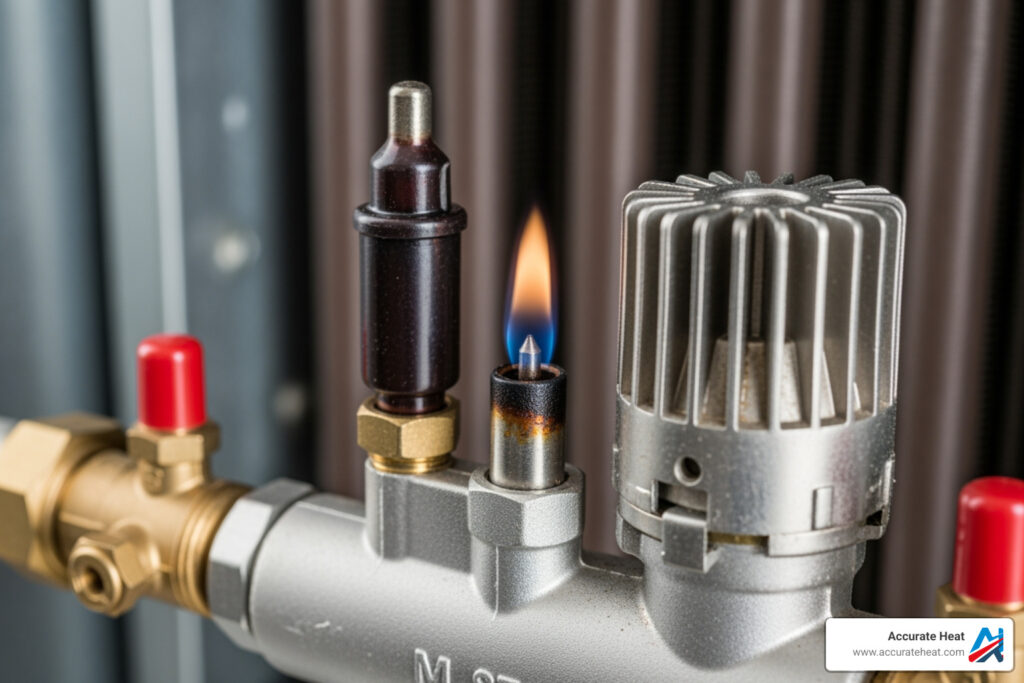
A pilot light is a small, continuously burning flame in your gas furnace that ignites the main burners when heat is needed. In older furnaces (typically pre-2010), this standing pilot light runs 24/7, accounting for up to 50% of your furnace’s total gas consumption.
When your pilot light goes out, you’ll notice these signs immediately:
- No heat coming from vents
- Cold air blowing through the house
- Furnace won’t start even when thermostat is turned up
Common causes include drafts blowing out the flame, a dirty pilot orifice restricting gas flow, or a faulty thermocouple (the safety device that detects the flame). The good news? Many pilot light issues can be fixed safely at home with basic tools.
This guide walks you through the complete furnace pilot light repair process, from safety checks to relighting steps, plus troubleshooting tips for when the flame won’t stay lit.
Understanding Your Furnace’s Pilot Light
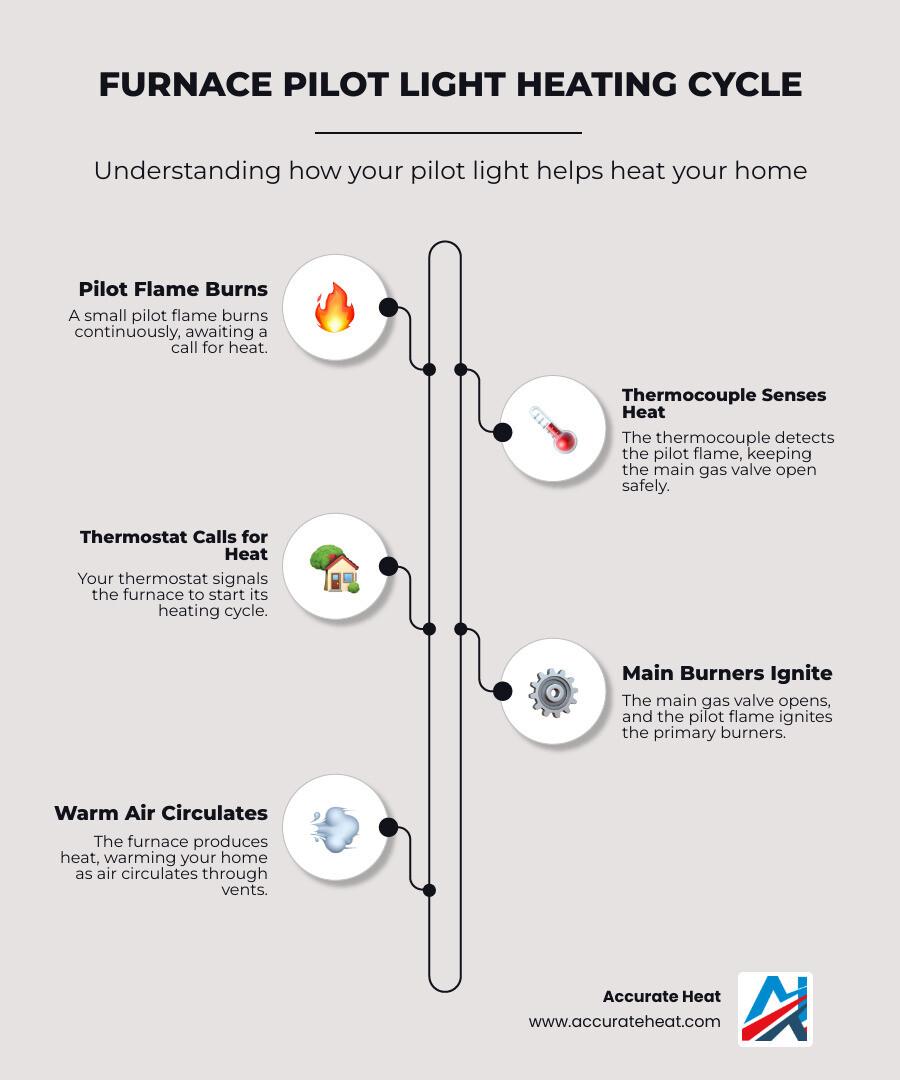
To tackle a furnace pilot light repair, it’s helpful to first understand what a pilot light is and how it works. A pilot light is essentially a small, constant gas flame that acts as the igniter for your furnace’s main burners. It’s a feature typically found in older gas HVAC systems, some of which can be 30 years old or more. If your home in Franklin, MA, or surrounding areas like Medfield or Millis, relies solely on electric power for heating, you won’t have one.
The primary function of this continuous flame is to ignite the larger gas burners when your thermostat signals a need for heat. Without a functioning pilot light, your furnace simply cannot produce warmth.
Standing Pilot vs. Electronic Ignition: A Key Difference
It’s important to differentiate between a “standing pilot” and modern “electronic ignition” systems.
- Standing Pilot: This is the traditional type we’re discussing, where a small flame burns continuously. While reliable for decades, it’s not the most efficient. Older furnaces with standing pilot lights operate at about 50-70% efficiency. The constantly burning flame can account for up to 50% of your furnace’s total gas consumption, even when the main burners aren’t running. In fact, an estimated half of a gas furnace’s energy consumption is from a pilot light that is perpetually lit. Today, only about 5% of furnaces still use standing pilot lights.
- Electronic Ignition: Most furnaces manufactured after 2010 use electronic ignition systems (like hot surface igniters or intermittent pilots). These systems only spark or heat up when there’s a call for heat, making them significantly more efficient (typically 94-98.5% AFUE, or Annual Fuel Utilization Efficiency). They eliminate the constant gas waste of a standing pilot.
Signs Your Pilot Light Is Out
When your pilot light goes out, your furnace can’t do its job. The most noticeable signs that your pilot light is out are:
- No heat from vents: Your home feels cold, and the air coming from your vents is room temperature or even chilly.
- Furnace won’t start: Even if you turn your thermostat up, the furnace doesn’t kick on, and you don’t hear the familiar sound of the main burners igniting.
- Furnace blowing cold air: The blower fan might still run, circulating cold air, but the heating element isn’t engaged.
Common Reasons Pilot Lights Go Out
Several factors can cause a pilot light to extinguish:
- Drafts: A strong gust of wind, an open window, or even a sudden internal draft from leaky ductwork can blow out the delicate flame.
- Dirty Pilot Orifice: The tiny opening where the gas flows to create the pilot flame can become clogged with dirt, dust, or debris. This restricts gas flow, leading to a weak, flickering, or extinguished flame.
- Thermocouple Issues: This is one of the most common culprits. The thermocouple is a safety device that senses the pilot flame. If it’s dirty, faulty, or improperly positioned, it can’t detect the flame, causing it to shut off the gas supply as a safety measure. We’ll dig deeper into the thermocouple’s role shortly.
- Low Gas Pressure: While less common for a single appliance, low gas pressure to your home or furnace can prevent the pilot from staying lit.
- Faulty Gas Valve: A malfunctioning gas valve can prevent gas from reaching the pilot light consistently.
Your Step-by-Step Guide to Furnace Pilot Light Repair
Before attempting any furnace pilot light repair, your safety is our top priority. Working with gas appliances requires caution. If you ever smell gas, immediately evacuate your home and call your gas company or 911 from a safe distance. Do not operate light switches or anything that could create a spark.
Here’s what you’ll need for this DIY repair:
- Your furnace owner’s manual (always a great resource!)
- A long-reach lighter or long fireplace matches
- A flashlight (optional, but helpful for visibility)
Step 1: Locate the Pilot Assembly and Turn Off Gas
First, we need to access the pilot light assembly. This is usually located near the main burners at the bottom of your furnace, often behind an access panel.
- Turn off your thermostat: Set it to its lowest setting or “Off.”
- Turn off power to the furnace: Go to your home’s electrical panel and flip the circuit breaker labeled for your furnace to “Off.” This prevents the blower fan from unexpectedly turning on.
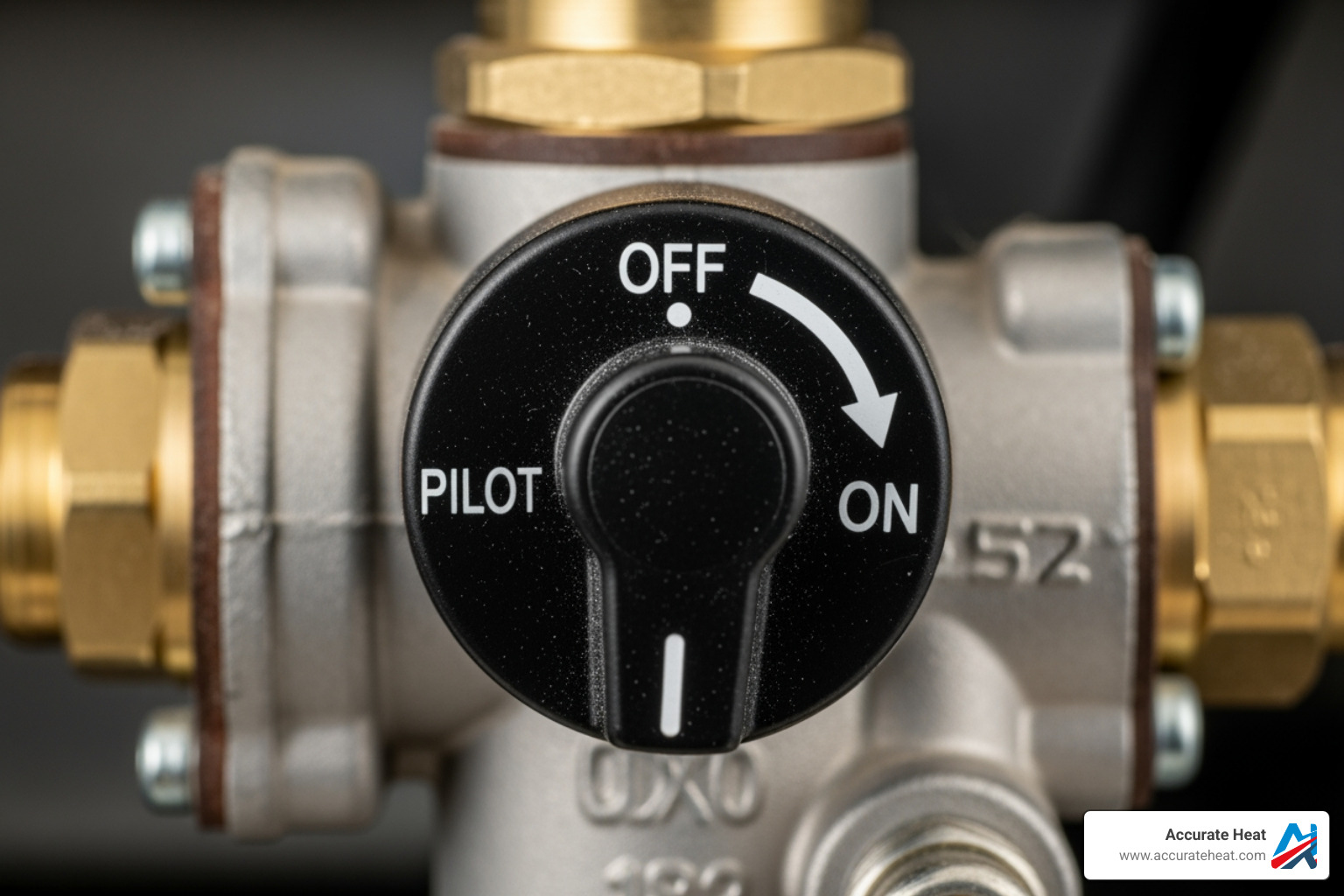
- Locate the gas control knob: This knob is typically found on the gas valve itself, usually with settings like “Pilot,” “On,” and “Off.” Follow the gas line from this valve to the pilot tube.
- Turn the gas control knob to ‘OFF’: This stops the flow of gas to the pilot and main burners.
Step 2: Wait for Gas to Dissipate
This step is crucial for safety. After turning the gas knob to “Off,” we need to allow any residual gas in the furnace chamber to dissipate.
- Wait at least 5 minutes. This ensures that any unburnt gas clears out, preventing a dangerous ignition when you relight the pilot. It also allows the thermocouple (the safety sensor) to cool down completely, resetting its safety mechanism. If you smell gas during this waiting period, do not proceed; leave your home and call for help.
Step 3: Relight the Pilot Flame
Now, we’re ready to relight the pilot.
- Turn the gas control knob to ‘PILOT’: This position allows a small amount of gas to flow to the pilot light.
- Press and hold the reset button: This button (sometimes part of the control knob itself) manually holds the gas valve open to allow gas to reach the pilot.
- Use your long-reach lighter or match: While continuing to hold the reset button, bring the flame to the pilot light’s opening. You should see the pilot flame ignite.
Step 4: Confirm the Flame and Turn the System On
Once the pilot light is lit, we need to ensure it stays lit and then restore furnace operation.
- Hold the reset button for 30-60 seconds: This is important! Keeping the button depressed allows the pilot flame to heat the thermocouple sufficiently. The thermocouple needs this heat to generate a small electrical signal, which tells the gas valve that the pilot is burning safely and it’s okay to keep the gas flowing. If you release too soon, the pilot will likely go out.
- Release the button slowly: After 30-60 seconds, gently release the reset button. The pilot flame should remain lit. If it goes out, repeat the relighting process from Step 1, ensuring you hold the button long enough.
- Turn the gas control knob to ‘ON’: Once the pilot is steadily burning, turn the knob from “Pilot” to “On.”
- Replace any access panels: Securely put back any panels you removed.
- Restore power and thermostat: Go back to your electrical panel and flip the furnace breaker back to “On.” Then, set your thermostat to your desired temperature. Your furnace should now kick on and start heating your home.
Troubleshooting: What If the Pilot Won’t Stay Lit?
It can be frustrating if you’ve followed all the steps for furnace pilot light repair, but the pilot light still won’t stay lit. This usually indicates an underlying issue beyond a simple relight. The most common culprit in this scenario is often the thermocouple.
The Role of the Thermocouple
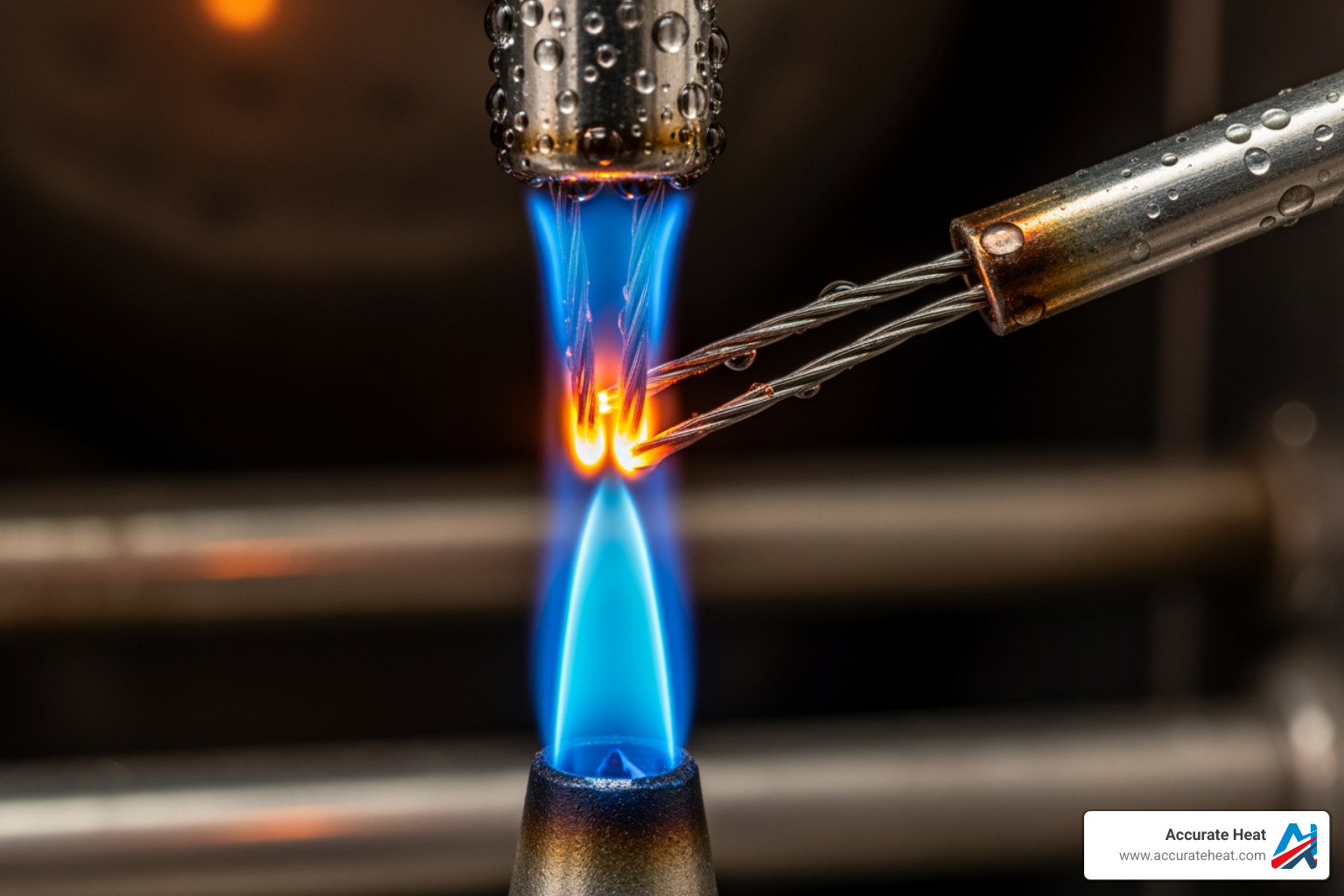
The thermocouple is a vital safety device in your furnace. Think of it as a flame bodyguard. It’s a small, rod-like sensor positioned directly in the pilot flame. When heated by the flame, it generates a tiny electrical current (around 20-30 millivolts). This current signals the gas valve to remain open, allowing gas to flow to the pilot. If the pilot flame goes out for any reason, the thermocouple quickly cools, the electrical signal drops, and the gas valve immediately shuts off the gas supply. This prevents dangerous gas leaks.
If your pilot lights but goes out as soon as you release the reset button, it’s a strong indicator that the thermocouple isn’t generating enough voltage, or is faulty.
Troubleshooting Common Furnace Pilot Light Repair Issues
Here are some common problems and what they might mean for your furnace pilot light repair:
- Dirty or Faulty Thermocouple:
- Issue: Over time, soot or carbon buildup can coat the thermocouple’s tip, preventing it from properly sensing the heat of the pilot flame. It might also be physically damaged or simply worn out.
- Troubleshooting: With the gas and power off, carefully remove the thermocouple (if accessible and you’re comfortable doing so). Gently clean the tip with a fine-grit sandpaper or steel wool to remove any buildup. Ensure it’s positioned correctly, with the pilot flame fully enveloping the top 3/8-1/2 inch of the tip. If cleaning doesn’t work, or if it’s visibly damaged, it likely needs replacement. Replacement thermocouples can cost between $100 – $250.
- Clogged Pilot Orifice:
- Issue: The tiny opening that delivers gas to the pilot flame can become blocked by dust or debris. This leads to a weak, flickering, or yellow pilot flame, which might not be strong enough to heat the thermocouple.
- Troubleshooting: With gas and power off, you can try to gently clear the pilot opening using a fine needle or a small, soft brush. You can also use compressed air, being careful not to push debris further into the line.
- Weak or Yellow Flame:
- Issue: A healthy pilot flame should be steady, strong, and blue with a small yellow tip. A weak, flickering, or predominantly yellow/orange flame often indicates insufficient gas flow or improper air mixture. This can be caused by a dirty pilot orifice (as above) or even low gas pressure.
- Troubleshooting: Address any pilot orifice cleaning. If the flame remains weak or yellow, it might signal a more complex issue with gas pressure or air intake, which typically requires professional diagnosis.
- Drafts Near the Furnace:
- Issue: Even a slight draft can blow out a pilot light. This could be from an open window, a leaky return air duct, or even a small gap in the furnace’s casing.
- Troubleshooting: Check for any drafts around your furnace. Seal any cracks or gaps in walls or ductwork with foil tape or silicone caulk. Ensure all furnace access panels are securely in place.
- Faulty Gas Valve:
- Issue: If the gas valve itself is malfunctioning, it won’t allow gas to flow properly to the pilot, or it might not stay open even with a healthy thermocouple signal.
- Troubleshooting: A faulty gas valve is a complex issue and should always be addressed by a professional HVAC technician. Replacement gas valves start around $350.
Safety, Maintenance, and When to Call a Professional
While we’ve covered many furnace pilot light repair steps you can take, some situations absolutely require professional attention to ensure your safety and the proper functioning of your heating system.
Critical Safety: The Risk of Carbon Monoxide
A malfunctioning pilot light, especially one with a weak, flickering, or yellow/orange flame, is a serious concern because it indicates incomplete combustion. This can lead to the production of carbon monoxide (CO), a colorless, odorless, and highly toxic gas.
- Yellow Flame Danger: An orange or yellow pilot light flame is not only inefficient but also produces carbon monoxide. A pilot light can generate more carbon monoxide as the system ages.
- Symptoms of Carbon Monoxide Poisoning: Exposure can cause carbon monoxide poisoning, with symptoms including headache, dizziness, nausea, and confusion. Prolonged exposure can be fatal.
- Importance of CO Detectors: Because carbon monoxide is odorless, CO detectors are your first line of defense. We recommend placing them near sleeping areas and on every level of your home. The CDC recommends using battery-powered carbon monoxide detectors and checking their batteries when you change your clocks in the spring and fall. If your carbon monoxide detector goes off, leave your home immediately and call 911.
When to Call a Pro for Furnace Pilot Light Repair
While we encourage homeowners in Franklin, MA, and surrounding areas to attempt basic furnace pilot light repair if they feel comfortable, there are clear instances when it’s time to call in the experts. Accurate Heat has over 30 years of experience serving communities like Needham, Walpole, and Canton, and we’re always here to help.
Call us if you encounter any of the following:
- Strong Gas Smell: If you ever smell gas, especially a rotten egg odor, do not attempt any repairs. Evacuate your home immediately and call your gas company or 911.
- Pilot Won’t Stay Lit After Multiple Attempts: If you’ve tried relighting the pilot several times following the instructions, and it still won’t stay lit, there’s likely a deeper mechanical issue at play, such as a faulty thermocouple, a major clog, or a gas valve problem.
- Visible Soot or Damage: Any signs of soot buildup around the pilot or burners, or visible damage to furnace components, warrant professional inspection.
- Unusual Noises: If you hear strange sounds like banging, whistling, or grinding, turn off your furnace and call a technician.
- You’re Uncomfortable: If at any point you feel uncomfortable working with your gas furnace, it’s always best to err on the side of caution and contact a qualified HVAC professional. There’s no shame in prioritizing your safety and peace of mind.
How Regular Maintenance Prevents Issues
One of the best ways to prevent the need for furnace pilot light repair is consistent, professional maintenance. Regular maintenance helps ensure your system runs safely and efficiently, catching small issues before they become major problems.
- Annual Furnace Tune-Ups: We recommend scheduling annual HVAC maintenance before the first cold snap. This is like a physical for your heating system. During a tune-up, our technicians will clean components, check for proper gas pressure and flame quality, inspect the thermocouple, and ensure all safety mechanisms are working correctly.
- Cleaning Components: Keeping the pilot assembly and burner compartment free of dust and lint is crucial for proper operation.
- Checking for Drafts: Technicians can identify and advise on sealing any drafts affecting the pilot light.
- Changing Air Filters: A dirty air filter restricts airflow, which can cause your furnace to overheat and potentially trigger safety switches that shut down the system, indirectly affecting pilot light operation. Replace or clean your furnace filter every 1–3 months during heating season, or as recommended by the manufacturer.
Modern Furnaces: The End of the Pilot Light Era
As we’ve discussed, the standing pilot light is a technology of the past, mostly found in older furnaces. Modern heating systems have largely moved away from this continuous flame in favor of more efficient and reliable ignition methods.
Electronic Ignition Systems
Today, most new furnaces use electronic ignition systems, which come in a few forms:
- Hot Surface Igniters: These are ceramic or silicon carbide heating elements that glow red-hot when there’s a call for heat, igniting the gas directly.
- Intermittent Pilots: These systems use an electric spark to light a small pilot flame only when heat is needed. Once the main burners ignite, the pilot flame extinguishes.
- Direct Spark Ignition: This system sparks directly at the main burners, eliminating the need for any pilot flame at all.
Benefits of Modern Furnaces
The shift to electronic ignition offers significant advantages for homeowners in Massachusetts:
- Higher Efficiency: Modern furnaces with electronic ignition systems typically achieve 94-98.5% AFUE. They only use fuel when actively heating, eliminating the constant gas consumption of a standing pilot light. As noted, a pilot can account for half of a gas furnace’s energy consumption.
- No Wasted Gas: Since the igniter only activates on demand, there’s no continuous gas waste, leading to lower energy bills.
- Increased Reliability: Electronic ignition systems tend to be more reliable as they aren’t susceptible to drafts or thermocouple failures that plague standing pilot lights.
- Improved Safety: By eliminating the constantly burning flame, the risk of carbon monoxide exposure from an inefficient pilot is reduced.
If you’re considering upgrading your older furnace, especially if it’s frequently requiring furnace pilot light repair, an ENERGY STAR model with electronic ignition could be a smart investment for improved efficiency and peace of mind.
Frequently Asked Questions about Furnace Pilot Lights
What does a healthy pilot flame look like?
A healthy pilot flame should be steady, strong, and blue, often with a small, sharp yellow tip at the very top. It should be cone-shaped and make only a quiet hissing sound. If your pilot flame is weak, flickering, or predominantly yellow/orange, it indicates a problem that needs attention, as a yellow flame can produce carbon monoxide.
How much does it cost to fix a pilot light?
The cost of furnace pilot light repair can vary widely depending on the underlying issue:
- DIY Cleaning: If the issue is a dirty thermocouple or pilot orifice that you can safely clean yourself, the cost is essentially free.
- Professional Thermocouple Replacement: If the thermocouple is faulty and needs to be replaced by a professional, costs typically range between $100 – $250, including parts and labor.
- Gas Valve Replacement: A faulty gas valve is a more significant repair. Professional replacement can start around $350 and go higher, depending on the furnace model and labor.
- Other Issues: More complex problems like a clogged flue pipe or issues with the heat exchanger can lead to higher repair costs, sometimes thousands of dollars.
Can a dirty air filter cause pilot light issues?
Yes, indirectly. A severely dirty air filter restricts the airflow through your furnace. This can cause the furnace to overheat, triggering a high-limit safety switch that shuts down the system to prevent damage. When the furnace shuts down unexpectedly, it can sometimes cause the pilot light to go out. Regular air filter changes are a simple yet crucial part of preventing many furnace problems.
Stay Warm and Safe with Expert Help
We hope this extensive guide empowers you to understand and confidently perform basic furnace pilot light repair in your Massachusetts home. Safety always comes first. If you ever smell gas, or if you’re uncomfortable with any step of the process, please stop and call a professional.
For persistent issues, complex problems, or if your pilot light simply won’t stay lit after multiple attempts, it’s time to bring in the experts. Accurate Heat provides reliable HVAC and plumbing services in Franklin and throughout Massachusetts, including Norfolk, Medway, Medfield, Wrentham, Bellingham, Millis, Holliston, Hopkinton, Foxboro, Newton, Waltham, Watertown, Belmont, Dedham, Charlestown, Framingham, Brighton, Needham, Norwood, Westwood, Stoughton, Sharon, Canton, Mansfield, Walpole, Quincy, Norton, Wellesley, Dover, Randolph, Winchester, Arlington, Braintree, Wayland, Sudbury, Lexington, Easton, and Weymouth. With over 30 years of experience, we offer 24/7 emergency service, ensuring expert, honest, and timely solutions for your home comfort.
For expert furnace services, explore our ultimate guide to furnace services: installation, repair, and maintenance. We’re here to keep your home warm and safe all winter long.