

What Is the 2026 Nor’easter Snowstorm?
The 2026 Nor’easter Snowstorm was a powerful coastal storm that struck the northeastern United States in late February 2026, bringing blizzard conditions, heavy snowfall, and dangerous winds from the mid-Atlantic all the way up to New England.
Here’s a quick summary of what happened:
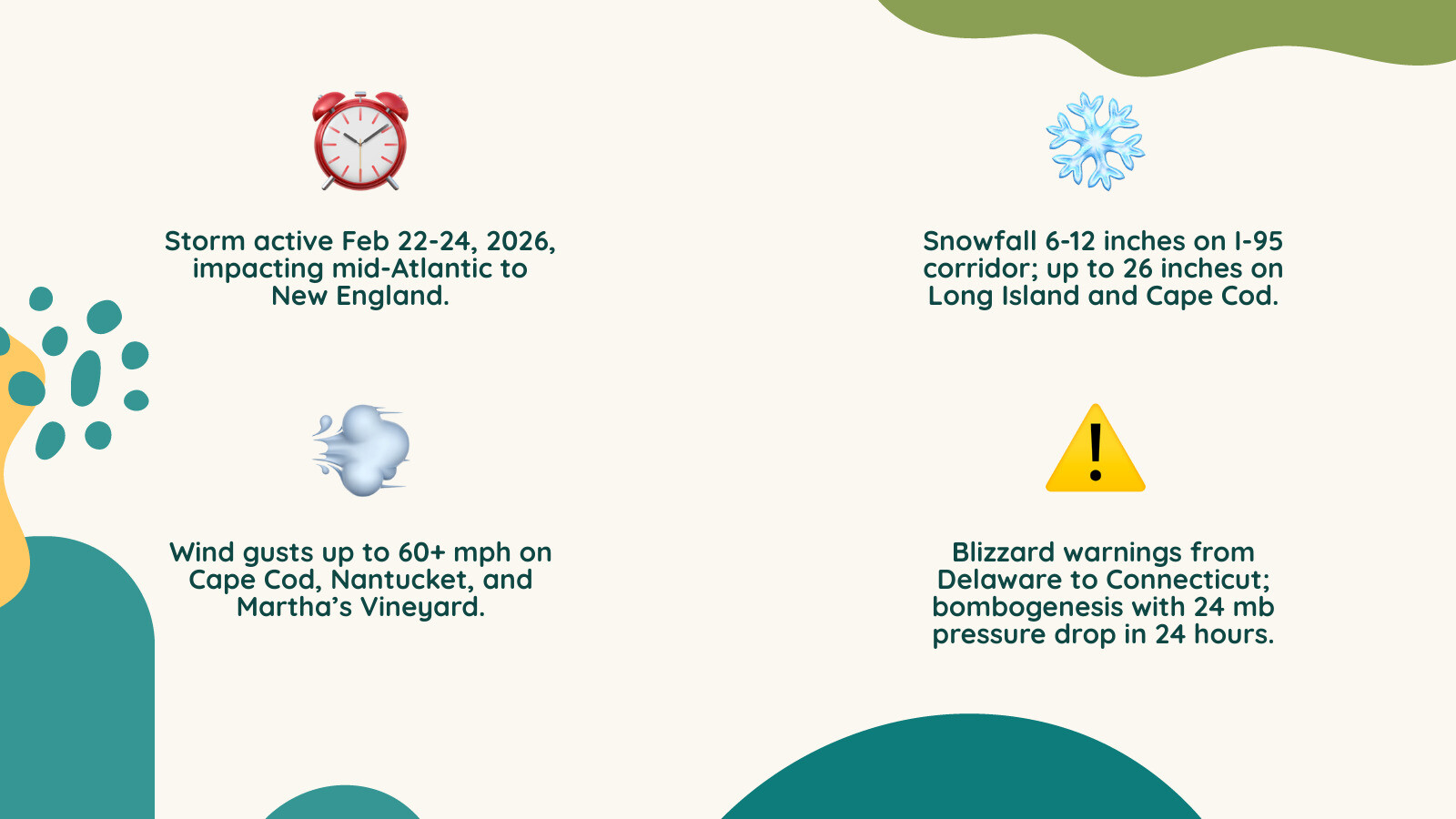
- When: Late Saturday, February 22 into Monday, February 24, 2026
- Where: Mid-Atlantic to New England — Philadelphia, New York City, Boston, Cape Cod, and surrounding areas
- Snow totals: 6-12 inches across most of the I-95 corridor; up to 26 inches possible on Long Island and Cape Cod
- Wind gusts: Regularly hitting 50 mph; over 60 mph on Cape Cod, Nantucket, and Martha’s Vineyard
- Blizzard warnings: Issued for all five NYC boroughs — the first time since 2017
- Storm type: A nor’easter with bomb cyclone (bombogenesis) potential — meaning it rapidly intensified as it moved up the coast
For Massachusetts homeowners, this storm wasn’t just a news story. It meant real risks: power outages, burst pipes, overwhelmed heating systems, and dangerous travel conditions.
This guide breaks down everything you need to know — how the storm developed, what it did, and how to protect your home if the next one hits.
Tracking the 2026 Nor’easter Snowstorm: Timeline and Impact

Predicting a “blockbuster” storm is always a bit like trying to catch lightning in a bottle—or in this case, a blizzard in a snow globe. The 2026 Nor’easter Snowstorm was a masterclass in meteorological suspense. Early in the week of February 16, 2026, forecast models were locked in a “duel.” The American GFS model was shouting about 2 to 3 feet of snow, while the European ECMWF model was whisper-quiet, suggesting only a few inches.
The storm’s energy actually started way out off the California coast. As it traveled across the country, it began to tap into moisture from the Gulf of Mexico. By the time it reached the Southeast, it was clear we were looking at a major coastal low. On February 17, the National Weather Service noted that while confidence in a storm was high, the exact track and timing remained uncertain.
The real drama began on Sunday, February 22. As the storm moved off the Mid-Atlantic coast, it underwent bombogenesis. This is a fancy way of saying the barometric pressure dropped at least 24 millibars in 24 hours, turning a standard winter storm into a “bomb cyclone.” For those of us in Massachusetts, this meant the storm gained massive strength just as it reached our doorstep.
Snowfall Totals and Wind Speeds of the 2026 Nor’easter Snowstorm
When the snow finally stopped falling on Monday, February 24, the numbers were staggering. This wasn’t just a “dusting”; it was a full-blown “blockbuster.”
- The I-95 Corridor: Areas from Philadelphia through New York City and up to Boston saw a widespread 6 to 12 inches of snow.
- The “StormMax” Zones: Long Island and Cape Cod were the hardest hit. AccuWeather’s Local StormMax™ predicted up to 26 inches, and many coastal areas saw nearly two feet of heavy, wet snow.
- Wind Speeds: This wasn’t just about the snow; it was about the air moving it. Winds gusted to 50 mph regularly across the region. On Cape Cod, Nantucket, and Martha’s Vineyard, gusts topped 60 mph.
- Visibility: Blizzard conditions created near-zero visibility. If you were outside, you couldn’t see your neighbor’s house, let alone the road.
This kind of “heart attack snow”—heavy, wet, and thick—is particularly dangerous for homeowners. It sticks to everything, including your heating system vents and outdoor units.
Affected Regions: From New York City to Boston
The 2026 Nor’easter Snowstorm took a classic path right up the I-95 corridor, impacting millions of people.
In New York City, blizzard warnings were issued for all five boroughs for the first time since 2017. The city, which had already seen its fair share of snow that season, was brought to a standstill. LaGuardia Airport was forced to close, and thousands of flights were canceled across the region.
As the storm pushed into New England, it focused its fury on coastal Massachusetts. While Boston saw significant accumulation, the coastal communities and islands faced the brunt of the wind and surge. The infrastructure damage was significant: over a million people across the Northeast lost power at the height of the storm. For many in our service areas like Franklin, Norfolk, and Medfield, this meant relying on emergency heat sources or hoping the pipes wouldn’t freeze before the lights came back on.
Comparing the February Blast to Winter Storm Fern
It’s easy to get your 2026 storms mixed up because, frankly, it was a brutal winter. Just a month earlier, from January 23–27, Winter Storm Fern tore across North America. Comparing the two helps us understand why the February Nor’easter was so unique.
| Feature | Winter Storm Fern (Jan 2026) | Feb 2026 Nor’easter |
|---|---|---|
| Meteorological Category | Category 3 “Major” | Bomb Cyclone / Nor’easter |
| Max Snowfall | 31 inches (New Mexico) | 26 inches (Long Island/Cape Cod) |
| Fatalities | 153 (North America) | 22 (Northeastern US) |
| Economic Loss | >$4 Billion | $2.5 Billion (Estimated) |
| Power Outages | >1 Million | >1 Million |
| Primary Impact | Continental (Plains to East Coast) | Coastal (Mid-Atlantic to New England) |
Winter Storm Fern was a sprawling giant that affected 230 million people across 40 states. The February Nor’easter, while more geographically concentrated, was more intense for the Northeast. It was actually the fifth weekend in a row with snow for cities like New York, pushing seasonal totals well above historical averages.
Recovery and Preparation for Future Winter Events
Recovery from a storm of this magnitude doesn’t happen overnight. In Massachusetts, governors declared a State of Emergency, and the National Guard was mobilized to help with snow removal and wellness checks. The polar vortex elongation that experts blamed for the extreme cold meant that even after the snow stopped, temperatures plummeted, making the cleanup even more treacherous.
Power restoration was the top priority. With over a million outages, utility crews from across the country descended on the Northeast. In towns like Medway and Millis, residents had to deal with blocked roads and downed lines for days.
Lessons Learned from the 2026 Nor’easter Snowstorm
If the 2026 Nor’easter Snowstorm taught us anything, it’s that your home is your castle—but only if you keep the drawbridge (and the furnace) in good working order.
- Vents are Vital: The heavy, wet snow from this storm frequently blocked high-efficiency furnace vents. When these vents are blocked, your system shuts down for safety. We saw many “no heat” calls that could have been prevented by a quick walk around the house with a shovel.
- The “Heart Attack” Snow Risk: Shoveling 20+ inches of wet snow is physically exhausting. Unfortunately, we saw reports of several fatalities related to cardiac events during cleanup.
- Power Outage Readiness: A boiler maintenance checklist is great, but you also need a plan for when the power goes out. Many homeowners in areas like Bellingham and Wrentham have since invested in standby generators or backup heating solutions.
- Professional Inspections: A heating system that works “okay” in 30-degree weather might fail completely when a Nor’easter brings 60 mph winds and sub-zero wind chills. Regular heating maintenance is the best way to ensure your system can handle the “big one.”
Conclusion: Protecting Your Home Against Severe Weather
The 2026 Nor’easter Snowstorm was a reminder of how quickly nature can disrupt our lives. At Accurate Baker Elman, we’ve spent over 30 years helping our neighbors in Franklin and across Massachusetts stay warm when the weather turns ugly.
Whether it’s emergency heating services in the middle of a blizzard or a routine tune-up to improve energy efficiency, we are here for you. We are a Mitsubishi Electric Elite Diamond Contractor, which means we bring the highest level of expertise to every home we visit.
Don’t wait for the next blizzard warning to find out if your HVAC system is up to the task. From Norfolk to Newton, and Holliston to Hopkinton, we provide 24/7 emergency service to keep your family safe and comfortable. If you’re looking to upgrade to a more resilient, efficient system, you can also find more info about Mass Save services to see how you can save money while winterizing your home.
Stay safe, stay warm, and remember: we’re just a phone call away, even when the snow is piling up!