
Why Water Leak Detection Could Save Your Home (and Your Wallet)
Water leak detection is the process of finding hidden or active leaks in your home’s plumbing — before they cause serious damage.
Here are the five most reliable methods to detect water leaks:
- Water meter test — Turn off all water, check if the meter still moves
- Visual and auditory inspection — Look for stains, warped floors, or listen for hissing sounds
- Toilet dye test — Drop food coloring in the tank; color in the bowl means a leak
- Thermal imaging and pressure testing — Professional tools that find hidden leaks behind walls
- Smart sensors and flow monitors — Devices that alert you in real time, even when you’re away
Water damage is far more common than most homeowners expect. It affects 40% of homes and is six times more common than theft and eight times more common than fire. Yet most leaks start silently — behind walls, under floors, or inside pipes you never see.
A burst pipe upstairs can cost an average of $12,500 to repair. A tiny crack in an irrigation line can waste over 6,000 gallons of water in a single month. And mold can start growing in as little as 24 hours after moisture sets in.
The good news? Most of that damage is completely preventable — if you catch the leak early enough.
Whether you’re dealing with a sudden drip or a suspicious spike in your water bill, this guide walks you through five proven methods to find leaks fast, from simple DIY checks to professional-grade detection tools.
Discover more about water leak detection:
Advanced Technologies for Water Leak Detection
As we move through 2026, the technology available to protect your home has become incredibly sophisticated. Gone are the days when you had to wait for a puddle to form in the kitchen to know something was wrong. Today, we use a combination of smart hardware and non-invasive professional tools to stop floods before they start.
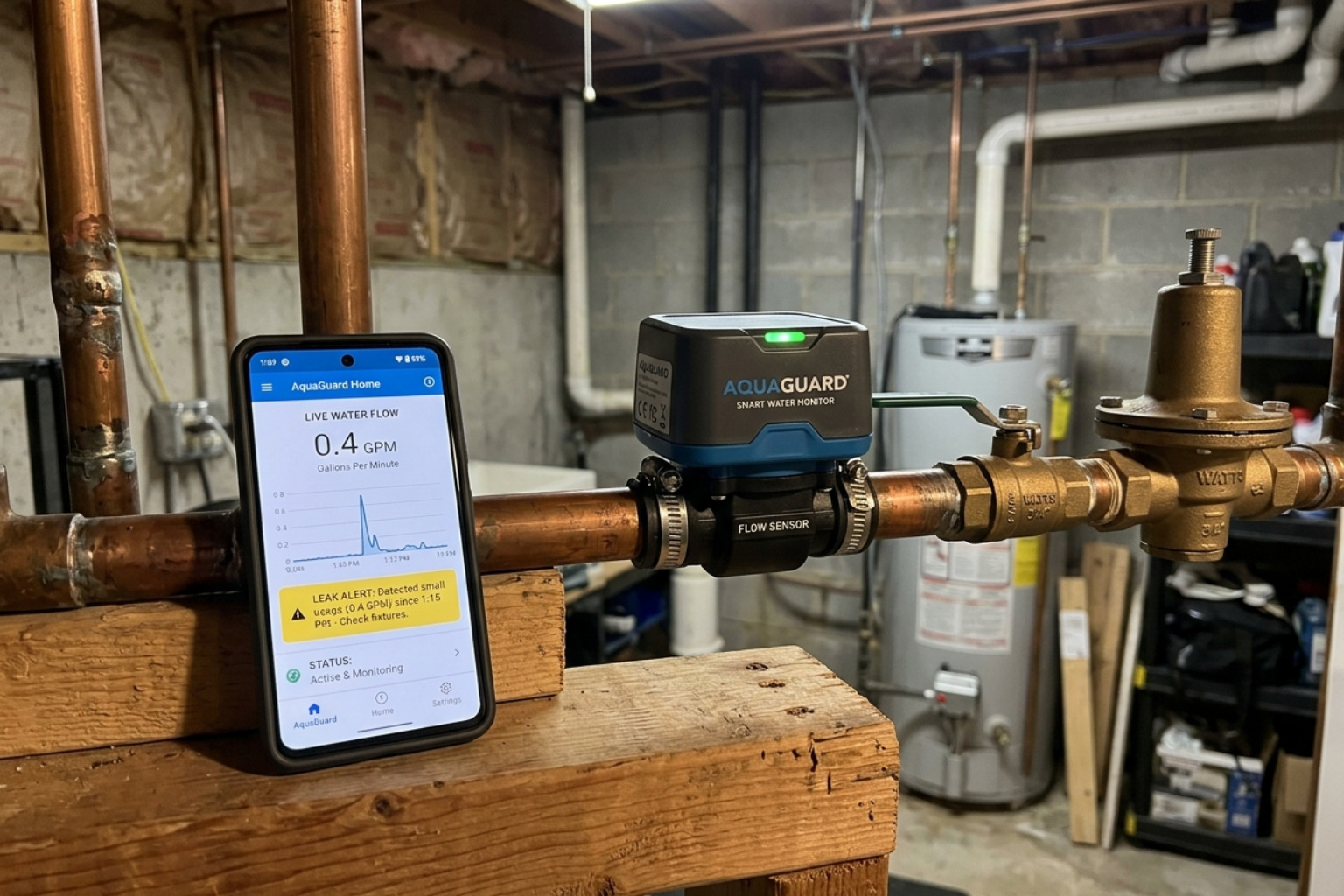
When choosing a system, you generally have two choices: spot sensors (which sit on the floor) or whole-house flow monitors (which are installed on your main water line).
| Feature | Spot Sensors (Moisture) | Whole-House Flow Monitors |
|---|---|---|
| Installation | DIY (Place on floor) | Professional (Cut into main line) |
| Detection Type | Pooling water in one spot | Irregular flow throughout home |
| Automatic Shutoff | Rarely | Yes (Closes main valve) |
| Micro-leak Sensing | No | Yes (Detects drips as small as 5ml/min) |
| Smart Integration | Yes (WiFi/App) | Yes (WiFi/App/Smart Home) |
Smart Flow Monitoring and Moisture Sensors for Water Leak Detection
Smart flow monitors are the gold standard for modern protection. These devices use AI to learn your home’s water “fingerprint.” If a pipe bursts while you’re at work, or even if a toilet flapper begins to leak silently, the system detects the abnormal flow and sends a notification to your smartphone. Many of these systems can even automatically shut off your main water valve to prevent a catastrophe.
In the first 30 days of installation, roughly 60% of homeowners are notified of a leak they didn’t even know they had. These devices are so effective that some can detect leaks as small as one drop per minute through daily “MicroLeak” tests. For those looking to dive deeper into the tech, you can read more about choosing your next digital water leak detector to see which features fit your home.
Furthermore, the US EPA WaterSense program provides excellent research on how these devices help reduce the thousands of gallons of water wasted annually per household due to undetected corrosion and irregular pressure.
Professional Acoustic Water Leak Detection
When a leak is hidden deep under a concrete slab or behind a finished wall, we turn to acoustic technology. This is a non-invasive method that uses highly sensitive microphones to “listen” for the sound of escaping water.
Water escaping from a pressurized pipe creates a specific frequency. Professional-grade acoustic tools allow us to pinpoint the exact location of a leak without tearing up your flooring or drywall unnecessarily. This technology is particularly useful for detecting subsurface leaks in metal or PVC pipes, where sound waves can travel anywhere from 100 to 1,000 feet. If you suspect a hidden problem, it’s often a sign that your pipes are pleading for professional help.
5 Guaranteed Methods to Find Hidden Leaks
You don’t always need high-tech gadgets to start your investigation. Combining DIY checks with professional services is the best way to ensure your home stays dry and your insurance premiums stay low. In fact, many insurance companies like State Farm or Nationwide offer discounts for homeowners who install approved water leak detection systems.
1. The Water Meter Test
This is the simplest way to confirm if you have a leak somewhere in your home.
- Step 1: Turn off all faucets, dishwashers, and washing machines.
- Step 2: Locate your water meter and check the “leak indicator” (usually a small triangular dial or a digital display). If it’s moving, you have a leak.
- Step 3: If there is no visible movement, record the meter reading and wait 30–60 minutes without using any water. Check the reading again. Any change indicates a hidden leak.
If you find the meter is running, you may need to look into fixing leaky pipes before the structural integrity of your home is compromised.
2. Visual and Auditory Inspections
Sometimes, your senses are the best tools you have.
- Look: Check for warped flooring, peeling paint, or water stains on ceilings. Don’t forget to look under the sink!
- Smell: Musty, earthy odors often indicate mold growth from a slow, hidden drip.
- Listen: In a quiet house, listen for the sound of running water or a faint hissing behind walls.
- The Toilet Dye Test: This is a classic. Drop a few drops of food coloring into your toilet tank. Wait 15 minutes without flushing. If color appears in the bowl, your flapper valve is leaking. This “silent” leak can waste hundreds of dollars a year. For more tips on bathroom maintenance, check out these easy fixes for your bathroom shower.
3. Thermal Imaging and Pressure Testing
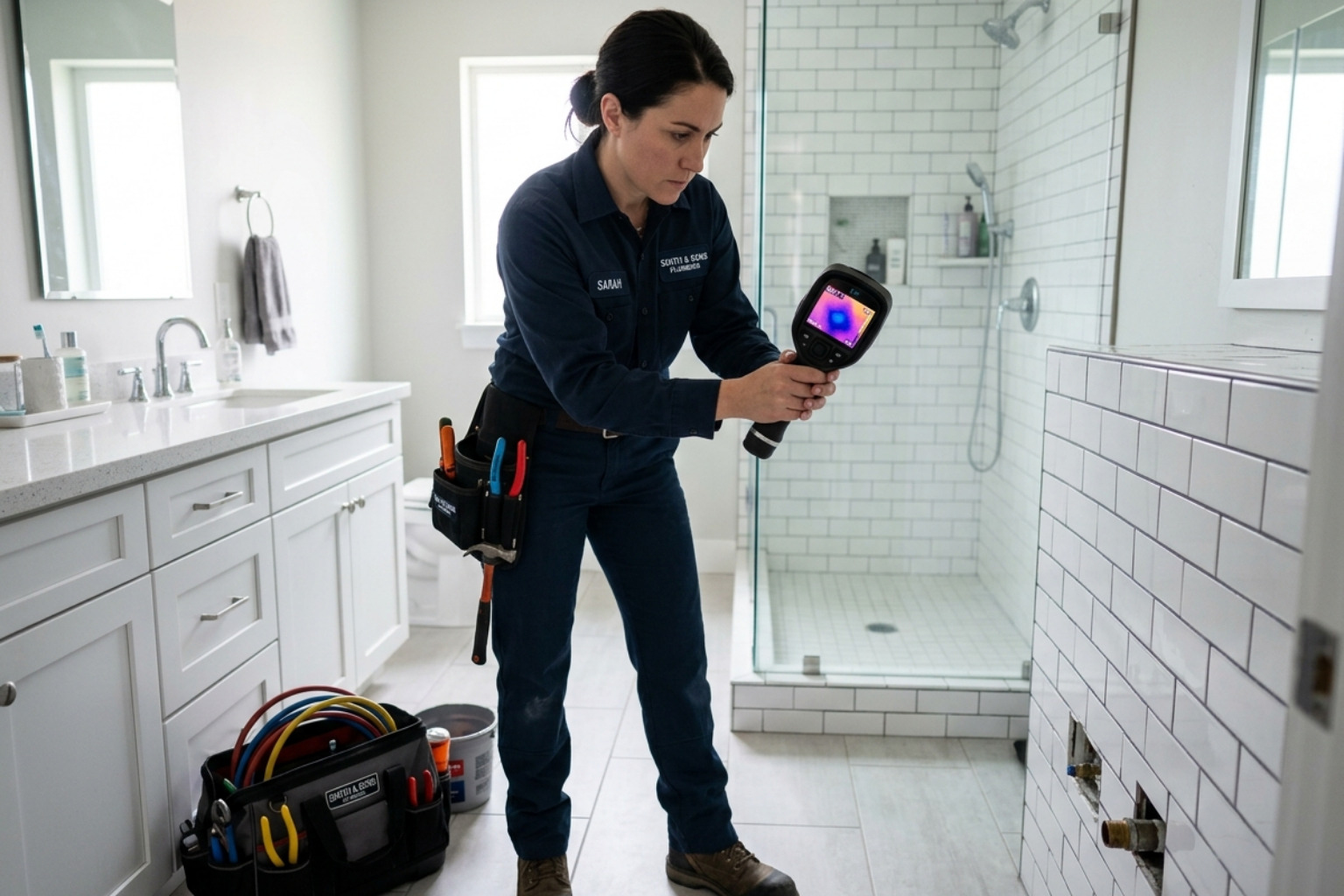
If the meter test confirms a leak but you can’t see it, we bring out the big guns. Thermal imaging cameras detect temperature differences caused by moisture. Since leaking water is usually a different temperature than the surrounding wall material, the leak appears as a “hot” or “cold” spot on the screen.
Pressure testing involves isolating sections of your plumbing and monitoring for pressure drops. This helps us narrow down exactly which line is compromised. These professional plumbing services are essential for finding “mystery” drips that DIY methods simply can’t reach.
4. Strategic Sensor Placement
If you aren’t ready for a whole-house system, battery-operated smart sensors are an affordable and effective alternative. These devices should be placed in high-risk areas where leaks are most likely to start:
- Under every sink: Kitchen, bathroom, and utility.
- Behind appliances: Washing machines, dishwashers, and refrigerators with ice makers.
- Near the water heater: Especially if it’s over 10 years old.
- Basements and crawlspaces: Near sump pumps or where the main water line enters the home.
Placement in crawlspaces is particularly important for residents in Massachusetts during the winter. These sensors can often detect freezing temperatures, giving you a “freeze alert” before your pipes actually burst. If you are worried about moisture in your lower levels, understanding the cracks in your foundation can help you decide where sensors are needed most.
5. Professional Leak Detection Services
Sometimes, the leak is outside your home, under your driveway, or deep within your irrigation system. A dime-sized crack in an outdoor pipe can waste 6,300 gallons of water a month! Professional leak detection utilizes subsurface technology to find these exterior leaks without digging up your entire yard. These specialized services are essential for finding leaks in areas like Norfolk, Medway, and Millis. Whether you need roof leak detection in Wrentham or comprehensive plumbing support in Medfield or Westwood, professional detection is the most reliable way to stop water waste.
Conclusion: Protecting Your Home in 2026
Water leaks are inevitable, but catastrophic water damage is not. By combining simple DIY habits like the water meter test with modern smart home technology, you can protect your property and your peace of mind.
At Accurate Baker Elman, we have seen how a small investment in water leak detection can save a homeowner tens of thousands of dollars in restoration costs. Whether you need a professional acoustic survey, a smart shutoff valve installation, or emergency repairs for a burst pipe, we are here to help.
We provide reliable HVAC and plumbing services throughout Massachusetts, including Franklin, Newton, Dedham, and Framingham. With over 30 years of experience and 24/7 emergency service, our team ensures your home comfort is never compromised.
Don’t wait for the puddle to appear. Stop leaks with our professional plumbing services today and keep your home dry for years to come.