
Why Homeowners Choose a Mitsubishi Electric Mini Split
A Mitsubishi Electric mini split is one of the most efficient and flexible ways to heat and cool your home — with no ductwork required.
If you’re ready to buy, here’s a quick look at the most popular Mitsubishi mini split options:
| Series | Best For | SEER2 Rating | Cold Weather Capable |
|---|---|---|---|
| GX Series | High efficiency, single zone | Up to 25.6 SEER2 | Yes, down to -13°F |
| M Series | Multi-zone whole-home comfort | Varies by configuration | Yes |
| JP Series | Budget-friendly single zone | 17 SEER | Limited |
| FS/H2i Series | Cold climates, Hyper Heat | 26.1 SEER | Yes, down to -13°F |
All Mitsubishi mini splits:
- Heat and cool using a single system
- Use inverter-driven compressors for consistent comfort
- Qualify for federal tax credits and rebates in 2025
- Come with up to a 10-year warranty when registered
For Massachusetts homeowners, the appeal is straightforward. Winters are harsh, older homes rarely have good ductwork, and energy bills climb fast. Mitsubishi mini splits are built to handle all three problems at once.
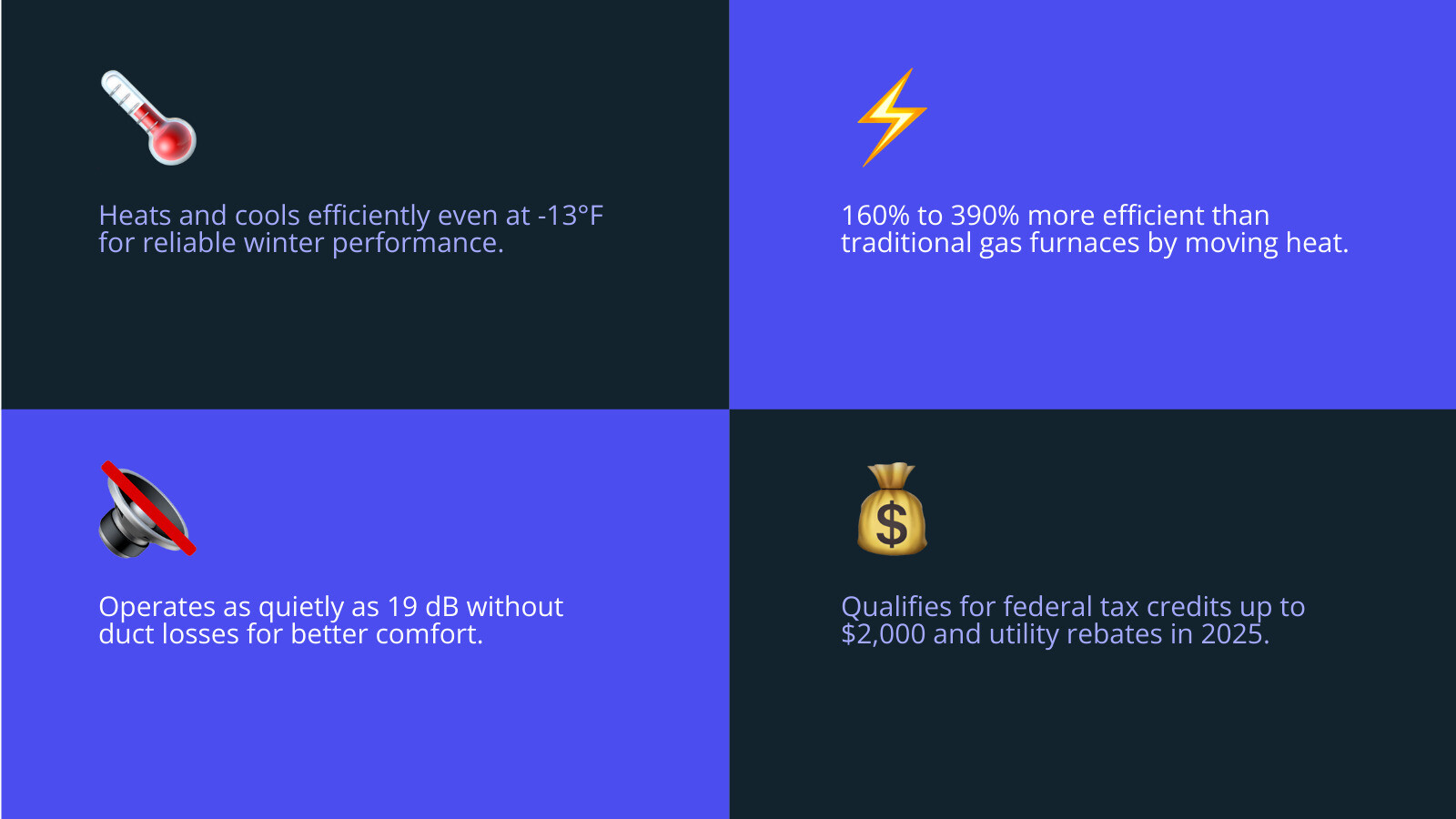
These systems move heat instead of generating it — making them between 160% and 390% more efficient than a gas furnace. They can keep your home warm even when outdoor temperatures drop to -13°F, which matters a lot in a New England winter.
And unlike central air, they don’t lose up to 30% of their efficiency through leaky ducts. Every BTU goes exactly where you need it.
This guide covers every major Mitsubishi mini split model, how to size and zone your system, what rebates are available right now, and what professional installation actually involves.
Simple Mitsubishi Electric mini split glossary:
How a Mitsubishi Electric mini split system works
At its core, a Mitsubishi Electric mini split is a heat pump that uses thin refrigerant lines to connect an outdoor condenser to one or more indoor air handlers. Unlike traditional furnaces that burn fuel to create heat, these systems use electricity to transfer existing heat from one place to another.
In the summer, the system pulls heat from inside your home and dumps it outside. In the winter, it reverses the process, extracting heat from the outdoor air (even when it feels freezing!) and pumping it into your living space. Because of this clever heat transfer method, these systems achieve a Coefficient of Performance (COP) of at least 2.6. In plain English, that means they deliver 2.6 times more energy than they consume.
Compared to electric resistance heating, a Mitsubishi Electric mini split can reduce your electricity use for heating by about 65%. It’s a massive win for both your wallet and the environment since these all-electric systems produce zero on-site emissions.
Mitsubishi Electric mini split benefits for Massachusetts homes
Living in areas like Franklin, Newton, or Norfolk means dealing with high humidity in July and bone-chilling cold in January. Traditional central air often fails to keep every room comfortable, especially in older New England homes where ductwork is either leaky or non-existent.
A Mitsubishi Electric mini split solves these local challenges by offering:
- Hyper-Heating Technology: While standard heat pumps struggle in the cold, Mitsubishi’s H2i technology maintains reliable heating in temperatures as low as -13°F.
- Dehumidification: These systems are expert at pulling moisture out of the air, leaving your home feeling crisp on those sticky August afternoons.
- Whisper-Quiet Operation: Indoor units can operate at sound levels as low as 19 decibels — that is literally quieter than rustling leaves.
- Versatility: They are the perfect solution for finished basements, sunrooms, or garage conversions where extending bulky ductwork would be a nightmare.
Mitsubishi Electric mini split Models, Types, Efficiency, and Buying Factors
Choosing the right Mitsubishi Electric mini split involves more than just picking a brand; you need to match the unit style to your room’s layout and your family’s comfort goals.
Indoor unit styles and the best fit for each room
One of the biggest perks of going ductless is that you aren’t stuck with one-size-fits-all vents. You can mix and match indoor unit styles based on the room:
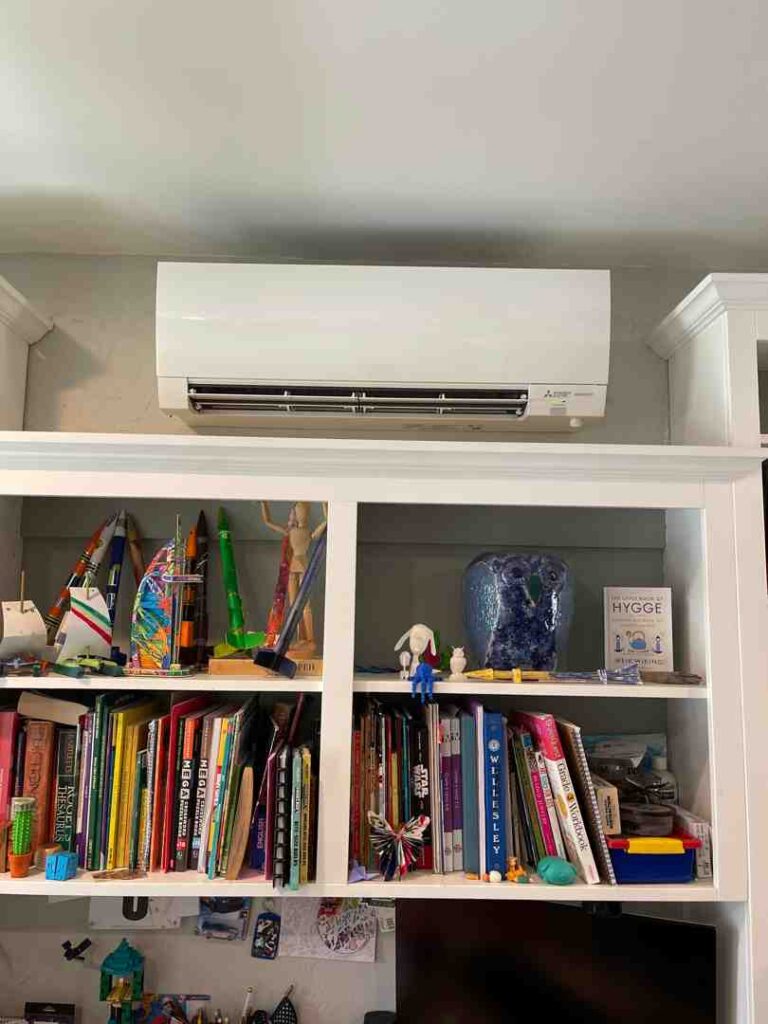
- Wall-Mounted Units: The most popular and cost-effective option. They sit high on the wall and provide excellent airflow for bedrooms and living areas.
- Ceiling Cassettes: These sit flush with your ceiling, showing only a sleek grille. They are perfect for a minimalist look and offer four-way airflow to eliminate hot or cold spots.
- Concealed Ducted Units: If you want the benefits of a mini split but prefer hidden vents, these units can be tucked away in a closet or attic.
- Floor-Mounted Units: Great for attic spaces with low walls or as a replacement for old radiators.
For a deeper dive into these options, check out our page on Ductless Mini Split AC Systems.
Single-zone vs multi-zone Mitsubishi Electric mini split systems
The choice between single-zone and multi-zone depends on whether you’re fixing one “problem room” or upgrading your entire home.
| Feature | Single-Zone System | Multi-Zone System |
|---|---|---|
| Coverage | One specific room or area | Up to 8 different rooms |
| Outdoor Units | One condenser per indoor unit | One condenser for all indoor units |
| Control | One thermostat | Independent control for every room |
| Best For | Additions, garages, or offices | Whole-home retrofits |
Multi-zone systems often use a “branch box” to manage refrigerant flow, allowing you to set the bedroom to 68°F for sleeping while keeping the home office at 72°F. This targeted cooling is far more efficient than cooling the whole house just to be comfortable in one spot.
Popular series, SEER2 ratings, and cold-weather performance
Efficiency is measured by SEER2 (for cooling) and HSPF2 (for heating). Higher numbers mean more savings.
- GX Series: A powerhouse of efficiency. The 12,000 BTU model achieves a staggering 25.6 SEER2 rating, while the 24,000 BTU version hits 21.5 SEER2.
- FS Series (H2i): This is the gold standard for Massachusetts. The 12,000 BTU 26.1 SEER Wall Mounted Mitsubishi Mini-Split H2i Hyper Heat is designed specifically to handle extreme winters.
- JP Series: A reliable 115V option with a 17 SEER rating, ideal for smaller rooms or budget-conscious projects.
Many newer models, like the GX series, are now transitioning to R454B, a low-GWP refrigerant that is much more eco-friendly than older types. You can find more technical details on the Mitsubishi Electric Trane Heating and Air Conditioning website.
2025 rebates, tax credits, and total cost considerations
While the initial investment for a Mitsubishi Electric mini split is higher than a window unit, the incentives available in 2025 make it much more affordable:
- Federal Tax Credit: Under the Inflation Reduction Act, you can qualify for a tax credit of up to $2,000 for high-efficiency heat pumps installed by December 31, 2025.
- Federal Rebates: Some households may be eligible for up to $8,000 in rebates depending on income levels and local state programs.
- Local Utility Rebates: Many Massachusetts utility providers offer significant “instant rebates” for switching from oil or gas to a high-efficiency heat pump.
When planning your budget, the “total cost” includes the outdoor unit, indoor air handlers, line sets, a dedicated electrical circuit, and professional labor. To learn more about the financial side, see our Heat AC Services Franklin MA Heat Pumps page.
Installation, Warranty, Maintenance, and the Best Next Step
Professional installation requirements and must-have accessories
Installing a Mitsubishi Electric mini split is not a DIY project. To ensure the system lasts 20+ years and maintains its warranty, you need a licensed HVAC professional.
A proper installation includes:
- Load Calculation: We perform a “Manual J” calculation to ensure the unit is sized perfectly for your room’s square footage and insulation.
- Electrical Work: Most systems require a dedicated 208-230V circuit and a weather-proof disconnect box outside.
- Accessories: You’ll need a level condenser pad (or wall bracket), a condensate pump (if gravity drainage isn’t possible), and “line-hide” to keep the exterior refrigerant lines looking neat.
Hiring the right team is crucial. Check out our Tips for Hiring a Ductless Heat Installer or see why we are the preferred Mini Split System Heat Pump Installers in Franklin MA.

Warranty coverage, maintenance schedule, and when to schedule service
Mitsubishi offers some of the best protection in the industry. While a standard warranty might cover parts for 5 years and the compressor for 7, registering your system online often bumps that to a 10-year parts and compressor warranty. As a Mitsubishi Electric Elite Diamond Contractor, we can often provide even better coverage and peace of mind.
To keep your system running at peak efficiency:
- Clean the Filters: Most units have washable filters. Check them every few months to ensure maximum airflow.
- Annual Service: Once a year, have a pro clean the coils, check refrigerant levels, and clear the condensate drains.
- Reference the Manual: You can find specific details in the Mitsubishi Mr.Slim MSZ-GE09NA User Manual.
For more DIY tips, see Mini Split Maintenance Made Easy.
Find the right Mitsubishi Electric mini split for your home
At Accurate Baker Elman, we’ve spent over 30 years helping homeowners across Massachusetts — from Waltham and Watertown to Foxboro and Franklin — find the perfect comfort solutions.
Choosing a Mitsubishi Electric mini split is an investment in your home’s value and your daily comfort. Whether you want to finally cool that upstairs bedroom or slash your heating bills this winter, we are here to help you navigate the models, rebates, and installation process.
Ready to upgrade your home comfort?
- Explore our Ductless Mini Split AC Systems
- Learn more about our ac installation services
- Contact us today for a professional consultation and see why your neighbors trust the Elite Diamond Contractor team!