Why Your Ductless Mini-Split Deserves Regular Attention
Ductless mini split maintenance is the key to keeping your system running efficiently, quietly, and reliably for years to come. Here’s what you need to know:
Quick Answer: Essential Maintenance Tasks
- Monthly: Clean or vacuum air filters (every 4-6 weeks)
- Seasonally: Clear debris around outdoor unit, wipe down indoor unit exterior
- Twice Yearly: Schedule professional service before heating and cooling seasons
- As Needed: Check for obstructions, unusual sounds, or water leaks
If you invested in a ductless mini-split for its energy efficiency and comfort, you already made a smart choice. These systems offer incredible benefits—no ductwork required, zone-by-zone control, and lower energy bills. But here’s the thing: they need regular care to deliver on those promises.
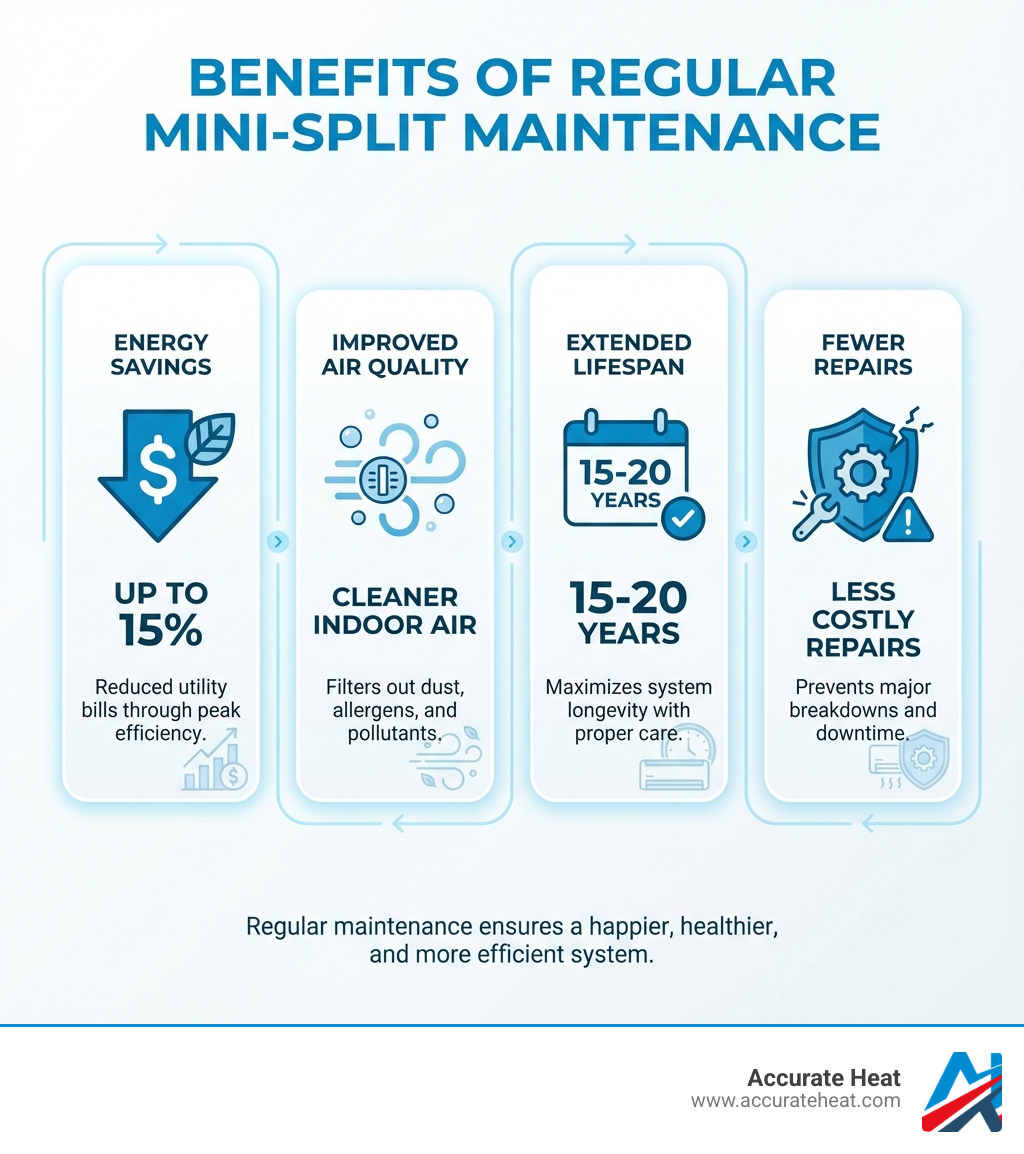
The good news? Ductless systems are actually low maintenance compared to traditional HVAC systems. A little routine attention goes a long way. Research shows that regular maintenance can save you up to 15% on energy bills, extend your system’s lifespan by years, and catch small issues before they become expensive repairs.
Not cleaning your air filter can force your system to work overtime, driving up energy costs and potentially causing component failure. On the flip side, simple tasks like filter cleaning and keeping your outdoor unit clear take just minutes but make a huge difference.
Whether you’re trying to stay warm during a harsh Massachusetts winter or cool during a humid summer, your mini-split works hard for you. This guide breaks down exactly what you can do yourself and when to call in the pros.
Why Regular Maintenance is Non-Negotiable
Just like a well-oiled machine (or a well-loved car!), your ductless mini-split system thrives on consistent care. Neglecting it is like asking your car to run a marathon without an oil change – it might make it for a while, but it’s bound to break down prematurely and guzzle gas along the way. For us, here in Massachusetts, where our HVAC systems work hard year-round, skipping maintenance isn’t just a risk; it’s a guarantee for trouble down the line.
So, what are the real benefits of committing to a regular ductless mini split maintenance schedule?
- Improved Energy Efficiency & Lower Utility Bills: This is often the first thing homeowners notice. When your system is clean and running optimally, it doesn’t have to strain to do its job. Dirty air filters and coils make your unit work harder, consuming more electricity and driving up your energy bills. Routine maintenance keeps your system running efficiently, saving you up to 15% on your energy bills. This extra care helps you avoid rising energy bills that can occur when a system is overworked due to clogged filters or dirty coils.
- Extended Equipment Lifespan: A ductless mini-split is a significant investment. We want to help you protect that investment! Regular maintenance helps ensure your ductless unit stays quiet and efficient all year round and for many years to come. It contributes significantly to the longevity and efficiency of your system by reducing wear and tear on components, which in turn increases the life span of your equipment.
- Better Indoor Air Quality: Your mini-split isn’t just about temperature; it’s also about the air you breathe. Regular cleaning, especially of air filters and coils, prevents the buildup of dust, allergens, and mold. This helps maintain performance levels and air quality, making your home a healthier and more comfortable place. For more tips on keeping your home’s air fresh, check out our guide on 5 Easy Tips for Better Indoor Air Quality in MA Homes.
- Prevention of Costly Breakdowns: Routine mini-split maintenance is a cost-effective way to help prevent larger issues from developing and might even save you from major repairs that typically cost much more. Catching minor issues during routine service maintenance before they cause bigger, more costly breakdowns is a huge advantage. It reduces the chances of component failure as your system ages.
- Quieter Operation: Ever noticed your mini-split getting a bit noisy? Often, it’s a sign of a clogged filter or a component struggling. Regular cleaning and inspection can keep your unit humming along quietly, just as it should.
- Consistent Heating and Cooling Performance: A well-maintained system provides reliable and consistent comfort. You won’t have to worry about inconsistent temperatures, or your system struggling to keep up during the hottest days of summer or the coldest nights of winter in Franklin, MA.
Routine care and cleaning are cost-effective ways to ensure your mini-split performs reliably and efficiently for years to come. There are a few preventative maintenance measures and cleaning tips you can take to maximize the efficiency of your ductless system. For more ways to optimize your heat pump’s performance, read our article on Maximizing Efficiency: Top Tips for Heat Pump Maintenance.
Your Essential Ductless Mini Split Maintenance Checklist
While professional tune-ups are vital, there’s plenty you can do between visits to keep your system happy. Think of it as a partnership: you handle the daily upkeep, and we handle the heavy lifting. This section outlines tasks homeowners can perform to keep their system running smoothly between professional visits.

Essential DIY Ductless Mini Split Maintenance: The Indoor Unit
Your indoor units (or air handlers) are the quiet workhorses distributing conditioned air throughout your home in towns like Medway, Wrentham, or Mansfield, MA. Keeping them clean is crucial for both air quality and efficiency.
Here’s what you can do:
- Cleaning Air Filters: This is arguably the most important DIY task. We’ll dive into the specifics below, but regularly cleaning or replacing these filters is paramount. Not cleaning your air filter can overwork your system and cause your energy bills to increase.
- Wiping Down the Unit Exterior: Over time, dust and grime can accumulate on the sleek surface of your indoor unit. Simply wipe down the outside of the unit with a damp cloth periodically. For stubborn stains, a mild, neutral detergent can be used. Don’t forget to clean the exterior of each vent too!
- Checking for Unobstructed Airflow: Ensure adequate space around the unit. Large furniture, bookcases, or even décor items should be kept at least four feet away from the unit to allow for proper airflow. This prevents the system from struggling and accumulating dust.
- Inspecting the Condensate Drain Line (Visual Check): While clearing clogs is a professional task, you can visually inspect the drain pan for standing water or signs of overflow. If you notice water leaking from your indoor unit, a clogged drain line is a common culprit.
- Single-Zone vs. Multi-Zone Care: If you have a multi-zone system with several indoor units connected to one outdoor unit, each indoor unit needs this individual attention. If you have a single-zone system, the principles remain the same, just with fewer units to check!
Best Practices for Cleaning Your Mini-Split’s Air Filters
Cleaning your air filters is the simplest, most effective DIY maintenance task you can perform. It directly impacts your system’s efficiency, air quality, and longevity.
Here’s our step-by-step guide:
- Turn Off Power: Always, always, always turn off your ductless mini-split system at the wall switch or the circuit breaker before performing any maintenance. Safety first!
- Access Filters: Carefully open the front panel of your indoor unit. You’ll typically find two mesh filters inside. Gently unclip or slide them out.
- Gentle Vacuuming: For light dust, you can often use a soft brush attachment on your vacuum cleaner to remove accumulated debris from the filters.
- Washing with Lukewarm Water: If the filters are particularly dirty or greasy, wash them with lukewarm water. A mild, neutral detergent can be used for stubborn grime. Avoid harsh chemicals or abrasive cleaners.
- Air Drying Completely: This step is crucial! Allow the filters to air dry completely in the shade before re-installing them. Reinstalling damp filters can introduce moisture and potentially mold into your system.
- Re-installation: Once bone dry, carefully slide or clip the filters back into their original position, ensuring they are securely fitted.
- Restore Power: Close the front panel, turn the power back on, and enjoy cleaner air!
Recommended Frequency: We recommend you clean your primary mesh filters monthly, or every 4-6 weeks. If your home in Framingham, MA, or Newton, MA, is particularly dusty, you have pets, or residents with allergies, you may need to clean them more frequently. Always Find your model’s specific instructions in the owner’s manual for precise guidance.
Maintaining the Outdoor Unit (Condenser)
The outdoor unit, or condenser, is where your system releases heat during cooling or absorbs it during heating. It’s tough, but it still needs your love and attention, especially with the varied weather we experience across Massachusetts.

Here’s how to keep it in top shape:
- Turn Off Power at the Breaker: Just like with the indoor unit, always cut power to the entire system at the circuit breaker before you touch the outdoor unit. This is critical for your safety.
- Clearing Debris: The outdoor unit can become a magnet for leaves, grass clippings, dirt, and other yard debris. Periodically inspect the outdoor unit – remove accumulated leaves and debris, and trim any nearby shrubs. Keeping the area around the unit clear of weeds, grass, and other obstructions is essential.
- Maintaining 2-Foot Clearance: Ensure there’s at least a two-foot clearance around all sides of the outdoor unit. This allows for proper airflow, which is vital for efficient operation.
- Gently Hosing Down Coils: With the power off, you can gently spray dust and dirt off the condenser coil with a garden hose. Crucially, avoid using a high-pressure nozzle or pressure washer, as this can damage the delicate metal fins. Ensure the outdoor unit is completely dry before turning the system back on.
- Checking for Level Placement: Over time, especially with ground-mounted units, the outdoor unit can shift and become unlevel. While you shouldn’t try to re-level it yourself, a quick visual check can identify if it’s leaning. An unlevel unit can affect drainage and compressor function.
- Winter Protection Tips (for our MA climate!): During the harsh Massachusetts winters, the outdoor unit needs some special consideration.
- Gently remove any snow and ice you find accumulated on or around the unit.
- If your unit is mounted close to the ground, consider mounting the condenser unit above grade to prevent it from being buried in snow and ice.
- While some suggest covering the unit, many manufacturers advise against fully enclosing it, as it can trap moisture and attract pests. Instead, placing a protective plywood cover on top can shield it from falling ice and heavy snow accumulation, while still allowing for ventilation.
When to Call the Professionals
While DIY tasks are important, some aspects of ductless mini split maintenance require the expertise of a trained professional. Think of it as the difference between changing your car’s oil and rebuilding its engine – some jobs are best left to the specialists. For comprehensive care and peace of mind, we recommend regular professional service. Our AC Maintenance Services are designed to keep your system running flawlessly.
How Often Should a Ductless System Be Professionally Serviced?
This is one of the most common questions we get! Ductless systems should be maintained twice a year to maintain system efficiency and indoor air quality. Your mini split system operates just like a traditional system — except without the ductwork. So, you should have your ductless system serviced by a professional twice a year — once before heating season and again before cooling season.
This means:
- Pre-Cooling Season (Spring): Before the summer heat hits Bellingham or Walpole, MA, a professional tune-up ensures your system is ready to deliver efficient, cool air.
- Pre-Heating Season (Fall): As temperatures drop and we prepare for winter in Franklin or Mendon, MA, a check-up ensures your mini-split is prepared to provide reliable heat without a hitch.
The deeper cleaning and inspections should take place at minimum once per year, but twice a year is often recommended, especially for systems that both heat and cool. To make this easy, consider enrolling in a maintenance plan like our Comfort Plus Membership. It ensures your system gets the regular attention it needs, often includes priority service, and can save you money in the long run.
The Role of Professional Ductless Mini Split Maintenance
When our certified HVAC technicians arrive for a professional tune-up, they go far beyond what a homeowner can safely or effectively do. This in-depth inspection and cleaning is crucial for optimal performance and longevity.
During a professional ductless mini split maintenance service, we typically perform a comprehensive checklist that includes:
- Checking Refrigerant Levels: Refrigerant is the lifeblood of your system. Low levels can indicate a leak, which reduces efficiency and can damage the compressor. We’ll check levels, look for leaks, and address any issues.
- Inspecting Electrical Connections: Loose or corroded electrical connections can lead to safety hazards, inefficient operation, or even system failure. We’ll tighten and inspect all wiring.
- Cleaning and Inspecting Coils Thoroughly: While you can hose down the outdoor coil, professionals use specialized cleaners and techniques to deeply clean both the indoor evaporator coil and the outdoor condenser coil. This includes applying a fungistat or bacteriostat to coils to discourage buildup. Clean coils are critical for efficient heat transfer.
- Testing Capacitors and Motors: Run capacitors are vital electrical components. We test them for proper function and check for signs of bulges or leaks, which indicate failure. We also inspect and lubricate fan motors as needed.
- Flushing the Condensate Drain Line: This line carries away condensation from the indoor unit. It can easily become clogged with algae or debris, leading to water leaks. We’ll flush and clear it to ensure proper drainage.
- Balancing Fan Wheels: The blower fan in the indoor unit needs to be balanced for quiet, efficient operation. An unbalanced fan can cause vibrations and noise.
- Verifying Thermostat Operation: We’ll check that your thermostat or remote control is accurately reading temperatures and communicating correctly with your system.
- Inspecting and Cleaning the Condensate Drain and Pan: Annually, we’ll ensure these are clear and functioning correctly to prevent water damage.
- Checking the Condition and Mounting of the Condensing Unit: We’ll ensure the outdoor unit is securely mounted and free from any structural issues.
These detailed checks allow us to catch minor issues before they cause bigger, more costly breakdowns, ultimately increasing the life span of your equipment and helping you avoid rising energy bills.
Warning Signs That Your Mini-Split Needs a Technician
Your ductless mini-split system is pretty good at telling you when something’s not right – you just need to know how to listen! If you notice any of these signs, it’s time to call a professional HVAC technician, especially if you’re in Blackstone, Millis, or any of our service areas in Massachusetts. Don’t let a small problem become a major repair.
Here are the key indicators:
- Unusual Noises (Grinding, Rattling, Hissing): While mini-splits are generally quiet, new or louder noises are a red flag. Grinding can indicate a failing motor, rattling might be a loose component, and a hissing sound could point to a refrigerant leak.
- Foul Odors (Musty, Burning): A musty smell often indicates mold or mildew buildup in the indoor unit or drain line. A burning smell could signal an electrical issue, which is a serious concern requiring immediate attention.
- Water Leakage: If you see water dripping from your indoor unit, it’s usually a sign of a clogged condensate drain line or an issue with the condensate pump. This can lead to water damage and mold growth.
- Ice Buildup on Coils: Ice on the indoor or outdoor coils is never a good sign. It often indicates low refrigerant, restricted airflow (dirty filter), or a mechanical problem.
- Poor Heating or Cooling: If your system isn’t keeping the room at the desired temperature, even after you’ve checked the filters and thermostat, it’s struggling. This could be due to refrigerant issues, a failing compressor, or other component problems.
- Short Cycling: This means your unit turns on and off frequently without completing a full heating or cooling cycle. It’s inefficient, wastes energy, and puts undue stress on the system, leading to premature wear.
- Increased Energy Bills: If your utility bills are suddenly higher than usual without a change in usage, your mini-split might be losing efficiency, often due to a lack of maintenance.
Many of these issues are discussed in our article on Common Summer AC Problems, but they apply equally to ductless mini-splits. Ignoring these warning signs can lead to more extensive and expensive repairs down the road.
Frequently Asked Questions about Mini-Split Care
We understand that homeowners often have questions about their ductless mini-split systems. Here are some of the most common ones we hear:
Are mini-splits high maintenance?
No, mini-splits are generally not high maintenance compared to traditional ducted HVAC systems. They are considered relatively low maintenance. The main difference is that, unlike central air, each indoor unit needs individual attention. However, the tasks are simple. Homeowners can easily handle routine tasks like cleaning or replacing air filters and ensuring the outdoor unit is clear of debris.
The key is consistency. While they don’t require constant tinkering, they do need consistent, simple care like regular filter cleaning and biannual professional tune-ups to maintain peak performance and efficiency. This routine care ensures they operate reliably and efficiently for years to come without becoming a burden.
What happens if I don’t clean my mini-split filter?
Not cleaning your mini-split filter is one of the most common and detrimental mistakes homeowners make. Here’s what happens:
- Restricted Airflow: The filter becomes clogged with dust, dirt, and allergens, severely restricting the amount of air that can pass through it.
- System Overwork: To compensate for the restricted airflow, your system has to work much harder to pull air in and push conditioned air out. This puts undue strain on the fan motor and other components.
- Reduced Efficiency & Higher Energy Bills: An overworked system consumes significantly more electricity. Not cleaning your air filter can overwork your system and cause your energy bills to increase, sometimes by as much as 15%.
- Poor Cooling/Heating Performance: With reduced airflow, your system can’t effectively distribute conditioned air, leading to uneven temperatures and a less comfortable home.
- Evaporator Coil Freeze-Up: The restricted airflow can cause the indoor evaporator coil to get too cold and freeze over. This can lead to water leaks from the indoor unit and, if left unaddressed, can seriously damage the compressor.
- Shortened System Lifespan: The constant strain from operating with a dirty filter will accelerate wear and tear on components, leading to premature breakdowns and a shortened overall lifespan for your mini-split.
- Poor Indoor Air Quality: A clogged filter can no longer effectively trap airborne particles, meaning dust, allergens, and even mold spores can circulate more freely in your indoor air.
In short, a dirty filter is a direct path to inefficiency, discomfort, higher costs, and potential system failure.
Can I clean the inside of my mini-split myself?
Homeowners can certainly perform basic cleaning tasks for their mini-split systems. These include:
- Wiping down the exterior casing of the indoor unit.
- Cleaning the air filters (as detailed above).
- Clearing debris from around the outdoor unit.
However, when it comes to the “inside” of your mini-split – specifically components like the blower wheel, fan, and evaporator coils (beyond a superficial wipe on visible parts) – we strongly recommend leaving this to a trained professional.
Here’s why:
- Sensitive Components: The internal components are delicate and can be easily damaged if not handled correctly. The evaporator coils have thin fins that bend easily, and the blower wheel can become unbalanced if not cleaned properly.
- Specialized Tools and Cleaners: Professionals use specific tools, such as coil cleaners, steam cleaners, and specialized brushes, to thoroughly clean these internal parts without causing damage. They may also apply fungistats or bacteriostats.
- Access and Disassembly: Reaching the blower wheel and the back of the evaporator coil often requires partial disassembly of the indoor unit. This should only be done by someone with the necessary training to ensure proper reassembly and avoid damaging electrical connections.
- Safety: There are electrical components inside, even when the power is off. It’s safer to have a professional handle these areas.
While some online guides might suggest DIY deep cleaning methods, our expert opinion, backed by manufacturers, is that end-users should never clean internal parts of the unit; this must be done by a qualified professional. Attempting to clean these sensitive areas yourself could void your warranty, cause damage, and lead to costly repairs.
Keep Your System Running Like New
We’ve covered a lot of ground today, from the compelling benefits of regular upkeep to a detailed checklist for both DIY and professional ductless mini split maintenance. The takeaway is clear: proactive maintenance is not just a chore; it’s an investment in your home comfort, your wallet, and the longevity of your system.
By consistently cleaning your air filters, keeping your outdoor unit clear, and scheduling those essential biannual professional tune-ups, you’re ensuring your ductless mini-split operates at peak efficiency year after year. This collaborative approach – your diligent DIY care combined with our expert service – is the best way to keep your system humming along happily, efficiently, and quietly through every Massachusetts season.
For expert service and peace of mind in Franklin, Foxborough, Medway, and throughout our Massachusetts service areas, trust a certified Mitsubishi Electric Elite Diamond Contractor like Accurate Heat. With over 30 years of experience, we’re dedicated to providing honest, timely, and expert solutions for your home comfort needs.