
Why Ductless HVAC Maintenance Matters for Your Home
Ductless HVAC maintenance is the regular care your mini-split system needs to keep running efficiently and reliably. Here’s what you need to know:
Quick Answer: Essential Ductless Maintenance Tasks
| Task Type | What to Do | How Often |
|---|---|---|
| DIY Filter Cleaning | Remove, rinse, and dry filters | Every 2-4 weeks |
| Wipe Indoor Unit | Clean exterior with damp cloth | Monthly |
| Clear Outdoor Unit | Remove debris, trim vegetation | Monthly |
| Professional Service | Full system inspection and cleaning | Once or twice yearly |
When you invested in a ductless mini-split system for your Massachusetts home, you likely chose it for its energy efficiency, flexibility, and reliability. But here’s the truth: even the best system needs regular attention to keep delivering those benefits.
Think of it this way—your ductless system works hard year-round, switching from air conditioning in summer to heating during harsh New England winters. Without proper care, dust accumulates in filters, coils get dirty, and small issues can snowball into expensive repairs.
The good news? Most maintenance is straightforward. Simple monthly tasks take just minutes, and scheduling professional service once or twice a year can save you up to 15% on energy bills while preventing costly breakdowns when you need your system most.
This guide breaks down exactly what you need to do to keep your ductless system running at peak performance—from quick DIY tasks you can handle yourself to the professional maintenance that protects your investment.
Why Regular Maintenance is a Must for Your Ductless System
Imagine buying a brand-new car and never changing the oil. Sounds a bit crazy, right? Your ductless HVAC system is no different! Just like your car, it’s a sophisticated piece of machinery that needs consistent care to perform its best. For homeowners across Franklin, Medway, and the greater Massachusetts area, understanding the “why” behind ductless HVAC maintenance is just as important as knowing the “how.”
Energy Savings and Lower Utility Bills
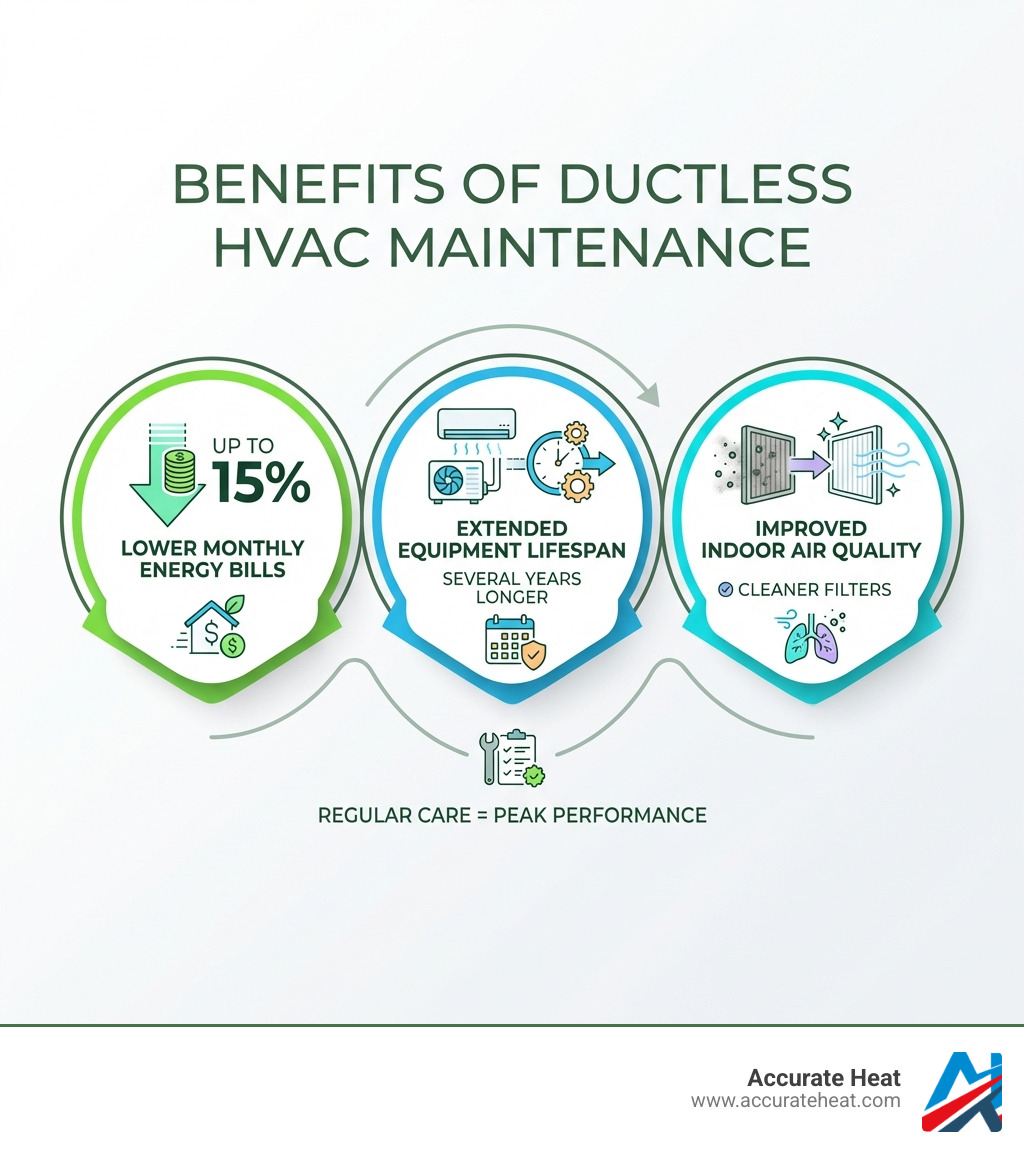
One of the most compelling reasons to keep up with your ductless system’s maintenance is the significant impact it has on your wallet. Routine maintenance isn’t just about preventing breakdowns; it’s about optimizing performance. When your system is clean and running smoothly, it doesn’t have to work as hard to heat or cool your home. This directly translates into lower energy consumption. In fact, according to the U.S. Department of Energy, routine maintenance can save you a remarkable up to 15% on your energy bills. That’s a noticeable difference, especially during those peak heating and cooling months in New England!
Extended Equipment Lifespan
A ductless mini-split system is a significant investment in your home comfort. Naturally, you want it to last as long as possible. Neglecting ductless HVAC maintenance can dramatically shorten your system’s lifespan. Dirt, dust, and debris accumulate over time, forcing components to overwork, which leads to premature wear and tear. Regular care ensures that all parts are functioning optimally, extending the serviceable life of your equipment for many years, providing you with consistent comfort season after season.
Improved Indoor Air Quality
We often focus on temperature, but the quality of the air we breathe indoors is just as vital. Your ductless system plays a crucial role in circulating air throughout your home. Without proper maintenance, especially clean filters, your system can become a haven for dust, allergens, and even mold. This can significantly diminish your Indoor Air Quality, potentially leading to discomfort or even health issues for your family. Regular cleaning and professional checks ensure that your system is circulating clean, fresh air, contributing to a healthier living environment.
Preventing Costly Repairs and System Failure
This is where maintenance truly shines as a preventative measure. Skipping ductless HVAC maintenance is like rolling the dice with your home comfort. Minor issues, if left unaddressed, can quickly escalate into major, expensive repairs. A clogged drain line, for instance, might seem small, but it can lead to water damage or even system shutdown. A professional technician can spot these budding problems during a routine visit, allowing for early intervention before they turn into full-blown crises. As we always say, a little proactive care goes a long way in avoiding unexpected breakdowns and costly emergency service calls. It’s an investment that pays for itself by ensuring your system operates efficiently and reliably when you need it most. For more insights into the broader benefits, check out our guide on the Benefits of Regular HVAC Maintenance.
Your Comprehensive Ductless HVAC Maintenance Checklist
Keeping your ductless system in peak condition involves a combination of simple tasks you can do yourself and more in-depth services best handled by a professional. Think of it as a team effort to ensure your home in Franklin, Bellingham, or Walpole stays comfortable all year long.
Here’s a quick overview of what falls into each category:
| Task Type | What to Do | How Often | Why it Matters |
|---|---|---|---|
| DIY – Filters | Clean/Replace Air Filters | Every 2-4 weeks (high use) / Monthly | Ensures optimal airflow, prevents dust buildup. |
| DIY – Indoor Unit | Wipe Down Exterior & Vents | Monthly / Every 2-6 months | Keeps unit clean, prevents dust accumulation. |
| DIY – Outdoor Unit | Clear Debris, Maintain Clearance | Monthly | Prevents obstructions, ensures proper heat exchange. |
| Professional – System Check | Full System Inspection & Tune-up | Annually / Bi-annually | Identifies issues, optimizes performance, extends life. |
| Professional – Refrigerant | Check Refrigerant Levels & Leaks | Annually / Bi-annually | Essential for efficient heating/cooling, prevents damage. |
| Professional – Coils | Deep Clean Evaporator & Condenser Coils | Annually / Bi-annually | Restores efficiency, prevents mold/bacteria growth. |
| Professional – Drain Line | Inspect & Clear Condensate Drain | Annually / Bi-annually | Prevents water leaks and potential water damage. |
| Professional – Electrical | Inspect Electrical Connections & Components | Annually / Bi-annually | Ensures safety, prevents electrical failures. |
Essential DIY ductless HVAC maintenance tasks
We believe in empowering homeowners to take an active role in their home comfort. Many crucial ductless HVAC maintenance tasks are surprisingly simple and can be performed with minimal tools and effort. Regular DIY care not only saves you money but also helps you stay attuned to your system’s performance, allowing you to catch potential issues early.
Tools You’ll Need:
- Soft cloth or damp rag
- Small vacuum with a brush attachment
- Garden hose (for outdoor unit)
- Mild, non-abrasive cleaner (optional, for exterior)
1. Turn Off Power First!
Safety is always our top priority. Before you touch any part of your ductless system for maintenance, always ensure the power is completely turned off at the breaker. This prevents accidental startups and protects you from electrical hazards.
2. Cleaning Filters: Your First Line of Defense
This is arguably the most important DIY task for your ductless system. The filters are responsible for trapping dust, pollen, and other airborne particles, preventing them from entering your home and clogging the internal components of your unit.
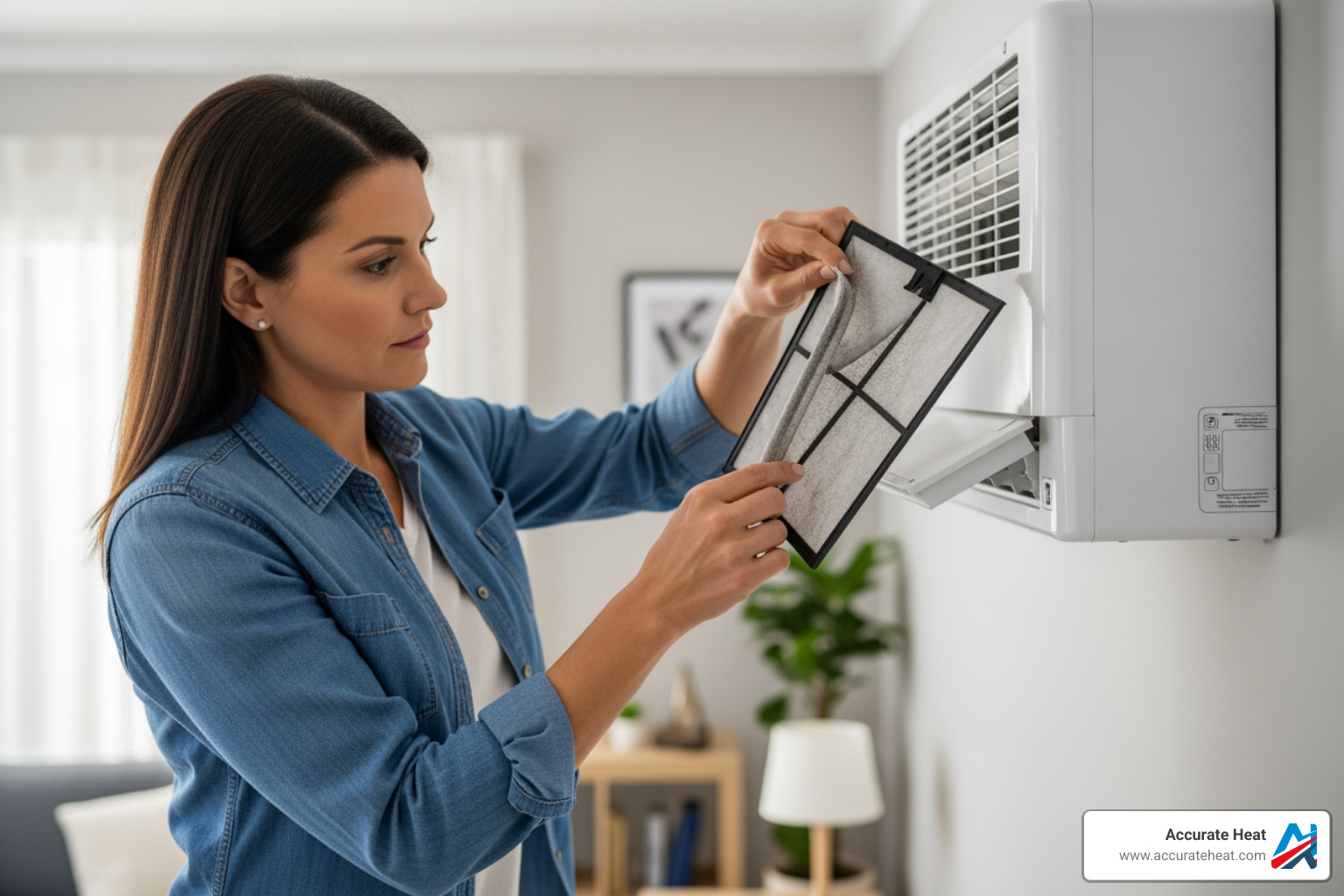
- How to Clean Filters: Most ductless mini-splits have reusable mesh filters. Gently open the front panel of your indoor unit (refer to your owner’s manual for specific instructions). Carefully remove the filters. You can clean them using a light vacuum cleaner to remove loose dust. For a deeper clean, rinse them under lukewarm water. If they’re particularly dirty, a mild soap solution can be used. Ensure they are completely dry before placing them back into the unit. Re-install the cleaned filters carefully in their original position, close the cabinet door, and then restore power.
- Filter Cleaning Frequency: This is a hot topic, and different sources recommend slightly different intervals. We generally advise cleaning your filters every 2 to 4 weeks, especially during high-use seasons (like summer and winter in Franklin, MA) or if you have pets, allergies, or live in a dusty environment. Some sources suggest every 4-6 weeks, but more frequent cleaning is always better for optimal performance and indoor air quality. If your filters are disposable, replace them after approximately 400 hours of use.
3. Wiping Down the Indoor Unit
Over time, dust can settle on the exterior surfaces and vents of your indoor unit. This isn’t just an aesthetic issue; accumulated dust can impede airflow and eventually get drawn into the system. Periodically, (we recommend monthly or every 2-6 months) use a soft, damp cloth to gently wipe down the outside of the unit, including the vents. If needed, a gentle chemical cleaner can be used, but always avoid harsh abrasives.
4. Cleaning the Outdoor Condenser Unit
Your outdoor unit is a workhorse, and it’s exposed to the elements. Keeping it clear of obstructions is vital for its efficiency.
- Clearing Debris: Monthly, take a walk around your outdoor unit. Remove any leaves, grass clippings, dirt, or other debris that may have accumulated around its base or on the fins. We recommend keeping at least 18 inches of clearance around the unit, and ideally four feet of surrounding space for optimal operation. Trim back any nearby shrubs, bushes, or tree branches that could impede airflow or fall into the unit.
- Cleaning Coils: If the condenser coils appear dirty, you can gently clean them with a garden hose. Crucially, avoid using a high-pressure nozzle, as this can bend the delicate fins. Ensure the power is off before cleaning and allow the unit to thoroughly dry before turning it back on.
These simple, regular tasks go a long way in keeping your ductless HVAC maintenance on track and your system running efficiently.
When to Call a Pro for Ductless HVAC Maintenance
While DIY tasks are essential, some aspects of ductless HVAC maintenance require the specialized knowledge, tools, and experience of a professional technician. Think of it as the difference between changing your car’s oil and rebuilding its engine – both are necessary, but one definitely needs an expert!

Annual or Semi-Annual Professional Service:
For comprehensive care, we at Accurate Heat recommend scheduling professional ductless HVAC maintenance at least once a year. For systems that work hard year-round, handling both heating and cooling in Massachusetts’ diverse climate, a semi-annual check-up (once before the heating season and once before the cooling season) is even better. This biannual approach ensures your system is perfectly tuned for optimal performance when you need it most.
What to Expect During a Professional Maintenance Appointment:
When our expert technicians from Accurate Heat visit your home in Franklin, Mendon, or any of our service areas, they perform a thorough, multi-point inspection and tune-up. This goes far beyond what a homeowner can safely or effectively do. Here’s what our professionals typically include:
- Checking Refrigerant Levels and Leaks: Refrigerant is the lifeblood of your system, transferring heat. Low levels can drastically reduce efficiency and indicate a leak. Our technicians will verify refrigerant temperatures and check for any potential leaks, repairing them as needed.
- Deep Cleaning Coils (Evaporator and Condenser): While you can rinse the outdoor coil, professionals use specialized cleaners and techniques to thoroughly clean both the indoor evaporator coil and the outdoor condenser coil. This removes stubborn grime, mold, and bacteria that can hinder heat exchange and airflow. We may even apply a fungistat or bacteriostat to indoor coils to prevent future buildup.
- Inspecting and Clearing Drain Lines and Pans: The condensate drain line can become clogged with algae and debris, leading to water leaks. Our technicians will inspect and clear these lines, and clean and treat the drain pan annually to prevent bacteria or mold growth.
- Checking Electrical Connections and Components: Loose or corroded electrical connections can be a safety hazard and lead to system malfunctions. Our team will inspect all wiring, tighten connections, and check components like run capacitors, voltages, and amp draws to ensure everything is operating safely and efficiently.
- Verifying Thermostat Operation: We’ll ensure your thermostat is calibrated correctly and communicating effectively with your ductless units, ensuring accurate temperature control.
- Inspecting Blower Motor and Fan Wheel: The blower wheel should be pulled and cleaned at least once a year. We’ll inspect the blower motor and fan wheel for proper operation and balance, as an unbalanced fan can cause noise and inefficiency.
- Inspecting Air Quality Components: If your system has additional air quality filters or components, we’ll inspect and clean or replace them as needed.
- Overall System Performance Check: Our technicians will run your system through its cycles, observing its operation, air temperatures, and overall performance to identify any underlying issues.
Entrusting these critical tasks to a professional not only ensures your system runs at peak efficiency but also helps identify potential problems before they become costly breakdowns. For comprehensive heat pump services, including detailed maintenance, repair, and installation, explore our Heat Pump Services Demystified Installation Repair and Maintenance guide.
Common Troubleshooting Tips for Your Ductless HVAC
Even with diligent ductless HVAC maintenance, sometimes your system might throw you a curveball. Before you panic and call for emergency service, there are a few common issues you can troubleshoot yourself. We want you to feel confident addressing minor hiccups in your home comfort system.
Here are some frequent problems and what you can do:
1. Poor Cooling or Heating
- Check Thermostat Settings: It sounds simple, but often the issue is just an incorrect setting. Ensure your remote control or wall thermostat is set to the desired mode (cool/heat) and temperature. Make sure it’s not set to “fan only.”
- Inspect Filters: Clogged filters are a primary culprit for reduced airflow and poor performance. If your system isn’t keeping the room warm or cold enough, check and clean your filters as described in the DIY section.
- Look for Ice on Coils: If you see ice forming on the indoor or outdoor coils, it usually indicates a more significant problem like low refrigerant, a dirty coil, or restricted airflow. This requires professional attention, but recognizing it is the first step.
- Clear Outdoor Unit Debris: Ensure the outdoor unit is free from obstructions. A pile of leaves or overgrown bushes can restrict airflow, making the unit work harder and perform poorly.
2. Water Leaks from the Indoor Unit
- Clear the Condensate Drain Line: The most common cause of water leaks is a clogged condensate drain line. This line carries condensation away from the indoor unit. If it’s blocked, water can back up and overflow. You can often clear minor clogs using a wet/dry vacuum at the end of the drain line (usually outside).
- Ensure the Unit is Level: If your unit was not installed perfectly level, water might not drain properly. While not a DIY fix, it’s something to note for a professional.
3. Strange Noises
- Inspect for Loose Parts or Debris: Unusual noises like rattling, banging, or grinding can indicate a loose part or debris caught in the fan. Turn off the power and carefully inspect the indoor and outdoor units for anything obvious that might be causing the noise.
- Screeching: A screeching sound often points to a worn-out fan motor bearing, which requires professional repair.
- Gurgling/Hissing: These sounds might indicate issues with refrigerant flow, which definitely warrants a professional inspection.
4. Foul Odors
- Clean Filters: Dirty filters can harbor bacteria and mold, leading to unpleasant smells. A thorough filter cleaning is often the first step.
- Check for Mold in the Unit: If odors persist, mold might have grown on the evaporator coil or in the drain pan. This requires a deeper cleaning, often best handled by a professional with specialized coil cleaners and treatments.
While these tips can help you address some issues, complex problems, especially those involving refrigerant or electrical components, should always be left to a certified HVAC technician. For any persistent issues or if you’re unsure, don’t hesitate to contact us for reliable HVAC Services in Franklin, MA.
Frequently Asked Questions about Ductless Maintenance
We hear a lot of great questions from homeowners in towns like Franklin, Millis, and Wrentham about their ductless systems. Here are some of the most common ones we encounter, along with our expert answers to help you keep your system running smoothly.
How often should I clean my ductless mini-split filters?
This is one of the most frequently asked questions, and for good reason! The filters are your system’s first line of defense against dust and debris. We generally recommend cleaning your ductless mini-split filters every 2 to 4 weeks.
Why the range? Several factors influence how often your filters need attention:
- High-Use Seasons: During the peak cooling of summer or heating of winter in Massachusetts, your system works harder, moving more air, and thus collecting more particles.
- Homes with Pets: Fur and dander can quickly clog filters, necessitating more frequent cleaning.
- Dust and Allergies: If you live in a particularly dusty area, are renovating, or if household members suffer from allergies, cleaning every 2 weeks can significantly improve indoor air quality and system efficiency.
Some manufacturers or general advice might suggest every 4-6 weeks, but in our experience, more frequent cleaning, especially in active homes, is always beneficial. For disposable filters, plan to replace them after approximately 400 hours of use. Regular filter cleaning is a simple yet powerful way to maintain efficient airflow and contribute to better 5 Easy Tips for Better Indoor Air Quality in MA Homes.
How often does a ductless system need professional service?
While DIY tasks are important, professional service is the cornerstone of effective ductless HVAC maintenance. For optimal performance and longevity, we recommend professional maintenance at least once a year.
However, because ductless units function as both heaters and air conditioners, working year-round, many experts (including us!) suggest semi-annual professional service. This means:
- One appointment before the heating season (typically late fall) to prepare your system for the cold New England winter.
- Another appointment before the cooling season (typically late spring) to get it ready for summer’s heat and humidity.
This biannual approach ensures that all components are inspected, cleaned, and tuned for the specific demands of each season, maximizing efficiency and preventing unexpected issues. Think of it as preparing your system for its two biggest challenges of the year. Scheduling regular professional tune-ups aligns with manufacturer recommendations and is essential for the health of your system. Learn more about the critical nature of these services in our article: Why Regular Maintenance of Your HVAC System Is Essential.
How much does it cost to service a mini-split?
The cost of professional ductless HVAC maintenance can vary, but it’s an investment that reliably pays off in the long run. Typically, professional mini-split servicing costs anywhere between $150 and $500.
Several factors can influence this price:
- Number of Indoor Units: A multi-zone system with several indoor units will naturally cost more to service than a single-zone unit.
- Complexity of Service: A basic tune-up might be on the lower end, while a more comprehensive service that includes deep coil cleaning, drain line flushing, and detailed electrical checks could be higher.
- Location and Provider: Costs can vary slightly by region, and different service providers in Massachusetts might have different pricing structures.
While $150-$500 might seem like an expense, consider it an investment. This cost is often significantly less than the price of major repairs or replacing a system prematurely due to neglect. Regular maintenance helps prevent unexpected breakdowns and can save you money on higher energy bills caused by an inefficient system. It’s often more cost-effective to address minor problems early than to wait until they require significant repairs or replacements. For tips on how to get the most out of your heat pump, refer to our guide on Maximizing Efficiency Top Tips for Heat Pump Maintenance.
Keep Your Comfort System in Top Shape
Your ductless HVAC system is a vital component of your home’s comfort, providing efficient heating and cooling throughout the year, especially in our Massachusetts climate. Just like any valuable asset, it thrives on consistent care. By understanding and implementing both the straightforward DIY tasks and the critical professional services discussed in this guide, you’re not just performing ductless HVAC maintenance—you’re actively protecting your investment.
Proactive care ensures year-round comfort, keeps your energy bills in check, and significantly extends the lifespan of your system. Don’t wait for a problem to arise before thinking about maintenance. Accept a preventative approach, and your ductless system will reward you with reliable, efficient performance for years to come.
For expert, reliable ductless system service in the Franklin, MA area, and surrounding towns like Mansfield, Foxborough, and Bellingham, trust the Mitsubishi Electric Elite Diamond Contractors at Accurate Heat. With over 30 years of experience, we offer expert, honest, and timely solutions for all your home comfort needs.
Ready to ensure your ductless system is in top shape? Contact us for all your HVAC Services today!