What Is a Mass Save Heat Pump — and How Much Can You Save?
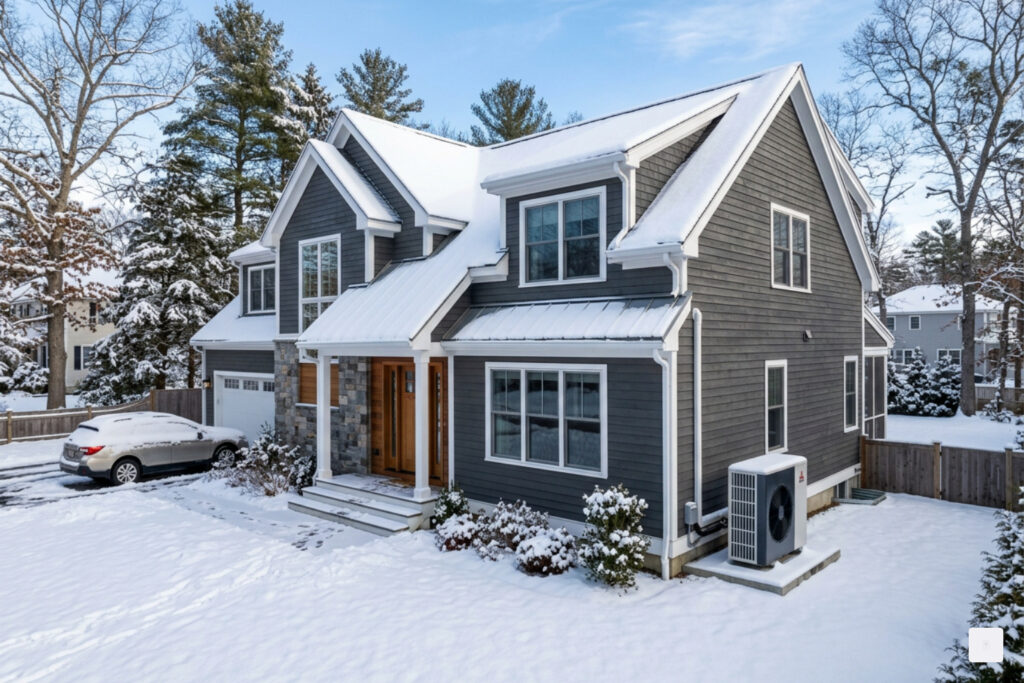
A Mass Save heat pump is one of the most cost-effective home upgrades available to Massachusetts homeowners right now. Through the Mass Save program, you can receive substantial rebates that significantly reduce the upfront cost of switching to a modern, energy-efficient heat pump system.
Quick answer for Massachusetts homeowners:
| Heat Pump Type | Standard Rebate | Income-Enhanced Rebate |
|---|---|---|
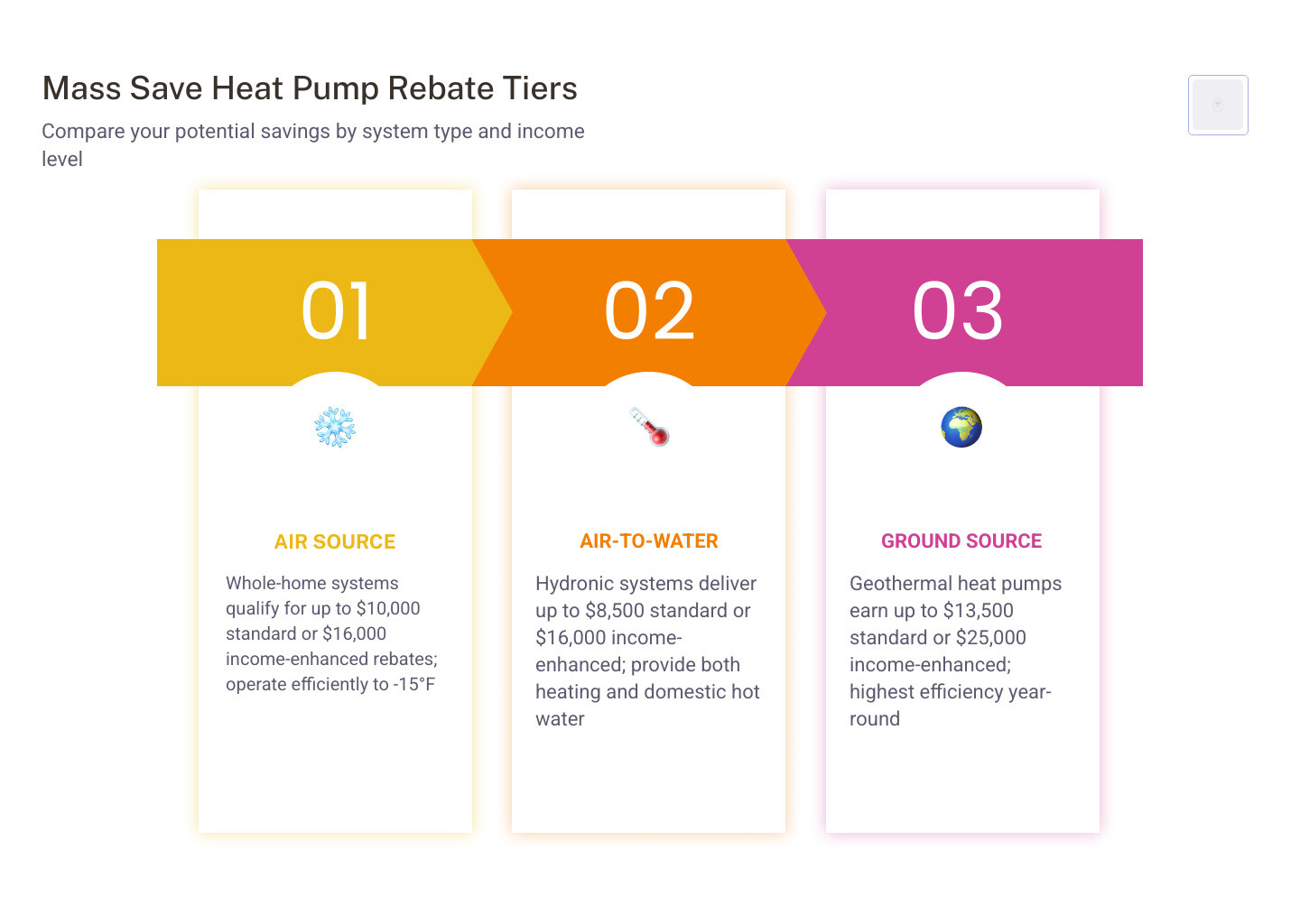
| Air Source (whole-home) | Up to $10,000 | Up to $16,000 |
| Air-to-Water | Up to $8,500 | Up to $16,000 |
| Ground Source (geothermal) | Up to $13,500 | Up to $25,000 |
| 0% HEAT Loan | Up to $25,000 | Up to $25,000 |
The key things to know up front:
- Mass Save is funded by a small surcharge on every Massachusetts electric and gas bill — it is not a federal program, and it is not a tax credit
- Rebates are available to residential customers of Eversource, National Grid, Unitil, Berkshire Gas, Cape Light Compact, and Liberty Utilities
- You must use a contractor from the Mass Save Heat Pump Installer Network (HPIN) to qualify
- A no-cost Home Energy Assessment is typically the first step
Today’s cold-climate heat pumps are a genuinely impressive technology. They can operate efficiently at outdoor temperatures as low as -15°F, and they are 2 to 3 times more efficient than a conventional boiler or furnace. Some models reach up to 400% efficiency, meaning they deliver four units of heat energy for every one unit of electricity consumed.
Beyond the efficiency gains, heat pumps provide both heating and cooling in a single system — and they produce the lowest carbon emissions of any home heating source available today.
This guide walks you through everything you need to know: which systems qualify, how the rebate tiers work, what income-based incentives are available, how to navigate the application process, and how to stack Mass Save rebates with federal tax credits for maximum savings.
Mass Save heat pump definitions:
Maximizing Your Savings with a Mass Save Heat Pump
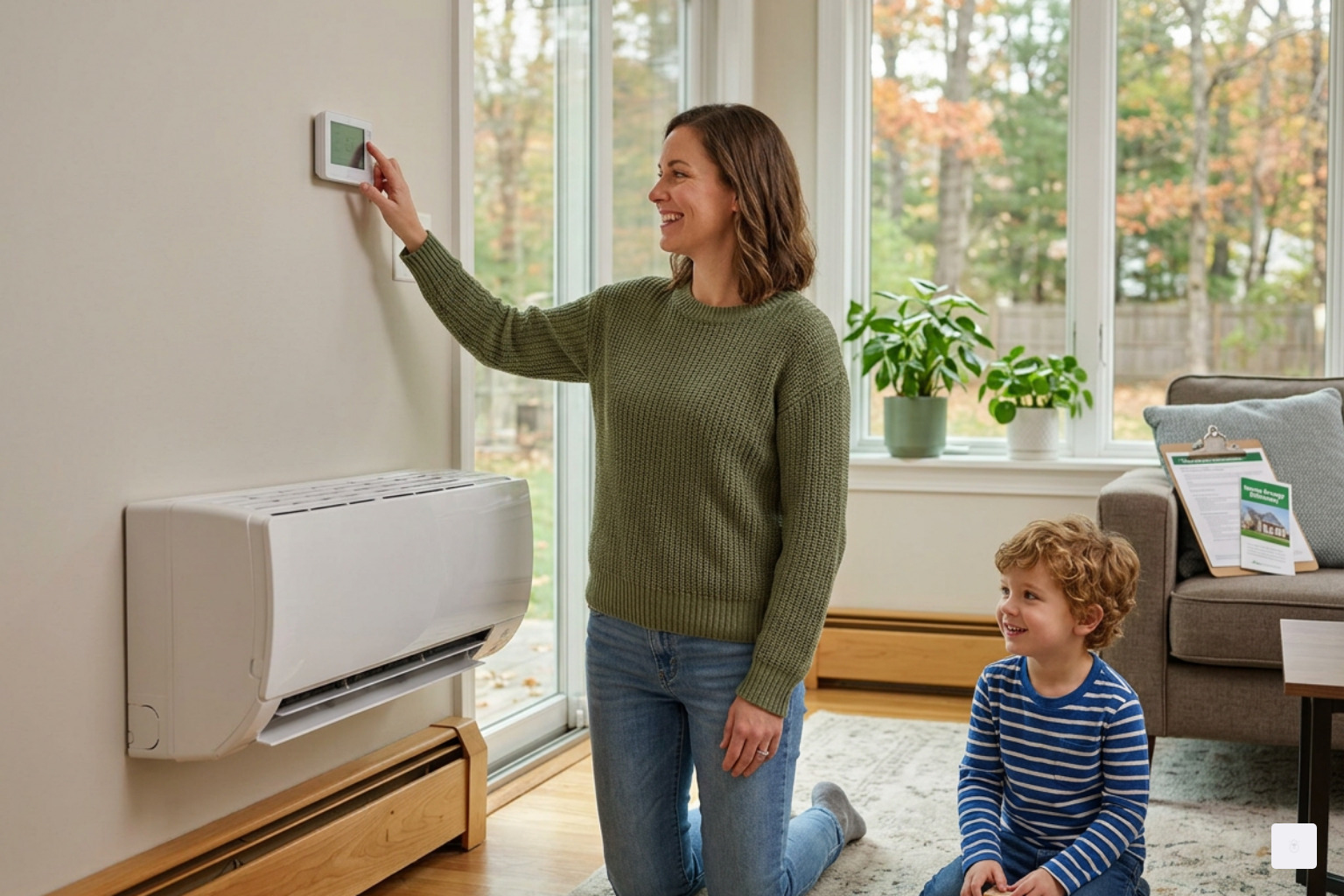
When you choose to install a Mass Save heat pump, you are taking advantage of a program designed to make clean energy affordable for everyone in Massachusetts. Because the Mass Save program is funded directly by a energy-efficiency surcharge on your monthly gas and electric bills, participating is simply claiming the money you have already contributed to the fund.
By working with sponsors like Eversource, National Grid, and Unitil, we can help you transition away from expensive fossil fuels. Upgrading to a heat pump not only lowers your carbon footprint but also shields your household from volatile heating oil and propane prices. Before making the transition, it is helpful to understand how these systems operate in our local climate. For a deep dive into the technology, you can read our Guide Heat Pump Systems New England. To learn more about the program’s overall structure, visit Mass Save | Heat Pumps .
Eligible Mass Save Heat Pump Technologies
Not all heat pumps are created equal, and Mass Save offers incentives across three primary technologies to suit different home layouts:
- Air Source Heat Pumps: These are the most common systems installed in Massachusetts homes. They extract heat from the outdoor air (even in freezing winter temperatures) and transfer it indoors. In the summer, they reverse the process to act as an air conditioner. You can choose a ducted system if you have existing ductwork, or a ductless mini-split system to heat and cool specific zones. You can learn more details on the Air Source Heat Pumps | Residential | Mass Save page.
- Ground Source (Geothermal) Heat Pumps: These systems utilize the stable temperature of the earth to provide heating and cooling. While they require more ground space and upfront preparation, they are the single most efficient heating technology on the market. Read more about The Benefits Of Geothermal Heat Pumps Energy Efficient Heating or check out the Ground Source Heat Pumps | Residential | Mass Save resources.
- Air-to-Water Heat Pumps: Instead of using forced air, these systems transfer heat from the outside air into a hydronic (water) system. They are ideal for homes with radiant floor heating or specialized low-temperature radiators, providing an all-in-one solution for heating, cooling, and domestic hot water. You can explore this option further on the Air to Water Heat Pumps | Residential | Mass Save page.
2026 Rebate Tiers and Income-Eligible Enhanced Incentives
Mass Save structures its incentives into three main tiers: Whole-Home, Partial-Home, and Basic.
- Whole-Home Rebates: To qualify for the maximum standard rebate, you must use your heat pump as the primary heating source for the entire home. This requires a signed verification form confirming that you will not rely on fossil fuels for primary heating.
- Partial-Home Rebates: If you are keeping your existing boiler or furnace for backup in certain zones, you can still qualify for generous per-ton rebates. These require the installation of approved integrated controls.
- Basic Rebates: These are smaller incentives designed for minor zone additions or single-head mini-split installations that do not cover the whole house.
For moderate-to-low-income households, the program offers Income-Eligible Enhanced Incentives. If your household income is under 60% of the State Median Income (for example, under $110,000 for a family of four), you may qualify for enhanced rebates that cover up to 100% of the installation cost.
However, getting these top-tier savings is not automatic. To understand the fine print, check out our guide on how Mass Save 10000 Rebate Not So Fast There Are Qualifications.
| Rebate Tier | Air Source Heat Pump | Air-to-Water Heat Pump | Ground Source Heat Pump |
|---|---|---|---|
| Whole-Home (Standard) | Up to $10,000 | Up to $8,500 | Up to $13,500 |
| Partial-Home (Standard) | Per-ton basis | Per-ton basis | Per-ton basis |
| Income-Eligible Enhanced | Up to $16,000 | Up to $16,000 | Up to $25,000 |
Key Considerations Before Installing Your New System
Before rushing into an installation, there are several crucial steps to ensure your system runs at peak efficiency.
First, weatherization is key. A well-insulated home requires a smaller, less expensive heat pump system to keep you warm. Mass Save requires a Home Energy Assessment to identify air leaks and insulation gaps. Completing these recommended upgrades first ensures your home is ready. You can read more about this in our article Seal The Deal With Mass Save Duct Sealing And Equipment Upgrades.
Second, if you keep your old heating system as a backup, you must install integrated controls. These controls automatically switch between your heat pump and your backup system based on the outdoor temperature. For the most cost-effective operation, we configure these controls to switch over at 30°F for heating oil or natural gas systems, and 5°F for propane systems. To understand how these dual systems work together, read our guide on How To Use Your New Heat Pump With Your Old Boiler.
Finally, while your home heating oil or gas bills will drop to zero, your electricity usage will increase. To offset this, many Massachusetts electric utilities offer seasonal heat pump rates to help lower your winter electric costs.
Step-by-Step Guide to Securing Your Rebate

Getting your rebate does not have to be a headache. Here is the straightforward process we guide our customers through:
- Schedule a Home Energy Assessment: This is the mandatory first step for most whole-home incentives. An energy specialist will assess your home’s insulation and draftiness. You can schedule this directly through the Mass Save® | Energy Assessments and Audits | Equipment Rebates … portal.
- Complete Recommended Weatherization: If the assessment finds that your home needs insulation or duct sealing, completing these upgrades can unlock additional bonuses and ensure your new heat pump operates efficiently.
- Select an HPIN Contractor: Work with a certified professional to design your system.
- Install the System: Our team handles the expert installation of your selected equipment.
- Submit the Rebate Application: We assist you in compiling the required invoices, load calculations, and verification forms.
- Post-Installation Verification: Mass Save randomly selects homes for third-party inspections to verify quality and compliance. Once approved, your rebate check typically arrives in 6 to 8 weeks, or it can be applied directly to lower your initial invoice.
To learn more about the installation journey, read Heat Pump Services Demystified Installation Repair And Maintenance.
The Role of a Mass Save Heat Pump Installer Network Contractor
To qualify for any Mass Save heat pump rebates, your system must be installed by a credentialed Heat Pump Installer Network (HPIN) contractor.
HPIN contractors ensure that:
- Your equipment is selected from the official Mass Save Heat Pump Qualified Product List.
- Your system is sized correctly using an ACCA Manual J load calculation, preventing short-cycling and high energy bills.
- Your system complies with the latest environmental standards, including the transition to modern, low-GWP refrigerants like R-32 and R-454B.
As a Mitsubishi Electric Elite Diamond Contractor with over 30 years of experience serving Franklin, Norfolk, Medway, and surrounding communities, we understand the technical nuances of these systems. For a breakdown of how we measure system performance, check out Understanding Heat Pump Efficiency Ratings Seer Hspf And More.
Financing Your Upgrade with the 0% HEAT Loan
If the upfront cost of a new system feels out of reach, the Mass Save 0% APR HEAT Loan is an incredible tool. This program offers interest-free financing of up to $25,000 with terms up to 7 years.
To secure the loan, you must first complete your Home Energy Assessment, obtain a proposal from an HPIN contractor, and submit the paperwork to Mass Save for a Lead Determination Letter. Once pre-approved, you can close the loan with a participating local lender. This interest-free financing makes home comfort immediately affordable. To explore how financing fits into your home improvement plans, read Energy Efficient Heating Solutions For A Sustainable Home.
Stacking Mass Save Rebates with Federal Tax Credits
One of the best aspects of upgrading your heating system in 2026 is the ability to stack utility incentives with federal tax credits. Under the Inflation Reduction Act, you can claim the Section 25C tax credit, which provides a credit of 30% (up to $2,000) for qualifying biomass stoves, heat pump water heaters, and air-source heat pumps. If you opt for a ground-source geothermal system, the Section 25D credit covers a full 30% of the entire installation cost with no upper dollar limit.
By combining a $10,000 Mass Save whole-home rebate, a 0% HEAT Loan, and a $2,000 federal tax credit, the cost of transitioning to clean energy becomes incredibly manageable. However, these programs have strict deadlines and filing requirements. For more information on maximizing these programs before they change, read Tax Credits Ending Soon.
At Accurate Baker Elman, we provide reliable HVAC and plumbing services throughout Franklin and the MetroWest area. With over 30 years of honest, expert service, we are ready to help you navigate every step of the rebate process.
Ready to make your home more comfortable and energy-efficient? Contact Accurate Baker Elman today to schedule your consultation!