
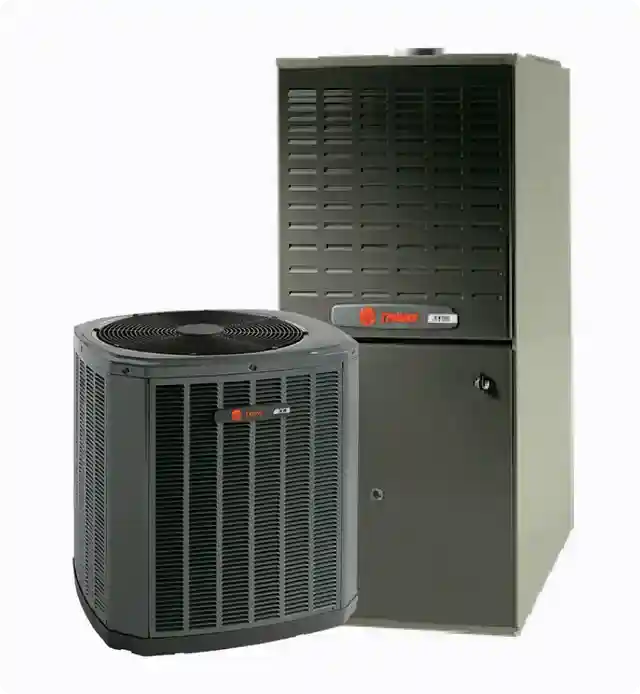
Why Choosing the Right Heating and Cooling Unit Matters Year-Round
A heating and cooling unit is one of the most important investments you’ll make for your home — especially if you live somewhere like Massachusetts, where winters are brutal and summers can be surprisingly humid.
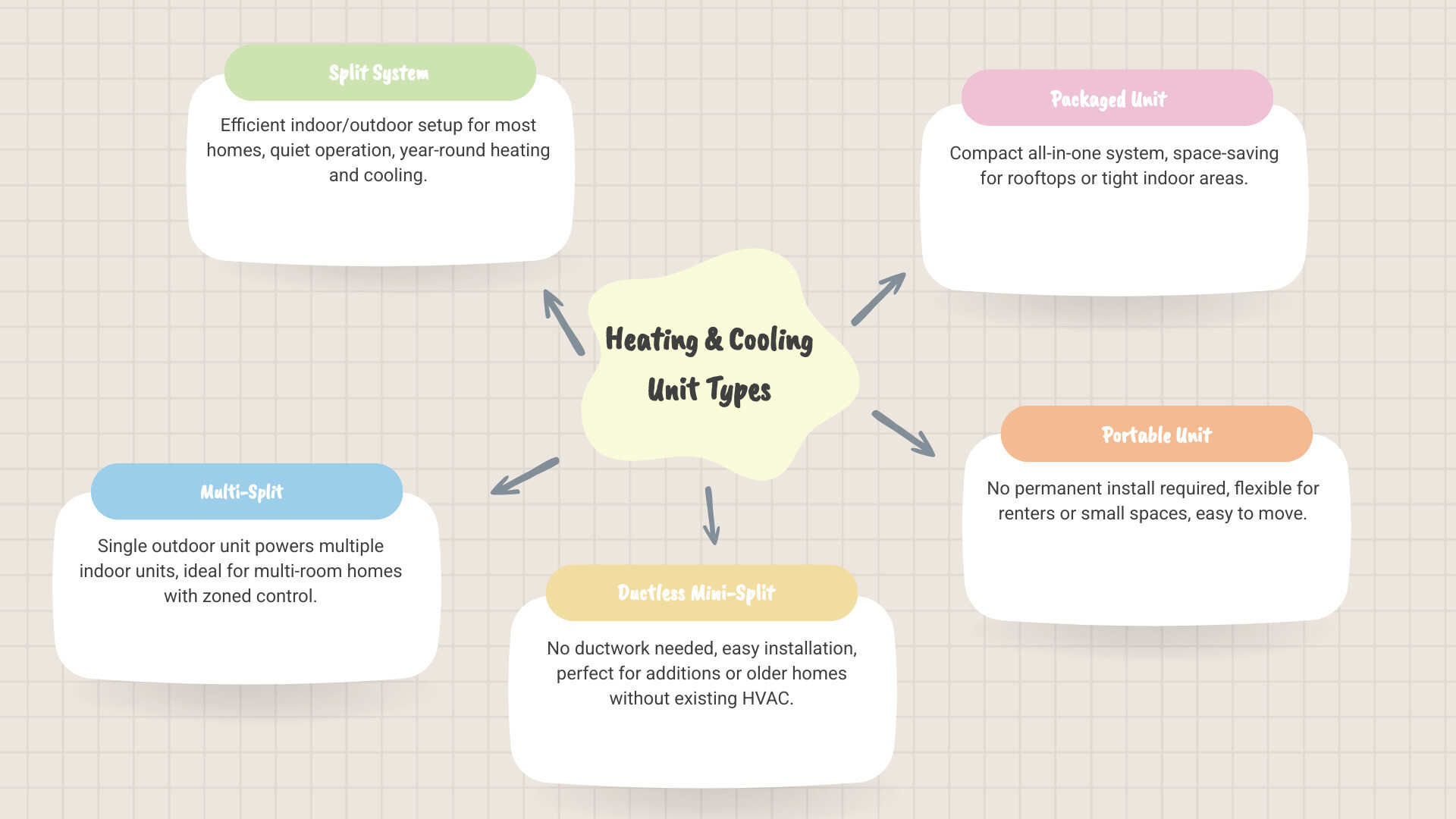
Before diving deep, here’s a quick overview of the most common types to help you decide fast:
| Unit Type | Best For | Key Benefit |
|---|---|---|
| Split system | Most homes | Efficient, quiet, year-round comfort |
| Multi-split | Multi-room homes | One outdoor unit, multiple rooms |
| Ductless mini-split | Homes without ductwork | Easy install, zoned control |
| Packaged unit | Limited indoor space | All-in-one, rooftop-friendly |
| Portable unit | Renters, small spaces | No installation needed |
The right system depends on your home’s size, layout, and how you use it day to day.
Modern units do more than just heat or cool. Many also dehumidify, purify the air, and can be controlled from your phone. And with energy costs rising, picking an efficient model isn’t just nice to have — it directly affects what you pay every month.
The challenge? There are a lot of options, and the wrong choice can cost you in repairs, energy bills, or comfort down the line.
This guide cuts through the noise so you can find a reliable system that fits your home and your budget.
Choosing the Right heating and cooling unit for Your Home

When we talk about a heating and cooling unit, we are usually referring to a system capable of handling both the sweltering July afternoons in Franklin and the sub-zero January nights in Newton. The most popular choice for Massachusetts homeowners is the split system.
A split system consists of two main parts: an indoor unit (the evaporator) and an outdoor unit (the condenser). These are connected by refrigerant lines. If you want to climate control several rooms independently, a multi-split system allows you to connect up to five indoor units to a single outdoor condenser. This is a fantastic way to ensure the baby’s nursery stays warm while your home office remains crisp and cool.
For those in flats or older homes in places like Belmont or Watertown where installing ductwork is a nightmare, wall-mounted units offer a sleek, unobtrusive solution. These systems are often air-to-air heat pumps, which are incredibly efficient because they move heat rather than generating it. In the summer, they pull heat out of your home; in the winter, they flip the script and extract heat from the outdoor air to bring it inside.
If you’re feeling overwhelmed by the technical jargon, don’t worry. Our team at Accurate Baker Elman has spent over 30 years helping neighbors across Norfolk County find the perfect fit. You can explore more about our HVAC services to see how we tailor these systems to local homes.
Understanding BTU Ratings for Your heating and cooling unit
Choosing a heating and cooling unit isn’t like buying a toaster; you can’t just pick the one that looks the coolest. You need to get the “size” right, which in the HVAC world is measured in BTUs (British Thermal Units).
BTU is a measure of how much heat a unit can add or remove from a room per hour. If you buy a unit with too few BTUs, it will run constantly, struggling to reach your desired temperature and sent your electric bill skyrocketing. If it’s too powerful, it will “short cycle,” turning on and off so fast that it fails to properly dehumidify the air, leaving you feeling clammy.
A good rule of thumb for a standard room is to multiply the square footage by 20, but for more precise calculations, many experts recommend multiplying the room’s cubic feet (length x width x height) by 5. For example, a 15x10x8 foot room would require roughly 6,000 BTUs. However, if you have high ceilings or large south-facing windows in a town like Wellesley, you might need a bit more “oomph.”
For those who love the data behind the comfort, you can check out this scientific research on energy efficient heat pumps to see how capacity and efficiency intersect.
The Benefits of a Ductless heating and cooling unit
If your home was built before the era of central air—common in historic areas like Charlestown or Lexington—you might think you’re stuck with noisy window units. Enter the Ductless Mini Split AC Systems.
These systems are a “big step up” from portable space heaters and window ACs. Here is why we love them:
- Zoned Comfort: You only heat or cool the rooms you are actually using. Why pay to cool the guest room when you’re in the kitchen?
- Better Air Quality: Traditional ducts can be breeding grounds for dust mites, mold spores, and allergens. Ductless systems use high-density filters and specialized technology like “Flash Streamers” to purify the air as it circulates.
- Easy Installation: Unlike central air, which requires tearing apart walls to run ducts, a mini-split only requires a small three-inch hole in an exterior wall for the conduit.
- Quiet Operation: Modern indoor units are whisper-quiet, often operating as low as 19 dB(A)—that’s quieter than a library!
Maximizing Efficiency and Reducing Running Costs
We all want to stay comfortable, but nobody wants to faint when they open their utility bill. To keep costs down, you need to look at efficiency ratings. For cooling, look for the SEER2 (Seasonal Energy Efficiency Ratio) rating. For heating, look for HSPF2 (Heating Seasonal Performance Factor). Higher numbers mean more comfort for less cash.
To dive deeper into how these ratings save you money, read our guide on Energy Efficient Heating Solutions for a Sustainable Home.
Beyond the hardware, how you use your heating and cooling unit matters. We recommend setting your thermostat to around 18-19°C (64-66°F) during the winter for an optimal balance of comfort and efficiency.
Other pro-tips for Massachusetts residents:
- Insulation is Key: Your high-tech heat pump won’t help much if the heat is escaping through a drafty attic in Framingham.
- Smart Timers: Use WiFi-enabled apps to pre-cool or pre-heat your home before you get back from work in Waltham, rather than leaving the unit running all day.
- The 50cm Rule: Ensure your outdoor unit has at least 50cm (about 20 inches) of clearance from plants or debris to maintain proper airflow.
Installation and Maintenance: Protecting Your Investment
You’ve found the perfect heating and cooling unit, but the journey doesn’t end there. Proper installation is the difference between a system that lasts 20 years and one that breaks down in two.
While the “DIY” spirit is strong in places like Braintree and Weymouth, HVAC installation is not a Sunday afternoon project. Many manufacturers, including LG and Mitsubishi Electric, require installation by a licensed professional to keep the warranty valid. A botched install can lead to refrigerant leaks, electrical fires, or simply a unit that doesn’t cool properly. As a Mitsubishi Electric Elite Diamond Contractor, we ensure that every connection is perfect.
Once installed, maintenance is your best friend. We recommend an annual service visit to check refrigerant levels, clean the coils, and ensure the “engine” of your system—the compressor—is running smoothly. Between pro visits, you should vacuum or wash your filters every two weeks. If your unit starts making a strange noise or smells a bit “funky,” it’s time to call for AC Repair Services before a small clog becomes a big, expensive headache.
Packaged Units vs. Split Systems
When space is at a premium—perhaps in a compact home in Quincy or a commercial building in Dedham—a packaged unit might be your hero.
While a split system divides its components between inside and outside, a packaged heating and cooling unit houses everything in one large outdoor cabinet. These are often installed on the ground on a concrete pad or even on the roof.
When Comparing Different Heating Systems Which One is Right for You, consider these factors:
- Footprint: Packaged units save you from losing a closet or basement space to an indoor furnace.
- Maintenance Access: Since everything is in one box outside, technicians can perform repairs without even entering your home.
- Noise: Because the “loud” parts are all outside, these can be very quiet for the interior of the home.
- Cost: Packaged units can sometimes be more expensive upfront due to their specialized design, but the simplified installation might save you on labor.
Smart Features and Eco-Friendly Refrigerants
The heating and cooling unit of today is a far cry from the clunky metal boxes of the 90s. We are now seeing units with built-in AI that learns your patterns and adjusts the temperature automatically. WiFi control is standard on many models, allowing you to use apps like Net Home Plus or Alexa to manage your home’s climate from your smartphone.
Environmentally conscious homeowners in places like Concord and Wayland will be pleased to know that the industry is moving toward “greener” refrigerants. Newer units often use R32 or R290, which have a much lower Global Warming Potential (GWP) than older HFCs.
Even better, choosing an ENERGY STAR certified system can make you eligible for significant federal tax credits and local rebates. In Massachusetts, programs like Mass Save offer substantial incentives for residents switching to high-efficiency heat pumps.
Conclusion: Finding Your Ideal Comfort Solution
Finding the right heating and cooling unit doesn’t have to be a stressful experience. Whether you’re looking for a ductless mini-split for a new addition in Hopkinton or a robust packaged unit for a business in Foxboro, the key is to prioritize efficiency, correct sizing, and professional installation.
At Accurate Baker Elman, we’ve been the trusted comfort experts for Franklin, MA, and the surrounding areas since we first started. We understand the local climate because we live here, too. From 24/7 emergency repairs to installing the latest Mitsubishi Electric technology, we are here to ensure your home remains a sanctuary regardless of the weather outside.
Ready to upgrade your home comfort without breaking the bank? Explore our Heating Services or give us a call today. We’ll help you find a system that keeps you cozy in the winter, cool in the summer, and keeps your wallet happy all year long.