Why Commercial HVAC Repair Keeps Your Business Running
Commercial HVAC repair is the process of diagnosing and fixing heating, ventilation, and air conditioning systems in business settings — from small offices to large commercial buildings.
Need help fast? Here’s what you should know:
- Commercial HVAC systems can fail due to compressor issues, refrigerant leaks, electrical faults, or clogged drains
- Signs you need repair: strange noises, uneven temperatures, rising energy bills, reduced airflow, or unusual odors
- 24/7 emergency repair services are available to minimize business downtime
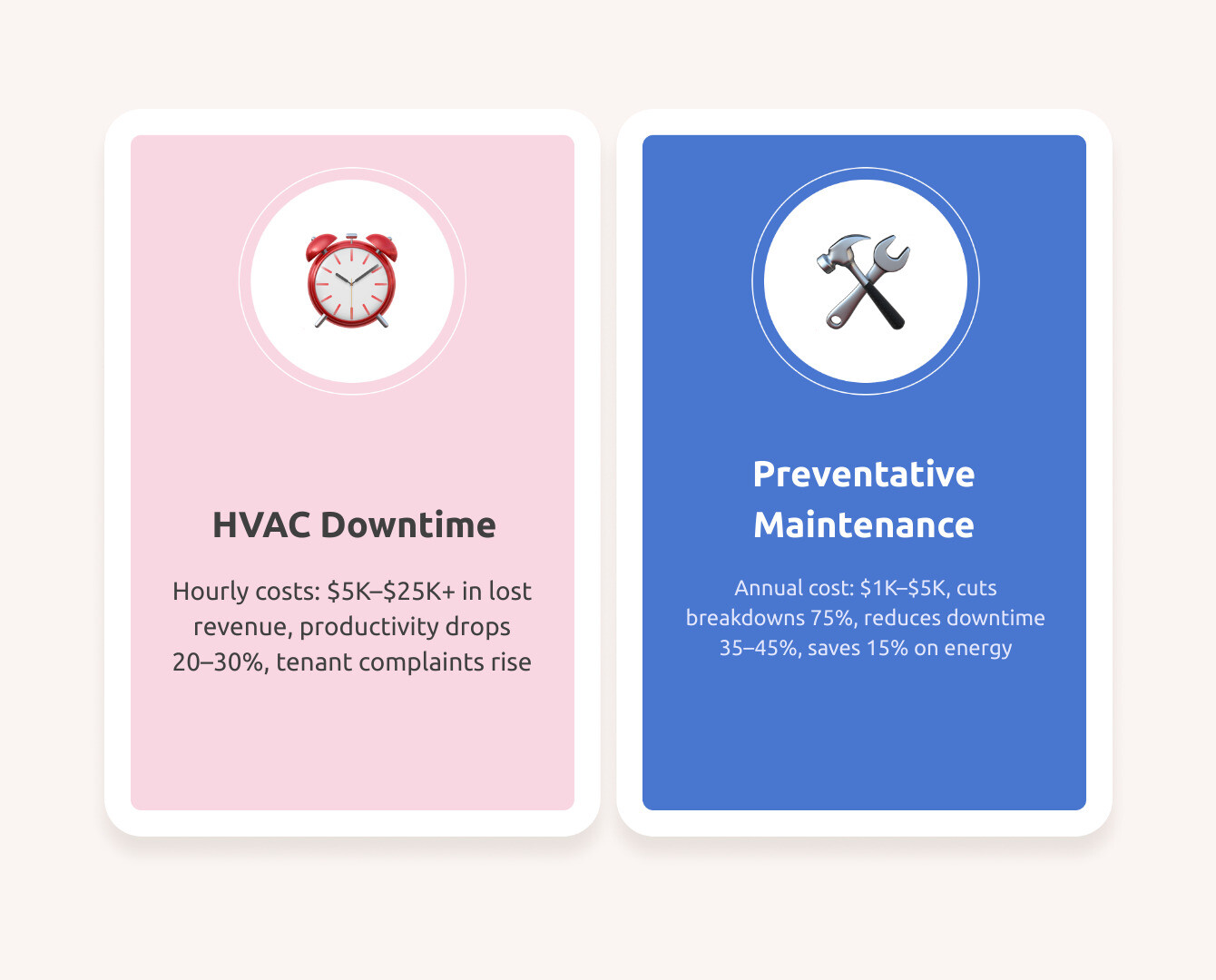
- Regular preventative maintenance can reduce unexpected breakdowns by up to 75%
- Systems typically last 15–20 years — age and repair frequency help determine repair vs. replacement
When your heating or cooling goes down, every hour matters. Employees get uncomfortable. Customers notice. Tenants complain. And in Massachusetts winters, an HVAC failure isn’t just an inconvenience — it’s a serious operational risk.
The good news? Most commercial HVAC failures are preventable. And when something does go wrong, a fast and reliable repair service can have your system back up before it disrupts your business.
At Accurate Heat, we understand that business owners and facility managers don’t have time for drawn-out repairs or vague answers. You need clear information, a trusted technician, and a fix that lasts.
This guide covers everything you need to know — from spotting early warning signs to choosing the right repair partner for your facility.
Quick Commercial HVAC repair definitions:
Identifying Common Issues and the Need for Commercial HVAC Repair
Running a business in areas like Franklin or Medfield means managing a lot of moving parts, and your HVAC system is arguably one of the most complex. Unlike residential units, commercial systems are high-capacity machines designed to handle heavy loads and complex zoning. When these systems falter, the impact ripples through your entire operation.

The diagnostic process for a commercial system is rigorous. Because these units often involve rooftop configurations (RTUs), chillers, or sophisticated VRF systems, a failure in one area can sometimes be a symptom of a problem elsewhere. Research from the Federal Energy Management Program highlights that regular maintenance and quick diagnostic responses can reduce downtime by 35–45 percent. Without this proactive approach, a minor performance decline can quickly escalate into a full system shutdown.
Signs Your System Needs Professional Commercial HVAC Repair
You don’t need to be an engineer to know something is wrong, but you do need to be observant. Early detection is the best way to keep Commercial HVAC repair costs manageable.
Keep an eye (and ear) out for these red flags:
- Strange Noises: Squealing belts, grinding metal, or loud banging usually indicate mechanical failure in motors or blowers.
- Uneven Cooling or Heating: If the conference room is a sauna while the accounting office is a refrigerator, your zoning controls or dampers are likely failing.
- Airflow Reduction: Clogged filters or failing blower motors can restrict air, making the system work twice as hard for half the result.
- Energy Spikes: A sudden, unexplained jump in your utility bill often means the system is “short-cycling” or struggling against a mechanical obstruction.
- Odor Detection: Musty smells can signal mold in the ductwork, while burning smells point toward electrical issues that require immediate attention.
If you notice these signs, it’s time to look into professional AC repair services in MA before the unit fails completely during a heatwave or a cold snap.
Repair vs. Replacement: Making the Right Choice for Your Facility
One of the toughest decisions a facility manager faces is whether to keep patching up an old unit or invest in a new one. In our 30+ years of experience serving Massachusetts businesses from Norfolk to Braintree, we’ve found that the “Rule of 5,000” (multiplying the age of the unit by the repair cost) is a helpful starting point, but commercial systems require a bit more nuance.
| Factor | Repair | Replacement |
|---|---|---|
| System Age | Under 10-12 years | Over 15-20 years |
| Repair Frequency | First major issue in years | Multiple service calls per season |
| ROI Data | Lower immediate cost | Lower long-term energy & tax benefits |
| Energy Efficiency | Maintains current (lower) SEER | Significant upgrades (up to 30-50% savings) |
| Parts Availability | Readily available | Parts for old units are becoming obsolete |
Commercial HVAC equipment generally has a lifespan of 15–20 years. If your system is approaching that two-decade mark and you find yourself calling for heating repair services in MA every few months, the ROI on a replacement often outweighs the cost of constant repairs. Newer systems offer green technology and energy-saving solutions that can pay for themselves through reduced utility bills and government rebates.
Critical Components Requiring Frequent Commercial HVAC Repair
Commercial systems are comprised of several high-wear components that bear the brunt of daily operations. Understanding these can help you communicate better with your technician during a service visit.
- Compressor Failures: Often considered the “heart” of the system, compressors fail due to electrical problems or refrigerant slugging. This is typically a high-priority Commercial HVAC repair.
- Refrigerant Leaks: Low refrigerant levels don’t just stop the cooling; they cause the entire system to overheat and can lead to permanent compressor damage.
- Electrical Components: Blown fuses, worn contactors, and failing capacitors are common, especially during the high-demand summer months in towns like Newton and Waltham.
- Blower Motors and Worn Belts: These parts are in constant motion. Belts can crack or slip, and motors can burn out if they aren’t lubricated and inspected regularly.
- Condensate Drains: In large buildings, a clogged drain can lead to significant water damage and mold growth if not cleared promptly.
- Control Systems: Modern commercial HVAC relies on sophisticated thermostats and building automation. A software glitch or a faulty sensor can bring a massive system to a standstill.
Maximizing Efficiency and Longevity Through Expert Service
We all want our equipment to last as long as possible. In commercial climate control, longevity isn’t just about luck; it’s about adhering to professional standards and smart energy management.
Maintaining high standards for your indoor air quality (IAQ) and system efficiency is vital for occupant health. According to Energy.gov, simply cleaning or replacing filters can reduce energy use by up to 15 percent. In a large commercial facility, that 15 percent translates into thousands of dollars saved annually.
The Role of Preventative Maintenance in Reducing Costs
If we could give business owners in Walpole or Quincy one piece of advice, it would be this: One emergency HVAC repair can cost more than an entire year of preventative maintenance.
Research shows that regular maintenance can reduce unexpected breakdowns by 70 to 75 percent. By planning ahead, we can catch a frayed belt or a small refrigerant leak before it turns into a catastrophic failure that shuts down your shop for three days.
Our recommended maintenance checklist includes:
- Filter Changes: Performed quarterly to ensure optimal airflow and IAQ.
- Coil Cleaning: Dirty evaporator and condenser coils force the system to run longer cycles.
- Electrical Tightening: Ensuring all connections are secure to prevent fire hazards and component failure.
- Lubrication: Keeping all moving parts friction-free to extend motor life.
- Calibration: Checking thermostats and sensors to ensure the system isn’t overworking.
For more information on how we tailor these services to your specific building, check out our HVAC services in Franklin MA page.
Benefits of 24/7 Emergency Response and Proper Installation
When a system fails at 2:00 AM in a data center or a medical facility in Needham, “waiting until Monday” isn’t an option. 24/7 emergency response is a cornerstone of business continuity. It minimizes downtime and helps reduce the risk of indoor air quality issues that can lead to discomfort and lost productivity.
Furthermore, many Commercial HVAC repair issues actually stem from poor initial installation. If a unit is oversized, it will short-cycle, turning on and off too frequently, which wears out the starter components. If it’s undersized, it will run constantly and never reach the set temperature. Proper sizing and code-compliant installation are the first steps in minimizing future repair needs. You can learn more about our approach to integrated commercial solutions to see how we prevent these issues from day one.
Choosing a Reliable Partner for Your Business Comfort
Choosing an HVAC partner is about more than just finding the lowest bid; it’s about finding a team that understands the local landscape and the specific needs of Massachusetts businesses.
At Accurate Baker Elman, we bring over 30 years of experience to every job site. Whether you are in Dedham, Framingham, or Weymouth, our licensed technicians are trained to handle the most complex commercial systems. As a Mitsubishi Electric Elite Diamond Contractor, we pride ourselves on honesty, timely solutions, and using high-quality OEM parts that come with reliable warranty coverage.
When you book a service visit with us, you can expect:
- Clear Communication: We explain the why behind every repair.
- Transparent Documentation: Photos and detailed reports of the work performed.
- Respect for Your Space: We work quickly and cleanly to minimize disruption to your staff and customers.
- Regional Expertise: We know the specific building codes and climate challenges of the Greater Boston area.
For those interested in seeing our work and staying updated on HVAC tips, follow industry experts and professional associations online. If your business is located in the South Shore or MetroWest area, you can find more specific Dedham MA services info on our dedicated local pages.
From the initial diagnostic to the final testing, our goal is to keep your business running smoothly. Don’t let a failing HVAC system put your operations on ice or leave them out in the heat. Contact us today to schedule your inspection or repair.