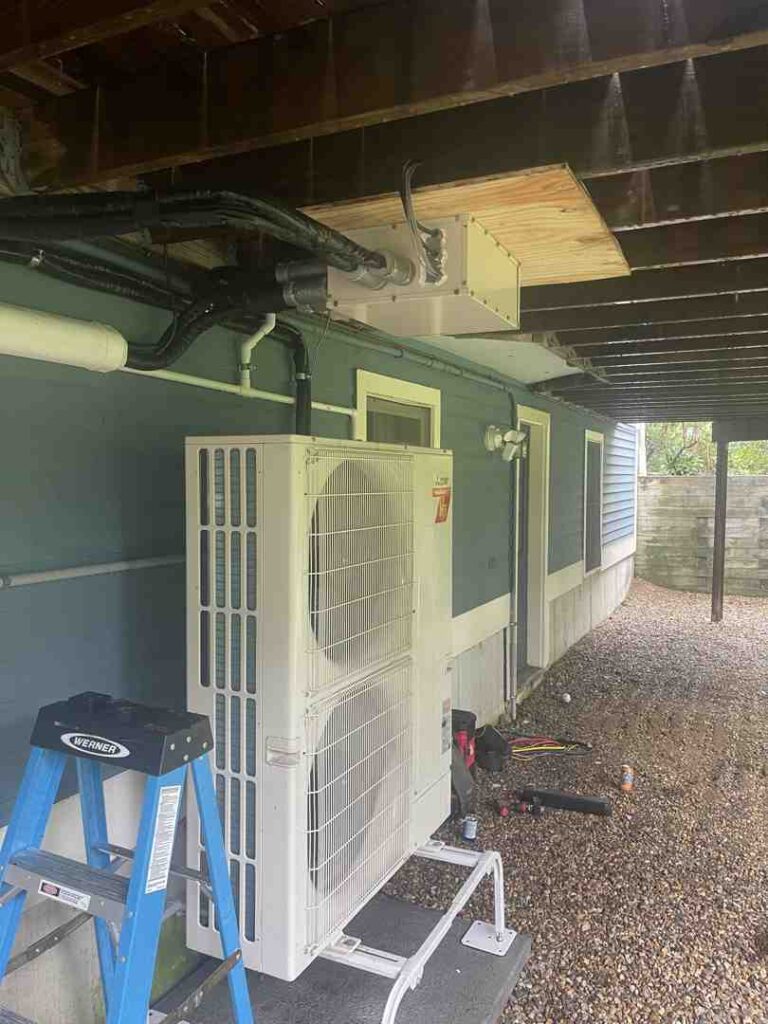
Why a Ductless Heat Pump Install Is Revolutionizing Home Comfort
A ductless heat pump install provides efficient heating and cooling without the need for traditional ductwork, making it an ideal solution for homes without existing ducts, room additions, or spaces where extending ductwork isn’t feasible. These systems consist of an outdoor compressor unit and one or more indoor air handlers connected by a small conduit, offering zoned temperature control and significantly higher energy efficiency than conventional HVAC systems.
Key facts about ductless heat pump installation:
- Installation time: 4-6 hours on average per zone
- Cost range: $4,350 to $10,500+ for professional installation
- Energy savings: Eliminates duct losses that can account for over 30% of energy consumption
- Efficiency ratings: Up to 35 SEER2 (compared to 15.2-25 SEER2 for ducted systems)
- Lifespan: 15 to 30 years with proper maintenance
- System types: Single-zone or multi-zone (up to 5-8 indoor units)
If you’re a Massachusetts homeowner tired of cold spots in your home or sky-high heating bills, you’ve probably heard about ductless mini-split heat pumps. These systems have become increasingly popular in colder climates because they’re incredibly efficient and don’t require the extensive ductwork that traditional HVAC systems demand.
But here’s the catch: while the concept might seem straightforward, a proper ductless heat pump install is far from a simple DIY project. Professional installation is critical to ensure your system operates efficiently, safely, and doesn’t void your warranty. The installation involves refrigerant handling (which requires EPA certification), precise electrical work, and specialized tools like torque wrenches and vacuum pumps.
This guide walks you through everything you need to know about the installation process—from understanding how these systems work to planning your project and knowing when to call in the experts. We’ll also cover the real costs, available rebates, and how to choose the right contractor for your home.
Understanding Your Ductless Mini-Split System
Before diving into the ductless heat pump install process, let’s understand what these systems are and how they work.
What is a Ductless Heat Pump and How Does It Work?
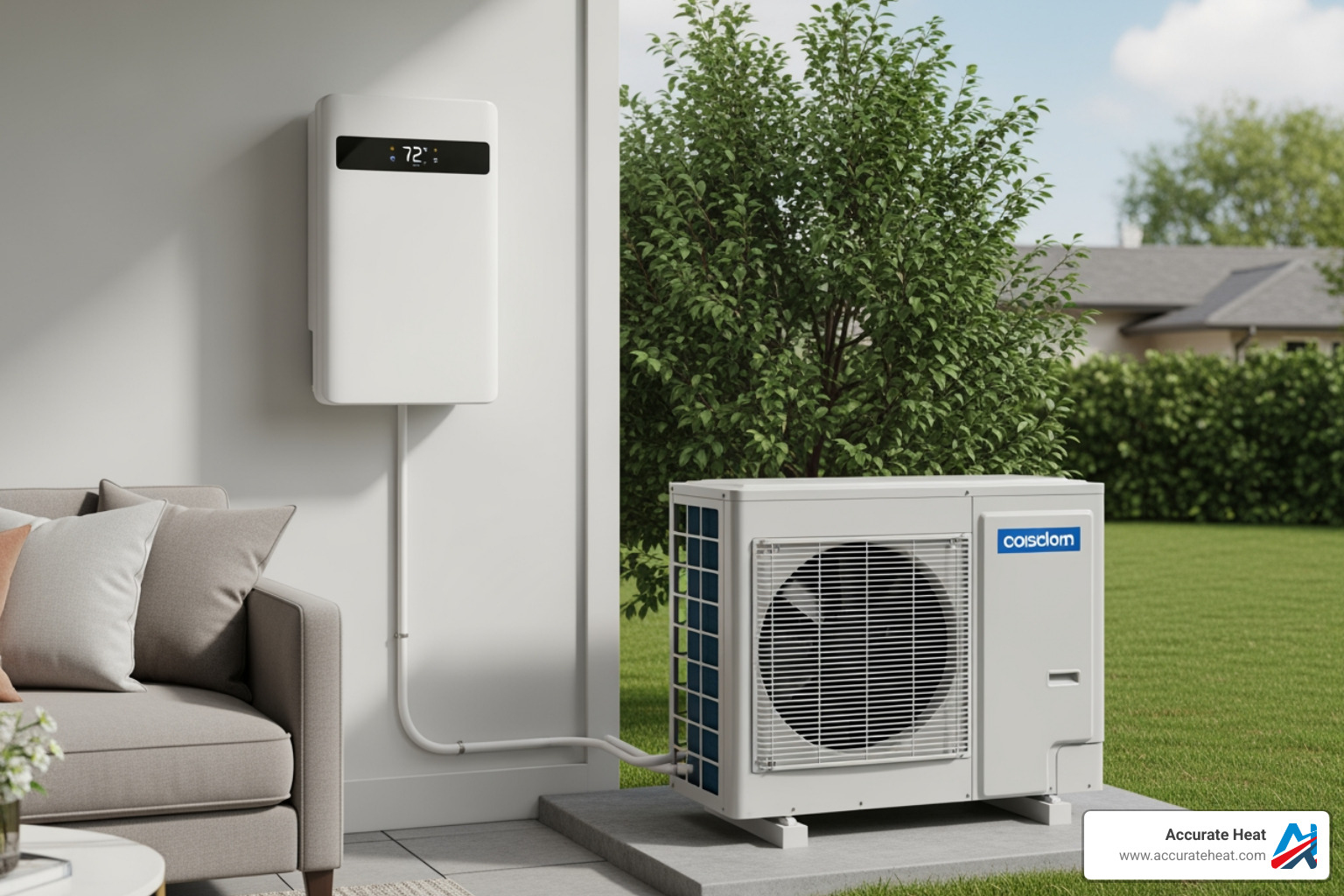
A ductless mini-split heat pump, or “mini-split,” is a highly efficient heating and cooling system that doesn’t rely on air ducts.
At its core, a mini-split system has two main components:
- An outdoor compressor/condenser unit: This unit is placed outside your home, similar to a traditional air conditioner’s outdoor unit but much smaller.
- One or more indoor air-handling units: These sleek units are mounted inside the rooms you want to condition.
These components are connected by a small conduit that runs through a three-inch hole in your wall, housing the power cable, refrigerant tubing, and a condensate drain line.
How does it work? It moves heat.
- In heating mode: The outdoor unit extracts heat from the outside air, even in chilly Massachusetts winters. This heat is transferred via refrigerant to the indoor unit, which warms your room. This process is efficient because it moves heat rather than generating it by burning fuel.
- In cooling mode: The process reverses. The indoor unit absorbs heat from your home’s air, transfers it to the outdoor unit, and expels it outside, leaving your space cool and comfortable.
A reversing valve allows the system to switch between heating and cooling by changing the refrigerant flow direction.
The Key Advantages Over Traditional HVAC
A ductless heat pump install is a significant upgrade to your home’s comfort and efficiency. Here are the standout advantages over traditional ducted systems:
- Zoned Temperature Control: Each indoor unit operates independently, allowing you to set different temperatures in different rooms or “zones.” No more heating or cooling unused spaces. This allows you to customize temperatures in different rooms, a feature our customers in Franklin, Medway, and Bellingham love.
- Superior Energy Savings: Traditional ducted systems can lose up to 30% of energy through leaky ducts. Since ductless systems deliver conditioned air directly into the room, they eliminate this energy waste, leading to lower utility bills.
- High Efficiency Ratings: Ductless mini-splits are highly energy efficient, reaching up to 35 SEER2, while ducted heat pumps typically range from 15.2 to 25 SEER2. A higher SEER2 (Seasonal Energy Efficiency Ratio 2) rating means greater energy savings.
- Improved Indoor Air Quality: Without ducts that collect dust and allergens, ductless systems contribute to cleaner air. Many units also feature advanced filtration systems that capture microscopic particles, providing a healthier living environment for your Massachusetts home.
- Ideal for Homes Without Ductwork: For older homes in areas like Walpole or Wrentham with no existing ductwork, a ductless heat pump install is a perfect retrofit solution. It provides modern heating and cooling without the disruptive and costly installation of new ductwork. They’re also perfect for home additions, converted attics, or garages.
To learn more about how these systems can benefit your home, check out our page on More info about Ductless Mini-Split AC Systems.
Potential Challenges and Considerations
While the benefits are substantial, there are a few challenges to consider:
- Higher Initial Installation Cost: The upfront cost for a ductless system can be higher than some other HVAC options, especially for multi-zone setups. However, long-term energy savings and available rebates can offset this investment.
- Aesthetics of Indoor Units: Some homeowners are concerned about the appearance of indoor units. While manufacturers have made great strides in designing sleek units, they are still visible. We can help you choose a placement and style that blends with your home’s interior.
- Proper Sizing is Critical: Proper sizing is paramount. An improperly sized system leads to inefficient operation, higher bills, and reduced comfort. Undersized units struggle to condition the space, while oversized units “short cycle,” wasting energy and causing excess wear.
- Regular Filter Maintenance Required: To maintain optimal performance, the indoor unit filters need regular cleaning (typically every month to month and a half of runtime). If neglected, performance drops and energy consumption rises.
Planning Your Ductless Heat Pump Install: Sizing, Selection, and Cost

A successful ductless heat pump install requires careful planning around sizing, system selection, and cost to ensure optimal comfort and efficiency.
Choosing the Right System for Your Home
Selecting the right system requires assessing your home’s unique needs.
- Sizing Calculations (Manual J): We perform a detailed Manual J heat load calculation for each area to be conditioned. This determines the precise BTU (British Thermal Unit) requirements for heating and cooling based on factors like:
- Square footage of the space.
- The local Massachusetts climate.
- Your home’s insulation levels.
- The number and type of windows.
- Heat-generating appliances and the number of occupants.
An accurate load calculation ensures your system is perfectly matched to your home, preventing common efficiency problems.
- Single-Zone vs. Multi-Zone Systems:
- Single-zone systems are ideal for one specific area, like a new addition, a converted attic in Medfield, or a garage workspace.
- Multi-zone systems are perfect for whole-home comfort, allowing multiple indoor units (typically up to five, but some handle eight) to connect to a single outdoor unit. This allows you to customize comfort in individual rooms, like bedrooms and home offices in Mansfield.
- Indoor Unit Types: Ductless systems offer flexibility in how indoor units are installed:
- High-wall units: The most common type, mounted high on a wall for excellent air distribution.
- Low-wall or floor-mounted units: A great option for rooms with limited wall space.
- Ceiling cassette units: Discreetly recessed into the ceiling for an almost invisible solution.
- Compact-ducted units: Provide a ducted look with very short duct runs for concealed aesthetics.
- Considerations for Older Homes: A ductless heat pump install is advantageous for older Massachusetts homes lacking ductwork, as it provides modern comfort without the cost of installing new ducts. We recommend a home energy assessment first to seal and insulate your home, which maximizes the benefits of your new heat pump.
Our Mini-Split System Heat Pump Installers in Franklin, MA are ready to guide you through your options.
What’s the Real Cost? Breaking Down Expenses and Incentives
Understanding the costs and available incentives for a ductless heat pump install can make this significant investment more manageable.
- Typical Cost Range: The average cost to purchase and professionally install a ductless mini-split system typically ranges between $4,350 and $10,500+.
- Factors Influencing Cost:
- System Size and Capacity: Larger homes requiring higher BTU output need more powerful, expensive equipment.
- Number of Zones: A single-zone system is less costly than a multi-zone system. Each additional indoor unit adds to the cost.
- Brand and Model: Different brands offer varying features, efficiencies, and price points. Premium brands may cost more upfront but often provide better performance and warranties.
- Labor Complexity: Factors like the distance between units, electrical panel upgrades, or challenging wall materials can increase labor costs.
- Additional Components: Accessories like condensate pumps or line-hide covers can add to the price.
- Available Rebates and Tax Credits: Fortunately, Massachusetts homeowners have fantastic opportunities to save money. You may be eligible for:
- Federal Tax Credits: The Inflation Reduction Act (IRA) offers significant tax credits for heat pump installations.
- State and Local Rebates: Massachusetts often has programs through utilities or state agencies that provide rebates for high-efficiency heat pumps.
We highly recommend exploring incentives in your area using the ENERGY STAR Home Improvement Savings tool. Our team can help you steer these options to maximize your savings.
The Step-by-Step Professional Installation Process
A ductless heat pump install is a technical process best left to certified professionals. Here’s what to expect during a professional installation so you know what to expect when our team arrives.
Site Selection and Preparation
Careful site selection is crucial for system performance and aesthetics.
- Choosing the Best Location for Indoor Units: We work with you to find ideal spots for indoor units, considering:
- Airflow: Ensuring effective air distribution.
- Drainage: Allowing for proper condensate drainage.
- Aesthetics: Minimizing visual impact. We also consider proximity to power and the outdoor unit to keep line sets short and discreet.
- Selecting the Outdoor Unit Location: The outdoor unit needs an accessible, protected spot. We look for locations that:
- Allow for free airflow: Clearances are essential for efficiency.
- Are away from direct sunlight: To minimize heat gain in summer.
- Are on a stable, level surface: Such as a concrete pad or wall bracket, often lifted above potential snow levels in Massachusetts.
- Minimize noise impact: Placed away from windows or outdoor living areas.
- Ensuring Proper Clearances: Both units require specific clearances from obstructions to operate efficiently and allow for maintenance. We follow manufacturer guidelines carefully.
- Protecting Furniture and Flooring: Our team protects your home during installation, using drop cloths and moving furniture as needed to keep your belongings safe.
A Pro’s Guide to Your Ductless Heat Pump Install
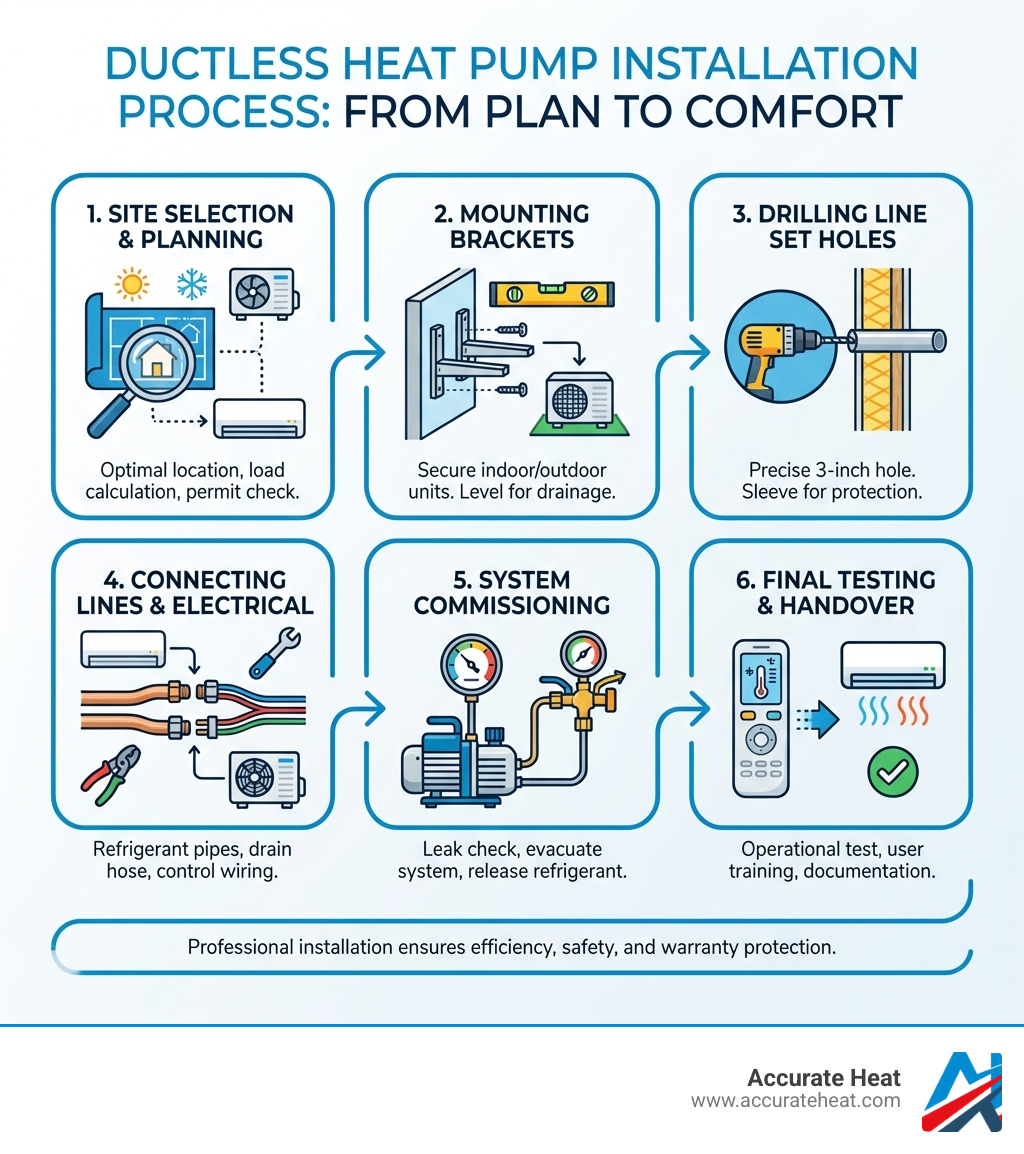
Once sites are selected, the physical ductless heat pump install begins. This process requires precision and specialized skills.
- Mounting the Indoor Unit Bracket: We securely fasten a level mounting plate to the interior wall, anchored into studs to support the unit.
- Drilling a 3-Inch Hole for the Line Set: A small hole is drilled through the exterior wall for the refrigerant lines, wiring, and drain line. We angle it slightly downward for proper drainage.
- Placing the Outdoor Unit: The condenser unit is placed on its pad or securely mounted to an exterior wall bracket, often using risers to lift it above snow accumulation.
- Running the Line Set: The bundled line set (refrigerant lines, electrical cable, and condensate hose) is carefully fed through the drilled hole and insulated to prevent energy loss.
- Connecting All Lines:
- Refrigerant Lines: Technicians connect the copper lines, creating perfect flares and using a torque wrench to prevent leaks.
- Electrical Connections: All wiring is connected safely and according to local codes on a dedicated circuit.
- Condensate Drain: The drain line is routed to direct water away from your home’s foundation.
- Vacuuming and Charging: We use a vacuum pump to remove all air and moisture from the refrigerant lines. We then add the precise amount of refrigerant using a digital scale for accuracy.
- Final Checks and Testing: Once connected, we power up the system, perform operational checks, and test for leaks to ensure both heating and cooling functions are working perfectly.
The typical ductless heat pump install takes 4-6 hours per indoor unit. For a visual guide, you can review resources like How To Install a Ductless Heat Pump .
Why Your Ductless Heat Pump Install Demands a Professional
While a DIY ductless heat pump install might seem appealing, it carries significant risks. Professional installation is essential for these reasons:
- Risks of DIY Installation: Without proper training and tools, DIY installation can lead to costly mistakes, system damage, and safety hazards.
- Refrigerant Handling (EPA Certification Required): Handling refrigerants requires EPA certification. Our technicians are legally qualified to manage these chemicals safely. Improper handling can lead to leaks and system failure.
- Proper Flaring and Torqueing of Lines: Imperfect connections on refrigerant lines will lead to leaks, reducing efficiency and potentially causing system failure.
- Pressure Testing with Nitrogen: Professionals pressure test lines with nitrogen to detect leaks before adding refrigerant. This ensures a sealed system, preventing future refrigerant loss.
- Deep Vacuum with a Micron Gauge: Lines must be evacuated of all air and moisture, verified with a micron gauge. Moisture left in the lines can form acids that destroy the compressor, leading to expensive repairs.
- Electrical Work and Code Compliance: This installation involves significant electrical work that must be done by a licensed electrician to comply with Massachusetts codes and ensure safety. Incorrect wiring is a fire hazard and can damage the unit.
- Voiding the Manufacturer Warranty: Most manufacturers void warranties if the system isn’t installed by a licensed HVAC professional.
- Optimal Performance and Longevity: Professionals properly size and locate your system, calibrating it for maximum efficiency and comfort. This ensures your system lasts its full 15 to 30-year lifespan.
As Mitsubishi Electric Elite Diamond Contractors, our technicians adhere to the highest industry standards. We offer The Benefits of a Ductless Heat Installer you can trust.
Maximizing Performance: Maintenance, Lifespan, and Smart Usage
After your ductless heat pump install is complete, consistent maintenance and smart usage are key to ensuring years of reliable comfort.
Ongoing Maintenance for Longevity and Efficiency
Regular maintenance keeps your mini-split running smoothly and extends its life.
- DIY Tasks:
- Cleaning Indoor Unit Filters Monthly: The indoor units have washable filters that can get clogged. We recommend cleaning these filters monthly during use to ensure optimal airflow, efficiency, and air quality.
- Keeping the Outdoor Unit Clear: Periodically check that the outdoor unit is free from obstructions like leaves, dirt, and snow during Massachusetts winters. Clear at least two feet around the unit for proper airflow. Blocking the unit can impede operation and cause damage.
- Professional Annual Maintenance: Your ductless heat pump also needs an annual professional check-up. During these visits, we will:
- Inspect and clean indoor and outdoor coils.
- Check refrigerant levels and connections.
- Verify electrical components.
- Inspect the condensate drain line.
- Test overall system operation.
- Make necessary adjustments.
With proper installation and maintenance, a ductless heat pump can last 15 to 30 years. Diligent maintenance can significantly extend this lifespan, while neglect can shorten it and lead to breakdowns.
Questions to Ask Your HVAC Contractor
Choosing the right contractor for your ductless heat pump install is critical. Ask any potential installer these essential questions:
- Is the proposed unit on the NEEP cold-climate product list? This is crucial for performance in our Massachusetts climate.
- What is your load calculation for my home? A reputable contractor will perform a detailed Manual J calculation to ensure the system is perfectly sized.
- Where do you recommend placing the units, and why? This shows their expertise in optimizing for performance, aesthetics, and noise.
- What is the warranty on parts and labor? Understand the coverage for both the equipment and the installation.
- Are you licensed and insured in Massachusetts? This is non-negotiable for your protection.
- Can you provide references from other local customers? References from local customers in areas like Franklin or Medway offer valuable insight.
- What rebates or incentives am I eligible for? A knowledgeable contractor will be up-to-date on available programs.
- What is the expected timeline for the installation? Get a clear understanding of the project schedule.
- What kind of post-installation support and maintenance plans do you offer?
For more guidance on selecting the right professional, check out our Tips for Hiring a Ductless Heat Installer.
Conclusion
A ductless heat pump install is a significant upgrade for any home, offering unparalleled efficiency, precise comfort, and incredible flexibility. We’ve explored how these innovative systems work, their numerous advantages over traditional HVAC, and the critical importance of professional installation. While the concept might spark a DIY dream, the technical realities of refrigerant handling, electrical work, and system calibration firmly place this job in the hands of certified experts.
Choosing a professional ensures your system is perfectly sized, safely installed, operates at peak efficiency, and maintains its manufacturer warranty. This protects your investment and guarantees you’ll enjoy reliable heating and cooling for decades.
At Accurate Heat, we pride ourselves on being a certified Mitsubishi Electric Elite Diamond Contractor. This means our team in Franklin and throughout Massachusetts is trained to the highest standards, ensuring you receive expert, honest, and timely solutions for your home comfort needs. We’re here to help you steer the entire process, from initial consultation and sizing to professional installation and ongoing maintenance.
Don’t let the complexities deter you from experiencing the superior comfort and energy savings of a ductless mini-split system. Let us put our 30+ years of experience to work for you. Learn more about our professional ductless mini-split services and find how we can transform your home comfort today.