Why AC Maintenance Tips Matter for Every Homeowner
AC maintenance tips are essential for keeping your home comfortable, your energy bills manageable, and your cooling system running smoothly. U.S. homeowners spend about $29 billion annually on AC energy costs, but simple, regular maintenance can significantly reduce your share.
Quick AC Maintenance Essentials:
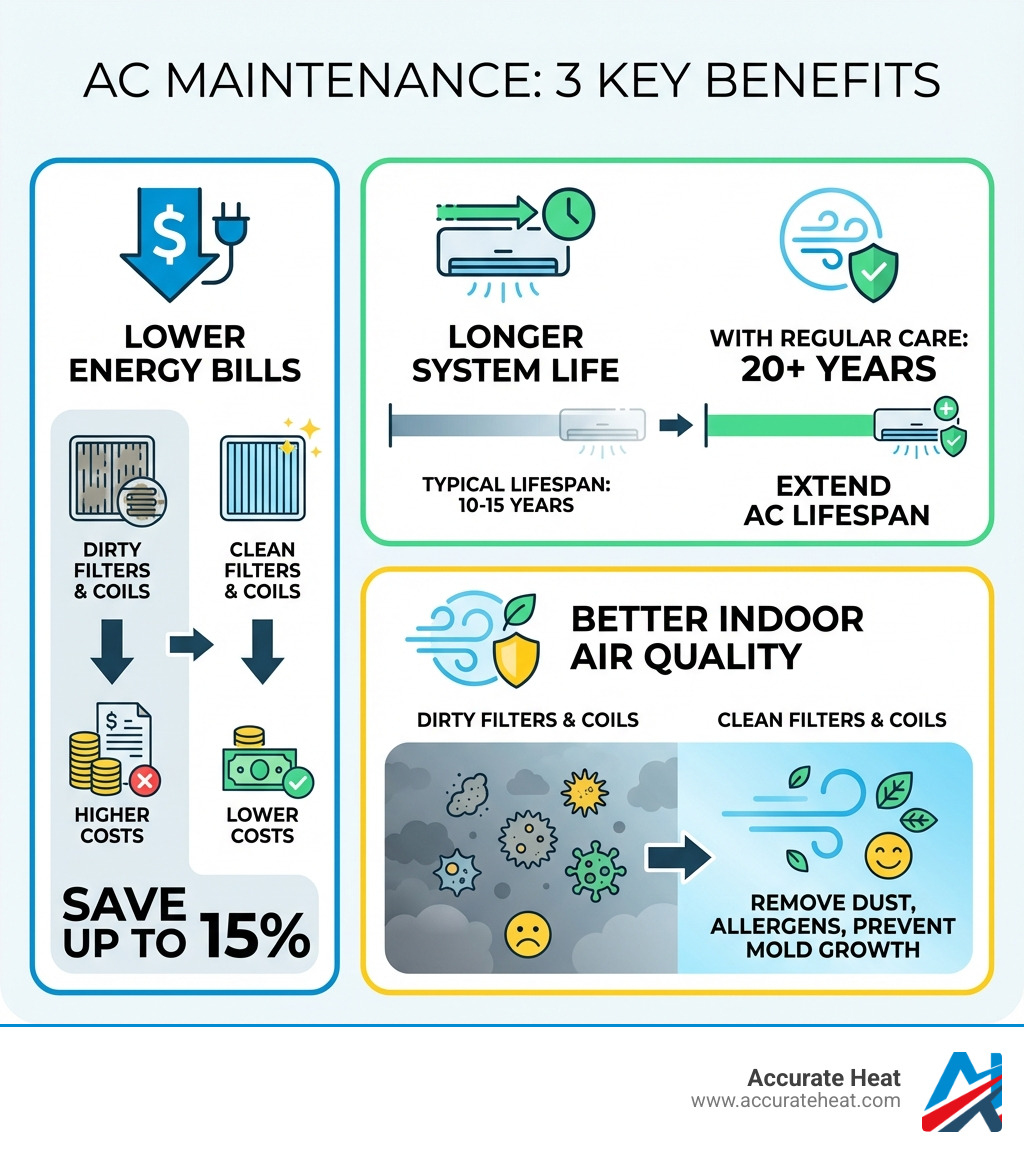
- Change air filters monthly (or every 90 days minimum) to reduce energy use by up to 15%
- Clear debris around your outdoor unit and maintain 2 feet of clearance on all sides
- Check your condensate drain to prevent water damage and humidity issues
- Schedule annual professional tune-ups in spring to catch problems early
- Seal duct leaks to prevent losing 20-30% of your cooled air
Nearly half of your home’s energy goes to heating and cooling. A poorly maintained AC works harder, costs more, and wears out faster. A clogged filter alone can raise cooling costs by 15%, while dirty coils and leaky ducts force your system to struggle, increasing your utility bill.
The good news is many tasks are simple enough for homeowners. Regular filter changes, cleaning your outdoor unit, and watching for warning signs can prevent costly repairs and extend your system’s life beyond the typical 10-15 years.
For Massachusetts homeowners facing hot, humid summers, a well-maintained AC isn’t just about comfort—it’s about reliability when you need it most.
A Homeowner’s Checklist: Essential DIY AC Maintenance Tips
Taking care of your AC doesn’t have to be a chore. A little proactive effort can save you headaches and money. Many essential AC maintenance tips are simple DIY tasks that boost efficiency and lower costs. Integrating these into your routine will keep your unit running smoothly through the warmest Massachusetts summers.
Simple DIY ac maintenance tips you can do today
Here’s what you can do to keep your AC in top shape:
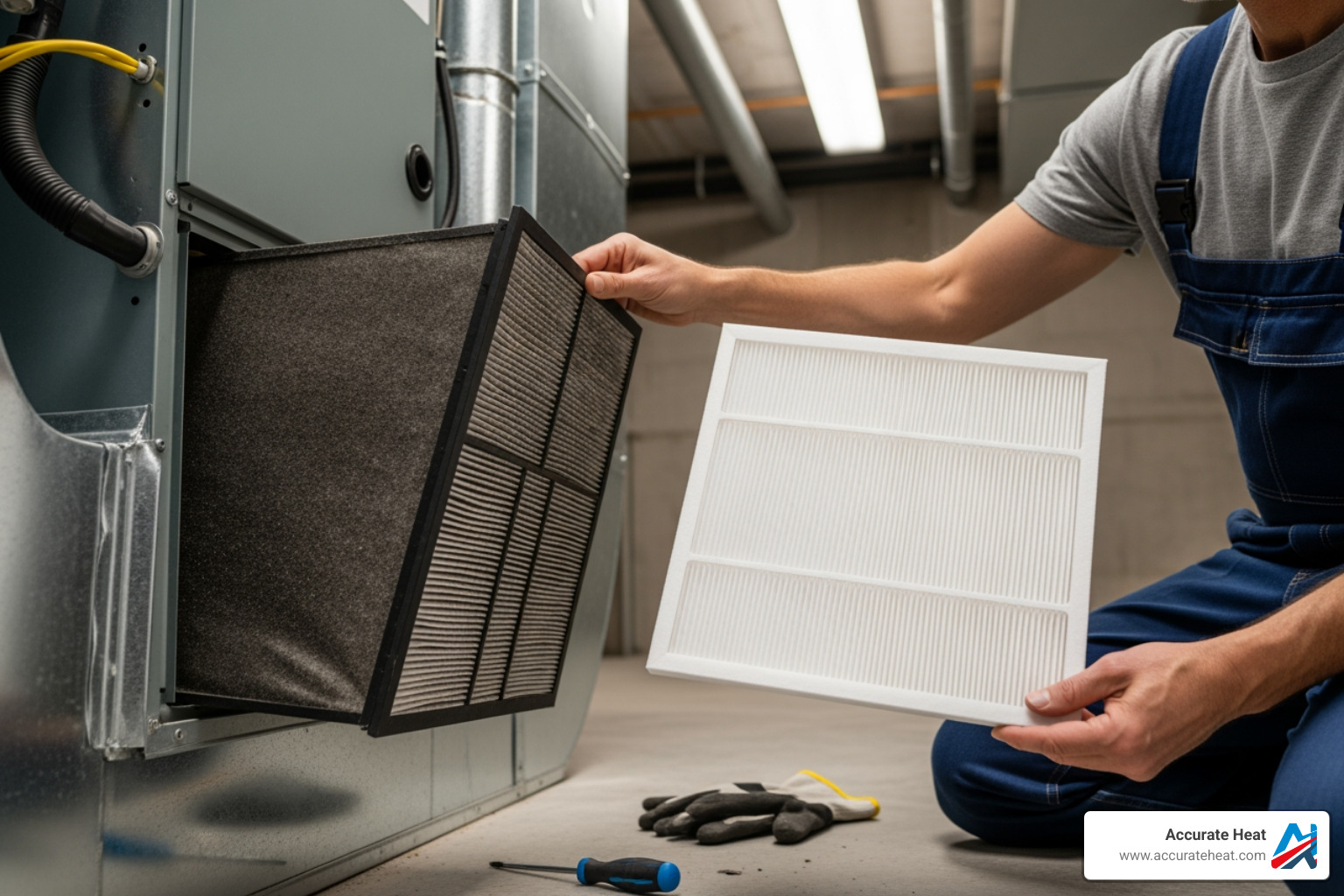
- Change Air Filters Regularly: This is the most crucial task. Aim for every 1-3 months.
- Clean Outdoor Condenser Unit: Your outdoor unit (condenser) releases heat. Keep it clean by trimming foliage and removing leaves, grass, and other debris that reduce airflow and make your system work harder.
- Clear Debris: Ensure at least two feet of clearance around all sides of your outdoor unit for optimal airflow.
- Check Condensate Drain: This line carries moisture away from your home. If it’s clogged, water can back up, causing damage or shutting down your system. You can often clear minor clogs with a wet/dry vacuum.
- Inspect Fins: The aluminum fins on coils are delicate and can bend, reducing airflow. You can gently straighten minor bends with a fin comb. For extensive damage, call a professional.
For more detailed guidance, the U.S. Department of Energy provides resources on maintaining your air conditioner.
Essential DIY AC Maintenance Tools:
- New air filters
- Soft brush or vacuum with a soft brush attachment
- Garden hose
- Fin comb
- Wet/dry vacuum
- Screwdriver
The Importance of Your Air Filter
Your AC’s air filter is like its lungs; it needs to be clean to function efficiently.
Filter replacement frequency: We recommend replacing your AC filter every 90 days. However, if you have pets, allergies, or use your AC heavily, you may need to change it monthly. Check it monthly during peak cooling season in Massachusetts.
Clogged filter effects: A dirty filter dramatically reduces airflow, forcing your AC to work harder and increasing energy bills. Replacing a clogged filter can lower your AC’s energy consumption by up to 15%! Dirty filters can also cause dust buildup on internal components, leading to expensive repairs or early system failure.
Improved Indoor Air Quality: A clean filter is vital for your Indoor Air Quality. It traps dust, pollen, and pet dander, preventing them from circulating in your home. This is especially important for households with allergy sufferers.
MERV ratings: Higher MERV (Minimum Efficiency Reporting Value) ratings filter smaller particles but can restrict airflow if not matched to your system. We can help you choose the right MERV rating for your AC unit.
Caring for the Outdoor Unit (Condenser)
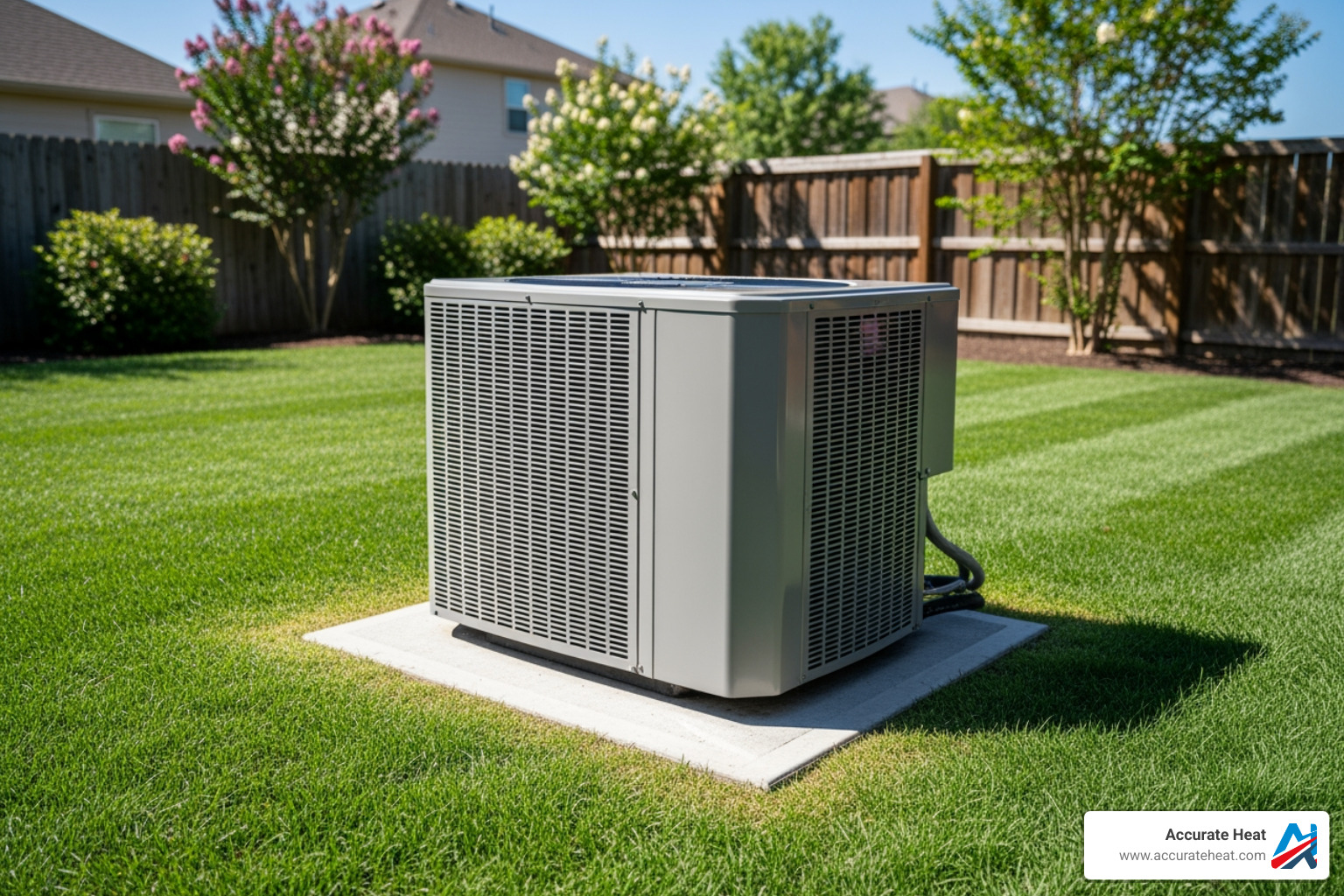
Your outdoor condenser unit releases the heat absorbed from your home. Keeping it well-maintained is crucial for efficiency.
Clearing foliage and debris: Keep the area around your outdoor unit clear. Leaves, grass, and shrubs can obstruct airflow, making the unit work harder. Ensure at least two feet of clearance on all sides so the unit can operate at peak efficiency.
Cleaning condenser coils: Dirt and debris can accumulate on the condenser coils. After turning off the power, you can gently clean these with a soft brush or vacuum. For a deeper clean, use a garden hose (not a pressure washer) to rinse dirt away from the inside out.
Straightening bent fins: The delicate aluminum fins on condenser coils can easily bend, restricting airflow. An inexpensive fin comb can be used to carefully straighten them, restoring proper airflow.
Sunlight exposure reduces efficiency by 10%: A condenser unit baking in direct sunlight can be up to 10% less efficient. Consider strategic landscaping or a small awning to provide shade without obstructing airflow.
Optimizing Your Entire System for Peak Efficiency
Optimizing your entire AC system goes beyond basic DIY tasks. These AC maintenance tips focus on overall home efficiency to save energy and reduce your system’s workload. Key areas include smart thermostat use, ductwork, and insulation.
Mastering Your Thermostat for Savings
Your thermostat is the brain of your AC system, and how you use it significantly impacts your energy use.
Programmable thermostats let you set different temperatures for various times of the day, saving energy when you’re away or asleep.
Smart thermostats offer Wi-Fi connectivity, remote control, and learning capabilities that adapt to your schedule. Homes with high energy bills can save around $100 a year with an ENERGY STAR certified smart thermostat.
Ideal temperature settings: The Department of Energy suggests an optimal indoor temperature of 78°F when you are home in the summer. Setting it a few degrees higher when you’re away yields significant savings.
Replacing thermostat batteries: If your thermostat uses batteries, replace them annually. For more ways to save, check out our Money Saving Thermostat Tricks.
The Hidden Impact of Ductwork and Insulation
If cooled air escapes before reaching your rooms, it’s wasted energy and money. This is where ductwork and insulation are critical.
Duct leaks: Ducts distribute conditioned air, but up to 30% can be lost to leaks, holes, or poor connections, meaning you’re cooling the attic instead of the living room. Signs of faulty ducts include uneven temperatures or stuffy rooms.
Sealing ducts with mastic or foil tape: You can seal leaks in accessible areas using mastic sealant or metal-backed (foil) tape. Standard duct tape is not recommended as it degrades over time.
Insulating ducts in attics/crawlspaces: Ducts in unconditioned spaces like attics or crawl spaces lose energy. Wrapping them in insulation dramatically improves efficiency. Sealing and insulating ducts can improve your HVAC system’s efficiency by 20% or more. Find more tips on how to Heat & Cool Efficiently from Energy Star.
Professional vs. DIY: When to Call for AC Service
While many AC maintenance tips are great for DIY, it’s crucial to recognize when to call a pro. Your AC is complex, and professional expertise is essential for safety, complex repairs, and maintaining your warranty.
Signs Your AC Unit Needs Professional Attention
Your AC often shows warning signs before a major breakdown. Recognizing them can save you from costly emergency repairs. If you notice the following, call the experts at Accurate Heat:
- Strange noises: Grinding, squealing, or banging sounds often indicate a mechanical problem like a failing motor bearing.
- Weak airflow: Air not coming from vents with its usual force can point to blower, ductwork, or refrigerant issues.
- Water leaks: Puddles around your indoor unit could mean a clogged condensate drain or a frozen evaporator coil.
- Bad odors: A musty smell can signal mold in your unit or ductwork. A burning smell might indicate an electrical issue.
- AC won’t turn on: This could be a tripped breaker or a more serious electrical fault.
- System short cycling: If your AC turns on and off frequently without completing a cooling cycle, it’s inefficient and indicates an underlying problem.
- High humidity: If your home feels clammy when the AC is running, it may not be removing moisture effectively.
For a deeper dive, explore our guide on Common Cooling Problems in Massachusetts and How to Fix Them.
Professional ac maintenance tips: When to call an expert
Even diligent DIYers need professional help. We recommend annual professional tune-ups in the spring, before the Massachusetts heat arrives. This preventative maintenance ensures your system is ready for summer and helps catch small issues before they become expensive.
A professional tune-up by a licensed HVAC technician includes tasks beyond what most homeowners should attempt:
- Refrigerant level checks: Proper refrigerant levels are critical for efficiency and require specialized tools.
- Electrical connection tightening: Technicians inspect and tighten connections for safe operation.
- Motor lubrication: Professionals lubricate moving parts to reduce friction and energy use.
- Blower component cleaning: Cleaning and adjusting blower components ensures proper airflow.
- Coil cleaning (professional level): Pros use specialized cleaners for a deep clean of both evaporator and condenser coils.
- Condensate drain clearing (thorough): Professionals thoroughly clear the drain line to prevent clogs.
- System controls and safety checks: They verify that your thermostat, starting cycle, and safety controls function correctly.
- Ductwork inspection: A technician can inspect your ductwork for leaks.
These tasks are vital for maximizing efficiency, extending your AC’s lifespan, and maintaining your manufacturer’s warranty. For more on professional care, read about the Benefits of Regular HVAC Maintenance.
Here’s a quick comparison of what you can do versus what our pros handle:
| DIY AC Maintenance Tasks | Professional AC Tune-Up Tasks |
|---|---|
| Change air filters monthly/quarterly | Check and adjust refrigerant levels |
| Clear debris from outdoor unit | Clean evaporator and condenser coils with specialized cleaners |
| Gently straighten bent fins | Inspect and tighten all electrical connections |
| Check condensate drain for blockages | Lubricate all moving parts (motors, bearings) |
| Ensure proper thermostat settings | Clean and adjust blower components |
| Inspect visible ductwork for obvious damage | Test thermostat and all system controls for proper operation |
| Inspect condensate drain for thorough cleaning and proper flow | |
| Check safety mechanisms and overall system performance | |
| Inspect ductwork for leaks and proper insulation (often extra) | |
| Measure airflow and temperature differential for optimal cooling |
The Long-Term Payoffs of Consistent AC Care
Following these AC maintenance tips isn’t just about immediate comfort; it’s about long-term benefits for your home, wallet, and health. Consistent care pays dividends.
How Maintenance Impacts Your Wallet and Your AC’s Lifespan
Regular AC maintenance is your best defense against costly, unexpected repairs.
Avoiding costly emergency repairs: A neglected AC is likely to break down during a Massachusetts heatwave. Emergency repairs are more expensive than preventative maintenance. Annual tune-ups identify minor issues like a loose wire or low refrigerant before they become major failures.
Extending equipment life: An AC system is a major investment with a typical 10-15 year lifespan. Consistent maintenance can extend this to 20 years or more. Proper care reduces wear on components, meaning your system works less hard, lasts longer, and you delay the cost of a replacement.
Potential energy savings of 20-50%: By combining equipment maintenance with proper insulation, air sealing, and thermostat settings, you could cut your energy use from 20% to 50%. A well-maintained unit runs more efficiently, lowering your monthly utility bills.
Consequences of neglect: Ignoring AC maintenance leads to reduced efficiency (up to 5% loss per year), higher bills, frequent breakdowns, premature system failure, and potentially voiding your warranty. For a deeper understanding, read our article on Why Proper Maintenance of Your HVAC System is Essential.
Breathe Easier: AC Maintenance and Indoor Air Quality
Your AC doesn’t just cool; it’s crucial for healthy indoor air quality. This is vital in Massachusetts, where allergens and humidity can foster mold.
Removing dust and allergens: A clean air filter is your frontline defense, capturing dust, pollen, and pet dander. This is especially beneficial for those with allergies or respiratory sensitivities.
Preventing mold growth in ducts: AC systems remove humidity, creating condensation. If the system is poorly maintained, moisture can build up in the ductwork, creating an ideal environment for mold and mildew. Regular maintenance, including cleaning the condensate drain, helps prevent this.
Cleaner coils and filters: Clean coils and filters ensure the air passing through your system is as clean as possible, contributing to a healthier living environment.
Health benefits: By filtering pollutants and controlling humidity, AC maintenance contributes to better respiratory health and reduced allergy symptoms. For more insights, check out The Role of HVAC Systems in Improving Air Quality in Massachusetts.
Frequently Asked Questions about AC Maintenance
We get many questions about AC maintenance from homeowners across Massachusetts. Here are answers to the most common ones.
How do maintenance needs differ for central, window, and mini-split units?
While cooling principles are similar, specific AC maintenance tips vary by system type:
- Central AC Maintenance: This involves the outdoor condenser, indoor coil, air handler, and ductwork. Key tasks are filter changes, outdoor unit cleaning, and professional annual tune-ups.
- Window Unit Filter Cleaning: These self-contained units require frequent cleaning of their accessible air filter (monthly during use). The coils and drainage area should also be checked.
- Mini-Split Indoor and Outdoor Unit Care: Ductless Mini Split AC Systems have an outdoor condenser and indoor air handlers. Maintenance involves regularly cleaning the indoor unit filters, keeping the outdoor unit clear, and ensuring condensate drains are clear.
How can I help my AC unit during extreme heat waves?
During Massachusetts heat waves, your AC works overtime. Here are some AC maintenance tips to help it cope:
- Using ceiling fans: Fans create a wind-chill effect, allowing you to set your thermostat a few degrees higher and reduce your AC’s workload.
- Closing blinds and drapes: Blocking direct sunlight, especially on south and west-facing windows, significantly reduces heat gain. Up to 76% of sunlight hitting standard double-pane windows becomes heat.
- Reducing use of heat-producing appliances: Run your oven, dryer, or dishwasher during cooler parts of the day.
- Ensuring outdoor unit has shade: Shading your outdoor condenser can improve its efficiency by up to 10%. Use landscaping or an awning, but don’t obstruct airflow.
- Keep your thermostat setting stable: Avoid drastic temperature changes, which force your AC to work harder.
For more strategies, see our guide on How to Keep Your House Cool in the Hot Summer Months.
Why is checking refrigerant so important, and can I do it myself?
Refrigerant function: Refrigerant is the chemical compound that absorbs heat from your indoor air and releases it outside. Without the correct amount, your AC cannot cool effectively.
Signs of leaks: Ineffective cooling or ice on the refrigerant lines could indicate a leak. Low refrigerant reduces efficiency, increases energy bills, and can lead to system failure.
Professional task: No, you cannot check refrigerant yourself. It requires specialized tools, training, and a license. Refrigerants are potent chemicals, and releasing them is illegal and harmful. Mishandling them can cause serious injury.
Safety hazards: Attempting to handle refrigerant can lead to chemical burns and damage your system. This task is strictly for licensed HVAC technicians. If you suspect a leak, call a professional immediately.
Stay Cool and Confident with Expert AC Maintenance
We hope these AC maintenance tips empower you to take a proactive role in caring for your home’s cooling system. From regularly changing your air filters to keeping your outdoor unit clear, these simple DIY tasks can make a significant difference in your comfort, energy bills, and your AC’s lifespan.
However, some tasks are best left to the professionals. Annual tune-ups are vital for thorough inspections, refrigerant level checks, electrical safety, and deep cleaning that ensures your system is operating at its peak.
For comprehensive and reliable tune-ups in Massachusetts, trust the experts at Accurate Heat. With over 30 years of experience serving Franklin, Norfolk, Medway, and surrounding communities, we provide expert, honest, and timely solutions for your home comfort needs. We’re here to ensure you stay cool and confident all summer long.