What That Burning Smell From Your Furnace Is Trying to Tell You
If your furnace smells like burning, here is a quick breakdown of the most common causes and how urgent each one is:
| Smell Type | Likely Cause | Action Needed |
|---|---|---|
| Dusty, fades in 30 min | Dust burning off at season start | Normal — monitor it |
| Burning plastic or acrid | Melting wiring or electrical failure | Shut off furnace, call a pro |
| Rotten eggs or sulfur | Gas leak | Evacuate immediately, call 911 |
| Musty or dirty socks | Mold or bacteria in ducts | Schedule inspection |
| Persistent burning | Clogged filter or overheating motor | Replace filter, call if it continues |
That first blast of heat in the fall is supposed to feel like relief. Instead, you catch a sharp, unfamiliar smell drifting through the vents — and your stomach drops.
Is this dangerous? Should I turn it off? Do I need to leave the house?
Those are the right questions to ask. Some furnace smells are completely harmless and disappear within minutes. Others are early warnings of a serious problem. And a few require you to act right now — no waiting, no second-guessing.
The good news: your nose is actually a reliable diagnostic tool. The type of smell, how long it lasts, and where it’s coming from can tell you a lot about what’s happening inside your heating system.
This guide walks you through each common burning smell, what it means, and exactly what to do about it — so you can make a fast, confident decision about your family’s safety.
Simple guide to furnace smells like burning:
Common Reasons Your furnace smells like burning
Most of the time, a burning smell falls into one of a few predictable categories. Timing matters just as much as the odor itself. If the smell shows up on the first run of the heating season and fades quickly, that is very different from a sharp plastic smell that keeps getting stronger.
Based on industry service patterns cited in the research, burning odor complaints are most common at seasonal startup. Dust is the leading cause, with clogged filters, foreign objects, and electrical issues following behind.

Here is the fast way to separate normal from dangerous:
| Odor Pattern | Usually Normal? | What It May Mean |
|---|---|---|
| Light dusty smell, first use, fades within 10 to 30 minutes | Yes | Dust burn-off |
| New furnace smell for first few cycles | Usually | Coatings and oils heating off |
| Burning smell that lasts beyond 30 minutes | No | Filter issue, debris, overheating |
| Plastic, rubber, fishy, bitter, or acrid smell | No | Electrical problem or melting material |
| Rotten egg or sulfur smell | Never | Possible gas leak |
| Musty or dirty sock smell | Not urgent, but not normal | Mold, mildew, or bacteria buildup |
For more background on warning signs, see our Signs Your Furnace Needs Repair Troubleshooting Guide and this outside overview on common burning-smell causes.
Harmless Seasonal Dust Accumulation
This is the classic reason a furnace smells like burning when you first turn the heat on in Massachusetts.
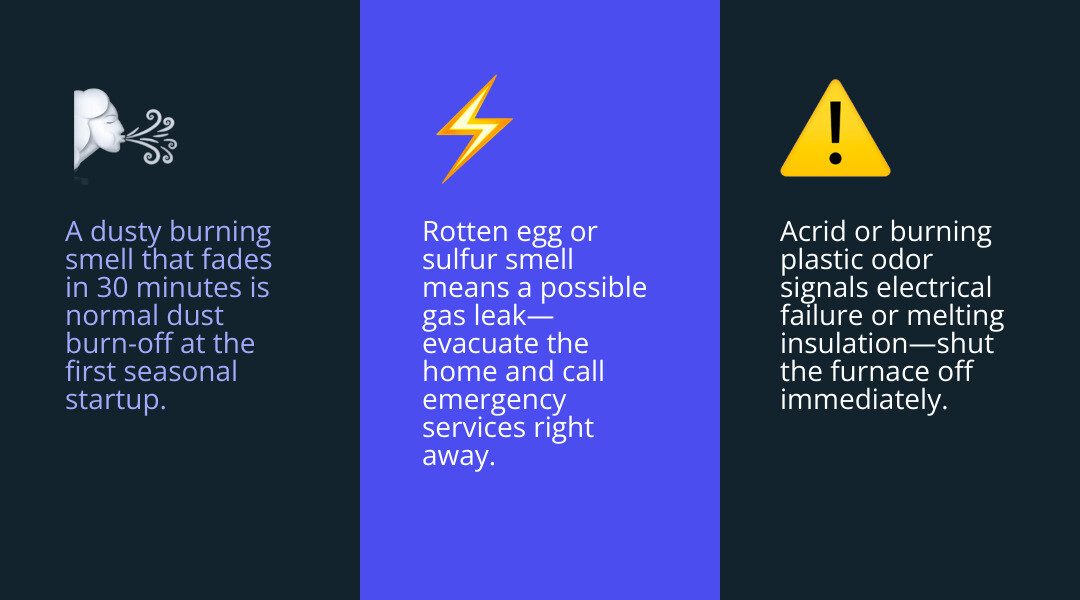
During spring, summer, and early fall, dust settles on the heat exchanger, burners, and nearby metal surfaces. When the furnace fires up again, that dust burns off. The smell is usually:
- Dry and dusty
- Mild rather than sharp
- Strongest during the first cycle
- Gone within about 30 minutes, sometimes up to an hour
If that description fits, it is usually safe to keep the system running while you monitor it. Cracking a window for a short time can help clear the odor faster.
When should you stop calling it “just dust”? If the smell:
- Gets stronger instead of weaker
- Lasts beyond the first 30 to 60 minutes
- Returns every cycle
- Comes with smoke, buzzing, or unusual noises
At that point, we recommend shutting the furnace off and arranging service. A dusty smell that never seems to leave can mean the issue is not dust at all. Our Signs Your Furnace Needs Repair Troubleshooting Guide can help you spot the difference.
Why a New furnace smells like burning
A brand-new furnace can also produce a brief odor during its first few heating cycles. This is usually caused by:
- Manufacturing oils
- Protective coatings
- Lubricants warming up for the first time
This smell is often less like “campfire burning” and more like warm metal, hot plastic, or a chemical-new-appliance smell. It should fade after the first few uses.
What is normal:
- Light odor during initial startup
- No smoke
- No worsening smell
- No tripped breaker or system shutdown
What is not normal:
- Strong acrid odor
- Visible smoke
- Repeated plastic smell after multiple cycles
- Headaches, dizziness, or irritation
If you are not sure, play it safe. A new system can have normal startup odors, but it should not smell like wires are cooking. This outside troubleshooting guide gives similar advice on new furnace odors and when to worry.
Clogged Air Filters and Overheating
A dirty air filter is one of the most common non-seasonal reasons a furnace starts to smell hot or burned.
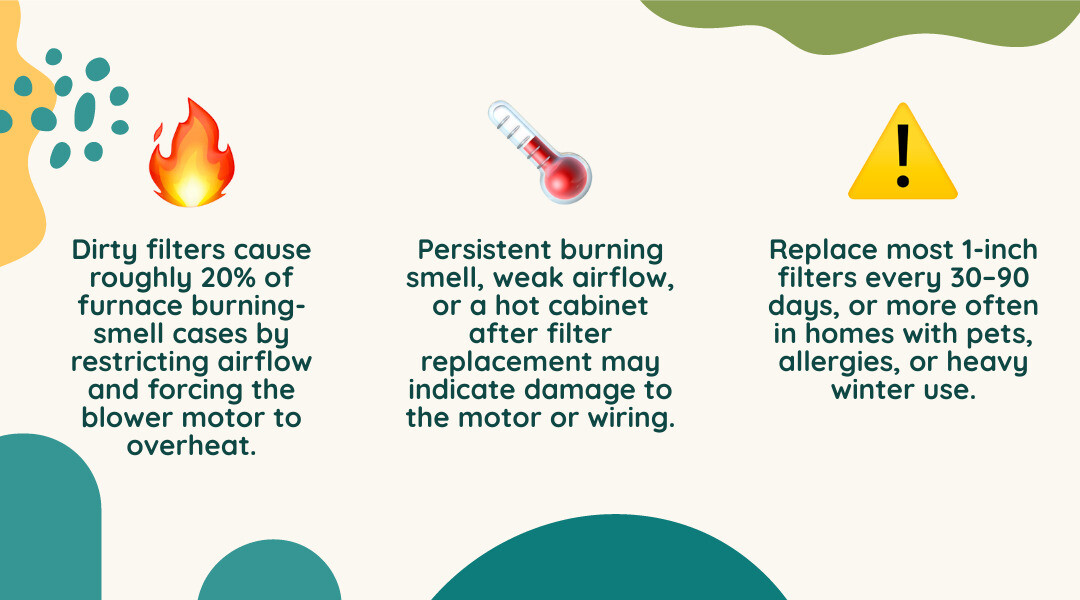
When the filter is clogged, airflow drops. That forces the blower motor and other components to work harder, and the system can overheat. Research in your source set estimated dirty or clogged filters account for roughly 20% of burning-smell cases.
Signs a clogged filter is part of the problem:
- Burning smell keeps coming back
- Weak airflow from vents
- Furnace runs longer than usual
- Utility bills climb
- Furnace cabinet feels unusually hot
- Filter looks gray, packed with dust, or bowed inward
For most 1-inch filters, replacement every 30 to 90 days is a good rule. Homes with pets, renovation dust, allergies, or heavy winter use may need more frequent changes.
If you pull out the filter and it looks like it has been through a Massachusetts blizzard indoors, replace it. Then monitor the smell on the next run. If the odor remains, there may already be damage to the blower motor, wiring, or other components.
We cover the maintenance side in more detail here: Heating Maintenance Prevents Costly Repairs.
Immediate Steps to Take for Home Safety
If you smell something burning, do not start with deep detective work. Start with safety.
Heating equipment remains a real fire risk. Research referenced NFPA data showing about 38,881 heating equipment fires per year from 2019 through 2023, accounting for roughly 12% of reported home fires. That does not mean every furnace smell is an emergency, but it does mean weird smells deserve respect.

Here is what we recommend doing right away:
Identify the smell type.
- Dusty and fading?
- Plastic, electrical, or bitter?
- Rotten eggs or sulfur?
- Musty or dirty socks?
Check how long it lasts.
- Under 30 minutes on first seasonal startup can be normal.
- Persistent odor is not something to ignore.
Look for danger signs.
- Visible smoke
- Sparking
- Buzzing or stalling noises
- Furnace shutting down unexpectedly
- Carbon monoxide detector alarm
Turn the furnace off if the smell is strong, sharp, worsening, or clearly not dust.
Ventilate the home if the issue is not a gas leak.
- Open windows briefly to clear indoor air.
Do not restart the system repeatedly.
- That can make an electrical or overheating problem worse.
Call a professional if the smell persists or seems unsafe.
One more important note: carbon monoxide does not have a smell. If anyone in the home develops headache, nausea, dizziness, or flu-like symptoms while the furnace is running, leave the house and seek help immediately.
What to Do if Your furnace smells like burning Plastic
A burning plastic smell is one of the clearest “shut it down now” warnings.
This odor often points to:
- Melting wire insulation
- Overheated blower motor
- Failing capacitor
- Damaged control board
- Plastic object or packaging near a hot component
- Debris pulled into ductwork or the furnace cabinet
Sometimes electrical smells start oddly “fishy” before becoming acrid or throat-burning. That is not your imagination. It can happen as electrical insulation overheats.
What to do:
- Turn off the furnace at the thermostat.
- If the smell is strong, shut off power to the unit at the breaker or service switch.
- Do not touch internal electrical parts.
- Check only for obvious, safely visible foreign objects near vents or registers.
- Call for professional diagnosis.
Do not keep running the system to “see if it clears up.” Plastic and electrical smells usually mean the problem is getting hotter, not better.
For related troubleshooting, read Furnace Repair 101 Troubleshooting Common Problems.
Identifying a Gas Leak (Rotten Egg Odor)
If the smell is rotten eggs or sulfur, treat it as a gas leak until proven otherwise.
Natural gas itself is odorless, but utility companies add a chemical called mercaptan so leaks are easier to detect. If that smell is coming from the furnace area or through the house:
- Do not turn lights or appliances on or off
- Do not use phones inside the house
- Do not try to relight anything
- Get everyone out immediately
- Call 911 and your gas utility from outside and at a safe distance
Do not stop to Google it from the kitchen. This is one of the few home-maintenance situations where “maybe it’s nothing” is the wrong bet every time.
A related point: not every dangerous furnace problem has an odor. Gas leaks may smell, but carbon monoxide does not. That is why every home should have working CO detectors.
For more on odor categories, this outside guide is helpful: Your Furnace Smells Bad, Oil/chemical smells vs. burning dust vs. gas .
When to Call for Professional Furnace Repair
You can safely wait and monitor only when all of these are true:
- It is the first furnace run of the season
- The smell is light and dusty
- It fades within 30 to 60 minutes
- There is no smoke, no noise, and no detector alarm
You should turn the furnace off and call for help if:
- The smell lasts beyond 30 to 60 minutes
- The odor is plastic, electrical, rubber, oil, or chemical
- You smell rotten eggs or sulfur
- The system is noisy, short-cycling, or struggling to move air
- The smell keeps returning after a filter change
- You see smoke or signs of overheating
- Anyone feels sick while the system is operating
At Accurate Baker Elman, we provide reliable HVAC service throughout Franklin and surrounding Massachusetts communities, with 24/7 emergency support when a heating problem cannot wait. If your furnace odor seems more serious than simple dust, professional inspection is the fastest way to protect your home and avoid bigger damage.
For long-term prevention, we recommend:
- Replacing filters every 30 to 90 days
- Keeping vents open and unobstructed
- Not storing items near the furnace
- Scheduling annual maintenance before heavy winter use
- Keeping carbon monoxide detectors tested and working
If your system is overdue for service, start with The Ultimate Guide to Furnace Services Installation Repair and Maintenance.
The short version? If your furnace smells like burning, trust the smell, trust the timing, and trust your instincts. Dust is common. Gas and electrical odors are not. When in doubt, shut it down and let us take a closer look.